
“You’re going to host a brunch? With everything you have going on?”
Even after 20 years together my very introverted husband doesn’t fully understand his more extroverted wife. The more he has happening, the more likely my husband is to retreat to a corner of the house for time alone because being with people drains him. For me, the crazier my life is, the more I need time with people with whom I can “refuel”. Extroverts are invigorated by the energy they get from spending time with people.
So, when I had an article due, a baking workshop to prepare for, several recitals, baseball games, and volunteer meetings to attend, my daughter’s graduation to prepare for, relatives coming in from town, and literally a dozen doctors’ appointments for myself and my children, it seemed a good time to host a brunch of some of my closest friends.
We had a great time, and I received the laughter and love I needed to sustain me through the hectic weeks to follow.
So, when I received a question this past week at a baking workshop about what I’d recommend as the perfect dessert to take to a potluck brunch if you had to make something gluten, dairy and tree nut free, I was ready with an answer: mini cheese cakes.
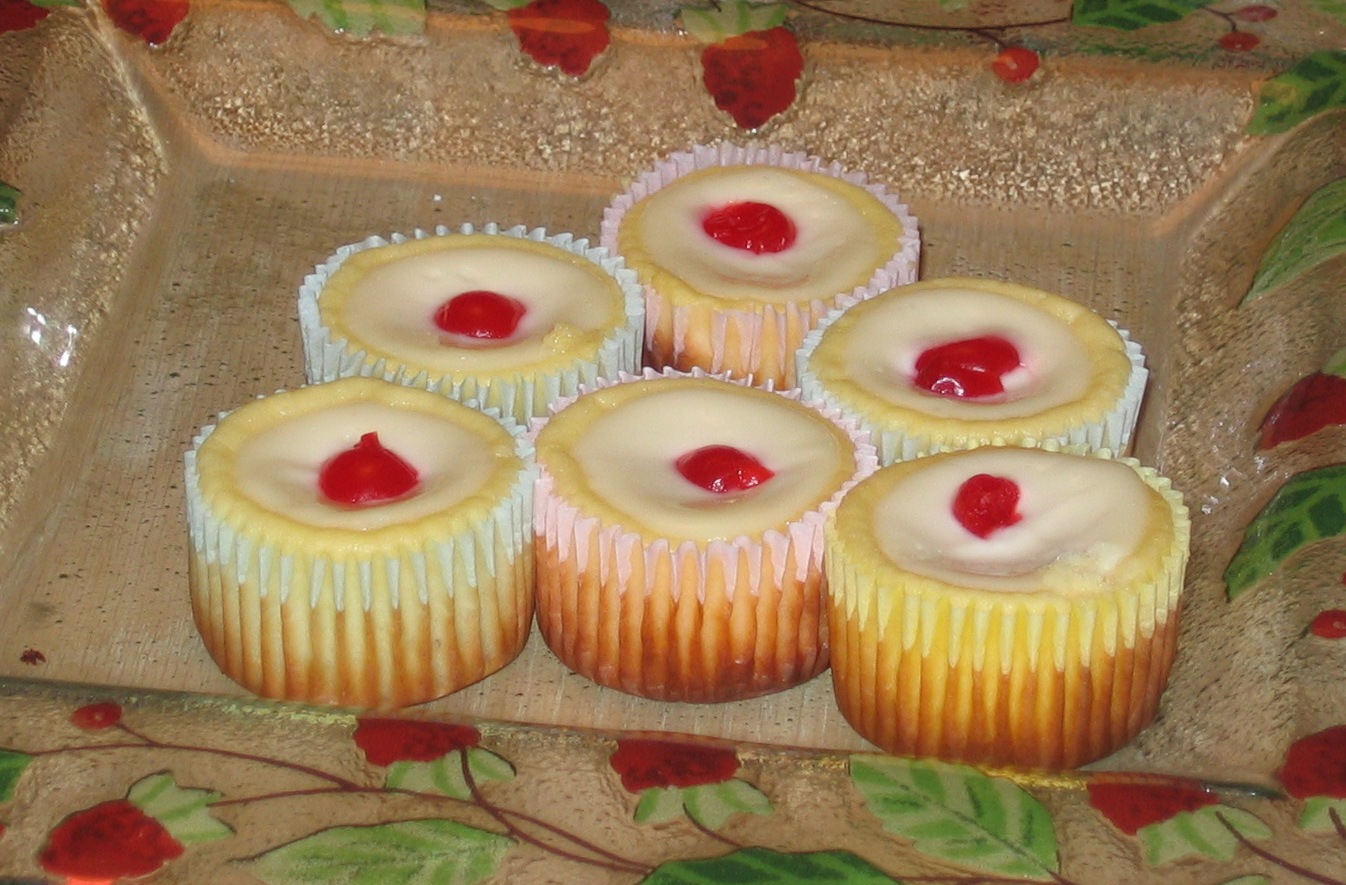
Mini cheesecakes are elegant, easy to make, versatile, and very adaptable for dairy, gluten and tree nut allergies.
Cheesecake Tips:
1. The crust: Crusts for cheesecake can be made from just about anything you want – honey graham crackers, animal crackers, shortbread cookies, oreo cookies coconut cookies, chocolate grahams, ginger cookies – your imagination is your only limitation. And today we live in a time where all the above can be found in gluten, dairy, and nut free versions at the grocery store. Depending on the type of cheesecake you want to make, you can vary which type of crust you want to make.
Making crusts are ridiculously easy, too. Simply zoop up your cookie or graham crackers in a food processor to make crumbs, or if you don’t have a food processor, put the cookies or crackers into a ziploc bag, seal, and whack away with a rolling pin or the end of an ice cream scoop or a clean meat mallet. then you mix the crumbs with a little bit of a sweetener like Agave or coconut sugar and a little bit of a fat like melted vegan butter or safflower oil. A good ratio is one tablespoon each of the sweetener and fat for every 1/3 cup of crumbs.
And if you’re trying to watch your overall caloric, carb and fat content, you can always omit a crust altogether.
2. The cheesecake filling: Cream cheese is the main ingredient in cheesecake. Today, folks with dairy allergies can find vegan versions of cream cheese at their local grocery store which makes for a nice substitute. Sometimes, though, folks prefer to use straight tofu, which works well, too.
The key tip for making good cheesecake is to be sure all your ingredients come to room temperature. If your cream cheese or tofu are cold, you’ll get lumps in your cheesecake, which doesn’t affect the taste but definitely detracts from the texture. To make sure your cream cheese isn’t affected by other ingredients, all other ingredients like your eggs should be at room temperature, too.
You should always cream the cream cheese alone before adding any of the other ingredients. Sometimes an online recipe will tell you to just mix all the ingredients together. Don’t. It will affect the texture of your cheesecake. Also, if you start to cream your cream cheese and find it’s still too cold, you can then just wait a little bit and resume creaming. If all the ingredients are together, you’ll never get the lumps out, no matter how long you wait.
If you are using cream cheese instead of tofu, you should decide on the type of texture you want for your cheesecake. Using only cream cheese makes for a nice, thick, “cheesy” cheesecake. If you want your cheesecake to be a bit silkier, adding sour cream (a vegan version) or silken tofu or a dairy free yogurt will lighten the cheesecake. If lightening the cheesecake, use a 3 to 1 ratio (e.g. 3 containers of cream cheese with 1 container of sour cream).
If you’re making cheesecake with tofu, I like to use the silken tofu because it’s so much smoother. One 15/16 ounce container is about equivalent to two containers of cream cheese.
3. The flavoring: You can make just about any type of cheesecake you desire. For a regular cheesecake, you only add vanilla and some sweetener. If you want a flavor, you can add lemon or orange zest, unsweetened cocoa powder, raspberry liquor, pureed cooked pumpkin or squash, or even herbs like rosemary and basil for a more savory type of cheesecake.
If you’re in a fun mood, you can make a layered cheesecake where you layer two different flavors of cheesecake or you layer cheese cake on top of a brownie crust or layer a mousse on top of cheesecake. The ideas are endless.
4. The sweetener: Regular cheesecake will often call for about 1/4 cup of sugar per one 8 ounce container of cream cheese. If you’re watching sugar, you can always use Agave (half the amount of sugar called for) or coconut sugar (same ratio as sugar) or Truvia (half the amount you’d use for sugar).
If you’re using Agave, the best way to incorporate it into the cream cheese is to slowly pour the Agave into the creamed cream cheese mixture while the mixer is constantly stirring and incorporating the Agave into the mixture. For coconut sugar and truvia, simply follow the instructions for sugar.
5. The eggs: Most cheesecake recipes call for eggs to help give the cheesecake structure. If you’re trying to watch your cholesterol, you can use egg whites only. The cheesecake will be slighly drier and a little less creamy but some people actually prefer their cheesecake that way.
If you want to avoid eggs altogether you can simply omit the eggs, but you’ll need to add a little flour or cornstarch to give the cheesecake some structure, about a 1/4 cup of either. I make an eggless chocolate cheesecake where I mix a 6 oz container of yogurt with cornstarch as a substitute for the eggs.
6. Making the cheesecake mini: The advantages of mini cheesecakes are several. For one, they bake up more quickly. Secondly, they are easier to serve. Thirdly, if you’re taking them to a party, they’re easy to transport. Fourthly, when you decorate them, you can vary the toppings and have a variety of cheesecakes to offer to the guests.
To make mini cheesecakes, you just use muffin tins. I like to line my muffin tins with paper liners to prevent any cross-contamination and for easy removal of the cheesecake, but you can also simply spray or grease the tins, too.
7. Baking the cheesecake: Cheesecakes are usually baked at low heat to prevent cracking and drying out the cheesecake. So, the best temperature is about 325 degrees. If you want to have extra smooth cheesecakes and really prevent cracking,it’s best to add some moisture to your oven. You can fill a pan with some hot water and put it at the bottom of your oven while the cheesecakes cook or you can put the muffin tins into another larger pan which is filled halfway with hot water. If you don’t do either of these steps, it is not a big deal. The cheesecakes just may crack a bit on top or be a little less smooth and moist. They’ll still taste good.
When your cheesecake is done, the edges are more done than the center. A knife inserted into the edges should come out clean while the middle should still be less stiff. It shouldn’t be liquidly and runny still, but it shouldn’t be as stiff as the edges. If you overcook the cheesecakes and the middles are stiff and cracked, don’t sweat it. the cheesecakes won’t be as creamy, but they’ll still be good and you can cover the cracks with your lovely toppings.
8. Cooling the cheesecakes: Cheesecake needs to cool before you eat it because it’s the coolin process that finishes cooking the cheesecake center and which solidifies the cheesecake. It’s best to let the cheesecakes cool at room temperature first and then to put them into the fridge.
9. The toppings: You can top your cheesecakes with just about anything. Slices of fruit like strawberries, kiwi or blueberries or a chocolate drizzle or crushed cookies or a whole cookie or a raspberry drizzle or shredded coconut. Your imagination is the only limit.
You can wait to add fruit garnishes until right before you’re taking them to a party or before you serve them so the fruit will stay fresh. Drizzles can be added while the cheesecakes are still warm or when they are cold. Cookies should be put on while the cheesecakes are still soft enough for you to push them down into the cheesecake.
10. Transporting mini cheesecakes: Always keep your cheesecakes in the fridge until it’s time to take them to the party. If you’re going a short distance, you don’t need to worry about keeping them cold, but if you’re going far away, pop them into a cooler with an ice pack or into a bag with a ziplock baggie full of ice.
Since the mini-cheesecakes are muffin size, you can usually fit them into a rectangular tupperware container or cupcake holder and transport them easily.
Mini Cheesecakes
Ingredients:
2 cups Smorables Gluten Free Graham crackers (about one box)
6 tbsp melted vegan butter
3 tbsp Agave
4 8 oz containers Tofutti vegan cream cheese, at room temperature
1/2 cup Agave
2 tsp gluten free vanilla
4 eggs, at room temperature
Baking Instructions:
1. Preheat oven to 325 degrees and line 24 muffin cups with cupcake liners.
2. Crush the graham crackers into crumbs by either processing them in a food processor or by whacking them with a rolling pin or mallet in a sealed bag.
3. Mix the melted butter with the Agave and blend well into the graham cracker crumbs until the crumbs are moist.
4. Evenly divide the crumbs among the muffin cups, about one tablespoon per muffin cup. Press the crumbs down to form an even crust.
5. Bake in the oven for 5 minutes and remove onto a cooling rack.
6. Cream the cream cheese in a mixer until smooth and creamy.
7. Slowly pour in the Agave while continually stirring until all the Agave is incorported into the cream cheese
8. Add in the vanilla.
9. Add the eggs, incorporating them one at a time.
10. Divide the cheesecake filling evenly among the muffin cups. They will be almost to the top of the muffin cups.
11. Bake until the cheesecakes are dry on the edges and mostly firm but still slightly soft in the center. This will take between 15 and 25 minutes depending on the thickness of your muffin tins and how evenly your oven is heating food.
12. Remove the cheesecakes to a wire cooling rack and cool to room temp. Put into the fridge so they can cool completely and solidify.
13. Garnish with fruit or chocolate drizzle or raspberry drizzle or cookie crumbs and serve.
 Pajama Living
You must be logged in to post a comment.