Cooking Techniques: Omelets

OLYMPUS DIGITAL CAMERA

“Do I look like a ma’am to you?”

I was 15 and working at a military base Burger King.  I asked a woman, “Ma’am, would you like cream and sugar in your coffee?”

“Ma’am?” she asked. “Ma’am? Do I look like a ma’am to you?”

At 15 I didn’t understand what I had said to make her so upset, but fast forward fifteen years later….

I had been out shopping, using the gift cards I had received for my 30th birthday.  Arriving home, I dropped my bags on the floor and slumped into the nearest kitchen chair.

“What’s wrong?” asked my husband.

“What’s wrong? I’ll tell you what’s wrong.  Pimply-faced teenage clerks kept calling me ma’am.  Do I look like a ma’am to you?”

As the words slipped from my mouth, that woman’s face from fifteen years earlier swam before my face. I had one of those “ah-ha” moments where everything is so clear that you wonder how you hadn’t realized it before.

Those ah-ha moments come in all sorts of situations. I still remember my first cooking “ah-ha” moment. I had taught myself at a young age to make omelettes. I had the basic principles down – mixed eggs; setting the eggs to form a base for the meat and/or cheese and/or vegetables; and folding. My omelets, however, lacked a certain something. They were flat, and quite often they broke when I folded them over. I wanted thick, fluffy omelettes which would hold the filling and provide a good  egg to filling ratio.

One weekend, as a teenager, my parents took me to a conference where the breakfast buffet included the chef making fresh omelettes for the guests right at the table. As I watched him, everything I had been doing wrong became clear.

I was reminded of this particular ah-ha moment this past week when my middle child wanted me to teach her how to make omelettes, so for this post, we’ll look at omelette technique.

Figuring Out Omelettes:

1. Eggs alone verses eggs and liquid: My grandmother always told me that she put water into her eggs because they made them fluffier than putting milk, and if you google omelettes and scrambled eggs, you’ll find “advice” on all sides of the issue. After experimenting, I have not found that adding milk or water affects the fluffy factor at all. Adding any type of liquid simply makes your eggs more “liquidy” and less “eggy”. Whether you add liquid or not is really a taste preference: Eggs blended on their own will be a little dryer. Water added will make for thinner but slightly moister eggs. Milk adds some flavor as well as moisture. Cream makes for a richer omelette. If you do add water or milk or cream, though, don’t add more than 1 tbsp per egg, because too much liquid will only cause liquid to separate out from your eggs.

2. Low heat heat verse higher heat: I always cooked my omelettes over low heat because I feared burning them while I was waiting for them to set, but the chef I watched made his omelettes over a medium-high heat. If you google the subject, you’ll once again find many differing opinions. The one consensus among the opinions and my own experience is that you shouldn’t ever cook eggs over high heat. It doesn’t give the eggs time to set properly, and if you’re not watching like a hawk, they will burn. After experimenting, I’ve found that starting the omelettes on a medium-low heat and turning down the heat to low actually works best for cooking an omelette more quickly while also setting it without burning it.

3. Setting the eggs: I had always set my omelettes by cooking the blended eggs over low heat with a lid on top. This worked well, but it made for a very flat omelette which wasn’t very solid nor was it fluffy. Watching the chef that day, however I realized that he knew the secret. You have to create layers to your egg. To do so, you bring the liquid egg sitting on the top to the more solid bottom part of your egg.

How do you do this? When you pour your egg mixture into your pan, within a minute, it will start to set around the edges. Just it begins to set, you gently lift a sold edge of the omelette and tilt your pan so that the egg that hasn’t solidified can run underneath your omelette. You keep doing this around different parts of your edge until no more eggs will run down underneath. What this does is to create depth to your omelette which makes the omelette thicker and fluffier and more stable for your filling.

4. Pan size and type: Once again, people have a lot of opinions about what you should use for cooking omelettes. The only two things you really need to know are: 1) No matter what type of pan you use, it should be one that your eggs won’t stick to. That doesn’t necessarily mean a nonstick pan. It just means that you need to grease your pan well. I normally put a tsp of olive oil into my pan and make sure I spread it all around the pan, including up the sides. 2) Your pan should be properly sized. A omelette made with two eggs or equivalent should not be cooked in a pan larger than 6 to 8 inches wide. The larger the pan, the more your eggs will spread, and the thinner the omelette will be. Similarly, if you’re making an omelette to share and are using four eggs, you want your pan to be 9 to 10 inches wide so you’ll have proper heat distribution and enough egg space for your filling.

5. Fillings: Few people make omelettes plain with nothing in them. If they want their eggs plain, they simply scramble them. Omelettes are specifically designed for filling, even if it’s simply with cheese. A couple of tips for really good omelettes: 1) Since an omelette usually cooks in about 3 to 5 minutes, if you want your filling to be warm, you should saute them first. I like to saute chopped mushrooms, broccoli, peppers and spinach. My husband likes to saute chopped ham. Whatever you prefer, if you saute the meat or veggies for a minute or two, they’ll be warm and you can season them with the spices and herbs you like for added flavor. 2) If using cheese, shredded is always best. You want something that will melt quickly just from the heat of the folded over egg. About a tablespoon of shredded cheese or cheese substitute for a two egg or equivalent omelette is good.

6. Flavoring: Most recipes for omelettes simply use salt and pepper, but for really good omelettes you should always consider adding herbs or spices, and for health reasons, omit the salt. I make my omelettes with black pepper, chopped chives and paprika. My oldest likes to make hers with cumin. One friend of mine swears by thyme. Another believes only oregano and basil should allowed in an omelette. Experiment and see what flavors you prefer.

Okay, for a recipe. Here’s how I make my omelettes these days:

Omelette

Ingredients:

olive oil (2 tsp, divided)

fillings (meats and/or veggies), about 1/4 to 1/2 cup worth, chopped

seasonings for the filling (pepper, herbs, spices)

two egg whites or 1/4 cup liquid egg whites

one whole egg

1 tbsp flax milk (or whatever you prefer)

ground black pepper (a pinch, about 1/8 tsp)

chopped chives (a good sprinkle, about 1 tsp)

paprika (a dash, about 1/4 tsp)

1 tbsp of shredded Daiya cheddar “cheese”

Cooking Instructions:

1. Spread 1 tsp olive oil in a pan and heat on medium-low.

2. Chop vegetables and meat into small pieces and saute in the pan with seasonings like pepper, oregano, basil, onion powder, whatever, just until the vegetables begin to soften and meats are warm.  Remove from the pan and set aside.

3. Re-coat the pan with another 1 tsp olive oil and warm over medium-low heat.

4. Whisk with a fork: the egg whites, whole egg, flax milk, pepper, chives, and paprika until well blended.

5. Pour the eggs onto the hot pan and let the edges begin to set. Should do so pretty quickly. Once setting begins, lower the heat to low.

6. Using your spatula, gently lift a solidified edge and tilt your pan so some of the liquid egg runs down underneath. Do the same with an edge side opposite the one you just did and continue until your liquid eggs are gone. This will only take a minute.

7. Add your filling to one side of the omelette, and add the shredded cheese on top.  Using a spatula fold the empty side of the egg on top of the filling. Turn the heat off and cover the omelette with a lid for about 30 to 60 seconds.

8. Remove the lid and slide the omelette onto a plate to enjoy.

*NOTE:  If I’m serving omelettes for company, I make three to four, but instead of putting all the cheese and meats into the omelettes, I keep some back for the top. I make the omelettes and then lay them side by side in an ovenproof dish. Then, I sprinkle the remaining cheese and meat on top of the omelettes, sometimes adding thinly sliced tomatoes and spinach leaves on top as well. After I put the dish into the oven at 170 degrees which not only melts the cheese but keeps the omelettes warm until we’re ready to eat.

Cooking Techniques: Crab Cakes

website crab cakes

Proceed to Rte 2.  Proceed to Rte 2.

Until recently, I had traveled the old-fashioned way: Jotting down directions on a piece of paper which I figured out using a map. This past year, however, my father gave us a GPS, which I have been using whenever I’m going someplace new.

For the most part, the GPS has been very helpful. I enjoy no longer trying to look at written directions and drive at the same time.  I appreciate that the “woman who lives in the GPS” tells me exactly when to turn and in which direction.  I have fun with the kids as we laugh when the GPS tries to phonetically pronounce New England towns which are never pronounced as they are spelled.

The other day, though, I was driving to a new destination which I knew I’d need to take Rte 2 to find.  The GPS, however, seemed to believe I wasn’t actually on Rte 2 itself.  The little arrow which indicates where you are had me off to the side of Rte 2.  So, for the next ten minutes, I listened as the poor woman in the GPS valiantly tried to get me onto Rte 2.  At every intersecting road, she would tell me to turn in a direction which would supposedly get me back to Rte 2.  Finally, as those intersections ceased to exist, the poor GPS simply continued to say over and over again, “Proceed to Rte 2.  Proceed to Rte 2.”

I confess, I was torn between feeling quite sorry for the machine and being frustrated with the absurdity of technology.  On the one hand, the machine was only doing what it was programmed to do – get me onto the correct route. On the other hand, with all our technological advances, someone hasn’t figured out how to correctly input the longitude and latitude of Rte 2?

These similar feelings were aroused when a friend of mine called last week about her crab cakes. She wanted to impress some dinner company, and the recipe she had found online wasn’t working.  On the one hand, I felt terrible for my friend who was doing her best to make a nice dinner.  On the other hand, I was frustrated by the number of recipes which are published which don’t actually work well.

So, for this post of our continuing adventures in cooking techniques, we are going to focus on crab cakes. I realize some folks will have shellfish allergies and never actually make crab cakes, but the fundamental principles also apply if you want to make a vegetable panccake instead.

Some problems with crab cakes:

1. If you try to make crab cakes, you quickly realize that trying to keep the crab in an actual cake or patty shape without the crab cakes falling apart as they cook can be difficult.  So, the key to helping with this problem is in how you make the crab cakes.

I have found that doing two things in conjunction with each other works best. First, mix all your binding ingredients together before adding them to the crab. Whatever you’re using – cracker crumbs, bread crumbs, cornmeal – mix that up with your eggs and herbs and liquids first and let it sit for a few minutes.  Then, mix the binder into your crab pieces.  You’ll need to take a few minutes to incorporate the binder well, but it’s worth those few extra minutes to do so.

The second thing to be done is to chill your crab cake mixture before forming the crab cake patties.  Chilling allows the ingredients to better meld with another so that when you form the patties, they’ll hold together better. So, after you make your crab cake mixture, cover it well with plastic wrap or foil and let it rest in the fridge for a little bit.  I find that fifteen minutes is really the minimum you should keep it in the fridge.  I usually opt for about 30 minutes.  You will find recipes that suggest an hour or two.

2. Another potential problem with crab cakes is the taste. People differ on their expectations about crab cakes. Some folks like the cakes to have a strong flavor of something other than crab so you’ll find recipes which use mayonnaise and mustard which make for a heavier taste. Other folks prefer the taste of the crab to come through and would rather use just some herbs. For my friend, the recipe she found was heavy on the mayonnaise, and she didn’t really like it. If you’re trying to compromise, you can do what I do which is to make a lighter crab cake with lemon juice and herbs and accompany it with a nice remoulade sauce which is essentially mayonnaise with herbs and seasonings.

Folks also differ about the type of crab to use. Fresh is said to be the best, and I would agree. Unfortunately budget limitations and availability of fresh crab can limit the opportunity to use fresh. I personally use frozen or canned crab meat. This time of year (winter) it’s usually canned. While you lose some of the texture and taste of fresh crab, you can still have great tasting crab cakes, so do what works for your budget and what’s available for you to purchase.

If using frozen, though, make sure thaw the crab pieces first, and if using canned, be sure to drain the crab pieces.

3. The final potential issue with making crab cakes is how you cook them. Recipes vary from deep frying to cooking them in the oven. It really comes down to preference and health issues. If you are trying to eat healthy, then baking the cakes in the oven is the best, but you will find that the flavor is lacking a bit. What I do is to put a teaspoon or two of olive oil in a bowl and lightly brush the olive oil on the top of the crab cake; then halfway through the cooking time, flip the cakes and do the same with the other side.

For my preference for cooking crab cakes, I cook them on top of the stove in a pan lightly coated with olive oil. This works well and is quicker than cooking the crab cakes in the oven.

If you do choose to deep fry the crab cakes, the key is to have hot oil, 350 to 375 degrees, so you can fry them quickly which reduces the amount of oil the cakes absorb.

So, for a recipe that I use:

Crab Cakes

Ingredients:

1 tbsp dried dill

2 tbsp chopped chives (dried or fresh)

2 tbsp lemon juice

1/2 tsp ground black pepper

1/2 cup liquid egg whites

3/4 cup gluten free bread crumbs (whatever you’d prefer)

24 ounces of crabmeat (six 6 oz cans will give you 24 oz of meat)

Cooking Instructions:

1. Whisk the dill, chives, lemon juice, black pepper and egg whites together.

2. Add the bread crumbs and mix well.  Let sit for a few minutes.

3. Drain the crabmeat and put into a bowl.  Add the breadcrumb mixture and combine well.

4. Cover the crabmeat and refrigerate for at least 15 minutes, 30 if you have the time.

5. Form the crabmeat mixture into patties. (I use a 1/4 cup measuring cup to scoop out the crabmeat so my patties are uniform.) Loosely and lightly pat the crab cakes into shape.

6. Coat the bottom of a nonstick skillet with about 1 tsp of olive oil. Heat to medium-low.

7. Place the patties onto the skillet and slightly flatten them. Cook for 4 to 5 minutes until the side is browned.

8. Flip the crab cakes and again slightly flatten. Cook for 4 to 5 minutes until the second side is browned.

9. Serve with remoulade sauce.

Remoulade sauce: Mix 1/2 cup mayonnaise (I like to use a reduce fat olive oil mayonnaise.) with 2 tbsp finely chopped green onions, 1/2 tsp ground mustard, and 1/2 tsp Old Bay seasoning.  Add lemon juice until the sauce is at the consistancy and lemony flavor you like. (I usually use about 3 tbsp.) Put it into the fridge for the flavors to meld while you’re cooking the crab cakes.

Cooking Techniques: Puddings

website pudding

Diaper boxes.

When my oldest was a toddler, she loved to play with other people’s toy kitchen sets. I wanted her to have one of her own, but all our money was going toward our first home and diapers.

One day I looked at the number of Costco diaper boxes piling up in the basement and realized just how sturdy those boxes actually were. I had a brainstorm. Maybe I could make a kitchen set using those boxes.

If you had asked me before that day whether I was capable of even thinking up such an idea, let alone following through with it, I would have said, “No way!” Growing up, my best friend was the artsy, creative one. I was the math and science nerd. I didn’t “do” crafts.

As life often proves, though, necessity can breed skill. My daughter loved to play “cook”, and I was going to make it happen for her. Using the diaper boxes, duct tape, and contact paper, I created a complete kitchen for her which included a stove, a fridge, and cabinets. I even added a diner style counter with a cash register to go with it.

That kitchen set lasted us for years, and my daughter loved it. And other people loved it, too. I got so many compliments on that set that, to this day, I am still amazed by what I accomplished.

I share this because recently folks have been telling me that they’re not capable of revamping their recipes like I do; but if I can create a kitchen set out of diaper boxes, folks can most definitely learn how to accommodate their food needs. And I’m going to help folks do it!

For the next several posts, I’m going to focus on technique, specifically the “how-to’s” of certain dishes with special reference to making them healthier and allergy friendly. For today’s post, we’ll look at puddings, because someone recently wanted to know how to make it.

Puddings are ridiculously simple, but people rarely make it homemade. They think it’ll take too much time or that they’ll mess it up. Neither is true. There are, however, some tips to keep in mind.

1. Make sure your recipe is a good one. Don’t just presume that because it is online or in a recipe book that it actually is correct. For some reason there are a lot online and in books that tell you to do things incorrectly like add the cornstarch by itself to the mixture, which leads me to point two.

2. Cornstarch (or another thickener like arrowroot or tapioca starch):  The key to pudding is how you thicken it. Cornstarch is the traditional thickener used, but it should never, ever be added to pudding by itself. Doing so will simply “gummy up” your pudding. Cornstarch is always to be mixed with your sugar (if you’re using it) and salt before adding it to your liquid or it needs to be mixed with liquid before adding it to the rest of your pudding mixture. The same should be kept in mind if you use arrowroot or tapioca starch.

Cornstarch also thickens best when your cooking temperature is even, so a stainless steel pan or enamel covered is best which leads us to point three.

3. Cooking Method: The best way to make pudding is to use a double boiler. I don’t own one so I simply put one pan on top of another. There are two ways of doing so: put a smaller pot filled halfway with water on the bottom and a slightly larger one on top or put water halfway in a pot that another pot will fit snugly into without touching the water below.

Whichever method you use, you want to bring your water to a boil before you begin making your pudding, because the heat from the boiled water is necessary for thickening your pudding.

When you do begin making your pudding, it’s important to stir the mixture well in the beginning so all ingredients are evenly mixed and there are no lumps.  Then, after your mixture has come to a boil, when you’ve added your thickener, it’s important to continually stir the mixture so it doesn’t burn on the bottom, which brings us to point four.

4. Patience: Pudding doesn’t actually take all that long, maybe fifteen minutes or so to completely cook, but when you’re standing over it, stirring constantly, fifteen minutes begins to feel like a long time. When it does, do not be tempted to try to speed things up or to stop stirring. Use the time to relax. Allow yourself the luxury of not being rushed and being able to reflect. Before you know it, the pudding will have thickened, and you’ll have a nice treat.

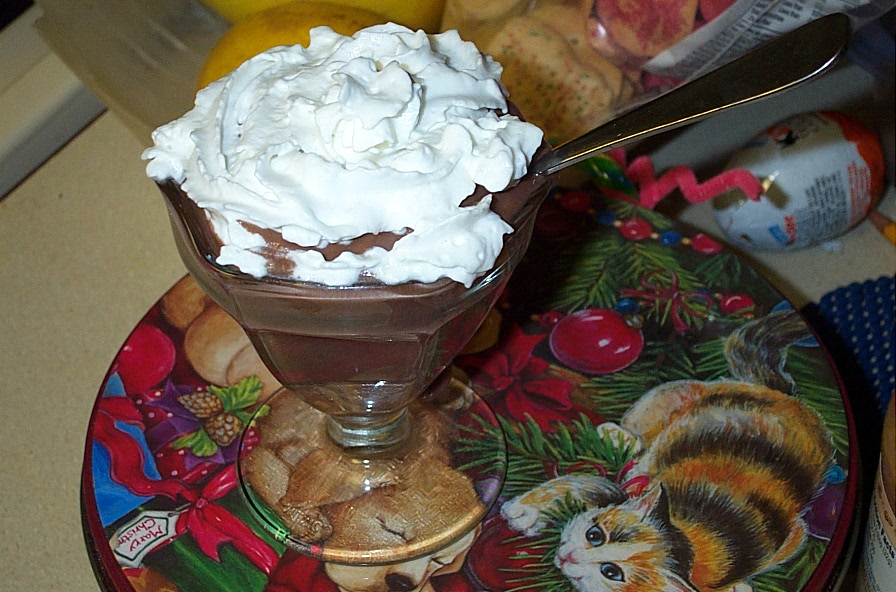
Okay, for a recipe: I have a chocolate recipe that is simple to make. If you are simply trying to lower your fat intake, use skim milk. The pudding won’t be as rich and thick, but it’ll still be delicious. If you have food allergies, I’ve successfully made this with flax milk, soy milk, almond milk, coconut milk, and rice milk. If you actually use sugar, then use 1/2 cup of sugar instead of the 1/4 Agave. You can also use 1/4 cup Stevia instead or 1/2 cup coconut sugar instead. If you want a really rich pudding, use soy or coconut creamer (or heavy cream if you don’t need to worry about milk allergies or fat intake.)

Chocolate Pudding

Ingredients:

1/4 cup Agave

1 3/4 cup “milk” (whichever type you want to use)

1/8 tsp salt

3 tbsp cornstarch

1/4 cup “milk”

1 oz unsweetened chocolate*

1 tsp vanilla

Cooking Instructions:

1. Bring water to a boil in a double boiler or makeshift boiler.

2. Mix together the agave, 1 3/4 cup milk, and salt. Set aside.

3.  Mix together the cornstarch and the remaining 1/4 cup milk. Set aside.

4. Stirring continually, melt the unsweetened chocolate.

5. Slowly, while continuing to stir, add the agave-milk mixture.

6. Bring the mixture to a boiling point. (Little bubbles will begin to appear at the top. You don’t need to continually stir here, but you’ll want to occasionally stir it until it begins to boil. Usually it’s less than five minutes to bring the chocolate liquid to a boil.)

7. When the mixture begins to boil, re-stir the cornstarch mixture and slowly pour it into the hot chocolate liquid, stirring continually.

8. Continue to stir the pudding until it begins to thicken.  (It’s okay to stop stirring for a few seconds at a time, but not for minutes, because once the pudding begins to thicken, it’ll thicken quickly. Usually it takes less than ten minutes for the cornstarch to thicken the pudding. You’ll know when it’s thickening because it’ll go from its liquid state to more of a solid.)

9. When the pudding thickens, remove it from the heat and stir in the vanilla until well blended.

10. Scrape the pudding into a shallow bowl and press a piece of plastic wrap directly against the top of the pudding. (This keeps that “skin” from “growing” on top of your pudding as it cools.)

11. Cool the pudding completely in the fridge before eating. If you put it into a shallow dish, you can usually eat the pudding within half an hour.

*Chocolate Note: If you don’t have unsweetened chocolate on hand, you can make your own.  Three tablespoons of unsweetened cocoa powder mixed with one tablespoon of shortening or oil is equivalent to one ounce of unsweetened chocolate.

You can also substitute an ounce of chocolate chips which is one tablespoon of chips. This will make for a sweeter pudding so if you don’t want it that sweet, simply reduce the agave by half.

If you like to use carob powder instead, 3 tablespoons of carob powder mixed with 2 tablespoons of water is equivalent to one ounce of unsweetened chocolate.

Also, if you don’t have allergies to it, you can use one of those pre-melted chocolate packages they make these days.

Finally, if you want, you can also just use chocolate flavored soy or rice or almond or coconut milk and skip the chocolate step and leave out the Agave.  I often use unsweetened chocolate soy milk with the Agave so I can control the amount of sweetener.

New Year’s Food Resolutions

website tempura

New Year’s Resolutions.

I was 12 years old when I made my first New Year’s resolution to be better behaved. That was the summer I spent two months grounded for recurring infractions. When I was 15 I decided to give up on boys. I had three different boyfriends before the year was out. At 18, I resolved to watch my weight better. I started college and gained 15 pounds. When my husband and I got married (in December), we decided (in January) that we’d finish grad school before starting a family. We became pregnant with our oldest despite three different forms of birth control, and I never attended grad school. After she was born, my husband and I resolved to give up making resolutions, and we’ve been faithful to that for almost 18 years.

For many people, the new year is a time for making changes to their lives, especially health-related ones. Studies, though, reveal that less than 10% of people always succeed in keeping their New Year’s resolutions. I believe it.

Interestingly enough, however, studies say that folks who continue to make New Year’s resolutions are 10 times more likely to succeed with their goals than those who don’t. So, I have to wonder….

Maybe resolutions aren’t such a bad thing.

How to keep them, however, requires making resolutions wisely, especially when it comes to food related ones.

Some thoughts I have, not as someone who’s actually made and kept resolutions, but as someone who’s had to make and keep lifestyle changes because life required it:

1. Don’t resolve to change everything: If you’re shooting for healthier eating, just resolve to do one thing better this year. Maybe you’ll try incorporating more vegetables into your diet. Or this could be the year you daily drink your eight glasses of hydrating fluids. Or how about simply adding a walk three times a week for half an hour each time.

2. Do resolve to try something different: Often we make resolutions about a habit we need to change by simply trying to stop the habit. When it comes to food, eating something healthier and different in place of what you’re trying to quit works much better. If you’re a chocoholic, try eating a piece of fruit when the craving hits or drink a glass of a fat-free “milk” that you’ve added dark cocoa powder to with a tiny bit of sweetener.  If you love sandwiches, try making an open-faced sandwich on one whole grain piece of bread. If you always take the elevator, take the stairs at least once each day.

3. Don’t go it alone: Friends and family are wonderful for this. If you’re going to start walking, ask a friend to if she wants to join you a couple times a week. If you’re starting to eat gluten free, don’t just cook for yourself – make it a family affair. If you know you won’t be able to resist that piece of chocolate, phone a friend and chat.

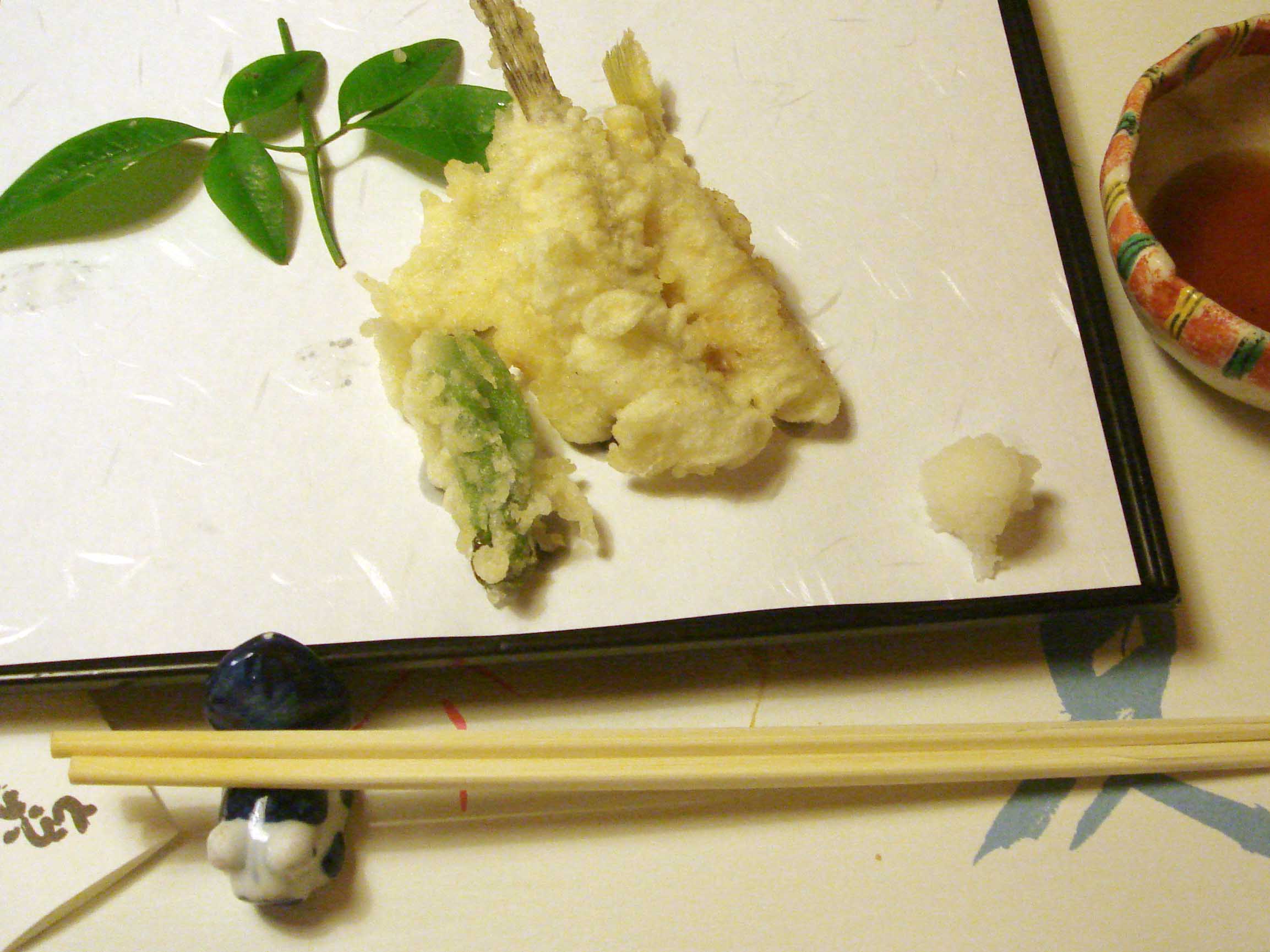
4. Do try to be fun and creative: If your resolution is to exercise and you’re doing so reluctantly, put on your favorite fast beat music and dance around your living room instead. If you don’t like vegetables, don’t eat them plain. Make tempura (recipe will follow below) or a stir fry where you experiment with different spices and herbs to see what flavors you like best. If you have to change your diet, find ways to “jazz” up the meal – peel your carrots into spirals (one of my kids’ favorites); stuff the zucchini with sauteed vegetables and herbs which you stir a little bit of real or tofu cream cheese into to make creamy; toast some gluten free bread crumbs with herbs and sprinkle it onto your fish.

5. Don’t set unrealistic expectations: If you need to lose weight, you’re generally not going to lose 30 lbs in six months. Shoot for ten lbs over 12 months, and you’ll be more likely to achieve your goal. If you’ve eaten white flour your whole life, it may take trying a few different types of whole grains before you find one that you actually like. If you always reach for junk food when you’re stressed, expect to slide occasionally, even if you’ve been doing well for a while.   

6. Do search out help: If you need to eat differently, read some magazines about allergy free or healthy eating to learn tips which can help you. If you want to exercise, ask your doctor the best way to begin. If you crave everything all the time, search online for tips for how to curb cravings.

7. Don’t be hard on yourself: Remember the statistics. If you fail at keeping your resolution, you won’t be the only one. And if you aren’t successful this time, it doesn’t mean you can’t be. Again, remember the studies – just make a new resolution, and you’ll improve your chances of success next time simply by continuing to make the resolutions.

So, now for that tempura. My children love my mother’s tempura, but of course, it’s made with wheat. I wanted to make something which could compete in taste and crispiness, and after a couple of different versions, I finally came upon one that is absolutely delicious and works well. The bonus: My children eat tons of veggies! And if you keep your heat high and use a heart healthy oil, it’s been shown that your veggies don’t absorb a lot of oil.

Tempura

Ingredients:

Heart healthy oil (I like to use Smart Balance for this)

Bob’s Red Mill Gluten Free Pie Crust (Make sure it’s the “pie crust” only mix, not the “biscuit and baking mix” or the gluten free “baking flour”)

ground black pepper

cold water

ice cubes

Quinoa flour

Veggies (broccoli, petite baby carrots, green beans, mushrooms, zucchini, etc…)

Cooking Instructions:

1. Heat your oil to about 375 degrees in a pan suited for doing so. (I actually own a fryer which the only two things I ever fry are tempura and mandu, which is a Korean dumpling.) 

2. Put some of the pie crust mix into a bowl. How much depends on how much you’re making. I always start with at least two cups.

3. Add some black pepper to taste. I usually use 1/2 tsp per 2 cups of crust mix.

4. Fill a large measuring cup half-filled with ice cubes and add cold water. Slowly add water and ice cubes to your flour mix, whisking as you do so, until the batter is just about to the consistency you want. (I test it by pulling up my whisk. If the batter easily flows off the whisk like water, it’s good.) You’ll have some unmelted ice cubes in the batter.  That’s perfect. Those will continue to melt and keep your batter cold while you turn your attention to the veggies.

5. Put some quinoa flour in a bowl and dip your veggies into the flour to coat them.  Shake off any excess.

6. Dip the floured veggies into the tempura batter and shake off any excess.

7. Put just enough veggies into your oil as the pan can accommodate. You don’t want to overfill the pan because the tempura batter will expand. You want to put the veggies in as quickly as you can and then cover the pan. Immediately put two minutes on your timer.

8. When two minutes are up, remove the veggies, making sure to lightly shake off any excess oil. Put the veggies into a pan lined with paper towels to absorb any excess oil.

9. Tempura is best eaten while still warm. Eat plain or with soy sauce or a sauce of your own choosing.