The American Love: The Chocolate Chip Cookie

website cookie

“But I want chocolate chip cookies!”

Growing up, my life was a collision of two worlds, even when it came to food.  On the one side was the traditional daily Korean fare of rice, fish and vegetables for all three meals.  On the other side was the American eating of the 1970’s – cheese in a can on Ritz crackers, Chef Boyardee, and Nestle Toll House cookies.

Even my non-baking, non-sweet eating Korean mother baked Nestle Toll House cookies on occasion.  It was what everyone did and still does.  Biting into a fresh from the oven chocolate chip cookie is high on the list as one of many people’s little joy’s in life. Chocolate chip cookies even became the state cookie of Massachusetts in 1997.

Go out to eat at a restaurant, and you’ll find chocolate chip cookies in some form worked into a dessert.  Go grocery shopping, and you’ll see 101 variations of the chocolate chip cookie with a handful of sugar cookies, macaroons, and oatmeal raisin cookies on the periphery.  Buy ice cream, and you’ll find the chocolate chip cookie ice cream sandwich, the chocolate chip cookie dough ice cream, and broken up chocolate chip cookies to use as a topping.  You can even purchase chocolate chip cookie scented candles, soaps, air fresheners, and hand sanitizers.

Americans have a love affair with chocolate chip cookies.  And when dietary restrictions or allergies limit your ability to have dairy, wheat, sugar, nuts, soy, and/or sugar and fats, you can suddenly find yourself living a life without one of your food loves.

The good news for most folks these days is that you can get just about any type of chocolate chip cookie you need:  fat free, sugar free, gluten free, dairy free, you name it, it’s out there.  Unfortunately, they don’t always quite “hit the spot” for whatever reason.  Many that I’ve tried just simply have a strange aftertaste that I can’t quite get over.  Others are too pasty or way too hard.  Sometimes it’s just not “right”, meaning it’s not what you expected out of your chocolate chip cookie.  And even when you do find a type that you like, sometimes you just want a homemade, fresh from the oven chocolate chip cookie.

Until very recently, I never tried making a chocolate chip cookie at home, though. Why be disappointed?  But the other day, my middle daughter said that she wanted to make cookies, and she wanted them to be chocolate chip.  What was a mother to do?  I bit the bullet and worked out a recipe for my daughter.  Because that’s what a good mommy does, right?

So, below is a recipe that my daughter and I concocted for chocolate chip cookies which are dairy free, soy free, nut/peanut free, gluten free, and made with a heart healthy fat and little refined sugar.  We decided we wanted them to be like the bigger, chunkier cookies you buy fresh from the bakery, and I have to tell you that the group we served them to the evening we baked couldn’t believe they had none of the above ingredients.  I hope you enjoy them, too.

Oatmeal Chocolate Chip Cookies

Ingredients:

3 1/2 cups gluten free whole grain oats (quick cooking or regular, either is fine)

2 cups gluten free flour blend (we used Bob Red Mill’s which was garbanzo bean flour and brown rice flour mixed)

1 cup coconut sugar (we used the Madhava brand found at the grocery store)

1/2 cup gluten free ground flaxseed meal

1/2 cup tapioca starch

1 tbsp xanthan gum

2 tsp baking soda

2 tsp cinnamon

1 tsp sea salt

2 to 3 cups Enjoy Life allergen free mini chocolate chips*

1 1/2 cup safflower oil

3/4 cup unsweetened applesauce

1/2 cup Agave

1 tbsp gluten free vanilla

Baking Instructions:

1.  Preheat the oven to 325 degrees and prepare your cookie sheets with parchment paper.

2.  Grind the oats in a food processor to make 3 cups of oatmeal flour.   Measure the 3 cups into a large bowl.

3.  Add the gluten free flour blend, coconut sugar, flaxseed meal, tapioca starch, xanthan gum, baking soda, cinnamon, and salt.

4.  Stir in the mini chocolate chips.  Set aside.

5.  Blend together the oil, applesauce, agave and vanilla.

6.  Make a hole in the center of the dry ingredients and pour in the wet ingredients.  Mix the batter until all ingredients are well mixed together.  (Note:  With gluten free batter, the chips will seem like they aren’t incorporating well.  When you form the cookies, you can just use your fingers to make sure the chips are in the dough.)

7.  To form the cookies, take two level tablespoons of cookie batter and roll them with clean hands into balls.  Place them on a cookie sheet with enough space to flatten the cookie with a fork in a crisscross pattern.

8.  When your cookie sheet is full, bake the cookies in the preheated oven for 8 minutes.  Turn the cookie sheet around and bake for another 8 minutes.  The cookies will be nicely browned.

9.  Cool on the cookie sheet for at least two minutes before moving the cookies to a wire cooling rack.  Cool completely.

10.  Enjoy!  Makes 36 large cookies.  You can always choose to make one tablespoon sized cookies, but you should then reduce the cooking time by a couple of minutes or so.  (Note:  We discovered that these were absolutely great for making a homemade nondairy frozen dessert “ice cream” and chocolate chip cookie sandwich!)

*My son likes a “more cookie to chips” ratio, so 2 cups of chocolate chips is good for his batter, but my daughters prefer a “more chips to cookie” ratio, so they put 3 cups in their batter.

When You’re Out of What You Need

DIGITAL CAMERA

“What do you mean we’re out of baking powder?”

My younger two children and I were busy, baking a variety of quick breads for a luncheon we were hosting the next day.  Their favorites were on tap:  chocolate chip date bread, pumpkin, a gluten free banana bread, and a lemon poppy seed.

The kitchen held the evidence of our hard work:  flour scattered on the counter top and kitchen stools – courtesy of my son; millimeter tabs of butter sticking to the kitchen aid and measuring spoons – my daughter’s workmanship; and measuring cups and ingredients cloistered in the center – my attempt at providing some measure of organization and neatness to the mess.

All had been going well with two of the four breads in the oven and our attentions turned toward the last two breads when my daughter said, “We’re out of baking powder.”

“What you do mean we’re out of baking powder?  When did we run out of baking powder?”

“I used the last bit in the pumpkin bread.”

“So, why didn’t you tell me BEFORE we started making the banana bread?”

“I dunno.”

That last statement, of course, was presented with the traditional shrug and vacant expression we moms have come to associate with such an explanation from our children.

Fortunately for my daughter, I know a trick or two, and we were able to finish preparing the last two breads despite running out of baking powder.

The same experience

Chances are that you’ve had a similar experience sometime in your life of cooking. You’re halfway into a recipe and suddenly realize you’re all out of a key ingredient. Sometimes you haven’t begun cooking but would really like to make something which requires an ingredient you don’t currently have in the house.

What can you do?

Do you have to stop cooking or forget making that particular recipe?  The answer is usually, “No,” because chances are good that you actually have what is necessary to substitute for most key recipe ingredients. If you google the ingredient you’re missing, you’ll find a whole host of online recommendations for substitutes, but a few of the more common culprits are listed below.

Common Culprits

1.  You’ve run out of baking powder:  People tend to always have baking soda in the house because we use it for more than just cooking.  If you run out of baking powder you can make your own.  For each teaspoon of baking powder you need, simply add to your recipe 1/4 tsp of baking soda plus any ONE of the following: 1/2 tsp cream of tartar OR 1/2 cup buttermilk or yogurt OR 1/4 cup molasses.  I usually determine which ingredient I’ll use by what I have in the house and which might taste better in the recipe.

2.  The recipe calls for buttermilk which you don’t buy:  Whenever a recipe calls for buttermilk, you can make your own.  Simply add 1 tablespoon of vinegar or lemon juice to 1 cup of your type of milk (cow, soy, rice, etc…) and let it sit for five minutes.  It’ll thicken up, and you can simply stir and use whatever amount you need for your recipe.  You can also mix 3/4 cup of yogurt with 1/4 cup of milk or 3/4 cup sour cream with 1/4 cup milk.  Again you can choose simply by what you have in stock or by which you’d think would taste best in your recipe.

3.  You’re baking, and you’re completely out of eggs:  No worries.  1 tablespoon of ground flaxseed mixed with 3 tablespoons of water is equivalent to one egg.  If you don’t have ground flaxseed on hand, 1/4 cup of a pureed fruit or vegetable like applesauce or pumpkin will substitute as an egg binder.  If the egg is acting as a leavener in your recipe (like for a cake), you can replace the egg by adding an extra 1 tsp of baking soda to your dry ingredients and mixing in 1 tablespoon of vinegar as the last ingredient to the batter.

4.  The recipe wants you to use milk but you’re out:  If it’s a baking recipe like a cake or cookies, you can always use another liquid like fruit juice or even water.  If you’re making something like a soup that uses milk simply as a liquid, you can substitute a vegetable or chicken broth or water seasoned with herbs.  If you’re making a dish that uses milk to make it creamy and thick, you can substitute cooked pureed vegetables in an equal amount.  If you’re baking something that needs the milk to give it density and thickness, substitute yogurt or sour cream, but reduce your fat (butter, oil, etc…) by about 1/4 cup.

5.  You need sour cream but you never buy it:  You can substitute yogurt which you’re more likely to have but for every cup of sour cream you’ll use 1 cup of yogurt mixed with 1 tablespoon of flour.  You can also substitute using 3/4 cup of a homemade buttermilk and adding about 1/3 cup of a solid fat (butter) to your recipe.

6.  You’re completely out of yogurt:  Substitute one cup of sour cream or homemade buttermilk or pureed cottage cheese for every cup of yogurt needed.

7.  You don’t buy cottage cheese or ricotta cheese for dietary/allergy reasons: Simply substitute pureed tofu in equal amounts.

8.  The recipe wants you to use molasses or honey instead of sugar which is all you have or vice versa:  1 cup of molasses is equal to 3/4 cup of sugar and 1 cup of honey is equal to 1 1/4 cup of sugar.  What’s important to remember is that molasses and honey are wet ingredients verses the dry ingredient sugar.  So, if you’re adding molasses or honey instead of sugar, reduce another liquid ingredient by at least a 1/4 cup. If you’re substituting sugar, make sure to increase the liquid by at least a 1/4 cup.  For all three you can always substitute half the amount of Agave remembering to reduce the liquid by 1/2 a cup if you’re using the Agave for the dry sugar.  You can also use 1/2 the amount of Truvia for sugar.  If you substitute Truvia for the molasses or honey, be sure to increase your liquids to adapt for the loss in wet ingredients.

9.  Your recipe calls for tomato sauce and you only have tomato paste:  3/4 cup of tomato paste mixed with 1 cup of water will give you about 2 cups of a tomato “sauce”.  FYI:  If you only have tomato sauce and need tomato “juice” in your recipe, 1/2 cup of tomato sauce mixed with 1/2 cup of water is equivalent to 1 cup of tomato juice.

10.  Your recipe wants you to use a certain type of meat, vegetable, bean or whatever and you only have another type:  Go head!  Substitute!  Use what you have.  Just be sure that what you’re using is comparable. For example, salmon, halibut and tuna are all fish with similar texture, thickness and cooking time, while cod and haddock cook similarly, as does flounder, tilapia and catfish. For vegetables, substitute one root vegetable for another (carrots, turnips, potatos, etc…), a flower vegetable for another (broccoli, cauliflower, brussel sprouts, etc…) and make sure everything is cut to the same shape and size and thickness so your cooking times will stay the same.

A recipe

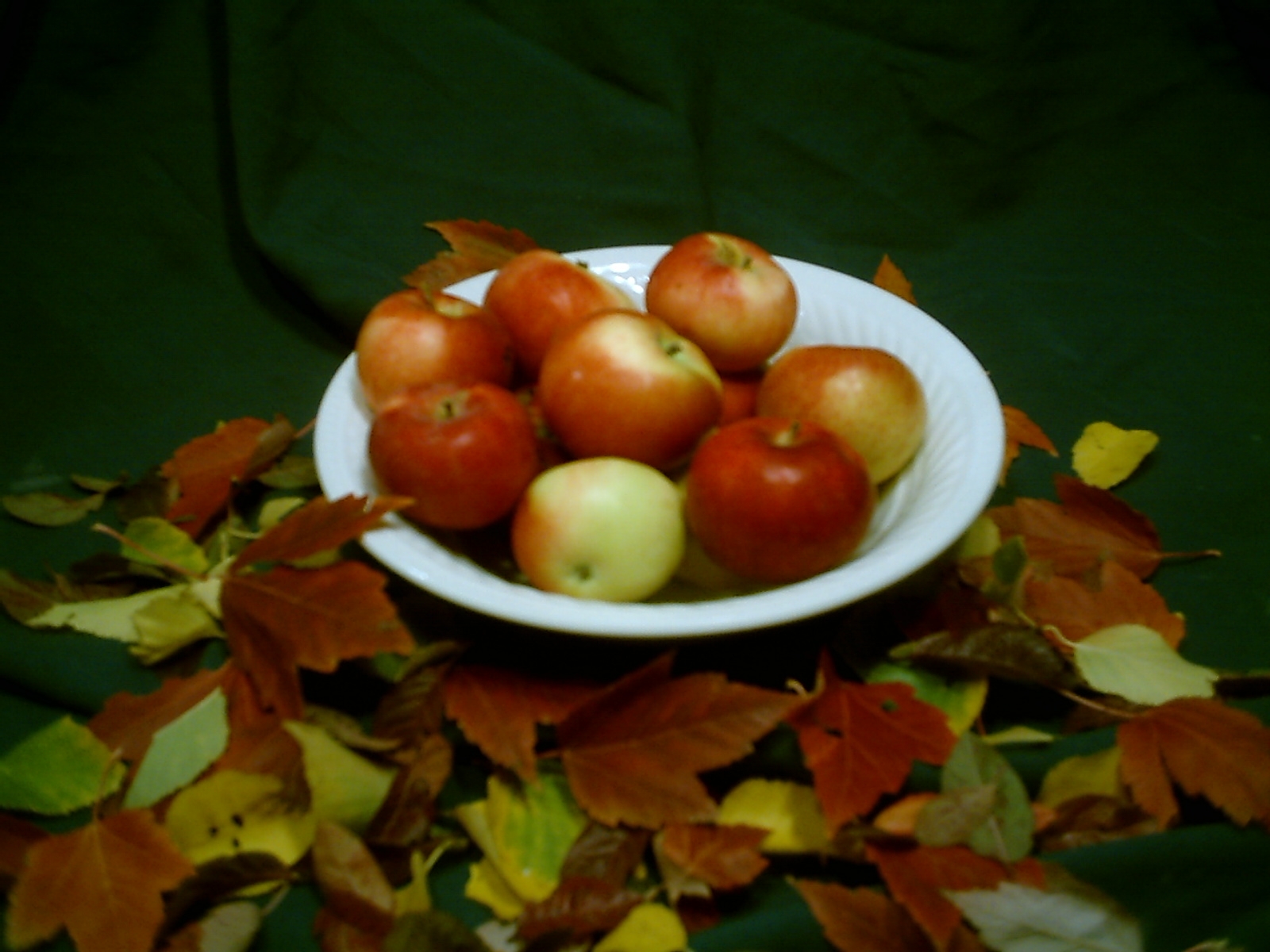
Since I’ve had a couple of requests now for how I make apple pie and apple crips, I’m going to share those below.

Apple Pie or Apple Crisp

Apple Filling:

Ingredients:

10 cups peeled, cored, sliced apples*

1/4 cup Agave

1 tablespoon lemon juice

2 tsp favorite spices**

Cooking Instructions:

1.  Put apples into a pan which allows them to be evenly distributed and cooked.

2.  Mix agave with lemon juice and spices and pour over the apples.

3.  Cook the apples over medium-low heat, stirring occasionally until the apples begin to soften and release some of their juices.  Usually about 15 to 20 minutes. They’ll lose that “raw” look and take on a slightly darker hue.

4.  Drain the apples, keeping the liquid and returning the liquid to the original cooking pan.  Cook the liquid down over medium-low heat until it’s reduced by about half.

5.  Mix the reduced liquid back in with the apples and set aside.

* Use apples which are good, crisp, sweet eating apples like honey crisp, juno gold, gala, braeburn, etc… which don’t need a lot of sweetening.  Regular pies and crisp tend to call for baking apples which are blander and that’s why the recipes call for two cups of sugar!  FYI:  A regular fist size apple will yield about one cup of apple slices.  The newer gigantic sized apples are usually about two cups.

(NOTE:  If you only have Macs or Empires or green apples, you can still use them, but since they are dry apples, you’ll notice that the liquid actually gets absorbed as they soften.  No worries.  Just skip steps 4 and 5.  Mac/Empire apples will soften more quickly than the crisp, eating apples.  Green apples will take longer.)

** I vary the spices.  Sometimes I just use cinnamon and nutmeg.  Other times I use ginger and cardamom.  Occasionally I use all four mixed together. Experiment to see what flavors you like.

For Apple Pie:

1.  I use Bob’s Red Mill gluten free baking and biscuit mix recipe for pie crust, only I add 1 1/2 tsp cinnamon and 1/2 nutmeg to the dry mix before adding the water. My two tips if you’re going to use that pie mix, though:  The dough usually needs a bit more water than they say, and to roll out the dough, put your dough between two pieces of wax paper.  It’ll roll out nicely and you can easily pull it off when you put the dough into the pan or as the top crust.

2.  After you’ve put your bottom crust into your pie pan, give the apples a good mix before layering them carefully one on top of each other in circle in the pie crust. Be sure to pour off any leftover liquid over the top of the apples when you’re done layering them.

3.  Cover the apples with your top crust and fold your edges in whatever manner you prefer (pinching, forking, free-style).

4. Melt a tablespoon of vegan butter and mix it with 1 tsp agave and 1/2 tsp cinnamon.  Brush the crust with the mixture, put in steam slits, and cover the pie edges with an edge cover or with aluminum foil.

5.  Bake for 35 to 40 minutes in a preheated 375 degree oven until the crust is browned and the apples are bubbling.

For Apple Crisp:

1.  Mix the apples and liquid one last time before placing into a 9 x 13 pan.

2.  Combine 2 cups gluten free whole grain rolled oats with 1/2 cup gluten free flour like garbanzo bean flour, 1 tsp cinnamon, 1/2 tsp nutmeg, and 1/2 tsp ginger.

3.  Cut in with a pastry blender 1/2 cup vegan butter to form a crumbly mixture.

4.  Add 1/4 cup agave and mix well until the dry crumbs are damp.

5.  Using your clean hands, crumble the oat mixture evenly over the apples.

6.  Bake for 15-20 minutes in a preheated 350 degree oven until the topping is browned and the apples are bubbling.

When It All Goes Wrong: What To Do

website wrong

“Aaaack!  He kissed me!”

I was in the fourth grade when I had the misfortune to become the object of someone’s obsession.  His name was Roger, and he was a slightly overweight, buck-toothed, Polynesian boy whose father was in the military with mine.

For a reason known only to himself, he decided he wanted to kiss me.  So, for seven months, my recesses were spent running away from Roger.  As soon as I stepped onto the playground, he would be after me.  Fortunately, I could outrun him, and I managed to evade him for seven long months.

Then came that fateful day in April which I’ll never forget.  Roger was absent! After a morning of long division and grammar, I joyfully ran to the playground monkey bars with my friends.  Finally, I could just sit and relax and play without worrying about Roger.

And that’s when it happened.  Unbeknownst to me, Roger was not absent for the day but only missing the morning for a doctor’s appointment.  So, there I was, sitting at the top of the monkey bars, happily chatting away with my friends, unaware that the stalker was stalking his prey.

Suddenly my friends screamed, and I turned around, which was the wrong move to make.  Before I knew it, Roger had laid a wet, sticky, yucky kiss right on my cheek! “Aaaack!  He kissed me!” I yelled, and to this day, I believe a guardian angel must have been looking out for me, because I quite literally jumped off the top of those monkey bars, about eight feet off the ground; landed squarely on my feet at the bottom; and took off running to the girls room, which is where my teacher found me fifteen minutes later, still desperately washing my cheek with soap and hot water, with just as hot, wet tears steaming down my face.

The irony is that once Roger had been able to kiss me, he left me completely alone. The chase was done, and he was no longer interested.  I was too young at the time to give this particular life lesson any significance other than that I was finally free and able to relax for the last two months of fourth grade recess, which I gratefully did.

Sometimes, we get just as caught off guard when we’re cooking.  We’ve mastered the tricks of substituting key ingredients to match our food restrictions, and we’ve created many a recipe with much success.  But then it happens:  We’re baking or cooking something for company or the family, and the recipe just does not work; and the question is, “What do I do now?”

1.  Don’t panic:  99% of the time, whatever you’ve created is still salvageable.  Usually the problem with what you’ve cooked is either a taste issue or a texture one.  In either case, there are remedies.

2.  If it’s a texture issue, cover it:  If it’s a baked good, make a fruit compote where you saute some fruit with Agave and spices and serve it over slices of the cupcakes, cake or cookies.  If it’s an entree or vegetable item, sprinkle the type of cheese you can eat over it and warm it in the oven to melt the cheese.  Or make a sauce that complements the dish and pour it over the entree or vegetables.  The fruit or melted cheese or the sauce will help to cover the texture issue.

3.  If a baked good’s taste is not what you’d like, drizzle it:  If a cake or cupcakes or cookies aren’t quite to your liking, nothing works better than a good drizzle.  Melt some allergen free chocolate, thin it with your type of milk product, and drizzle it over the cake or cupcake or cookies.  Or if you can use powdered sugar, make a glaze of your liking with powdered sugar, a liquid to thin it, and flavoring of your choice — vanilla, orange, mint, etc….  Or use a cream cheese that you can eat where you melt it in the microwave with your type of milk to a drizzling consistency.  A good drizzle covers a multitude of taste imperfections.

4.   If it’s both a taste and texture issue, disguise it:  If you’ve made something that is falling apart or has a texture that is too soft or too thick or too anything, turn it into a crumbled or cut up mixture that can become a part of something else. For example, a cake that you crumble or cut up can become a layer in a parfait or trifle of fruit, yogurt or pudding, and cake or you can layer it with ice cream or frozen nondairy dessert to make a terrine.  Vegetables or meat can easily become a part of a stew, stroganoff, soup, or layered pasta or other type of casserole.  Once you layer the food in with other things, the taste and texture issues become a non-issue.

5.  If something you’ve cooked doesn’t taste good, doctor it:  Generally if you don’t like how something tastes, you usually have a sense of what is wrong.  It might be too salty or too sweet or too bland or different spices are competing with one another or one spice is too overwhelming.  In any of these cases, you can remedy the situation.

If it’s too salty:  Add more of the solid (vegetables, pasta, meat, beans, etc…) or liquid (broth, water, juice, milk, etc…) ingredients to balance out the ratio.  Or use a dash of something sweet like honey, Agave, maple or brown rice syrup, etc… to counter the salt.

If it’s too sweet:  Add an acid like lemon juice or balsamic vinegar.  Or if it’s a dish that will work to do so, add some salt or more pepper or a spice that works with the dish like cayenne or cumin.

If it’s too bland:  Add something sweet, salty or spicy to jazz it up.  Or use lemon juice or balsamic vinegar, in small amounts like a teaspoon at a time, to bring out the other flavors more.  Or invest in oils like truffle oil which a small drizzling of on top of a dish goes a long way toward adding deep flavor.

If it’s too spicy:  Cut the heat with something sweet like honey or Agave or molasses or with something fatty like your type of butter or peanut butter.  Or if it’s a dish that you can mix rice or pasta into to spread the spice out more evenly, do that.

If one spice is overwhelming:  Add a little more of a complementing ingredient. For example, spices like nutmeg, cloves, coriander, anise, ginger, etc… can be “diluted” with the addition of more fruit.  Herbs like basil, dill, oregano, bay leaves, etc… can be evened out with more vegetables.  Garlic, onions, chives, etc… can benefit from more beans or chicken or meat.

If flavors are competing with one another:  Decide which flavor you want and add more of that one.  Or add more ingredients until the flavor are dulled.  Or add a sweetener or something salty or an acid like vinegar to help the flavor meld more with one another.

The below are muffins which I’ve never, ever had any issues, so you won’t need to apply any of the above “fixes”!

Gluten Free Cranberry Chip Pumpkin Muffins

Ingredients:

3 1/2 cups Authentic Foods Gluten Free Multi-Blend Flour Mix

1 tbsp gluten free baking powder

2 tsp ground cinnamon

1 tsp baking soda

1/2 tsp salt

1/2 tsp ground ginger

1/2 tsp ground nutmeg

1/2 tsp ground cloves

2 cups finely chopped dried cranberries*

1 cup Enjoy Life Allergen Free mini chocolate chips**

2 cups pureed pumpkin or one 15 oz can pumpkin

1 cup liquid egg whites

1 cup Agave

2/3 cup safflower oil

1/2 cup soy milk (or whatever type you prefer or need)

Baking Instructions:

1.  Preheat the oven to 350 degrees, and line 24 muffin tins with If You Care Baking Liners (or another type if you prefer or simply grease the cups).

2.  Mix the flour, baking powder, cinnamon, baking soda, salt, ginger, nutmeg and cloves with a whisk until the flour is light and airy, not heavy.

3.  Stir in the cranberries and mini chocolate chips.

4.  Mix the pumpkin, egg whites, Agave, oil, and milk.

5.  Stir dry ingredients into the wet ingredients and blend until well combined.

6.  Evenly divide the batter among the muffin tins.  The cups will be 3/4 full.

7.  Bake for 20-25 minutes until a toothpick inserted in the center comes out clean.  Muffins will be puffed up and golden brown.

* Make sure the cranberries are finely chopped, because large cranberries in this muffin will mess up the texture of the muffin since you’re using gluten free flour.  I generally use my food processor to just chop them up, but you can always use a pastry knife or simply chop them up by hand.

** Make sure they are mini chocolate chips to help with the texture of the muffins.  You can also reverse the ratio and have one cup of the cranberries and two cups of the mini chocolate chips, which is how my children prefer it.

Birthdays and Food: When you have allergies

OLYMPUS DIGITAL CAMERA

“I’m sorry, but I can’t come.”

The general consensus is that December 25th is  the worst date for a child to have as his or her birthday.  I disagree.

Adults have sympathy for children who have to share their limelight with Jesus. While it’s true that the child’s birthday and Christmas present will most likely be rolled into one, the adults in his or her life usually try in some way to make the birthday special to compensate for having to share their special day.  And because the birthday is a traditionally celebrated family holiday, the child is usually surrounded by relatives, wishing him or her a “Happy Birthday!” in addition to “Merry Christmas!”

The worst dates to have as a birthday are January 1st and around Memorial Day weekend.  No one is available at either of these times to celebrate a child’s birthday.  After the craziness of the holidays, most folks are looking for a quiet respite on January 1st, and Memorial Day weekend is traditionally the start of summer and when folks are opening up summer places or having family gatherings.

I know because my brother and I have those birthdays, and time after time our birthday parties were cancelled because the responses were “So sorry, but we have . . . already scheduled for that day.”

My parents were great about compensating, though, and we had the family tradition of going to a movie (which was a treat for us) and having pizza and ice cream cake (also a treat) on our birthdays instead.

As a child, though, whenever I was at someone else’s birthday party, I felt a little left out, because I was like that bridesmaid adage – always celebrating another child’s birthday, but never knowing the thrill of having my own birthday party celebration.

When you’re a child with food allergies, you can feel the same way.  It’s awkward to be the person who can’t eat the birthday cake and ice cream with everyone else.

So what can parents do to help their children?

1.  Take initiative on your child’s behalf:  If the party is hosted by a relative, ask them if they’d like your help with the birthday cake.  My relatives are always willing to let me bake an allergy friendly cake, because it’s one less thing for them to do for the party!  If the party is given by a friend, ask if they’d mind if you baked some cupcakes to add to the cake choice.  I’ve never had a friend say, “No.”  And if the party is being hosted by someone you really don’t know, simply explain to them that your child has severe allergies and ask if they’re fine with you contributing some allergy friendly “ice cream” to the celebration.  Once again, I have never had anyone refuse my request or not understand.

2.  Educate people:  I realized early on that most people simply are not aware of the types of food allergies children can have, and once they know, they are quite happy to do what they can to help a child feel included.  Early on, as we were invited to other people’s homes, I would talk with them about my children’s food allergies and how difficult it can be at parties, and it wasn’t long before the invitations began to change.  Included on them most often now is a little question about whether anyone has any food allergies that the host should be aware of, and when my children arrive at these parties, the host has made sure to provide food for all the food restricted children.

3.  Start a new trend:  The highlight of birthday parties always seems to be the cake, but it doesn’t have to be.  Because of my own history, I’ve always tried to make my children’s birthday parties memorable, but we’ve always hosted parties where the children are busy creating their own pizzas (allergy friendly, of course!) or making crafts or doing a science experiment or playing creative games.  And what I’ve found is that the children don’t really have an interest in the cake and ice cream part anymore.  And what’s happened is that some of my friends have begun to do the same thing.  So now, more often than not, even though cake and ice cream are served, once the “Happy Birthday!” has been sung, the children haven’t even stuck around to eat the cake but have gone back to the fun!

4.  Be prepared:  Sometimes “it’s just what it is”, and your child needs to be prepared for that reality.  If it seems like he or she will be the odd man out, unable to partake of the food at the festivities.  In that case, I simply make a special cupcake that I send with my child in a container, so he or she can enjoy eating with the rest of the children.  Have your child help you make and decorate the “special” cupcake, and he or she will most likely be even more thrilled with his or her cupcake than what is being served — or at least my children were always boasting about the cupcakes they got to make themselves!

5.  Talk with your child positively:  It’s easy to feel upset ourselves that our children are being “left out”, so we need to remember to share with our children all of the reasons to be happy about attending another child’s party.  Good feelings are contagious, and they’ll pick up on our positive attitude.

6.  Educate your child:  Children are bright.  They understand a lot at even a young age.  Make sure your children understands why they can’t eat foods at parties, and help them to think about their food allergies as just another part of what makes them the special people that they are.  My children don’t see their food allergies as handicaps.  They actually view it as an opportunity for mommy to continue to work on revamping even more recipes for them to taste test!

As I’ve become an adult, I’ve begun my own tradition of throwing myself a birthday brunch the week before Memorial Day weekend.  I invite local friends and give myself the gift of some time off from the hectic busyness of life with three children. To make my cakes special, I use the following frosting which is enough to frost a three layer cake.  It’s very tasty and not extremely sweet which is the way I like it.  It’s a slightly revamped version of a couple of frosting recipes you can find at http://www.elanaspantry.com

Chocolate Frosting

Ingredients:

2 cups Enjoy Life allergen free mini chocolate chips

2/3 cup safflower oil

2 tablespoons Agave

1 tablespoon gluten free vanilla

Cooking Instructions:

1. Put all ingredients into a microwave safe measuring cup and stir.

2.  Microwave for one minute, and quickly and vigorously stir until the chocolate chips are completely melted and the mixture is starting to be a little thick.

3.  Scrape the chocolate mixture into your mixing bowl (a metal bowl is best), and put into the freezer for about 15 minutes.  (You want the mixture to be hardening almost the whole way through with only the middle being slightly runny still.)

4.  Take out the mixing bowl and with a mixer, mix the frosting on a medium to high speed, occasionally scraping down the sides of the bowl, until the frosting is completely whipped and creamy.  (The mixture taken from the freezer will be a dark brown with a glossy texture.  When it’s been whipped, it’ll be a lighter brown and a thicker, creamier, frosting-like texture.)

5.  Use the frosting to frost cooled cake layers.  Unused frosting will keep in the fridge.

Eating Out: Can We Do It?

website lasagne

Where’s the shark? I want to see it!”

For several years gracious and generous friends of ours have allowed us to vacation as a family at their home on Cape Cod.   We have come to relish our times there, swimming at the both the ocean and bay beaches in Eastham, watching movies at the old-fashioned drive-in theater in Wellfleet, biking the Cape Cod rail to trail paths, and walking along the shops in Provincetown. This past week, however, we had our first experience with a great white shark, which fortunately to my mind but to the children’s dismay, we did not see up close.  The shark effectively put an end to our day at the beach as life guards blew their whistles and ran up the red warning flag, waving us all back onto the beach and out of harm’s way.

While we had remained safe from the shark that particular day, I unfortunately found myself in harm’s way later in the week due to my food allergies.  Despite my vigilance about what I eat and where I eat, I had an anaphylactic reaction one evening, presumably to some sort of cross-contamination of food from the restaurant we had eaten our dinner at.  I had ordered a dish which did not contain anything I was allergic to as its ingredients, and I had informed the server of my allergies and need for prevention of cross contamination.  Despite being proactive, however, I still found myself at the mercy of my allergies once again.

Unfortunately for those of us with food allergies, it’s all too common that we have to refrain from enjoying some of the pleasures of life, like eating out at a restaurant, because doing so can put our lives at risk. For many, this can be frustrating.  Who wants to have to cook all the time?  Whom of us wouldn’t enjoy a night out with friends?  And sometimes you just want a dish you would never make yourself.  The reasons for wanting to eat out are endless, and to be restricted by food allergies can be downright depressing at times.

So what can we do?

1.  Don’t lose hope:  The times are “a’changing” as they say.  More and more restaurants are getting on board with the program.  Even this week at the Cape we discovered an ice cream shop (the Ice Cream Cafe in Orleans) which is now serving gluten, dairy, and nut free frozen dessert options.  Granted, I only had three flavor choices as opposed to fifty ice cream flavors, but I had a choice. Yay!  The number of restaurants that cater to allergies has grown just in the past five years alone.  So as more folks begin to understand the need, our options will continue to increase.

2.  Cultivate relationships:  If you have a restaurant that you really like which you know you’ll frequent a few times a year, take the time to introduce yourself to the management and waiters when you arrive.  Explain that you have food allergies but you really want to be able to eat at their restaurant because you enjoy their food.  I have four places near my home where I know I can safely eat because they’ve gotten to know me and know that I will eat there as long as they accommodate my allergies.

3.  Create your own recipes:  Sometimes it’s not about going out but being able to eat a particular dish you really like.  Nowadays you can find the recipe for most restaurant dishes online.  Simply type in the restaurant name and add “recipes”, and you’ll find what you want.  Then you can adapt the recipe to fit your dietary needs and enjoy the dish in your own home without the worries of cross contamination.

4.  Practice being proactive:  Research restaurants before you go.  With online resources you can view their menus and ingredients without even leaving your home.  For example, I know that as someone with a dairy allergy, I cannot go to Olive Garden.  Every single dish except two (a garden salad and their meat spaghetti sauce) is made with some sort of dairy.

If you haven’t researched a restaurant ahead of time, ask your waiter if they have a sheet which tells you what ingredients are in their foods.  Many restaurants nowadays have forms which highlight dishes which are gluten, dairy, egg, soy or nut free.  If they don’t, ask the waiter to ask whether a particular dish has whatever you’re allergic to.  Most waiters are more than happy to oblige.

5.  Be prepared:  Sometimes, despite all the above, things go awry when you’re eating out, so make sure you have your epi-pen or benadryl with you at all times. Though, you never want to have to use them while enjoying a meal out, it’s always best to have them if you do need to use them.

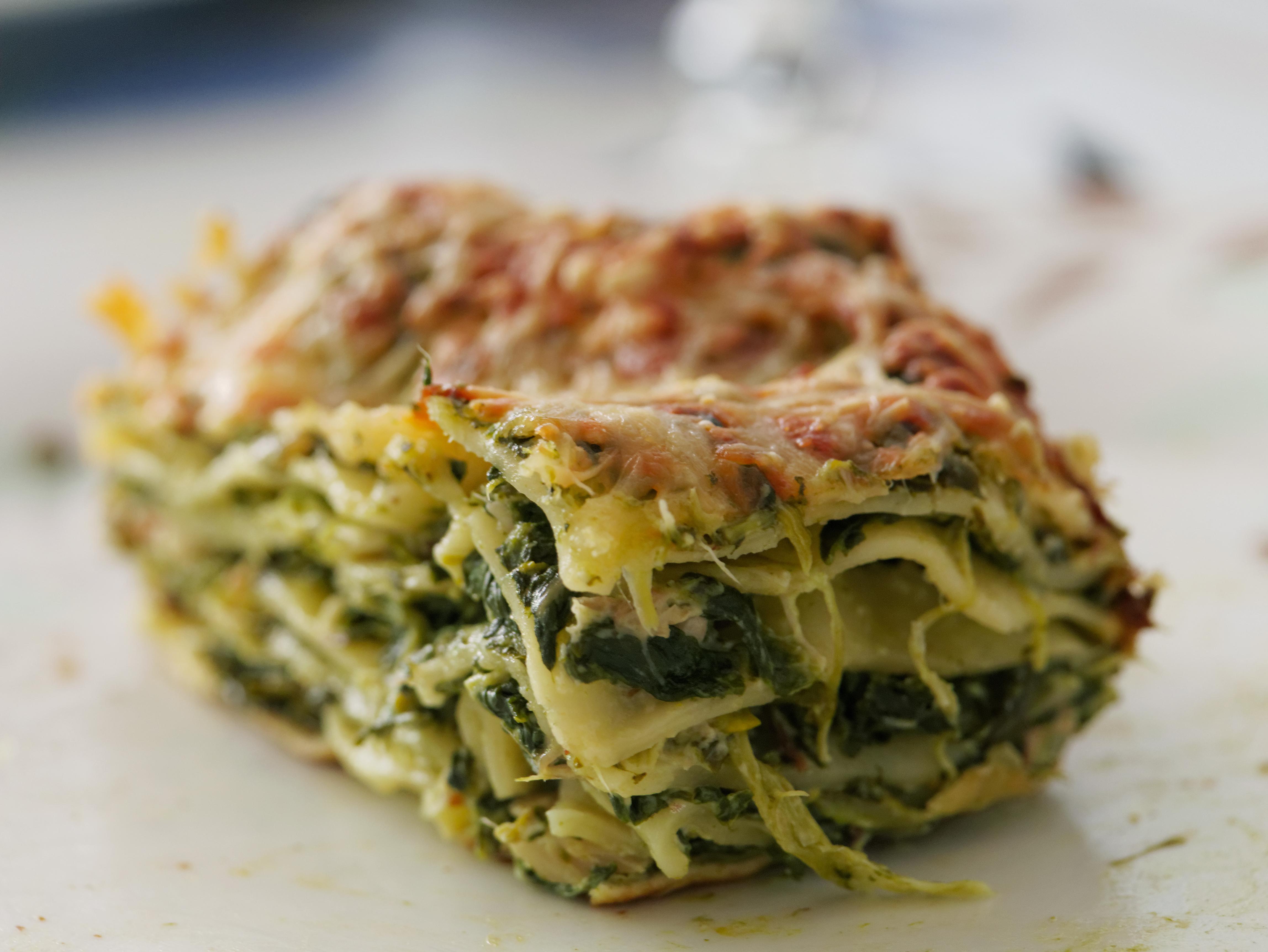
One of my favorite restaurants is Not Your Average Joe’s.  They are always willing to work with my allergy restrictions, but some dishes I just have to make for myself at home.  Their lasagna is one.  Below is their recipe and my recipe, adapted for my particular allergies.

Their Ingredients:                              
Lasagna Sheet 1 each
Basil Pesto 2 tbsp
Ricotta Cheese 3 oz
Crumbled Goat Cheese 1 oz
Sautéed Spinach 3 oz
Grilled Summer Squash 3 slices
Grilled Zucchini 3 slices
Cooked Asparagus 2 slices

Shredded Mozzarella ¼ cup

Grate Romano cheese 3 tbsp

Marina Sauce 2 fl oz

My Ingredients:
One sheet gluten free noodle
4 tbsp chopped fresh basil
2 tsp minced garlic
4 oz silken tofu
Sautéed Spinach 3 oz
Grilled Summer Squash 3 slices
Grilled Zucchini 3 slices
Cooked Asparagus 2 slices

1/4 cup vegan mozzarella

1/4 cup vegan parmesan

Marina Sauce 2 fl oz

Cooking Instructions:
1.  Spread pre-cooked pasta sheet the long way in front of you out on table.

2.  Spread pesto on bottom 3rd of sheet and pipe ricotta and goat cheese over pesto. (I mix the basil and garlic with the tofu and spread half of that instead — you’ll use the second half when you “repeat the process below.)

3.  Top with 1 1/2 each of squash and zucchini, 1 each asparagus and 1 1/2 oz of spinach. Fold over lasagna sheet and repeat process.

4.  Place lasagna on a plate and top with mozzarella and romano cheeses. (I use the vegan versions.) Place in microwave for 40 seconds.

5.  Place in an ovenproof dish and bake at 375 degrees for 6 minutes until heated through and golden brown. Remove from oven and drizzle with sauce around lasagna.

Practice Makes Perfect: The Muffin Strategy

website muffins

“Finally!  I’m a girl!”

High school drama clubs are known for their shortage of boys, and as such, time after time I was cast in male roles for the plays I auditioned for at my high school.

For the most part, I actually enjoyed the roles I played.  Not every high school girl gets a chance to be a maniacal Captain of Inquisition (Man of LaMancha) or a foul-mouthed military pilot (South Pacific).  (My father wasn’t too thrilled by this latter role!)

What was difficult about those roles, though, was that it didn’t come naturally to me to be a boy.  While others simply had to become their characters, I had to take on a persona AND remember to walk, talk, and gesture like a boy, too.  I’d be saying a line, and the director would yell, “Stop walking like a girl!”

“But I am a girl!” I’d wail, and he’d reply, “No, you’re a crazy inquisitor!  Now walk like one.”

And in time, I did.

With time and practice and a lot of thought, I learned how to become the male characters and eventually any character I needed to be — so much so that a couple of years ago I was showing several children how I wanted them to act in a scene I was directing, and one of my assistants said, “You know, you could do this as a one-woman show!  You’re switching roles without even thinking!”

Becoming any character, whether it was male or female, had become second nature to me.  That didn’t mean I wasn’t thrilled when I was finally given a female role as Bess, the wife of Scrooge’s nephew, in A Christmas Carol, but it does mean that something I initially thought too difficult to ever do actually wasn’t.

Cooking with Non-Traditional Ingredients

In the same way, it can seem awkward and uncomfortable when people suddenly have to cook or bake in non-traditional ways.  It can seem “unnatural” to cook without wheat, dairy, sugar, or eggs.  Figuring out how to adjust dry and wet ingredients for a “substitute” ingredient can be frustrating.  You’re being told to stop cooking the only way you’ve known how to in favor of a method you’ve never tried before.

As with my acting, practice is important for learning how to cook with non-traditional ingredients, but it can be a pain to practice. Practice takes time, money and energy, and you may invest all three and have a disaster which is completely inedible and a waste.  It’s helpful that these days you can find many cookbooks and online sites with recipes and tips from people, but sometimes, you try a recipe, and it doesn’t work for you or it’s not to your liking.

I remember when I first learned I had a dairy allergy.  I went to a bunch of vegan sites to get recipes, and I was disappointed by the taste of the food.  I asked a vegan friend whether being vegan meant having no taste buds, which obviously could have been very offensive to her, but knowing me, she simply laughed and told me that it wasn’t them but that I was a food snob, which in many ways I am. She did follow up her comment, though, with some advice.   “Learn what you can about vegan cooking, but create your own recipes using the tips you learn.”

Muffins for Practice

It was great advice, but you still have the problem of needing to practice in order to create those recipes. And here’s my tip for you:  Start with something like muffins and work your way to other foods.  Muffins are great for practice, because they don’t require a lot of ingredients that you wouldn’t already be using or have in your house, which saves on money. They’re quick to make up, which saves you time; and you don’t have to make a large batch of them, so they’re not wasted if they don’t come out the best. In addition, who doesn’t like a good muffin?  Even if you have to practice almost daily for a week, your children will still be willing to eat them again and again.

Years ago I found a basic muffin recipe in a cookbook which I have simply modified over time as the number of foods I’m allergic to has increased. The recipe is:  2 cups flour, 1 tsp salt, 2 tsp baking powder, 1 beaten egg, 4 tbsp sugar, 1 cup milk, and 1 tbsp melted butter.  The original recipe explained that you could add 1/4 to 1/2 cup of any chopped or mashed fruit, nuts, chocolate chips, etc… to the batter. Then you bake them for 20-25 minutes in a 400 degree oven.

You can use that recipe or another recipe that you find in a favorite cookbook to practice for whichever ingredients you need to substitute, and you can go the earlier posts on this site about substituting for dairy, eggs, sugar, wheat or nuts to help you.

Meanwhile, a favorite recipe of my children’s is posted below.

Blueberry Banana Chip Muffins

Ingredients:

2 1/2 cups 100% whole wheat flour or 2 cups Authentic Food Gluten Free Flour Blend

2 tsp baking powder

1 tsp cinnamon

1/2 tsp nutmeg

1/2 tsp ginger

1/2 tsp salt

1 cup Enjoy Life Allergen Free mini chocolate chips

1 cup mashed ripe bananas

1/2 cup egg whites

2 tbsp Agave

1 tbsp safflower oil

3/4 cup soy milk

1 cup frozen wild blueberries

Baking Instructions:

1.  Preheat the oven to 400 degrees.  Line 18 muffin cups with liners.  (I use “If You Care” ones.)

2.  Combine the flour, powder, cinnamon, nutmeg, ginger, and salt.  Stir in the chocolate chips.

3.  Mix the bananas, egg whites, Agave, oil, and milk.  Add the blueberries.

4.  Quickly stir the dry ingredients into the wet, mixing only until the dry ingredients are moistened.

5.  Evenly divide the batter among the muffin cups.

6.  Bake for abut 20 minutes until a toothpick inserted into the center comes out clean.

Cross Contamination: Preventing It

website contamination

“Don’t kiss a boy with your mouth open.  Boys have germs.”

It was the summer before I was slated to begin my first year at college when my mother decided to have “the talk” with me.   What I was expecting, I really don’t know, but the statements above were not it.

I wisely refrained from telling my mother that I had already violated her late-coming mandate, and only later, with my friends, did I laugh about the “cooties” theory of relationships.  I knew my mother meant well, and having been raised in an entirely different time and culture, she had no way of knowing that my modern American teenage life was unlike her Korean childhood.

Contamination concerns

I realized, as well, that my mother simply wanted to protect me as I left home to begin my “independent” life.  She cared, and I was glad she did.

In the same way, people tend to care about and be protective of family members who have food allergies.  They worry about possible cross-contamination, and since cross-contamination can be a matter of life or death for some folks, it’s definitely worthy of thought and concern. The two concerns most people have are that they might accidentally contaminate food being served or that they think it’s difficult to prevent such a thing from occurring.

Some Tips

My personal tips, though, are:

1.  Don’t stress! Avoiding cross contamination is not difficult.  You just need to be pro-active.

2.  If the allergies in the family are severe, keeping two separate sets of cooking utensils and pots or pans is one way method to use.  Have different styles and colors of each so you can easily identify which ones you use for regular cooking and which ones you use for the allergy cooking.   So, for example when I make eggs for the rest of the family using a little bit of butter (which they prefer), I have a larger egg pan which I use to make their eggs.  On the burner next to theirs I use a smaller pan to make my egg which I usually cook with olive oil.

3.  Another thing you can do either in conjunction with or instead of having two separate utensils and pans for everything is simply to wash things in hot water and soap in between the uses. Whenever I’m cooking for someone with a peanut allergy which happens to be one of the few food allergies no one in our family currently has, I first wash everything I’m going to use for baking or cooking in hot, soapy water and dry them with a clean fresh towel even before I begin cooking. Numerous studies have shown that any contaminating residue from what you’ve cooked before is definitely washed away with a good scrubbing in hot, soapy water.

4. A third method you can utilize is to invest in parchment paper which I use all the time. It’s great because you can line your cookie sheet or insert it in your tube pan or put it on your casserole dish for any cooking or baking and then simply remove it, which keeps the food from contaminating your pans.  During the holidays when I have to bake all sorts of different items — gluten free, egg free, sugar free, nut free, etc… — along with traditional baked goods, the parchment paper comes in very handy as I simply remove and reline with each different goodie I’m baking.

Chocolate Chip Bars

Ingredients:

2 1/4 cup whole wheat flour or 2 cups Authentic Foods gluten free blend

1 teaspoon baking soda

1 tsp cinnamon

1/2 tsp salt

1/2 cup soy free Earth Balance “butter”

3/4 cup Agave

2 eggs, at room temperature

1 teaspoon vanilla

3 cups Enjoy Life allergen free mini chocolate chips

Baking Instructions:

1.  Preheat the oven to 350 degrees.

2. Line a 11 x 17 x 1 inch cookie sheet with parchment paper slightly larger than the pan, so the ends hang off.

3.  Mix the flour, baking soda, cinnamon and salt together.  Set aside.

4.  In a mixer, cream the butter until smooth.

5.  Slowly pour the Agave into the butter with the mixer mixing on low speed until the Agave is completely incorporated into the butter.

6.  Add the eggs, one at a time, mixing well in between each addition.

7.  Add the vanilla.

8.  Slowly add the flour mixture, about 1/2 cup at a time, mixing on low until all the flour is incorporated.

9.  Add the chocolate chips.

10.  Carefully spread the batter into the pan, using a rubber spatula to make sure the batter is evenly spread throughout the entire pan.

11.  Bake for about 20 minutes until the batter is golden and puffed.

12.  Cool in the pan on a wire rack.  (This stores well by simply covering it tightly with plastic wrap or foil.)

Making the Changes

OLYMPUS DIGITAL CAMERA

Look how far I’ve come with my split, Mommy!”

My middle daughter is a dancer. Not only does she look exactly like a dancer with her natural rail thin length and long, muscular legs and arms, she walks and moves with the grace of a dancer, too. In addition, she acts like a dancer, always thinking in terms of music and dance moves. Since she also likes children as well, it’s no wonder that she wants to be a dance teacher when she grows up.

As such, at almost 13, she’s already begun taking the steps she deems necessary to accomplishing her career goal. She’s taking a variety of dance classes so she can be accomplished in different types of dance. She’s working on her splits and stretches so she can be as flexible as she needs to be to dance, and she’s making plans to be a student aide in the preschool dance classes when she begins her first year of high school.

Step by step, little by little, with achievable goals, my daughter is doing what she needs to follow the course she’s set out for herself.

Adapting to Dietary Changes

Learning how to cook, bake and eat healthier and/or within the confines of dietary restrictions or allergies is just as achievable in the same way through many little changes in habit along the way which lead ultimately to a different eating and cooking lifestyle.

Sometimes a health issue leads to a radical change in diet – a heart attack, a diagnosis of diabetes, a severe allergic reaction to a type of food – which can be a source of frustration, especially if you’ve been eating a certain way for a large part of your life. The instinct is to simply change everything all at once, which can just set you up for disaster.

What’s key to remember is that changing your eating and cooking habits should be viewed as another lesson you’re learning in life. Being able to balance and ride your first bicycle as a child didn’t happen overnight. Neither did you jump into a lake and swim its length your first time out. So, if you’re learning to eat gluten free or with less meat and fat in your diet or without sugar and you’re finding yourself struggling with the recipes, the tips, and desire, cut yourself some slack.

Tips for Changing Your Diet

Some tips to help you on your journey:

1. Make one change at a time. Maybe it’s swapping out olive oil for butter this week and waiting until next week to make a turkey burger instead of hamburger with the goal that by the end of the month you’ll try a salmon burger. Or maybe you’ll try one new gluten free recipe every week or two, learning this week how to make pancakes you can actually eat but waiting until you’ve made those successfully a couple of times before you try to revamp your favorite birthday cake recipe.

2. Seek help. There are so many online blogs and websites, paper cookbooks, and cooking shows these days to turn to for aid for just about every type of cooking that exists. Use them to learn tips and to find tested recipes. Ask a friend who’s a few steps ahead of you what he or she has gleaned from his or her culinary experience. There’s nothing that says you need to go the road alone. Maybe you’ll even find a friend or family member who wants to practice revamping recipes with you or is willing to be your guinea pig for taste testing.

3. If you don’t like it, don’t eat it. Unfortunately, there’s a myth out there that you need to just deal sometimes when it comes to eating food that is healthier for you or which fits into your allergy or dietary restrictions. It’s simply not true. If the texture or taste of the first gluten free brownies you try to make doesn’t appeal to you, don’t settle. Find another recipe to try. If you don’t really like the taste of olive oil in a recipe that calls for butter, try another healthy oil. If really and truly hate ground turkey, don’t use it. If you don’t like the foods you’re eating, you’ll never stick to eating healthier or within your dietary restrictions. Or you’ll force yourself to bear it, but you’ll be sad, craving the foods you’re really rather be eating. Neither is best, so make sure you actually like what you eat.

4. Practice, practice, practice. We all have those memories of failing at something and being riled when someone told us, “If you don’t succeed at first, try, try again,” but honestly, everything in life takes practices. Not just school lessons, sports and musical instruments, but relationships, exercise and cooking, as well. When my son was first diagnosed with an egg allergy, it took months for me to perfect a chocolate cake that the entire family liked. The practice batches weren’t bad. They just weren’t to the standard we wanted in terms of texture and taste. Now, though, I have a recipe that I go back to time and time again and which we all enjoy.

5. Start slowly. Unless you have a food allergy, you can begin a healthy diet by halves and work your way up, so to speak. If your goal is to eat 100% whole grains instead of white flour, but you’re unsure of the taste and texture appeal, try swamping out just half of the white flour in a recipe. If you aren’t quite ready to completely get rid of butter, don’t. Just limit yourself to a certain amount a week on something where the taste really matters to you while you swap it out in everything else. If you don’t think you can go from whole milk to skim, drink 2% for a few weeks, before drinking 1% for another few weeks until you’re drinking the skim and wondering why you were ever concerned in the first place about making the switch.

And if you do have a food allergy, you can still start slowly.  If you’re suddenly allergic to milk, just try one type of a different “milk” this week and wait to try vegan cheeses.  Though we often want to find substitutes for all our usual eating patterns, there’s no need to “fill” every niche of your diet in a short span of time.   It may take months for you to discover which substitute products for milk or wheat or egg or whatever that you like the best.

6. Be willing to experiment. If you come across a recipe or an idea that you think sounds interesting, but you’re unsure, just go for it. What’s the worst that can happen? You don’t really like what you tried or made? Big deal. Now you know that there’s something you won’t do again. That’s a good learned lesson. More likely, you’ll discover something that you really do like and want to try to make or eat again. Or you may be inspired to figure out how to make the recipe better or to try the item again, just made by another company.

Fruit Smoothie

Ingredients:

1 cup frozen strawberries (or peaches or blueberries or mixed berries or mangos or bananas, whatever you like)

4 ounce silken tofu (this is 1/2 cup)

1/2 to 1 cup soy milk, depending on how thick you like your smoothie (you can also use another type of “milk” you’d prefer or a 100% juice of your choice)

2 tablespoons Agave

Preparation Instructions:

1. Blend all ingredients using whatever method you prefer or have:  blender, hand blender, food processor, etc….

2.  Scoop into individual cups and enjoy!

NOTE:  You can also add yogurt to this if you’d like, 4 0unces of a dairy or nondairy type.

Tricks of the Trade: Owning Cooking Tips

website peach shortcake

“Run, Paula, run!”

In middle school our gym year always began with a trip to the town park for a complete “physical”.  Sit ups, push ups, a mile run around the track.  As an overweight pre-teen this was not one of my favorite things to do in life. Unfortunately I had no choice in the matter.

Then came the September of my eighth grade year.  During my seventh grade year I had suddenly and miraculously begun to grow once again and had completely thinned out.  While I had realized this was doing wonders for my social life, I had yet to learn that it could impact my athletic ability.

You can imagine my surprise to discover that with the weight loss, I could actually hold up my thinner weight in a push up, pull in the smaller stomach into a sit up position, and run without losing my breath.  It was an even greater surprise to discover that I was on my way to beating Stephanie, the yearly hands-down “winner” of the mile run.

I had simply been marveling in my ability to breathe and run at the same time as I went around the track the first time, but as I ran the track for the second time, the screams of friends telling me to “run” made their way into my consciousness.  I looked around and discovered that Stephanie was a few paces behind me, which was simply unheard of.

A true confession:  When I realized that I was actually ahead of Stephanie, a surge of adolescent competitive power surged throughout my entire being and all I could think was that I was going to beat Stephanie if it was the last thing I did. Unfortunately, Stephanie had years of running on her side, which I was all to aware of as she began to gain on me.

Since I was determined to win, though, I pictured my dad in my mind.  He had run in numerous marathons, many of which I had watched him run in, so I figured I might be able to gain some tips from him.  I could see him regulating his breathing, keeping his steps heel-toe, and focusing his vision ahead on the finish line.

As I adjusted my breathing, stride and vision, I began to feel like a runner, and I started to think that I actually was a runner.  It occurred to me that I could actually beat Stephanie and before I knew it, a burst of speed had kicked in and I was leaving Stephanie behind by a quarter of a lap, which continued until I crossed the finish line.

New experiences can trump the old

Before that day I would have vehemently denied that I could run, let alone beat the fastest girl in our grade.  That experience proved I was wrong, though, and in many ways changed the trajectory of the next few years to come as I took up long-distance running.

In the same way, too often I hear from people that they can’t cook, that they’ve tried in the past and it didn’t work, so they don’t want to try again.  What I’ve learned over the years is that anyone can cook.  They just have to learn the tricks or tips that will help them to be successful.

Searching out tips

The key is to actually seek out the tricks of the trade, though.  Much of what I’ve learned about what works and what doesn’t in cooking has been through trial and error experience, but just as much has been people sharing their tips with me along the way and me searching out the best tips in cooking magazines, from cooking shows, and online.  Disastrous recipes have miraculously come together once I’ve learned the right tips for those particular recipes.

So, below I’ll share a few tried and true tricks which I’ve learned along the way to get you started, so you, too, can discover that you can “run” when you thought you couldn’t.

Cooking tips

1.  Ever been frustrated that your potato pancakes or crab cakes fall apart?  Mix your bread crumbs or oatmeal or whatever dry mixture you’re using in with the eggs and let it sit for five minutes to absorb the egg before you mix them into the rest of  your ingredients.

2.  Been frustrated by a recipe that calls for buttermilk when you never have buttermilk in the house?  Add one teaspoon lemon juice or vinegar to a cup of whatever milk you use and let is sit for five minutes.  Then just add it to your recipe.  Alternatively, invest in SACO powdered buttermilk which can sit in your pantry or fridge for months without going bad.  You just add water when you need to use it.

3.  Ever wonder why your hamburgers puff up on the grill?  It’s because heat is affecting the cooking of the burger from all directions, making the center of the burger puff.  If you simply put a dimple in the center of your burgers, the burgers will cook more evenly and not be puffed up.

4.  Been trying to figure out how to make your thawed frozen fish taste like fresh? The key to good frozen fish is to thaw it completely, rinse it, and pat it dry with a paper towel before you cook it.  Too often folks just thaw and cook which leaves too much of the watery residue which greatly affects the cooking, the taste and the texture.

5.  Don’t want your pasta to be too soft after the sauce is added?  Cook your pasta one to two minutes less than the package directions, drain, and then add it to your hot sauce so the pasta will finish cooking with the heat of the sauce.   If you are cooking your pasta ahead of time, rinse it in cool water, drain, and toss with a tiny bit of olive oil.  The pasta will keep until you need it later for dinner.

6.  Never been able to roll out that pie crust without problems?  Put the pie dough in between two pieces of wax paper and then roll out with the rolling pin.  You’ll be amazed at how easy it is to roll that pie crust now.

7.  Been trying to figure out how to actually get all of your honey, molasses or otherwise sticky substance out of the measuring cup and into your recipe?  Lightly grease the inside of your measuring cup or line it with plastic wrap.  The sticky liquid will just slide out.

8.  Want to cut your small fruit into equal sizes?  Use your egg slicer.  It works wonders.

9.  Want boiled eggs that aren’t green on the inside or over or undercooked?Cook’s Illustrated has the best method I’ve ever tried:  Put your eggs into cold water, completely covering them up to an inch over with water.  Bring the water to a boil over high heat.  Remove the pan from the heat, cover, and let the eggs sit in the pan for 10 minutes.  Remove the eggs to ice water for five minutes, and then peel.

10.  Tired of your freshly baked quick breads sticking to your loaf pans?  Line your loaf pans with parchment paper so that “ears” are sticking up from the pan, so that you can simply lift the breads out of the pans when they’re done.

11.  Want homemade pizza crusts to be as crispy as the pizza from a brick oven? Preheat your oven to 500 degrees with your pizza stone or pan in the oven.  Put your pizza crust directly onto the hot pizza pan and cook for five minutes before you add your tomato sauce, toppings, and cheese.  Return the pizza to the oven for another five minutes or until the cheese is melted and the crust is browned and crisp.

12.  Been sad that your mashed potatoes which were perfect when you made them are too thick when you serve them?  Potatoes will continue to absorb the milk over time, so after you initially make your potatoes, let them sit for a few minutes before adding more warmed milk to the potatoes.

13.  Ever had difficulty making those pudding recipes because they gum up when you add the cornstarch?  No matter what your recipe tells you, if you simply whisk the cornstarch in from the beginning into your liquid and slowly warm the liquid up over low heat, stirring constantly, your pudding will thicken properly without gumming up.

14.  Wonder how to keep your cheesecake from cracking?  Wrap the outside of your cheesecake pan with aluminum foil and your cheesecake pan into a larger pan which you can add hot water to up to the center of the cheesecake pan.  Bake the cheesecake as instructed.  The moisture from the water will keep your cheesecake from cracking.  Just be careful when you’re removing the pan from the hot water after it’s done!

15.  Tired of trying to cut your cake layers to make enough layers for the cake recipe?  Simply bake thinner cake layers.  For example, I bake a multiple layer cake by putting about a cup of cake batter into a parchment lined 9 in pan and baking two pans at a time for about ten minutes.  Then I have four, six, or eight nicely sized thinner layers without the effort of trying to “cut” the larger cakes into smaller layers.

16.  Want to make great pasta salad?  After you cook your pasta and drain it, transfer the pasta immediately to a large cookie tray so it can cool quickly and evenly.  This will improve the texture of your pasta for your pasta salad and help your pasta marinade to “stick” to the pasta better.

Peach Shortcakes

Shortcake Ingredients:

1/2 cup vegan butter (or real butter if you can have it)

2 cups 100% whole wheat flour

3 teaspoons baking powder

1/4 teaspoon salt

1/2 teaspoon of ground cinnamon

1/4 teaspoon dried orange peel

1/4 teaspoon ground ginger

1/4 teaspoon ground nutmeg

2 tablespoons Agave (if you want to use sugar, it would need 1/4 cup)

1/2 cup soy milk (or whatever type you use)

Cooking Instructions:

1.  Preheat the oven to 400 degrees.  Line a cookie sheet with parchment paper.

2.  In a food processor put the butter, flour, baking powder, salt, cinnamon, orange peel, ginger, nutmeg, and Agave.  Pulse just until the dough is crumbly.

3.  Slowly add the milk and pulse just until the dough clumps together.

4.  Drop lightly filled 1/4 cups of batter onto the parchment paper and gently pat the dough into even biscuit shapes and sizes.  (You may want to lightly grease your measuring cup if you don’t want the dough to stick.  I don’t actually use a measuring cup. I just eyeball a 1/4 cup size.)  

5.  Bake for 10-15 minutes until the biscuits are lightly browned and cooked through.

Peaches Ingredients:

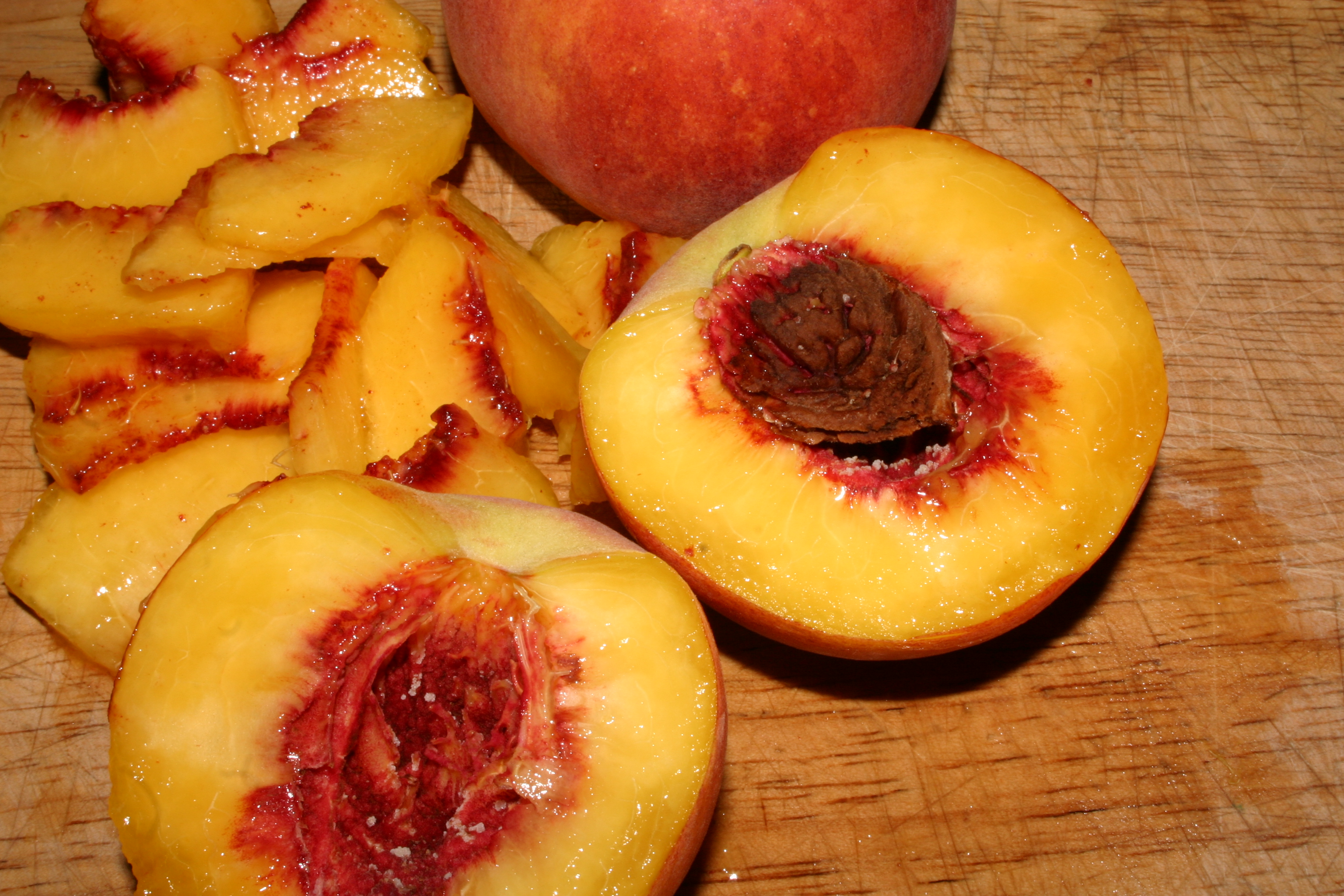
2 16 oz bags of frozen peach slices (you can always use fresh, too!)

4 tablespoons Agave

1 teaspoon cinnamon

1/2 tsp ginger

1/4 cup packed ginger mint and/or mint leaves

Cooking Instructions:

1.  Thinly slice the ginger mint and/or mint leaves into strips.

2.  Mix the Agave with the cinnamon and ginger.

3.  In a large bowl, mix the gingermint/mint leaves and the Agave mixture with the peaches.

4.  If using the peaches shortly, let the peaches sit out on the counter for 15 minutes or more until they are thawed.  Be sure to stir the peaches every so often.  If using the peaches later in the day or the next day, put the peaches into the fridge.  Be sure to mix them well before serving.  (You can also thaw the peaches in the microwave before mixing them with the other ingredients, if you need them more immediately.)

Cream Ingredients:

One pint soy creamer

1/2 cup soy sour cream

1/4 cup Agave

2 tablespoons cornstarch

1/4 teaspoon salt

2 teaspoons vanilla

Cooking Instructions:

1.  In a saucepan, mix the soy creamer, the sour cream, the agave, the cornstarch and the salt.

2.  Slowly cook over a low heat, stirring constantly, until the mixture begins to thicken.

3.  Remove from the heat and add in the vanilla.

4.  Pour into a heat safe bowl.  Place a piece of saran wrap directly against the cream to prevent it from forming a “crust”, and cool in the fridge.

5.  When it’s completely cooled, you can simply stir it up with a spoon and serve over the shortcakes or you can whip them in a mixer or with a whisk if you want to incorporate some air and make the cream fluffier.

Assembling the Shortcakes:

1.  Place one shortcake on a plate.

2.  Spoons some peaches on top of the shortcake.

3.  Put a dollop of cream on top of the peaches.

4.  Enjoy!

Comfort Foods: Revamping Them

website mac and cheese

“We need a depression session.”

As high school students, my three best girl friends and I knew exactly how to handle any teenage angst that came our way.  A break-up, issues with our parents, school problems — all could be handled with a carton of ice cream and a package of cookies.  Armed with both, we’d meet up at one of our houses and just dig in — the cookies were sturdy enough to scoop the ice cream so no utensils would be required!

There was something about creamy vanilla ice cream topping a crisp chocolate chip cookie that was satisfying not just to the taste but to the soul as we talked, cried, and laughed our way to the end of both the carton and the package.

Comfort Eating

We don’t have to look far these days to know that “comfort-eating” has been tagged as a no-no.  It’s been linked to obesity.  It encourages consumption of “unhealthy” foods over “healthy”.  And psychologists say it prevents us from tackling what the real issues in our lives are.

Knowing all this, though, we have to admit that most of us do it.  For some, certain foods bring back the comforting memories of a better time.  For others, a little sugar rush helps get through the bump in the day.  For many, the fact that certain foods encourages the release of serotonin is exactly what we need to turn a bad mood into a happy one.

What can we do

While I’ve learned over the years to curtail eating just for comfort, there are still those times when I yearn for one of those traditional comfort meals — just because.  And when I have those moments, I want to be able to eat them without feeling guilty.

So, over the years, I’ve revamped many a recipe so my family and I can enjoy those occasional bouts of comfort eating.  Below is an Emeril recipe for mac and cheese that was just too much of everything which I revamped because my children loved it so much.  I’m including it here so you can see how easy it is to alter a favorite recipe without sacrificing taste and “comfort”.

Macaroni and Cheese

Emeril’s Recipe:

one pound of elbow macaroni

6 slices of bacon

1 tbsp minced garlic

6 large eggs

2 cans evaporated milk

1/2 tsp cayenne pepper

1/4 tsp ground nutmeg

3 cups grated sharp Cheddar cheese

1 cup grated Monterey Jack cheese

1 cup grated Parmesan cheese

Paula’s Revamped Version:

one pound 100% whole wheat pasta (can also use gluten free pasta)

2 links chicken Italian sausages (fully cooked type)

one 16 oz thawed frozen broccoli florets

2 tsp minced garlic

1/4 cup chopped frozen onions (can use fresh, too)

1 tsp ground black pepper

1/2 tsp ground nutmeg

3 cups Cabot 50% reduced fat cheddar cheese (shredded)

2 12 oz cans fat free evaporated milk

4 eggs plus 1/2 cup liquid egg whites

1/2 cup Cabot 50% reduced fat cheddar cheese (shredded)

Cooking Instructions:

1. Preheat oven to 475 degrees and very lightly grease a 9 x 13 pan. (I normally use a little bit of olive or grapeseed oil.)

2. Prepare the whole wheat or gluten free noodles as directed on the package, but cook it one minute less than indicated.  Drained the noodles and put them into a large bowl.

3. In a food processor, chop up the two sausage links into fine pieces and add to the noodles.

4. In a food processor, chop up the thawed broccoli florets into fine pieces and add to the noodles.

5. Add the garlic, onions, black pepper and nutmeg, and 3 cups of the cheese, mixing well with the noodles.

6. Whisk well together the cans of evaporated milk with the eggs and egg whites.  Pour into the noodle bowl and combine.

7.  Using a ladle, scoop out the mac and cheese into the 9 x 13 pan.  When you reach the end of the noodles, pour any leftover milk/egg mixture from the bottom of the bowl onto the noodles in the pan.  Gently tap the noodles to make them even in the pan.

8. Sprinkle the remaining 1/2 cup shredded cheese over the top of the noodles.  (You can increase this to 1 cup if your family really likes a more gooey mac and cheese.)

9. Bake in the preheated oven for 15 minutes or until the sauce is bubbling at the edge and no longer liquidy in the center.  Let the mac and cheese sit for 10 minutes before serving.

Food “Processing”: A Look at Cooking Tools

website processor

We have too much stuff!”

During the first ten years of married life, we moved four times, which helped to keep our material possessions to a minimum.  For the past second ten years, however, we’ve lived in the same house and increased our family to five in number. At the same time, both sets of parents have “de-cluttered” their houses as they’ve moved into smaller places, which has resulted in our home becoming substantially more full.

As a result I’ve become a bit of a manic freak about getting rid of stuff.  Every six months the children and I go through their books and their toys to donate to organizations which help needy children.  Every summer for the past few years, I’ve gone through the continually growing pile of “stuff” in the basement to donate to organizations like the Epilepsy foundation who so wonderfully come to your house and pick up anything and everything you’re willing to donate for them to sell at discount prices.

Even as I write, my youngest is delightfully planning the yard/garage sale I told him we’re going to try to do this summer to rid ourselves of even more “stuff”, all of which are great and wonderful items to have but which we ourselves no longer need.

Useful kitchen equipment

In the heat of the “purger”, however, there are a handful of items which I will never, ever part with or give away.  Those are my few cooking extravagances which I use almost every day.  My slow cookers I’ve already written about, but just as a reminder:  Crockpots are a godsend for getting dinner on the table when life is crazy.

The second item is my Kitchen Aid which I’m still grateful to my in-laws for purchasing as a Christmas present the first year I was married after I mixed up several dozen batches of cookie dough by hand and couldn’t use my right arm for a week after!

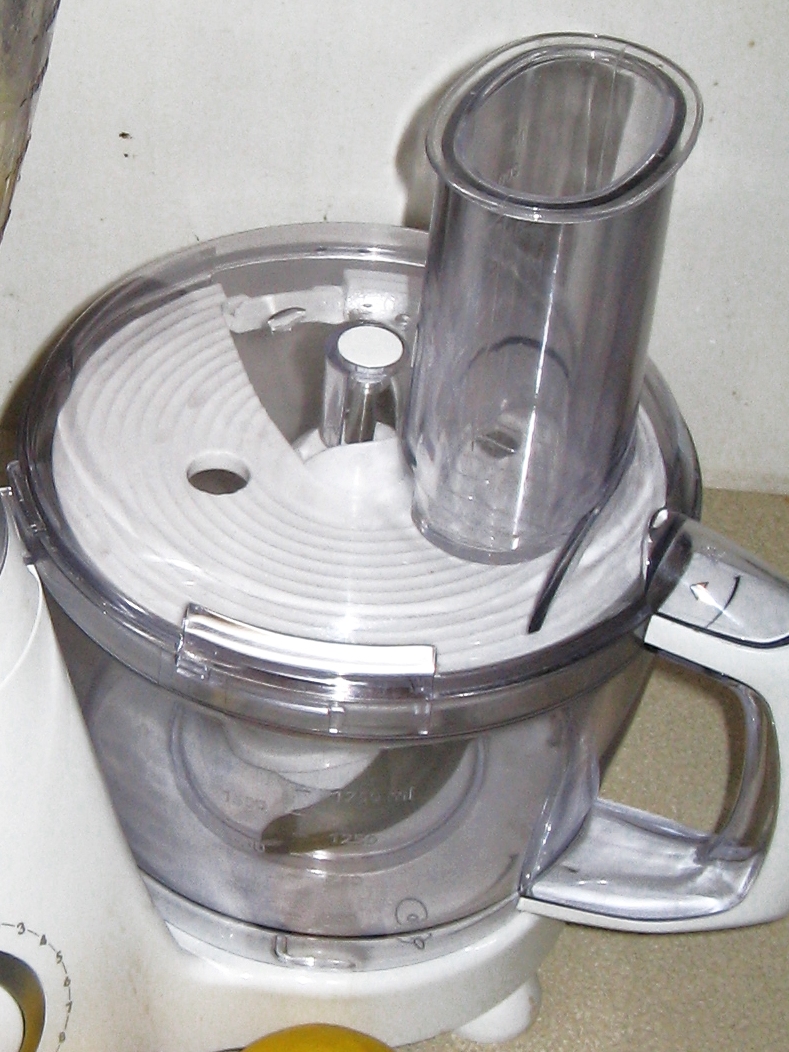
The final item which I use all the time and which I would highly recommend to anyone and everyone who wants to cook at all is my food processor.  I’m not talking about one of those large ones which department store wedding registries try to sell you and which seem to have a bad rap for being big, bulky, and hard to clean.  I’m referring to a simple small four cup food processor which you can find at a second hand store for a few bucks and which is more than adequate for any family use.

Benefits of a food processor

If you do any cooking at all, you’ll know that so much of the time consumption is the chopping and preparation.  The beauty of the food processor is that it does all your chopping, shredding, and more while you’re working on something else.  It also chops and cuts and shreds more uniformly than you’ll ever be able to do, which helps for even cooking.  Finally, it can perform tasks such as grinding nuts and whole oats into flour which is truly wonderful if you’re always having to substitute different foods into your cooking and baking due to food allergies or dietary restrictions.

I use my food processor several times a week for almost all my cooking but there are specific recipes for which I’m really grateful to have such a tool on hand. Below are two such recipes.

Company Salmon with Peach Salsa

Ingredients:

16 oz thawed frozen peaches* (you can certainly use fresh)

one 14.5 oz no salt added fire roasted diced tomatoes

1/2 cup frozen chopped onions (you can use fresh if desired)

1 tsp minced garlic

1 tbsp Key West lime juice (can use regular lime juice, too)

1/4 cup fresh cilantro (can use a couple of tsp of dried, too)

1 tsp ground black pepper

1/2 to 1 tsp coarse sea salt (can omit)

10-12 4 oz frozen salmon fillets with no skin** (you can certainly use fresh)

1 tbsp olive oil

1 tbsp vegan butter (or whatever type you need or prefer)

Cooking Instructions:

1. In the food processor chop the peaches to the size and consistency you like for your salsa.  (Some folks prefer their salsa chunky while others like it pureed.  I tend to make mine somewhere in the middle.)  Pour into a bowl.

2. In the food processor chop the diced tomatoes with the onions, garlic, lime juice, and cilantro.  Add to the peaches in the bowl and stir well.  Set aside or put into the fridge so the flavors can meld.

3.  Season with the black pepper and salt, if using.

4. Over medium heat, melt the butter with the olive oil in a pan that will fit your salmon fillets.

5. Carefully place the fillets into the hot pan, and cook for five minutes.  It’s best that you just leave the salmons alone to form a nice browned crust.

6.  Flip the salmon over and cook for two minutes to finish.

7.  Place the salmon on plates with the crust side up and spoon peach salsa over the top.

* If you’re using the frozen peaches, you can simply pull them from the freezer, dump them into a microwave safe bowl and defrost for one to two minutes, just until they’re not frozen solid.  If you’re thinking ahead of time, you can pull them out a few hours before and defrost them in the fridge.  If you’re using fresh, you need to slice the peaches off the core.

** I like to buy wild caught frozen salmon because it’s cheaper, and then it’s ready whenever I need it.  If you’re thinking ahead, you can put the salmon into the fridge the night before to defrost.  If you’re like me and only thinking of dinner at the last minute, simply the salmon in their packages into a bowl of cold water for twenty minutes, turning them halfway through the time.  Then remove them from their packaging, rinse, and pat dry.

Gazpacho

Ingredients:

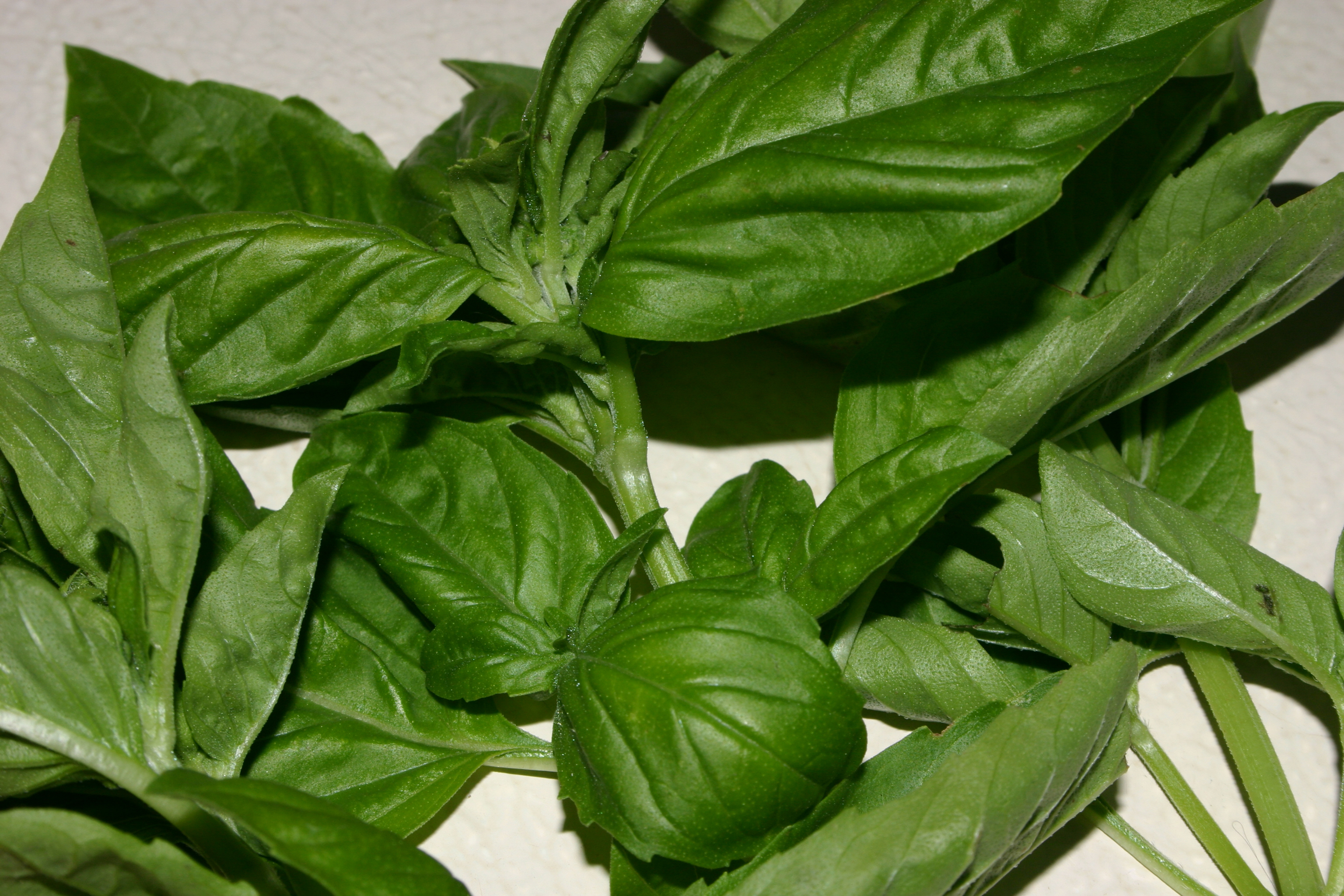
1/4 cup fresh basil

6-8 green onions

2 cloves garlic or 2 tsp minced garlic

one yellow pepper, cut into large pieces

46 oz 100% tomato juice*

2 cans 14.5 oz no salt added petite diced tomatoes**

1 tsp ground black pepper

4 tbsp balsamic vinegar

2 tbsp extra virgin olive oil

8 baby cucumbers, washed and cut into large pieces***

1/2 tsp fresh ginger****

2 cups to 4 cups reduced sodium fat free broth of choice (beef, chicken or vegetable)

Cooking Instructions:

1. In a food processor puree the basil, green onions, garlic, and yellow pepper.

2.  In a large bowl, add the puree to the tomato juice and blend well.

3.  Add the two cans of petite diced tomatoes, the black pepper, the balsamic vinegar and the olive oil, and mix well.

4.  In the food processor finely chop the cucumbers.  Add to the tomato juice mixture with the ginger.

5.  Add the broth one cup at a time until the gazpacho is at the consistency you like.  We like a thicker soup and only use 2 cups, but I have friends who like it to be of thinner consistency and I have added up to four.

6.  It’s best if you chill the soup for a couple of hours to allow the flavors to meld.

* Make sure you do buy just 100% tomato juice which will just be tomatoes and water.  A lot of the “juices” out there have so much other added “stuff”.

**If you don’t want to use canned tomatoes, you can certainly peel, seed, and dice 4 cups of fresh tomatoes.  You can also use regular diced canned tomatoes, but the chunks will be larger.

*** I like the baby cucumbers because I use them as is, skins and all.  If you use regular cucumbers, you’ll need to peel and seed them.

**** I keep fresh ginger paste/puree in the fridge which is always at the ready for me to use, but you can certainly peel and put in a small sliver of fresh ginger root.

“Herb”ivore: Using Herbs for Flavor

website herbs

“You can’t kill this.  It’s a succulent.”

True Confessions:  I am a plant killer.  Since I have no malicious intent and do not deliberately intend to kill my plants, I am, however, only guilty of involuntary plant-slaughter at most and not actual murder or even voluntary plant-slaughter.

And since I know this about myself, I don’t ever buy plants to have in my house; and friends and family who know me well don’t buy plants for me as gifts.  One day, however, a friend arrived for brunch with a plant in hand called a succulent.  (If you’re not familiar with a succulent, as I was not, it’s what a cactus is, though there are other varieties of succulents which are not cacti.)

My friend, who is absolutely marvelous with plants, assured me that she had brought me a plant that even I could not kill.  As you can imagine, with my track record, I was skeptical.  But my friend was right.  It’s a year and a half later, and the little succulent is still going strong.

It’s probably because you can basically ignore it, and it will still thrive on its own. As long as I remember to water it at least once a month, it’s good to go. Essentially it’s my type of plant, and if my friend had not given me the succulent I would never had learned that I could be free of my identity as a plant killer.

Why use herbs

For some people, they feel similarly about herbs and spices.  They don’t know exactly what to do with them and haven’t used them a lot, so they don’t.  They stick with salt and pepper and bottles of Mrs. Dash which just combine many herbs and spices together for use with anything.

Herbs and spices, however, are wonderful to use in cooking, because they can bring nuanced flavors to your food and allow you to cut back on your sodium use. Today, the variety you can find at the grocery store is remarkable.  You can buy it dried, freeze-dried, frozen, packaged in refrigerator tubes, ground, pureed, as leaves, and of course, fresh.

Fortunately for me, my husband has a green thumb, and he grows wonderful herbs for me in small planters we keep on the back porch which I can just snip as I want. When I don’t have fresh herbs available, though, I freely use the dried, freeze-dried, and refrigerator tube versions as well.  And I always have a variety of ground spices in my pantry for my use.

Tips for using herbs and spices

There are a few things to always keep in mind when using herbs and spices.

1.  Fresh herbs are usually added near the end of your cooking time, because they lose their flavor if cooked for too long, while dried herbs and spices are added at the beginning because they need the heat to bring out their flavor.

2.  Dried herbs have a more concentrated flavor so you use less than you would  of fresh herbs.  1/2 to 1 tsp of a dried herb is usually equal to a tablespoon or two of a fresh herb.

3.  Since the oils in a dried herbs are essentially “trapped” inside, before you add dried herbs to your dish, you should “crush” them a bit between your fingers to release their flavor.

4. Spices such as cloves, cinnamon, nutmeg and ginger are usually associated with baking and fruit dishes, but they add wonderful flavor to meat and seafood dishes and even to soups, beans, and macaroni and cheese.

5. Most herbs go well with just about anything from meat to vegetables to even fruit.  Experiment to see what flavors you like with what.

6. When you really want to bring out the flavors in a recipe, creating a base aromatic is the best way to go.  Simply put a little bit of oil in your pot and add dried herbs or spices, along with chopped onions or peppers or garlic, and slowly cook them over low heat for a little while before adding your meat or vegetables or fish or soup or whatever.

7. If you’re making something like a soup or stew or roast which needs a long time to cook, dried herbs are really better to use than fresh.  If you want to use fresh herbs, you can add those at the end as a garnish.

8. If you buy fresh herbs in a package from the store and don’t use it all up immediately, wrap the leftover herbs in a slightly damp towel and put it in sandwich baggie to keep it fresh a little longer in the fridge.

9. If you buy dried herbs and spices, they will lose their potency after a while, but the length of time varies.  Essentially, the rule of thumb is that if you can’t smell anything when you gently rub the spice or herb and/or they’ve completely lost all their color, most likely they should be tossed.

10. When using dried herbs, you should shake the herbs into your hands and then add them carefully to your dish.  If you shake the container over the dish itself, the steam from the cooking gets into your container and can spoil your dried herbs more quickly.

11. Dried herbs should be kept in a dark, dry, cool place.  Those little spice racks we buy are actually not very good for storing the herbs and spices, because usually those are put on the wall, near the stove where the light, heat and moisture all work together to spoil the herbs and spices.

12. If you want to buy dried spices or herbs but get that “fresh” flavor, buy whole dried spices which you can grind in a spice grinder just before using.

Herbed Shrimp and Vegetables

Ingredients:

1 – 2 tbsp olive oil (depends on how much you prefer to use)

1 cup frozen chopped onions (can use fresh if you have)

1-2 tsp dried herbs of your choosing (depends on how you prefer to use)

1-2 tsp minced garlic (jarred, tube, freeze-dried, fresh, whatever in the amount you prefer)

4-6 zucchini, 5-6 inches long, cut into 1/2 inch half moons*

2 yellow peppers, diced into 1/2 inch squares

1 14.5 oz can no salt added petite diced tomatoes, drained

1 lb thawed frozen deveined cooked shrimp**

4 cups fresh herbs of your choosing, chopped (will reduce to about 2 cups when diced)***

1/2 tsp coarse sea salt (you can add more or just omit altogether)

1/2 tsp black pepper

Cooking Instructions:

1. In a large stovetop skillet combine the olive oil with the onions.  Saute over low heat, stirring occasionally, for ten to 15 minutes until the onions are caramelized, which essentially means they’ve turned darker in color and become a bit thicker in texture.

2.  Add the dried herbs and garlic and saute for another five minutes over low-medium heat, being careful to stir so the garlic doesn’t burn.

3. Add the zucchini and peppers and saute over medium heat for about 3-4 minutes until the colors become a bit darker and more vibrant.

4.  Add the tomatoes and saute another 3-4 minutes.

5. Add the cooked shrimp with the herbs, salt and pepper, and stir until well coated and shrimp becomes slightly warm, about 1-2 minutes.

6. Serve by itself or over pasta or rice or couscous or quinoa or whatever.

* I prefer to buy or grow and use smaller zucchini because the flavor is better and it’s not as seedy.  If you purchase a larger store zucchini, then you should adjust your amount accordingly and scrape out the seeds from the zucchini before slicing.

** I love frozen deveined cooked shrimp because it’s cheaper and always ready when I want to use it.  You can use fresh shrimp but you then need to add it after the vegetables with the tomatoes so they can cook during that 3-4 minutes.  If yo use the frozen shrimp and forget to take it out ahead of time like I always do, you can just put the shrimp in a bowl of cold water to defrost them.

*** I use a lot of herbs for this recipe because my family likes it that way, but you can use reduce the amount by half.  As for the types of herbs we use, we like to vary it every time, but we usually use some combination of oregano, basil, mint, ginger mint, cilantro, rosemary, thyme, dill, chives, and/or parsley.