Thanksgiving Thoughts: Vegan Gluten Free Cornbread (to eat or for Stuffing)

“It just requires a bit of planning….”

I was chatting with friends this week about Thanksgiving and the fact that I am making Thanksgiving dinner for folks who are vegan in addition to the folks with all the food allergies in our family. As someone who enjoys hosting and creating menus, this fact doesn’t overwhelm me, but I realized as I chatted with a person in line at the grocery store yesterday, that for some, cooking for folks with food restrictions seems daunting.

I explained to the woman in line that it doesn’t have to be. It just requires a bit of planning. And with that in mind, I thought I’d take the initiative over the next couple of weeks to post some recipes and thoughts which might be helpful for folks who need to think about family members with food sensitivities.

As it happens, I promised my mother-in-law that I’d make cornbread for a gathering this weekend, and I thought it would be a good chance to talk about stuffing. Many folks believe Thanksgiving dinner is not complete without stuffing. I am inclined to agree. If you are wheat or gluten sensitive, though, traditional stuffing won’t work for you. The nice thing about today’s world, though, is that you can choose from a variety of ready-made whole grain gluten free breads which you can simply substitute for regular bread in any stuffing recipe.

If you’re looking for something a little different, though, cornbread stuffing is a nice addition to any Thanksgiving meal. If there are food allergies, though, it is not as easy to find cornbread “stuffing” bread which is gluten, dairy, nut, and egg free. There are certainly gluten free mixes which you can swap out vegan alternatives for the butter, eggs and milk the box will tell you add, but if you’re going to take the time to do that, you may as well make your own from scratch which won’t take you any longer to do.

The recipe below is one I created for making a vegan, gluten free cornbread. You can make it as bread to eat or turn into corn muffins. You can also turn them into cubes for using in stuffing recipes.

Vegan, Gluten Free Cornbread

Ingredients:

2 tbsp ground golden flax seed

6 tbsp hot water

1/4 cup agave (optional) or additional 1/4 cup cold water

3 tbsp vegan butter

2 tbsp agave

1 1/2 cup dairy free milk of choice (I usually use soy milk)

2 cups favorite whole grain gluten free flour blend

1 cup gluten free cornmeal

1 tbsp baking powder

1 tsp baking soda

1/2 tsp salt

1 tbsp chives

1 tsp thyme

1 tsp other herb of choice (like rosemary, sage, marjoram, or a mixture of all three)

1/2 tsp ground onion powder

1 tbsp vinegar (white or apple cider)

Baking Instructions:

  1. Preheat the oven to 350 degrees and prepare pan with parchment paper or favorite method of greasing the pan.**
  2. Mix the ground flax seed with the water and allow it to thicken. If you are used to “regular” cornbread, once the flax seed mixture has thickened add the agave. If you prefer a more savory cornbread, use water in place of the agave.
  3. Melt the vegan butter and add 2 tbsp of agave (regardless of whether you added the above 1/4 or not). Set aside.
  4. Measure out the milk and set aside.
  5. Mix together the flour, cornmeal, baking powder, baking soda, salt, chives, thyme, herb choice, and onion powder.
  6. Using a wooden spoon, mix into the dry ingredients the flax seed mixture until you have a mixture which looks like coarse crumbs.
  7. Add the butter mixture, the milk and the vinegar and whisk together quickly just until incorporated and somewhat smooth.
  8. Pour into the prepared pan and bake for 25 minutes until puffed and golden and a finger pressed into the top reveals that the cornbread is firm to the touch.
  9. Cool on a wire rack.

** If you’d prefer making cornbread muffins for Thanksgiving dinner, you can spoon the batter into greased muffin tins and bake until the muffins have puffed and are golden and firm to the touch. Usually the muffins will only need about 15 minutes, if using a traditional sized muffin tin.

To make cornbread crouton cubes for stuffing: To turn them into cubes for making stuffing from it, you simply cut the cooled cornbread into the size cubes you desire, lightly coat the cubes with a neutral tasting plant oil such as extra light olive oil, place the cubes in a single layer on a cookie sheet and toast them in the oven until they have dried into a crouton-texture. Most recipes for croutons will tell you to use higher temps like 400 degrees. I prefer to use a lower temp of 250 degrees, and I shake or turn the cubes over a couple of times during the process. It’s up to you what you choose, but what’s important is to definitely check on them every ten minutes or so and pull them out as soon as they dry out. You don’t want to brown or burn them. Once you have the cornbread croutons, then you can substitute those into any of your favorite cornbread stuffing recipe.

Healthy Habits: Triple Chocolate Avocado Brownies

“You’d have to do the impossible….”

As a child my father told me that I could do anything I set my mind to, and I believed him. His words served me well as I grew, helping me to succeed at things folks were quick to say I could not, to endure difficult situations I felt ill-equipped to handle, and to learn how do things I might not have otherwise tried.

I did learn that simply setting one’s mind isn’t always enough, of course, but at the end of the day, having confidence that you can achieve does tend to open up possibilities which are closed to folks who don’t even make the attempt.

So, when a friend who is allergic to wheat, dairy, soy, rice, apples, nuts, peanuts, coconut, flax seed, eggs, and bananas told me she hadn’t had a brownie in 15 years, I took up the challenge. How could I not? What did it matter that I couldn’t use any of the usual substitutions for traditional ingredients in brownies? I was determined to make a brownie my friend could eat.

My friend wasn’t convinced I could make a brownie from “nothing” as she said, and especially not one that would taste like a brownie, but it helped that she wasn’t allergic to avocados and that she wanted a fudgy brownie as opposed to a cakey or chewy one.

The beauty of avocados is that they can substitute for eggs and the fat as one item so both eggs and butter could be substituted for in the traditional brownie recipe. Most nontraditional recipes would then use a dairy free milk but my friend is allergic to most versions. I opted to use water but I needed the water to be thick. Using unsweetened chocolate as part of my flavoring added the thickness I needed to the water. Then, I only needed to refine the chocolate-ly taste by adding unsweetened special dark cocoa powder, Enjoy life mini chocolate chips, and cinnamon.

I tried the brownies out on a group before taking them to my friend, and the reviews were positive, and one person commented, “The whole piece tastes like the inside of a brownie, which is the best part!”

When I took a pan to my friend, she couldn’t believe I had done it – made a brownie she could eat. I, of course, had trusted that once again my father’s words would be true!

Triple Chocolate Avocado Brownies

Ingredients:

1 cup mashed ripe avocado (usually two avocados)

2 ounces unsweetened chocolate

1 cup boiling water

2 tsp vanilla

1 cup agave

2 cups gluten free flour blend (I used King Arthur’s whole grain version)

3/4 cup Hershey special dark unsweetened cocoa powder

1 tsp baking powder

1/2 tsp salt

1 tsp cinnamon

1 cup Enjoy Life mini chocolate chips

Baking Instructions:

  1. Preheat the oven to 350 degrees and line a 11 x 15 pan with parchment paper.
  2. Mash the avocado in a large bowl and set aside.
  3. Place the unsweetened chocolate into a measuring cup or bowl which can sustain heat and pour the boiling water over it. Stir until the chocolate is melted and the liquid is slightly thick.
  4. Add the chocolate water mixture to the avocados, along with the vanilla and agave.
  5. In a smaller bowl, mix the flour with the unsweetened cocoa powder, baking powder, salt and cinnamon.
  6. Add the dry ingredients to the wet and mix just until moistened.
  7. Add the chocolate chips and stir until the batter is well mixed.
  8. Spread the batter into the prepared pan and bake for 20-25 minutes until the brownies are slightly puffed and just a slight indent remains in the center when you touch it.
  9. Allow the brownies to cool in the pan on top of a cooling rack.
  10. Remove the brownies from the pan by lifting the parchment paper, and slice the brownies into squares to enjoy.

Healthy Habits: Blueberry Oatmeal Cake

“How do I….?”

My oldest has been in Germany since the beginning of August, and if I had known then what I know now, I wouldn’t have cried so much when she left! Though she is across an ocean, I have heard from her every single day. The reason? To pepper me with questions about how to cook this or prepare that. Now that she is on her own for the first time in an apartment, she has to cook for herself, and every evening, as she prepares her dinner, she texts or calls with several questions.

So, not only am I not missing her because we speak more than we did while she was in college, but I have been happy to note that she is doing all she can on a limited budget with little cooking supplies to still try to eat as healthy as she can. In fact, she has an app she uses to help her make sure she gets all the nutrients and vitamins she needs from the food she eats. I am pleased that some of the lessons I imparted actually took root!

In the past couple of weeks, I have been working on those same lessons for healthy eating and revamped a couple of cake recipes for an uncle who is diabetic. He likes his sweets but white flour and sugar products don’t like him! Since dessert is something he often looks for, though, I put my hand to creating a couple of cakes which might be slightly better for him to consume.

To make a healthier cake, I chose to begin with whole grain, whole rolled oats because they contain a lot of fiber and protein. Then, I removed the sugar, opting instead to use smaller amounts of coconut sugar and/or agave and fruit like blueberries and chunky applesauce which contain fiber as well. My last change was to reduce the fat by swapping a reduced amount of oil for the usual butter and to use egg whites instead of whole eggs.  And of course, I made them gluten, dairy and tree nut free so I could eat them as well!

Below is the blueberry oatmeal cake recipe.

Blueberry Oatmeal Cake

Ingredients:

2 cups gluten free, whole grain, whole rolled oats

2 cups boiling water

1 cup gluten free flour blend

1 tsp baking soda

2 tsp baking powder

2 tsp ground cinnamon

1 tsp ground nutmeg

1/2 tsp salt

1 cup agave

1/2 cup extra light olive oil

1/2 cup liquid egg whites (or two whole eggs if you’d prefer or 2 tbsp ground flaxseed mixed with 6 tbsp water if you want it vegan)

1 cup to 2 cups fresh blueberries (depends on the ratio of cake to berries you want and the size of your berries)

Optional Topping:

In a pan, melt 2 tbsp of vegan butter, add 1 cup of whole rolled oats with 1/2 tsp cinnamon and 1/4 tsp nutmeg. Cook for 5 minutes, stirring frequently. Add 1 tbsp agave or coconut sugar. Mix well and cook for another minute. Sprinkle on top of the cake before putting it into the oven to bake.

Baking Instructions:

  1. Preheat the oven to 350 degrees and line a 9 x 13 pan with parchment paper or grease as you prefer.
  2. In a bowl mix the oats with the boiling water and let them sit until the oats have absorbed all the water. Usually only takes about five minutes.
  3. In another bowl mix together the flour, baking soda, baking powder, cinnamon, nutmeg and salt. Set aside.
  4. In the bowl with the oats, add the agave, olive oil and egg whites and mix well.
  5. Add the dry ingredients to the wet, and mix well.
  6. Fold in the blueberries.
  7. Spread the batter into the prepared pan (adding the optional topping if you’d like now), and bake for 20 to 25 minutes or until the cake is puffed, golden, and a toothpick inserted in the center comes out clean.
  8. Enjoy!


Recipe Revamping: Chocolate Chip Cake

“You need a reset….”

I always anticipate summer to be an opportunity for rest and relaxation, and every year, summer whizzes by with a full schedule of appointments and family visits and school readiness with little rest and even less relaxation. Though we do take time here and there as a family to capture little pockets, the concept of taking time to sit back and revive one’s energy remains just that, an idea.

Some of the reason is simply the season of life we are in at the moment. The years raising children tend to be rather hectic and chaotic. Another reason is that working in the public school system during the year means having to work during the summer to supplement the income which precludes “vacation time”. Yet a third is that we live in a world that is busy, and we get caught up in that busyness.

As I was pondering busyness this week, I realized that as a family we are beginning a time where a “reset” is quite possible. Two of our three children will be away at graduate and undergraduate schools. I have stepped down from most of the obligations I have spent 17 years pursuing. My husband and I are looking at new life ventures. If ever we could make choices about health and lifestyle and time spent, it is now.

Deciding to make the choices, though, tends to be easier than following through with action. A recent email illustrated this. Someone’s health issues meant she had to really begin to watch what she ate. Her grandmother, however, had passed down a chocolate chip cake recipe which she loved and made frequently for the family. Lately, though, as her health has had more complications, she finally realized she couldn’t continue to eat her grandmother’s cake as it was originally made. She needed to remove the gluten and dairy which were making her sick and to make it healthier, fat-wise.

She reached out to me to see I might be able to revamp the recipe. The original recipe called for 1 1/2 cups of butter, 2 1/2 cups of sugar, 4 whole extra large eggs, 1 tsp vanilla, 4 cups all purpose white flour, 4 tsp baking powder, 1 tsp baking soda, 2 cups full fat sour cream, and 2 1/2 cups chocolate chips.

You can see why she shouldn’t be eating it on a regular basis!

Making the cake gluten free was simply a matter of swapping a gluten free flour blend. I chose to use King Arthur’s wholegrain blend, but since I wanted to give the cake more protein and fiber, I opted to substitute one cup of the flour with gluten free oat flour which I made by finely processing gluten free whole rolled oats into a flour. This added the overall protein and fiber count of the cake.

Since making things healthier for me always includes removing the white refined sugar, I reduced the sweetener down to 1 cup and used agave instead of sugar.

The butter, sour cream and eggs, however, required some thinking. I needed to reduce all three if we wanted a healthier cake but how to do that without sacrificing the moisture in the cake? I switched vegan butter for the regular butter and reduced it to 1/2 cup. I substituted tofu sour cream for the regular and used only 3/4 cup. Then I reduced the eggs to two large.

All these reductions needed to be replaced, though, and as I thought about it, I finally decided to use banana cream. For folks not familiar with this, you simply freeze banana slices to the point where they’re mostly frozen but still a little flexible. Then you pop them into your food processor and let it zoop for several minutes until the frozen banana slices become the consistency of soft ice cream, which is how many folks eat it. I used it as a replaced for the missing butter, eggs and sour cream, and it worked beautifully, adding the moisture needed but not tasting overly much like bananas.

The final few changes I made were to use mini allergy friendly chocolate chips instead of the regular larger sized ones and to reduce the amount to 1 cup. Since the chips are mini, they distribute more evenly into the batter, and you need a lot less to get the same chocolate chip to cake ratio. I also added a tablespoon of cinnamon to add flavor and to help regulate blood sugar levels.

The folks I served it to this week, thought the cake was delicious, and the person who had originally emailed was glad she could eat it without making her health issues worse.

Chocolate Chip Cake

Ingredients:

1/2 cup vegan butter

1 cup agave

3 cups banana cream*

1 tsp vanilla

2 large eggs

3 cup whole grain gluten free flour blend

1 cup gluten free oat flour**

4 tsp baking powder

1 tsp baking soda

1 tbsp ground cinnamon

3/4 cup tofu sour cream

1 cup Enjoy Life mini chocolate chips

1 tbsp apple cider vinegar

*To make banana cream: Slice bananas into three cups worth and put into the freezer. Freeze just long enough to begin to freeze but so they are still slightly flexible. If you put the banana slices until a shallow pan in an even layer, this would only take 15 to 30 minutes. You can also freeze the bananas ahead of time in a tupperware, and when you need it, microwave them for just a few seconds to keep them frozen but pliable. Put the mostly frozen pieces of bananas into a food processor and begin to process until the pieces turn into a creamy soft ice cream mixture. This will take several minutes. Make the mixture just before you are ready to add it to the wet ingredients.

**You can use store bought gluten free oat flour, but if you want more protein and fiber, take gluten free wholegrain rolled oats and put them into your food processor and process until you have oat flour. This will take several minutes.

Baking Instructions:

  1. Preheat the oven to 350 degrees. Grease and prepare a Bundt pan. (I used a non-aerosol olive oil and ground flaxseed.)
  2. In a mixer, cream the vegan butter. Scrape down, and with the mixer on low, slowly pour in the agave and blend the butter and agave until smooth.
  3. Add the banana cream and blend just until mixed. Add the vanilla.
  4. Add the eggs, one at time, mixing well with each addition. Set the wet mixture aside.
  5. Mix the flour blend, oat flour, baking powder, baking soda, and cinnamon.
  6. Add half the dry ingredients to the wet and blend. Add the tofu sour cream. Mix well, and then add the second half of the dry ingredients.
  7. Mix in the mini chocolate chips.
  8. Add the vinegar and mix just until blended.
  9. Pour the batter evenly into the prepared pan and bake for 50 to 55 minutes until the cake has puffed, is golden, and an inserted toothpick comes out clean.
  10. Allow the cake to cool in the pan for at least 15 minutes before removing to a wire rack to cool completely.

Recipe Revamping: Blueberry Buckle

“Simply relax and enjoy when you can….”

Two graduations, a wedding, a family reunion, visits with extended family, and a funeral, sprinkled in between doctor appointments for all family members and added on top of a summer work schedule and preparing our daughters to go away in August for their masters and bachelors programs, has left no time for vacation during our summer. So, we have been making the most of little pockets of time – playing family board games when we can, doing an Escape the Room adventure, getting massages, taking an afternoon walk.

This week, we took time to bake together, making the most of prime blueberry and peach season, and one of the items we made was a blueberry buckle. For folks not familiar, blueberry buckle is similar to a coffee cake but the ratios of fruit to batter are flipped. In coffee cakes, the cake is the star with fruit lending flavor. In a buckle, the fruit is in abundance and the batter is scant, just enough to suspend the fruit. Both have signature crumb toppings.

I wanted to make a blueberry buckle which was gluten and dairy free and which didn’t use white refined sugar. It turned out to be quite easy. I simply substituted a store bought gluten free flour blend for the flour, used half the amount of coconut sugar for the regular sugar, and creamed vegan butter instead of regular butter. The result was quite tasty when we had it for dessert with nondairy vanilla ice cream.

Blueberry Buckle

Ingredients:

Topping:

1/2 cup gluten free flour blend

1/2 cup coconut sugar

1/2 tsp cinnamon

4 tbsp vegan butter

Batter:

1 1/2 cup gluten free flour blend

1/2 tsp salt

1 tsp cinnamon

2 tsp baking powder

3/4 cup vegan butter

2/3 cup coconut sugar

2 tsp vanilla

3 eggs

4 cups fresh blueberries

Baking Instructions:

  1. Line a 9 inch springform pan with parchment paper and preheat the oven to 350 degrees.
  2. Mix together the topping flour, coconut sugar, and cinnamon. Using clean hands, squeeze the vegan butter into the dry ingredients until you have thick crumbs. Set aside.
  3. Mix together the batter flour, salt, cinnamon, and baking powder. Set aside.
  4. In a mixer, cream together the vegan butter and coconut sugar. Add the vanilla and mix well.
  5. Add the eggs, one at a time, mixing well in between. The batter will look messy, like it’s all broken, but that’s the way it’s supposed to be.
  6. Add the dry batter ingredients to the wet and mix just until blended and smooth. The batter will be thick.
  7. Gently fold in the blueberries until the batter is completely mixed in with the berries.
  8. Spread the batter evenly into the prepared pan and bake for 50 minutes, turning the pan halfway through at 25 minutes.
  9. The buckle will be golden and puffed and a toothpick inserted in the center will come out clean when it is done.
  10. Cool for ten minutes on a wire rack. Loosen the sides of the cake with a butter knife from the springform pan, and release and remove the side pan. Let the cake cool completely and enjoy!


Roasted Garlic Bread

“It’s the simple pleasures….”

I celebrated another birthday this year, and unlike many people, I don’t mind that I did. While I am not thrilled that my metabolism is slowing down and that aches tend to last longer, I am grateful for the maturing process which only aging and experience can bring. One gets to know oneself better as time goes on, and that’s a good thing, in my opinion, because only then can you really embrace your strengths, recognize and work on your weaknesses, and allow yourself to be the best version of yourself.

My husband wanted to know what I wanted to do for my birthday this weekend, because we have had a particularly stressful couple of weeks with a funeral and a graduation and time at a hospital with a dear friend. As I thought about what I wanted, I realized I simply wanted to hang with my family, particularly to have a good meal and to watch a movie while all three of my children were actually with me on my birthday for the first time in a few years.

Now, both cooking and watching a movie are not my husband’s ideas of a good time, but as a loving husband, he dutifully grilled the zucchini and chicken I prepared and sat through a movie. My gift to him for being kind enough to grill for me was to figure out a starch to go with the meal. Since I do have that slowing-down metabolism, I tend to eat less carbs these days, but I know that my husband thinks a meal is not complete without bread.

So, I decided I’d make garlic bread, but I didn’t want to use traditional white bread or the large amounts of butter. As I thought about garlic bread, I realized what I love best is the garlic so it occurred to me that garlic should be the the “showpiece” of garlic bread as opposed to the minced versions usually made, which led me to the idea of roasting the garlic and making a garlic bread similar to bruschetta which used olive oil, tomatoes and basil, only I used a gluten free whole grain bread instead.

The roasted garlic bread was ridiculously easy to make and added a nice dimension to the grilled dinner!

Roasted Garlic Bread

Ingredients:

peeled garlic cloves

olive oil

whole grain bread (gluten free or whole wheat or multi-grain)

fresh basil

grape tomatoes (optional)

Cooking Instructions:

  1. Preheat the oven to 500 degrees.
  2. Mix a couple of cups of peeled garlic cloves (how much you need depends on how many slices of bread you are making; also if you buy them already peeled, it makes life easier) with just enough olive oil to coat them, and roast them in the oven, turning them every five minutes until the garlic has darkened in color. (Usually this only takes ten to 15 minutes.)
  3. Remove the garlic from the oven and reduce the oven to 350 degrees. Let the garlic cool for a few minutes.
  4. While the garlic is cooling, slice your whole grain bread (whether gluten free or not) into thin slices (unless you bought the already sliced version, in which case you’re set) and place the slices on a cookie sheet or shallow pan.
  5. Chop up a couple of cups of fresh basil into small sprinkle-able pieces (how much you need depends on how many slices of bread you are making; also, if you don’t have fresh basil, you can also use dried basil, but you’d only need a couple of teaspoons then).
  6. Slice the roasted garlic into thin slices and sprinkle evenly among all the bread slices. Then sprinkle the basil. (Optional: slice grape tomatoes into think slices and sprinkle in between the garlic before sprinkling the basil.)
  7. Drizzle a small amount of olive oil over each bread.
  8. Bake in the reduced-heat oven for five to ten minutes until the bread is toasted.
  9. Serve immediately and enjoy.
  10. Leftovers keep well in the fridge. Simply reheat in the oven for a few minutes for crispy bread or microwave for a few seconds if you simply want it warm.

Recipe Revamping: Cardamom Citrus Bars

“It was so nice of someone to think of us….”

The first full week in May is designated as appreciation week for teachers and nurses, and in our schools, the local PTO plans a week of nice surprises for the teaching staff. One day might be a luncheon. Another could be a day of raffles and winning prizes which have been donated. Sometimes they provide a breakfast. A few years included massage therapists coming in for 10 minute chair massage opportunities.

In the past I’ve helped to coordinate appreciation week for our schools but recently I’ve stepped down and help just by donating food for whatever special opportunities are being provided. This year, I made a couple of soups for the luncheon and signed up to bring in desserts for a special salty and sweet day the PTO planned.

Since I wasn’t sure what to make for the dessert, I asked for ideas from the staff, and someone mentioned that it would be lovely if I could make lemon bars for those with dairy, soy, gluten and nut allergies, all of which were prevalent among a number of the teachers. Since usually the bars I make are made from tofu, which was one of the allergies, I looked up a basic lemon bar recipe to revamp.

The recipes I found were all pretty much the same: To make the crust, mix 2 cups of flour, 1 cup butter, and 1/2 cup sugar, which was baked in a variety of pans sized from 8 x 8 to 7 x 11. The filling was usually 4 eggs, 2 cups sugar, 1/4 cup flour, and lemon juice which strangely ranged from 1/3 cup to 3/4.

Revamping the recipe:

For the flour: It was easy to simply substitute the flour with a gluten free flour blend. I chose King Arthur’s whole grain blend which is my current favorite since it is easy to get at the grocery store and has more protein and fiber than the other blends.

For the butter: To make the bars dairy free, I simply used Earth Balance’s soy free vegan butter.

For the sugar: The sugar was where I simply had to make some cuts. 2 1/2 cups of sugar in bars in an 8 x 8 or 7 x 11 or 9 x 9 pan is just too much sugar. I opted to use only 2 tablespoons in the crust, switching powdered sugar for the white sugar because it would combine more easily with the flour. And for the filling, I reduced the amount to 1/2 cup of white sugar and used 1/4 cup agave. As a final change, I used a 9 x 13 pan for thinner bars.

For the lemon: As a general rule, I suggest folks use fresh lemons for lemon bars. As I was looking at the recipe, I decided that I wanted to change things up a bit, so I opted to make citrus bars instead where I mixed freshly squeezed lemon and orange juice together. I also decided to add cardamom which is a spice that I like, just to further change things up a bit. Since the recipes varied greatly in amount, I cut the difference and used 1/2 cup of juice.

When I went to the school later in the day to help clean up, several staff stopped me to say how much they enjoyed the citrus bars, mostly because someone thought to make something they could eat, but also because they liked that the bars had so much less sugar but still tasted good.

Cardamom Citrus Bars

Ingredients:

2 cups gluten free flour blend (I used King Arthur’s whole grain version)

1/2 tsp cardamom

2 tbsp powdered sugar

1 cup vegan soy free butter

4 eggs

1/2 cup sugar

1/4 cup agave

1/4 cup gluten free flour of choice (I used sorghum flour)

1/4 tsp cardamom

1/2 cup freshly squeezed lemon and orange juice (I used 1/4 cup of each)

Baking Instructions:

  1. Line a 9 x 13 pan with parchment paper. Preheat the oven to 350 degrees.
  2. Mix the gluten free flour, powdered sugar and cardamom together. Using a pastry knife or two knives, cut the butter into the flour mixture until crumbly.
  3. Spread the crust mixture into the prepared pan and use your clean fingers to press the mixture evenly into the pan.
  4. Bake in the preheated oven for about 15 minutes until the crust is puffed and golden.
  5. While the crust is baking, mix together the eggs, sugar, agave, flour, cardamom, and lemon and orange juices.
  6. Pour the citrus mixture over the hot crust and spread evenly.
  7. Bake in the oven, another 15-20 minutes until the filling has solidified.
  8. Cool completely on a wire rack.
  9. Just before serving, sprinkle with powdered sugar. (Note: The bars absorb the powdered sugar, so sprinkling just before serving allows you to serve pretty bars without having to add more sugar than you ought to be eating.)


Recipe Revamping: Flourless Chocolate Torte

“That’s a lot of butter and chocolate….”

We had company the other night, and I wanted to make a more “special” gluten and dairy free dessert. My oldest was home for Spring break from college, and as we bounced ideas around, we thought about a flourless chocolate torte. Immediately we looked up a recipe from a well-known chef. We both had a heart attack just reading the recipe.

The recipe? 16 oz semi sweet chocolate; 2 1/2 sticks of butter; 7 eggs, separated, 1 1/2 cups sugar; 2 T. rum; 1 tsp vanilla; 1 tsp salt.

I did some research and discovered that the majority of recipes by other folks called for crazy amounts as well, but I did find that a couple of folks did use smaller amounts of chocolate, sugar and butter… not greatly decreased but less. It seemed that the difference affected the density of the torte, exactly how torte-like versus cake-like versus mousse-like one wanted the dessert to be.

In the end I decided I’d make a lot of changes, and tried two different versions. Both were delicious, but one was a more dark chocolate, cakey variety, and the other more sweet and velvety. Below are both versions.

For both, I decreased the butter as well as substituted for it, and substituted alternatives for refined white sugar (0ne recipe uses coconut sugar; the other agave and truvia). I also decreased the chocolate amounts and swapped a raspberry liquor for the rum. In neither, though, did I decrease or play with the eggs because without the flour, the eggs are essentially what makes the cake! So, my apologies for folks with egg allergies. Will work at another time on creating something similar without eggs!

Flourless Chocolate Torte

Version One: Dark Chocolate Raspberry Torte (Dark Chocolate-y and More Cake-like)

Ingredients:

8 tbsp vegan soy free butter

7 ounces dairy free bittersweet chocolate

7 eggs, separated, with yolks in a large bowl and whites in a mixer

3/4 cup coconut sugar

2 tbsp raspberry liquor (optional)

1 tsp vanilla

1/4 tsp cream of tartar

1/4 cup coconut sugar

Version Two Ingredients: Semi-Sweet Chocolate Raspberry Torte (Sweeter and More Mousse-like)

Ingredients:

8 tbsp vegan soy free butter

10 ounces dairy free semi-sweet chocolate

7 eggs, separated, with yolks in a large bowl and whites in a mixer

1/2 cup Agave

2 tbsp raspberry liquor

1 tsp vanilla

1/4 tsp cream of tartar

2 tbsp truvia

Baking Instructions:

  1. Preheat the oven to 325 degrees and take out a 10 inch springform pan. Do NOT grease the pan.
  2. Chop the chocolate into smaller pieces and put into a microwave safe bowl with the vegan butter. Microwave the butter and chips 20 seconds at a time, until the act of stirring completely melts the chips. Set aside.
  3. In the large bowl with the eggs yolks, add either the coconut sugar or the agave and beat the eggs with a wire whisk for about 5 minutes until the eggs increase in volume and are light and frothy.
  4. Slowly add the chocolate/butter mixture, stirring continually as you gradually add all of the chocolate mixture.
  5. Mix in the vanilla and raspberry liquor and set aside.
  6. Add the cream of tartar to the egg whites and begin to blend on low speed.
  7. Gradually begin to increase the speed and slowly pour in either the coconut sugar or the truvia.
  8. Beat until the egg whites increase in volume, are no longer clear but white, and when you pull the mixing paddle up, the whites make peaks.
  9.  Using a rounded spatula, gently fold the egg whites into the chocolate mixture, a little at a time, until all the egg whites are completely incorporated into the mixture.
  10. Pour the batter into springform pan and bake in the preheated oven for 35 to 40 minutes. (The second version took closer to 45-50 minutes.) The cake will have puffed and the top will look dry and no longer glossy.
  11. Remove to a wire cooling rack and allow the cake to cool.
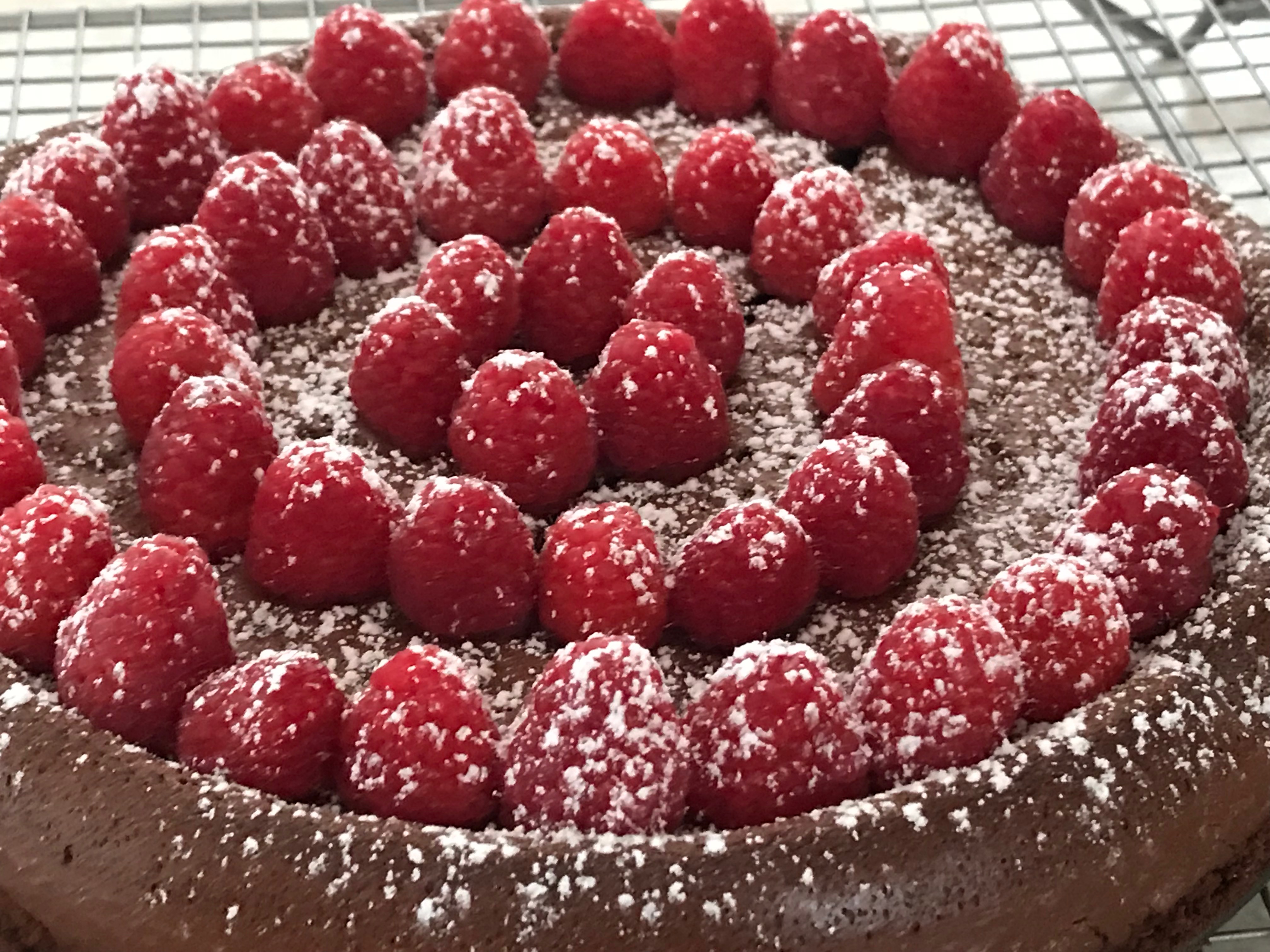
  12. If you are eating it soon, you can run a knife around the pan and release the bottom from the springform and decorate the cake with fresh raspberries and a small sprinkling of powdered sugar.
  13. If you are not going to eat the cake within a few hours, put the cake in the refrigerator and decorate the cake with fresh raspberries before you’re ready to actually eat it.


Recipe Revamping: Chocolate Tunnel Bundt

“You don’t accept me for the way I am….”

Raising children is not for the faint-hearted. If you are a parent, you know this truth. You survive endless nights of no sleep, trying to figure out the needs of an infant whose only mode of communication is a high-pitched cry worthy of being classified as a torture weapon, only to be thrust into the tantrums of the the toddler years and the beginnings of the end as your child discovers the word, “No.”

Just when you are beginning to see growth into a complete-sentence-talking, self-feeding, potty-trained, potentially reasoning-able individual, your child begins school which forces you to learn how to navigate a world fraught with “firsts” – the first time your child’s teacher calls to say your child made the whole class cry by telling them that Santa Claus was dead; the first time your child comes home crying because someone said they weren’t his friend anymore; the first recital where your child throws up from fear.

You begin to think those years will not end, but they do, only to be replaced by the middle school years which begins a roller-coaster ride through the ups and downs of your child’s emotions where you learn that the hold the perceptions they have about themselves from the outside world seems stronger than anything you say or do as the parent in her life.

You survive those years, too, but begin to wish to be back in them when the middle-schooler turns into the high school teen who hides in his cave-bedroom, believing you have no understanding, no wisdom, no sense, no anything that you can offer to his all-knowing self. You begin to actually doubt  your abilities until the day comes when she is accepted into college, and anxiety about actually leaving home mounts, and she reverts to two year old behavior, wanting and needing mommy to hug and console and be with her at all times until she leaves.

My second child, who is going to be graduating from high school has entered this last phase, and interestingly enough, her chosen way of spending time with her mother is that she suddenly wants to bake with me every other day – this of course being the same child who has been “too busy” to bake with me for the past four years and who now seems to think I should stop everything I am doing to bake with her whenever she is emotionally distraught about college.

Of course, I do drop everything, because she is my daughter, I do want to spend time with her, and I also enjoying baking. And this weekend, I taught her how to bake a chocolate bundt which I had revamped a couple of weeks ago when this same daughter had asked that I make a chocolate tunnel bundt cake for when my mother-in-law was visiting.

The original chocolate bundt cake recipe called for 3 cups of sugar, 1 1/2 cups of butter, 3 eggs, 3 cups of all purpose flour, 3/4 cup cocoa, 2 tsp baking powder, 2 tsp baking soda, 1 1/2 tsp salt, 1 cup coffee, 1 cup buttermilk, 1 cup pecans, 1 tsp vanilla, 12 oz cream cheese, another 2 eggs, another 1/4 cup sugar, 1/2 cup coconut, and 1 1/2 cup chocolate chips. It also called for a glaze made of 4 tbsp butter, 1 cup powdered sugar, 3 tbsp cocoa, 2 tsp vanilla, and 1-3 tbsp water.

To revamp the recipe, I swapped olive oil for the butter and reduced it to 1 cup, and switched coconut sugar for the refined white sugar, cutting the amount to 2 cups. I used King Arthur’s whole grain gluten free flour in place of the white flour, and chose to use the special dark chocolate unsweetened cocoa powder for the regular cocoa powder. I reduced the salt to only 1/2 tsp. I made a “buttermilk” with soy milk and apple cider vinegar, reduced the eggs to two, and omitted the pecans altogether.

For the filling: I reduced the cream cheese to 8 oz instead of 12, using the tofu version,  and halved the eggs to one. I also omitted the coconut altogether and used Enjoy Life chocolate chips, reducing the amount to 1 cup of the mini chips. For the sugar, I once again used the coconut sugar, and I added a tablespoon of the cocoa powder and 1 tsp vanilla to increase the chocolate taste. Finally, I chose not to make a glaze.

The result was a delicious cake which had less fat and sugar and calories as well as more protein and fiber. I’m including the recipe below for the cake which can be made as the tunnel cake with the cream cheese filling or as a plain chocolate bundt without the filling.

Chocolate Tunnel Bundt Cake

Ingredients:

2 cup coconut sugar

1 cup extra light olive oil

2 eggs

3 cup gluten free flour blend (I used King Arthur’s whole grain blend)

3/4 cup special dark unsweetened cocoa powder

2 tsp baking powder

2 tsp baking soda

1/2 tsp salt

1 cup strong, cooled coffee

1 cup soy milk mixed with 1 tbsp apple cider vinegar

1 tsp vanilla

For Filling:

8 oz tofu cream cheese

1/4 cup coconut sugar

1 tbsp cocoa

1 egg

1 tsp vanilla

1 cup Enjoy Life mini chocolate chips

To make the filling:

Beat the tofu cream cheese until fluffy. Mix in the coconut sugar and cocoa powder, scraping down the sides as needed. Add the egg and vanilla. Stir in the mini chocolate chips.

Baking Instructions:

  1. Preheat oven to 350 degrees. Grease and flour bundt pan with the preferred method. I use vegan butter and then sprinkle ground flax seed which coats the pan well, allows the cake to slide out easily, and adds the omegas from the flax seed to the nutrition of the cake, not to mention a pleasant tasting, textural crunch.
  2. Combine the coconut sugar, eggs, and olive oil in a mixing bowl.
  3. In a separate bowl mix together the flour, cocoa powder, baking powder, baking soda, and salt.
  4. In large measuring cup, blend the coffee and buttermilk and vanilla.
  5. Add the flour mixture to the sugar/oil mixture alternately with the wet ingredients, blending well, until the ingredients are incorporated.
  6. If making just the chocolate bundt cake, evenly spread the batter into the prepared bundt pan as is.
  7. If making the tunnel cake, evenly spread about 1/3 of the batter into the bundt pan; then evenly dollop the cream cheese mixture atop the batter, making sure to leave a wall of batter on either side of the cream cheese. Then carefully add the remaining batter on top of the cream cheese filling.
  8. Bake the cake in the preheated oven for 60 to 70 minutes until the cake is firm to the touch and a toothpick inserted into the cake comes out with just dry crumbs. The cake will be slightly pulling away from the edges of the pan.


Holiday Happenings: Holiday Dried Fruit Cake

“I just don’t understand why….”

Recently I picked up a Cooking Light magazine which had slow cooker recipes. (If you’ve followed my blog for any length of time, you know how much I love my crock pots!) To my disappointment, the recipes only proved how crazy this world is when it comes to healthy eating.

Cooking Light is a magazine which focuses on healthier eating, so can someone explain to me why their recipe for apple cider, which has a lot of natural sugars from the apples, tells you to add brown sugar?! Or why a recipe for green beans calls for sugar in the balsamic glaze when balsamic vinegar is usually used by chefs precisely for its sweetness?! Or why a pork chop recipe uses a can of Coke?! Coke!!

This is a perfect example of how the world falls into the trap of compartmentalizing. Cooking Light‘s idea of healthier eating is focusing on reducing fat and introducing more whole grains, which does add to healthier eating but it’s not the whole story. Similarly, folks who buy store bought products will find reduce fat food with higher levels of sugar or sugar free foods with higher levels of fat.

Healthy eating is about moderation in all respects. That doesn’t mean giving up all foods which might not be the best for you. It just means doing what you can to make those foods healthier for you when you do eat them.

Several weeks ago, someone asked me about fruit cake. She wanted to know if it was possible to make one without all the sugar usually in fruit cake and whether it could be made “vegan” and gluten free. Since she asked, I decided to try, and the result was actually such that a person at a recent workshop I came up to me at the end and said, “You shouldn’t call it fruit cake.”

“Why,” I asked, “it is fruit cake.”

“Yes, but I wasn’t going to try it because it said, ‘fruit cake,’ but I did and it’s so good.”

And it is good. For folks who like fruit cake or for folks who would like to try a vegan, gluten free, reduced sugar fruit cake, the recipe follows below. This version has no added white refined sugar because the fruit and peel mix has more than enough! It does use natural sugars from bananas and other dried fruit to give it a sweetness which is just enough but not overpowering. In addition, I chose some higher fiber and protein flour to add to its nutritional heft to help counter some of those natural sugars, and I reduced the fat to just 1/2 cup and used a healthier plant based oil at that.

Holiday Dried Fruit Cake

Ingredients:

1 1/2 cups ripe, mashed bananas

1/2 cup avocado oil

3 tbsp ground flax seed mixed with 6 tbsp of water

16 oz pkg of Paradise Old English Fruit and Peel mix

1/2 cup currants

3/4 cup dried chopped dates

2 cups boiling water

2 cups gluten free flour blend (I used King Arthur’s whole grain version)

1 cup gluten free oat flour

2 tbsp Hershey’s Special Dark unsweetened cocoa powder

1 tbsp ground cinnamon

1 tsp baking soda

1 tbsp apple cider vinegar

Baking Instructions:

  1. Preheat the oven to 350 degrees and line eight 4 x 6 pans with parchment paper so you have wings on all four sides to pull the breads out at the end.
  2. In a large bowl mix the mashed bananas and oil.
  3. In a small bowl mix the ground flax seed and water.
  4. In a medium bowl mix the Old English mix, currants, dates, and boiling water.
  5. In another medium bowl, mix the gluten free flour, oat flour, cocoa powder, cinnamon, and baking soda.
  6. To the large bowl with the bananas and oil, add the flax seed mix, the dried fruit mix and the dry ingredients, along with the vinegar, and blend really well until everything is moist and incorporated.
  7. Divide the batter evenly among the eight pans and put them onto a cookie sheet large enough to hold all eight pans.
  8. Slide the cookie sheet into the oven and bake the breads for 20 minutes. Then turn them around and bake for another 20 minutes. When the breads are done they’ll be slightly puffed and a toothpick inserted in the center will come out clean.
  9. Remove the breads to a cooling rack by pulling them out of the pans by the wings you created.
  10. Let the breads cool for about 15 minutes before removing the parchment paper and allowing them to cool completely on the wire racks.
  11. The breads can be stored by wrapping them well in plastic wrap and putting them in the fridge. They also freeze well if you then wrap them again in aluminum foil and put them into the freezer.

Autumn Appetites: Fruit Butter Muffins

“But it doesn’t look like butter….”

When my oldest was in preschool, I asked if she wanted to try apple butter on her toast, and when I placed it on the table, I could tell by her face that she was confused. “But it doesn’t look like butter,” she said.

For folks who haven’t enjoyed the taste of a fruit or vegetable butter, it’s basically a spread like jam or jelly, only with a softer, more paste-like consistency, and it is extremely easy to make your own, especially if you own a crock pot. You simply slowly cook the fruit for a long time so that it breaks down completely. And homemade fruit or vegetable butters are very allergy friendly because you control what goes into the recipe.

Folks who have been reading my posts for a while know that I like recipes which require little work, and making fruit or vegetable butter in the crock pot fits the bill perfectly. And this time of year, when I’m looking for a myriad of ways to use apples and pumpkin, making them into “butters” is ideal, though fruit and vegetable butters can be made with just about any fruit or vegetable… apples, plums, pumpkins, squash, peaches, mangoes, strawberries, turnips, cherries….

You simply chop the fruit or vegetable into pieces which you place into your crockpot. For fruit like apples, pears, plums, etc… I don’t even peel the fruit. I simply core and slice, because the nutrients are in the skins, and you’re cooking the fruit for so long that the skins break down. Vegetables with hard rinds like pumpkin and squash, though, you’ll want to peel.

Once the fruit or vegetables are in the crock pot, you can decide if you want to make the butter plain or spice it up. Adding spices like cinnamon, nutmeg, ginger, coriander, cloves, etc…, or flavors like lemon or vanilla or orange peel, etc… adds dimension to the flavor. For folks who want a sweeter butter, you can add some agave or truvia or coconut sugar (or sugar if you use it). Unless my fruit is very tart, however, I don’t add any sweetener.

Then you just turn your crock pot to low and let the fruit break down over a long period of time. How long will depend on the amount you’re making and the thickness of your fruit or vegetable, anywhere from 6 to 12 hours. You want to cook the fruit or vegetables long enough that the consistency is very thick, way past applesauce consistency. Some folks recommend propping the top of your crock pot lid to help with evaporation. I’ve never done that and haven’t had any problems with the fruit being too watery, but you can choose which way you’d like to try.

Once your fruit or vegetables are completely cooked down, you can cool them and have a chunky butter or you can puree the fruit or vegetables with a food process or blender into a smoother butter. Your choice. The butters will keep well in the fridge for a couple of weeks, or you can freeze them for several months. If you want to extend the life of the fruit butter in the fridge, you can add sugar and lemon juice which help to preserve the fruit and keep mold from growing. And of course, you can always can the butters if you are one the type to can, which I am not. *grin*

Fruit butters can be used in place of butter and jams on toasts, muffins and scones. It can be used in place of applesauce in recipes. It can be used to thicken sauces. It can be added to cookies and pies for a richer flavor. The list is endless. For myself, I like to make muffins with the butters, and below I’ve pasted in recipe that is one of my favorite creations. I have used apple butter, pumpkin butter, winter squash butter, and strawberry butter so far, and I can’t wait to try some others!

Fruit Butter Muffins 

Ingredients:

8 ounces of chopped dried fruit, your choice

1 cup gluten free instant oats

1 1/2 cup boiling water

2 tbsp ground golden flaxseed

6 tbsp water

3 cups gluten free flour blend (I like to use a garbanzo bean, sorghum, and oat flour blend)

2 tsp baking powder

1 tsp baking soda

1/2 tsp salt

2 tsp cinnamon

1 tsp nutmeg

1 tsp ginger

3/4 cup plant base oil (extra light olive, safflower, avocado, etc…)

1/2 cup fruit or vegetable butter

2 tbsp apple cider vinegar

Baking Instructions:

1. Preheat the oven to 350 degrees and line 24 muffin cups with cupcake liners or grease them so the muffins won’t stick to your pan.

2. Mix the chopped dried fruit with the oats in a bowl, and pour the boiling water over them, pushing the dates and oats down into the water so they are covered. Let sit.

3. Whisk together the ground flax seed with the water, and set aside.

4. Whisk together the flour, baking powder, baking soda, salt, cinnamon, nutmeg, and ginger. Set aside.

5. Mix the oil with the fruit butter, oatmeal mixture, and the flax meal mixture.

6. Make a hole in the center of the dry ingredients and pour in the wet ingredients along with the apple cider vinegar. Mix up quickly just until the dry ingredients are moist.

7. Evenly scoop the muffin batter among the 24 muffin cups and bake for 15 minutes or until the cupcakes are golden and puffed and a toothpick inserted in the center comes out clean.

8. Remove the muffins to a wire rack and cool completely. These keep well in a tightly covered tupperware container.

Recipe Revamping: Lemon Bundt

“The world as best as I remember it….”

A musician named, Rich Mullins, released an album years ago titled, “The World As Best As I Remember It.” The songs in the album challenged folks to think about what they thought they knew, to consider how our current perceptions can affect memories and views of “history,” to understand that much is simply “as best as we remember it.”

Food memories are often “as best as we remember it” because the emotions around them can cloud or enhance what we remember. For example, when I was pregnant with my second child, I simply could not eat iceberg lettuce. It made me so sick that to this day I cannot eat it. What’s interesting is that when I think about iceberg lettuce now, I don’t seem to have memories of eating it ever, though my parents will tell you that I most definitely did, and for a time, wouldn’t eat any other type of lettuce as a child.

Another example is a friend whose mother always made cake from a box for his birthday which was the only time his mother ever baked, so in his memory, his mother made the best cakes ever. As a grown up, after eating one of my homemade cakes, his mother made him a cake from a box, and he couldn’t believe the difference in taste because he was sure his mother’s cake would win the “best ever” taste test over my homemade cake, which he had to admit, it didn’t.

This week I received an email from someone whose grandmother used to make a lemon bundt cake that held fond memories for her. She wanted to be make the cake for her granddaughter but realized that with all her granddaughter’s food allergies she couldn’t. So, she asked if I might help her find a way to recreate the cake so that it tasted and looked just like her own grandmother’s recipe.

Her grandmother’s recipe called for 3 cups of all purpose flour, 1 cup of butter, 2 1/2 cups of sugar, 6 eggs, and 1 cup of sour cream in addition to the salt, baking soda and lemon juice. When I read the recipe, I realized that in addition to the allergy substitutions, the cake needed a health-makeover as well!

Substituting and recreating the lemon bundt cake:

The Flour: Since the granddaughter needed to be gluten free I opted to use King Arthur’s gluten free blend, but to make the cake a bit healthier, I chose the whole grain blend instead of the straight rice flour blend and reduced the flour to 2 1/2 cups.

The butter: The granddaughter’s dairy allergy meant substituting the butter with something else, but to make it healthier as well, I decided to use olive oil which has good fats and to reduce the amount to 2/3 of a cup. Because I didn’t want a heavy olive oil flavor, I used the extra light version.

The sugar: 2 1/2 cups of sugar is a lot! My friend didn’t ask me to do anything about the sugar, but I couldn’t help myself. I opted to use a combination of agave and truvia. To create the exact same sweetness as the original cake, I used 2/3 cup agave with 1/2 cup truvia. To make the came so I’d like it, which meant it being much less sweet, I reduced both amounts by half. So, folks can choose what they’d prefer.

The eggs: Six eggs is a lot! I reduced the amount by half and added some water to help fill out the liquid ingredients. Since I was using the agave which is a liquid, between the agave and the added water, the reduction in eggs was fine.

The sour cream: Since the granddaughter had a dairy allergy, I couldn’t use the sour cream, so I opted to make a buttermilk from soy milk and lemon juice but I reduced the amount to 1/2 since it was a liquid as opposed to the solid sour cream, which reduced the amount of fat in the cake.

The flavoring and leavening: I added baking powder to the baking soda since it was a gluten free cake and I used fresh lemons to achieve the most lemony taste by grating the peel and then squeezing the juice.

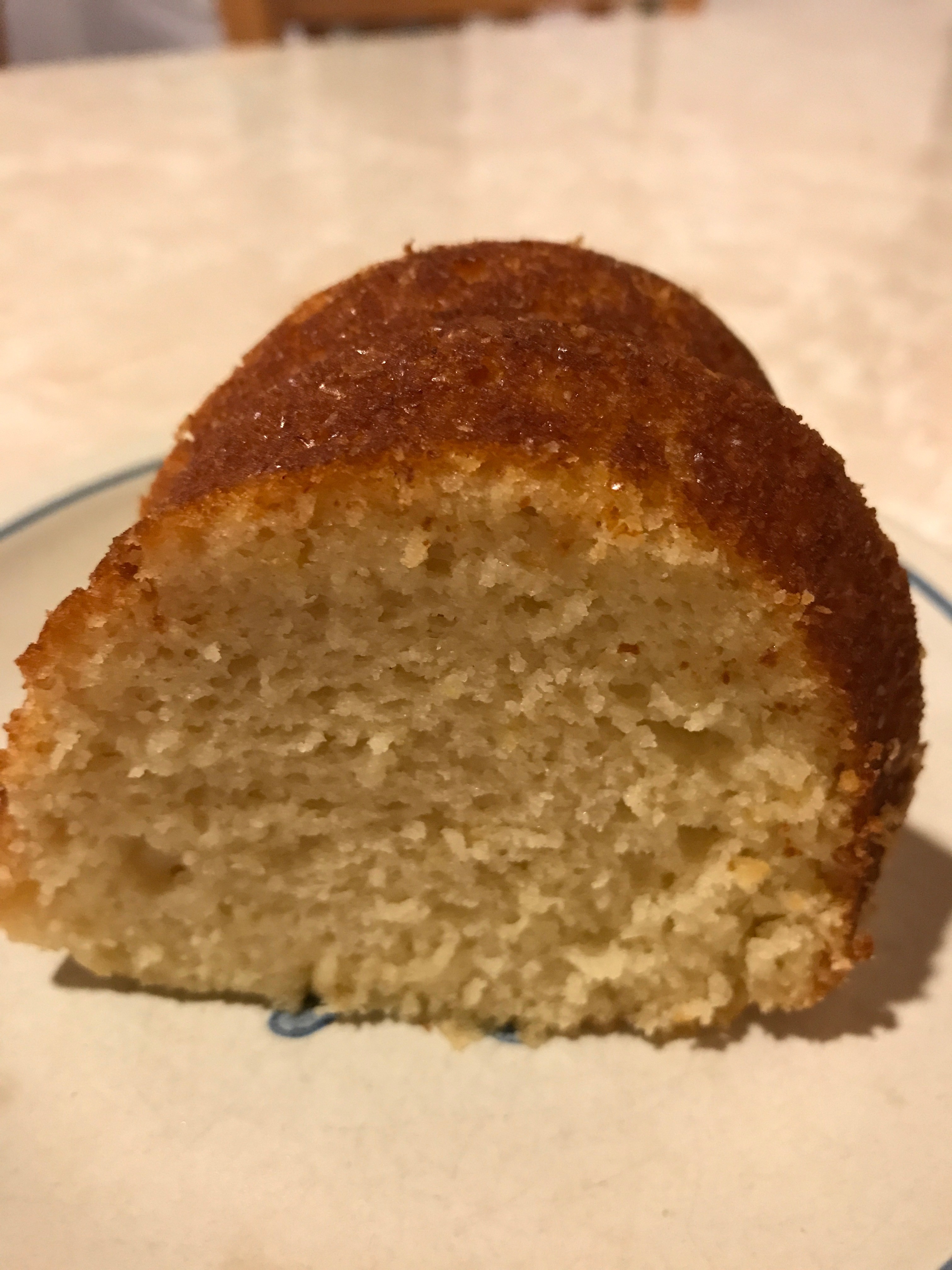
The cake came out amazing! When I served it to company, which included my friend, she said it tasted just like her grandmother’s. So, now she had her grandmother’s cake to serve only allergy friendly and as a much healthier version!

Lemon Bundt Cake

Ingredients:

2 ½ cups Gluten Free Flour blend (I used King Arthur’s whole grain blend)

2 tsp gluten free baking powder

1/2 tsp baking soda

1/2 tsp salt

1 tbsp freshly grated lemon peel (from fresh lemons is the best way to go)

2/3 cup extra light olive oil

1/3 to 2/3 cup Agave (use higher amount if you like a sweet cake)

1/4 to ½ cup Truvia (use higher amount if you like a sweet cake)

½ cup “buttermilk” (I used soy milk mixed with 1/2 tbsp lemon juice)

3 large eggs

1/2 cup freshly squeezed lemon juice (depending on size of lemons, you will need anywhere from 4 to 6 lemons)

1/4 cup plain water

Baking Instructions:

1. Preheat oven to 350 degrees.  Prepare a bundt pan for use.  (I coated the pan with vegan butter, and then I sprinkled the pan with ground flaxseed.)

2.  Mix the flour with baking powder, baking soda, and salt.  Add the lemon peel and mix well. Set aside.

3.  Mix oil, Agave, Truvia, buttermilk, eggs, lemon juice and water.

4.  Mix the dry ingredients into the wet ingredients. Combine well until the dry ingredients are completely moistened.  Batter will be thick.

5.  Evenly spread batter into bundt pan and bake for 35-40 minutes until a toothpick inserted into the cake comes out clean.

6.  Cool on wire rack for at least 15 minutes before removing from the pan and cooling completely.