Cooking Techniques: Allergy Friendly Pie Crusts

website crusts

“Yay! Thanksgiving in October!”

My ninth grade daughter is taking French this year for the first time, and the high school she is at hosts an exchange program with another high school in France. We were asked to host a French student for two weeks, and one of the suggestions for entertainment was to have a Thanksgiving meal with them, since that would be a different experience for them.

We were happy to oblige, as you can tell by my son’s response above.

As we prepared, we explained to our French student that no matter what people say about the Turkey and the side dishes and the rolls, that Thanksgiving really is all about the pies: apple pie, pumpkin pie, mincemeat pie, cranberry pie, pecan pie, sweet potato pie, pear pie, buttermilk pie, and every possible variation of these pies which exist.

For folks with food allergies, though, pies can be tricky. May people struggle with pie-making in general, even when you’re able to use white flour, butter, and salt. The thought of trying to make a pie crust with substitutions is something a lot of folks simply just don’t want to consider.

The good news, though, is that making a gluten, dairy, soy, salt free pie crust is actually easier than making a traditional pie crust. You just need to know a few things, and you’ll be on your way to a great Thanksgiving dessert buffet!

Tips for Allergy Friendly Pie Crusts:

1. It’s just a simple swap: Because pie crusts don’t need to rise the way breads and cakes do, you can simply substitute your favorite gluten free flour for the all purpose flour. No need to make up any special flour blends at all. If you want a flakier, crispier, closer to traditional pie crust, opt for flours like brown rice or sorghum. If you want a more substantive crust with flavor, protein and fiber, try garbanzo bean or gluten free oat flour. If you have a gluten free flour blend sitting around in your closet, you can by all means use, too.

2. Cold is best all the way around: All pie crust recipes call for cold butter or shortening, cold ice water, and to put the made crust in the fridge for a little while. Why? Because warm pie crust dough sticks and won’t roll very well. Warm pie crust dough makes for a denser, less flaky crust.

What I find works wonderfully is to stick your measured butter and/or shortening into the freezer for five 10 minutes or so before using, to put ice cubes into your water, and to put your prepared pie crust dough into the fridge for a minimum of thirty minutes, an hour at the most.

3. “Fat” substitutions work: I use soy free vegan butter and shortening in my pie crusts all the time without any difference. So you can simply use what works for you without worry. It’s a straight one to one substitution ratio. What you should know, though, is that the allergy friendly versions tend to be softer than regular butter and shortening so sometimes I freeze them a little longer more like 10 to 15 minutes.

4. Work around and with the rolling: When it comes to pie crusts, the rolling out of the dough is what usually causes issues for people. I’ve learned a couple of things:

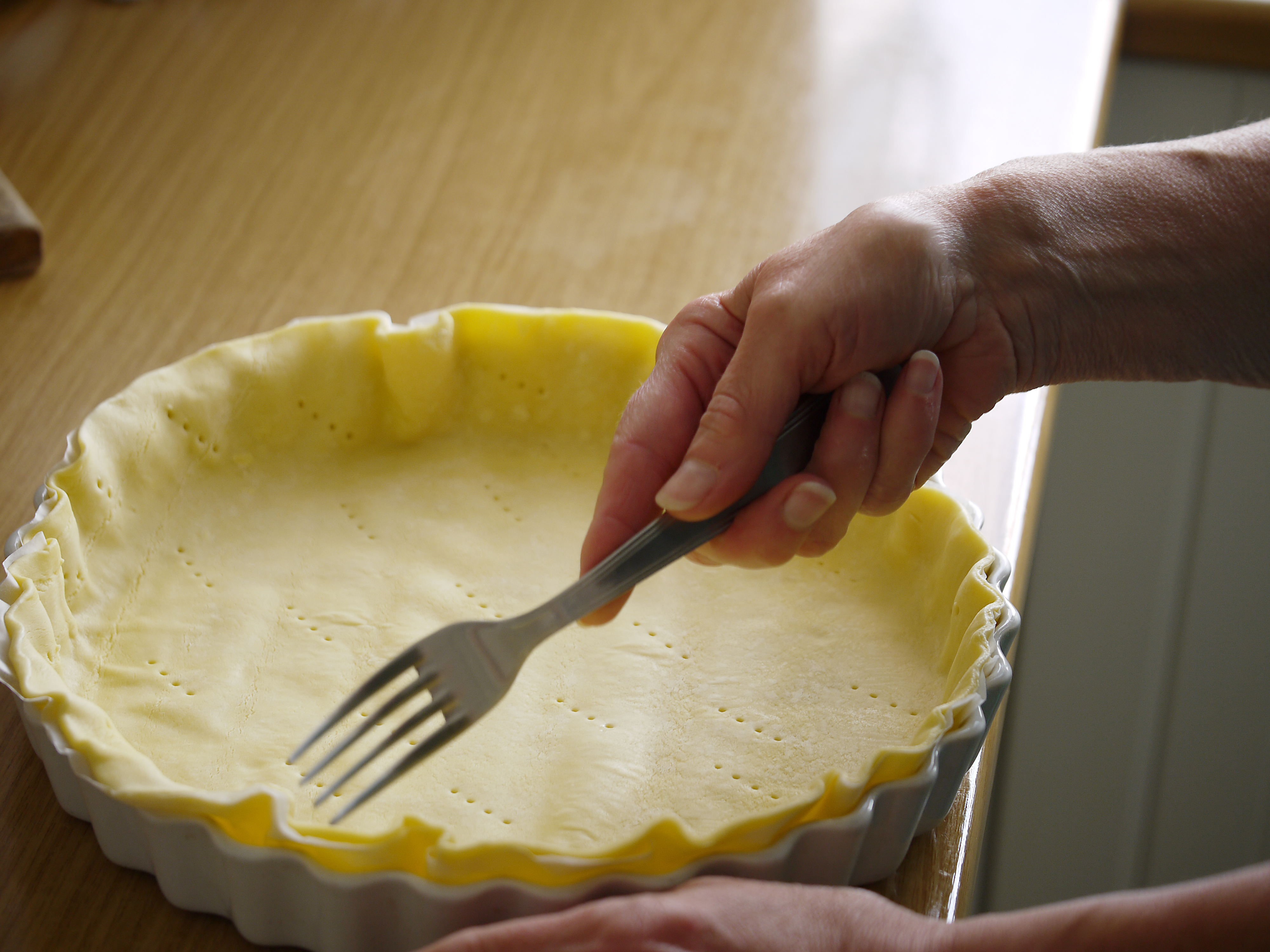
One, you don’t have to roll the bottom crust. I shape my dough into a slightly flattened disk (about an inch high) which I cool in the fridge for my 30-60 minutes, and then I simply use my fingers to push the dough outward from the center to the edges. It takes less than five minutes and actually makes for a more even crust.

Two, when I do have to roll the crust for the top part of a pie, I’ve found that putting the dough between two pieces of wax paper which I’ve also lightly greased is the best approach. The dough rolls easily, doesn’t stick, and comes off when I go to put it on top of the pie.

5. Be creative with the flavoring: Salt is the go-to for pie crusts, but it doesn’t have to be. If you’re making an apple pie, add some cardamom to complement the cinnamon in the pie. If you’re making a pumpkin pie, add grated orange peel as a contrast to the pumpkin. If you’re making a sweet potato pie, add grated nutmeg to intensify the sweet potato taste. You simply add the spices to the dry ingredients of the pie dough before cutting in the fat.

6. Know the effects of the process: Another issue people often have problems with is making their dough too dry or too wet. It’s important to understand the dynamics of the different ways you process the dough:

If you use a food processor which is what many recipes say to do nowadays, the dynamics of the food processing blade means the water is incorporated quickly and efficiently. If you have cut the fat in yourself with a hand pastry blender of two knives and are adding the water by stirring the dough with a fork, the water will drain into different parts of your dough more quickly than you can stir it. As a result you will often need more water for hand processing than when using a food processor.

Also, a food processor will draw the dough naturally into a ball which makes it easy for you to see that you have enough water. When you stir the dough by hand, the dough will usually not form a ball unless you’ve added too much water.

So, a tip: If a recipe calls for a certain tbsp amount of ice water for use in a food processor, it will normally mean you’ll need about two tablespoons more for hand stirring, so if my dough looks dry after the amount specified, I will go ahead and add two more tablespoons, and then even if it looks dry still, I will push the dough together with my hands to form two disks. If the dough will stick together, it’s fine, if there are dry pieces falling off, I simply wet my hands with the ice water and incorporate those dry pieces into the disks.

Struesel Pear Cranberry Pie

(This recipe makes two pies)

Ingredients:

Pie crust, prepare enough for two bottoms only

1 cup agave

1/4 cup water

one 12 oz package of fresh cranberries (be sure to check for stems)

8 pears, washed, cored and sliced into 12-16 slices each

3 tbsp cornstarch

3 tbsp water

2 cups gluten free whole oats

1/2 cup sorghum flour

1 tsp cinnamon

1/2 tsp nutmeg

1/4 tsp ground cloves

1/2 cup vegan soy free butter*

Baking Instructions:

1. Prepare your favorite pie crust recipe. If you don’t have one, Bob’s Red Mill pie crust mix works very well. Would recommend adding some spices to jazz it up a bit, though.  Line the bottoms of two 9.5 inch pie pans with the crusts.

2. Mix agave with water and put into a stove top pan large enough to hold all the pears.

3. Add the cranberries and bring to a boil. Cook for a minute or two until the cranberries begin to pop.

4. When the majority of cranberries have popped, add the pears, stirring to coat with the cranberries. Cook for 3-5 minutes until pears have softened.

5. Mix the cornstarch with the water, and making a well in the center of the pear mixtures, slowly add the cornstarch, stirring continually. Mix the cornstarch syrup thoroughly with the pear-cranberry mixture, cooking for a minute or two to make sure the syrup has thickened.

6. Evenly divide the pear-cranberry mixture between the two pie crusts.

7. In a food processor, add the oats, sorghum flour, cinnamon, nutmeg, cloves and butter.  Process until the mixture is a nice crumbly topping.

8. Evenly distribute the topping over both pies to completely cover them.

9. Bake in a preheated 375 degree oven for about 40-45 minutes until the pie is bubbling and the streusel is golden brown.

10.  Cool completely before serving.

* This makes for a savory topping which contrasts with the sweetness of the pear-cranberry mixture. If you happen to like your toppings sweet, you should add a tbsp or two of Agave with the butter.


Recipe Experiment: Sorghum Quick Bread

“Well, can’t you make some healthy junk food for me to have as a snack?”

If my son was growing up in what the surveys say is a typical American home, he’d be a junk food junkie. Given the choice, cookies, ice cream, cake, chocolate, candy, would always win. As it is, though, he was born into our family so he is more of a junkie wannabe, constantly nagging me for all those things and resigning himself to a banana when the answer is, “No.”

The other day, though, he had a particularly rough day, and he really wanted something sweet but a banana wasn’t cutting it. (Yes, he must be my son, since he’s already learned that food can sometimes provide solace in the face of difficult days! No, I do not approve of folks “feeding” their problems, but face it, sometimes you just need some comfort food!)

One look at his little sad face, and I caved. Since I still have all that sorghum flour I mentioned in the sorghum pancake post, I decided I’d try experimenting. Maybe I could make a quick bread which would be a good healthy snack but provide that little sweet solace my son craved.

Since sorghum flour is so high in fiber, it seemed it would make a great base for a banana bread where ripe bananas would help to cut down on the need for sugar and the fiber in the sorghum flour would counter any spike in blood sugar levels from all the fructose. I didn’t want the bread to be too heavy, though, so I mixed a bit of brown rice flour, and then, because you know how much I like that protein-full garbanzo bean flour, I added that, too.

Because I wanted to steer clear of egg, dairy, and soy allergies, I used ground flaxseed and flax milk, using lemon to make a “buttermilk” and adding vinegar at the end to help the eggless, gluten free breads to rise.

I had wanted to use a little bit of safflower oil, but since the cupboards were bare of that, I opted for a coconut oil and used some coconut sugar, figuring any residual coconut taste would complement the bananas. To add other flavor, I decided this would be a spice bread and incorporated some cinnamon, nutmeg, ginger, allspice and cardamom. Then because this was supposed to be “medicinal” bread, I added mini Enjoy Life chocolate chips, and the results were two loaves of delicious, healthy snacking bread.

My son was happy that he got to eat a “healthy junky snack”, and I was happy that I was able to bring a smile to his face without compromising my principles surrounding junk food.

Sorghum Banana Quick Bread

Ingredients:

2 tbsp golden ground flaxseed mixed with 6 tbsp of water

1/2 cup flax milk* mixed with 1/2 tbsp lemon juice

2 cups mashed very ripe bananas

1/2 cup melted coconut oil**

1/4 cup Agave

2 cups sorghum flour

1/2 cup brown rice flour

1/2 cup garbanzo bean flour***

1/2 cup coconut sugar

1 1/2 tsp baking soda

1/2 tsp sea salt

2 tsp ground cinnamon

1 tsp ground cardamom

1/2 tsp ground ginger

1/2 tsp ground nutmeg

1/2 tsp allspice

1 1/2 cups Enjoy Life allergen free mini chocolate chips****

2 tbsp apple cider vinegar*****

Baking Instructions:

1. Line two 9 x 5 loaf pans with parchment paper so there are wings hanging over the sides of the pan for lifting the bread out, and preheat the oven to 350 degrees.

2. Mix together the flaxseed and water and let it sit for five minutes to thicken.

3. Mix together the milk and lemon juice and let that sit for five minutes to thicken.

4. Mix together the flaxseed mixture, the milk mixture, the mashed bananas, coconut oil and agave. Set aside.

5. Whisk together the sorghum, brown rice and garbanzo bean flours with the coconut sugar, cinnamon, cardamom, ginger, nutmeg, and allspice.

6. Add the chocolate chips to the dry mixture, and then add the dry mixture to the wet ingredients with the apple cider vinegar.  Mix quickly and well.

7. Evenly divide the batter between the two loaf pans.

8. Bake for 40 minutes until the bread is golden brown and a toothpick in the center comes out mostly clean.

9. Cool the bread for 10 minutes in the pan. Then remove the bread, using the parchment paper wings to a wire cooling rack. Cool another ten minutes, and then carefully slide the loaves off the parchment paper onto the wire rack.

10. Cool completely, slice and enjoy.  Or eat it while it’s still warm, if you can’t wait!

* You can use any other type of milk, too.

** Try it with safflower oil or vegan melted butter instead of coconut oil if you have a tree nut allergy.

*** If you have a legume allergy, just double the brown rice flour or opt for another type altogether.

**** If you want to mix it up, omit the chocolate chips and try using chopped dried plums or apricots or dates instead.

*****If you don’t have apple cider vinegar, white distilled is fine.

Final Note: If you don’t want to use all those spices, don’t. Feel free to omit any of them or experiment with your own flavors.


Menu Suggestion: Mini Cheesecakes

website mini cheesecakes

“You’re going to host a brunch? With everything you have going on?”

Even after 20 years together my very introverted husband doesn’t fully understand his more extroverted wife. The more he has happening, the more likely my husband is to retreat to a corner of the house for time alone because being with people drains him. For me, the crazier my life is, the more I need time with people with whom I can “refuel”. Extroverts are invigorated by the energy they get from spending time with people.

So, when I had an article due, a baking workshop to prepare for, several recitals, baseball games, and volunteer meetings to attend, my daughter’s graduation to prepare for, relatives coming in from town, and literally a dozen doctors’ appointments for myself and my children, it seemed a good time to host a brunch of some of my closest friends.

We had a great time, and I received the laughter and love I needed to sustain me through the hectic weeks to follow.

So, when I received a question this past week at a baking workshop about what I’d recommend as the perfect dessert to take to a potluck brunch if you had to make something gluten, dairy and tree nut free, I was ready with an answer: mini cheese cakes.

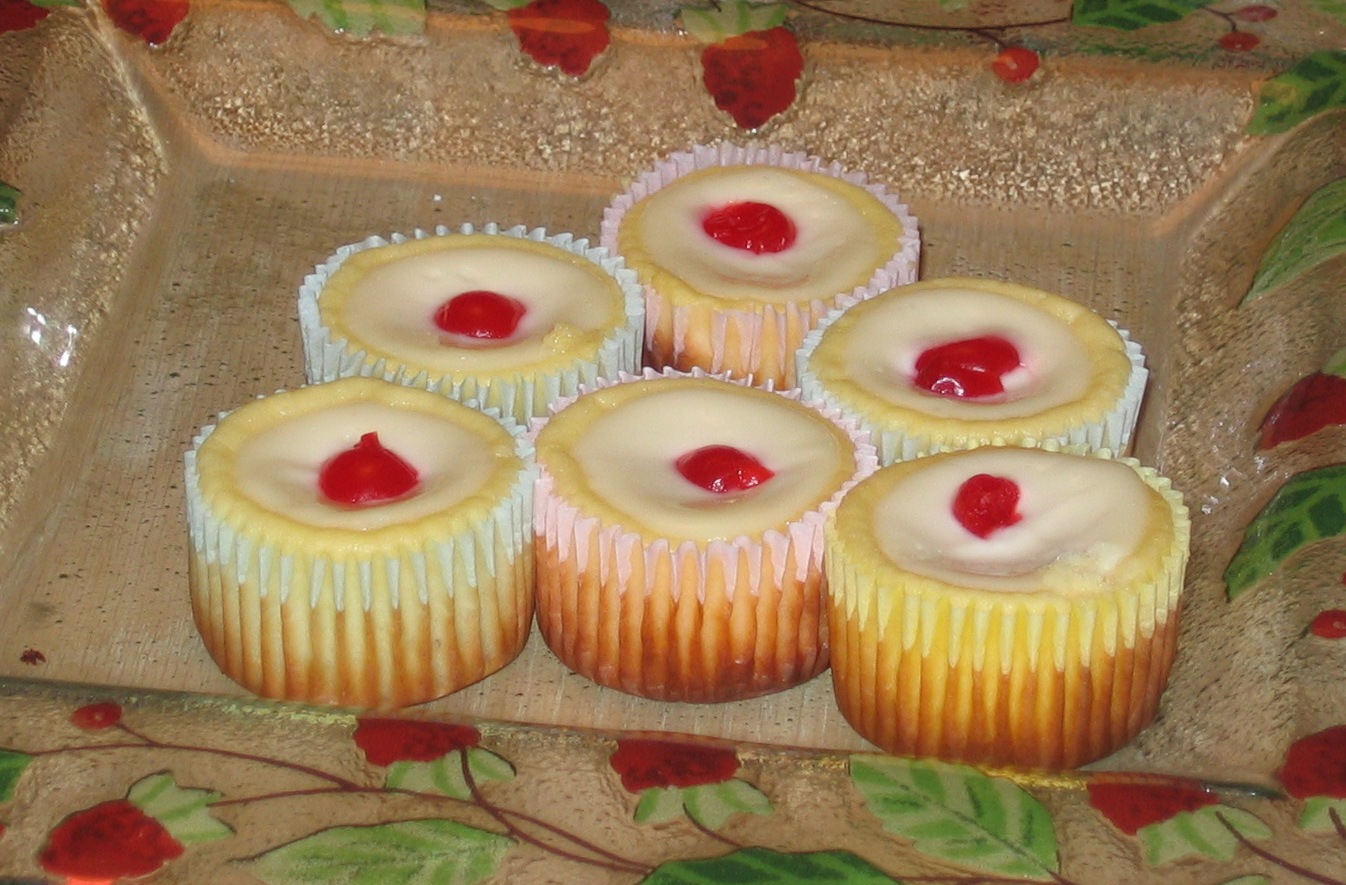
Mini cheesecakes are elegant, easy to make, versatile, and very adaptable for dairy, gluten and tree nut allergies.

Cheesecake Tips:

1. The crust: Crusts for cheesecake can be made from just about anything you want – honey graham crackers, animal crackers, shortbread cookies, oreo cookies coconut cookies, chocolate grahams, ginger cookies  – your imagination is your only limitation. And today we live in a time where all the above can be found in gluten, dairy, and nut free versions at the grocery store. Depending on the type of cheesecake you want to make, you can vary which type of crust you want to make.

Making crusts are ridiculously easy, too. Simply zoop up your cookie or graham crackers in a food processor to make crumbs, or if you don’t have a food processor, put the cookies or crackers into a ziploc bag, seal, and whack away with a rolling pin or the end of an ice cream scoop or a clean meat mallet. then you mix the crumbs with a little bit of a sweetener like Agave or coconut sugar and a little bit of a fat like melted vegan butter or safflower oil. A good ratio is one tablespoon each of the sweetener and fat for every 1/3 cup of crumbs.

And if you’re trying to watch your overall caloric, carb and fat content, you can always omit a crust altogether.

2. The cheesecake filling: Cream cheese is the main ingredient in cheesecake. Today, folks with dairy allergies can find vegan versions of cream cheese at their local grocery store which makes for a nice substitute. Sometimes, though, folks prefer to use straight tofu, which works well, too.

The key tip for making good cheesecake is to be sure all your ingredients come to room temperature. If your cream cheese or tofu are cold, you’ll get lumps in your cheesecake, which doesn’t affect the taste but definitely detracts from the texture. To make sure your cream cheese isn’t affected by other ingredients, all other ingredients like your eggs should be at room temperature, too.

You should always cream the cream cheese alone before adding any of the other ingredients. Sometimes an online recipe will tell you to just mix all the ingredients together. Don’t. It will affect the texture of your cheesecake. Also, if you start to cream your cream cheese and find it’s still too cold, you can then just wait a little bit and resume creaming. If all the ingredients are together, you’ll never get the lumps out, no matter how long you wait.

If you are using cream cheese instead of tofu, you should decide on the type of texture you want for your cheesecake. Using only cream cheese makes for a nice, thick, “cheesy” cheesecake. If you want your cheesecake to be a bit silkier, adding sour cream (a vegan version) or silken tofu or a dairy free yogurt will lighten the cheesecake. If lightening the cheesecake, use a 3 to 1 ratio (e.g. 3 containers of cream cheese with 1 container of sour cream).

If you’re making cheesecake with tofu, I like to use the silken tofu because it’s so much smoother. One 15/16 ounce container is about equivalent to two containers of cream cheese.

3. The flavoring: You can make just about any type of cheesecake you desire. For a regular cheesecake, you only add vanilla and some sweetener. If you want a flavor, you can add lemon or orange zest, unsweetened cocoa powder, raspberry liquor, pureed cooked pumpkin or squash, or even herbs like rosemary and basil for a more savory type of cheesecake.

If you’re in a fun mood, you can make a layered cheesecake where you layer two different flavors of cheesecake or you layer cheese cake on top of a brownie crust or layer a mousse on top of cheesecake. The ideas are endless.

4. The sweetener: Regular cheesecake will often call for about 1/4 cup of sugar per one 8 ounce container of cream cheese. If you’re watching sugar, you can always use Agave (half the amount of sugar called for) or coconut sugar (same ratio as sugar) or Truvia (half the amount you’d use for sugar).

If you’re using Agave, the best way to incorporate it into the cream cheese is to slowly pour the Agave into the creamed cream cheese mixture while the mixer is constantly stirring and incorporating the Agave into the mixture. For coconut sugar and truvia, simply follow the instructions for sugar.

5. The eggs: Most cheesecake recipes call for eggs to help give the cheesecake structure. If you’re trying to watch your cholesterol, you can use egg whites only. The cheesecake will be slighly drier and a little less creamy but some people actually prefer their cheesecake that way.

If you want to avoid eggs altogether you can simply omit the eggs, but you’ll need to add a little flour or cornstarch to give the cheesecake some structure, about a 1/4 cup of either. I make an eggless chocolate cheesecake where I mix  a 6 oz container of yogurt with cornstarch as a substitute for the eggs.

6. Making the cheesecake mini: The advantages of mini cheesecakes are several. For one, they bake up more quickly. Secondly, they are easier to serve. Thirdly, if you’re taking them to a party, they’re easy to transport. Fourthly, when you decorate them, you can vary the toppings and have a variety of cheesecakes to offer to the guests.

To make mini cheesecakes, you just use muffin tins. I like to line my muffin tins with paper liners to prevent any cross-contamination and for easy removal of the cheesecake, but you can also simply spray or grease the tins, too.

7. Baking the cheesecake: Cheesecakes are usually baked at low heat to prevent cracking and drying out the cheesecake. So, the best temperature is about 325 degrees. If you want to have extra smooth cheesecakes and really prevent cracking,it’s best to add some moisture to your oven. You can fill a pan with some hot water and put it at the bottom of your oven while the cheesecakes cook or you can put the muffin tins into another larger pan which is filled halfway with hot water. If you don’t do either of these steps, it is not a big deal. The cheesecakes just may crack a bit on top or be a little less smooth and moist. They’ll still taste good.

When your cheesecake is done, the edges are more done than the center. A knife inserted into the edges should come out clean while the middle should still be less stiff. It shouldn’t be liquidly and runny still, but it shouldn’t be as stiff as the edges. If you overcook the cheesecakes and the middles are stiff and cracked, don’t sweat it. the cheesecakes won’t be as creamy, but they’ll still be good and you can cover the cracks with your lovely toppings.

8. Cooling the cheesecakes: Cheesecake needs to cool before you eat it because it’s the coolin process that finishes cooking the cheesecake center and which solidifies the cheesecake. It’s best to let the cheesecakes cool at room temperature first and then to put them into the fridge.

9. The toppings: You can top your cheesecakes with just about anything. Slices of fruit like strawberries, kiwi or blueberries or a chocolate drizzle or crushed cookies or a whole cookie or a raspberry drizzle or shredded coconut. Your imagination is the only limit.

You can wait to add fruit garnishes until right before you’re taking them to a party or before you serve them so the fruit will stay fresh. Drizzles can be added while the cheesecakes are still warm or when they are cold. Cookies should be put on while the cheesecakes are still soft enough for you to push them down into the cheesecake.

10. Transporting mini cheesecakes: Always keep your cheesecakes in the fridge until it’s time to take them to the party. If you’re going a short distance, you don’t need to worry about keeping them cold, but if you’re going far away, pop them into a cooler with an ice pack or into a bag with a ziplock baggie full of ice.

Since the mini-cheesecakes are muffin size, you can usually fit them into a rectangular tupperware container or cupcake holder and transport them easily.

Mini Cheesecakes

Ingredients:

2 cups Smorables Gluten Free Graham crackers (about one box)
6 tbsp melted vegan butter
3 tbsp Agave
4 8 oz containers Tofutti vegan cream cheese, at room temperature
1/2 cup Agave
2 tsp gluten free vanilla
4 eggs, at room temperature

Baking Instructions:

1. Preheat oven to 325 degrees and line 24 muffin cups with cupcake liners.

2. Crush the graham crackers into crumbs by either processing them in a food processor or by whacking them with a rolling pin or mallet in a sealed bag.

3. Mix the melted butter with the Agave and blend well into the graham cracker crumbs until the crumbs are moist.

4. Evenly divide the crumbs among the muffin cups, about one tablespoon per muffin cup. Press the crumbs down to form an even crust.

5. Bake in the oven for 5 minutes and remove onto a cooling rack.

6. Cream the cream cheese in a mixer until smooth and creamy.

7. Slowly pour in the Agave while continually stirring until all the Agave is incorported into the cream cheese

8. Add in the vanilla.

9. Add the eggs, incorporating them one at a time.

10. Divide the cheesecake filling evenly among the muffin cups. They will be almost to the top of the muffin cups.

11. Bake until the cheesecakes are dry on the edges and mostly firm but still slightly soft in the center. This will take between 15 and 25 minutes depending on the thickness of your muffin tins and how evenly your oven is heating food.

12. Remove the cheesecakes to a wire cooling rack and cool to room temp. Put into the fridge so they can cool completely and solidify.

13. Garnish with fruit or chocolate drizzle or raspberry drizzle or cookie crumbs and serve.

Recipe Makeover: Wacky Cupcakes

website wacky cake

“It’s just not wacky enough.”

The saying is that “necessity is the mother of invention”, and certainly for families in the Depression and World War eras, lack of rations led to the creation of what we know as wacky or Depression cake. These are cakes made without eggs and milk which were scarce, and today many people with egg and dairy allergies have turned to them gratefully for countless number of birthday and family parties.

The email I received yesterday, though, made me laugh because it said, “Unfortunately, the recipe just isn’t wacky enough for my family.” This particular person also needed the cake to be gluten and sugar free in addition to egg and dairy free.

And I’m finding that to be a common problem among folks who send me emails. The world has come a long way: grocery stores, online sites and even restaurants carry gluten free products, nut free foods, dairy free items, and sugar free versions of just about everything. Unfortunately, for the person who is allergic to more than one of these, it can still be difficult to find foods which meet all the needed “free” criteria.

So, this morning, I took a gander at reworking the two recipes sent to me. I had signed up to bring some allergy friendly desserts to the Teacher Appreciation luncheon my children’s elementary and middle schools were hosting, so I decided I’d use the recipes to make cupcakes.

The first recipe sent was for a plain wacky cake calling for 3 cups of all purpose flour, 2 cups of sugar, 2 tsp baking soda, 1 tsp salt, 2 tbsp vinegar, 2 tsp vanilla, 3/4 cup vegetable oil, and 2 cups of water.

The second recipe was for a chocolate wacky cake calling for 3 cups of all purpose flour, 2 cups of sugar, 2 tsp baking soda, 1 tsp salt, 1/2 cup unsweetened cocoa powder,  3/4 cup vegetable oil, 2 tsp vanilla, 2 tbsp vinegar, and 2 cups cold water.

For both recipes, it just called for mixing everything together.

The Makeovers:

1. The flour: Since it needed to be gluten free, I had to decide which type of flour blend to use. Since the recipe is already compensating for the loss of eggs with the use of vinegar and baking soda, I was concerned about the batter’s ability to rise. As such, I decided that Bob’s Red Mill Biscuit and Baking Gluten Free Mix which is a blend of garbanzo bean flour, rice flour, cornstarch, xanthan gum, and baking powder would be best.

Why? Because 1) the mix of rice and garbanzo bean flour would allow for the higher fiber and protein without being too heavy; 2) the mix already has the xanthan gum in it which means one less item to mix in myself; and 3) the extra baking powder would help to compensate for the lack of leavening ingredients.

Folks who can have gluten could always use a white whole wheat or red whole wheat to boost the nutrients and fiber in the recipe.

2. The sugar: I decide that I would opt for two different sugar substitutes. For the chocolate wacky cake, I used coconut sugar because I wanted to try a dry substitute and because I thought the brown sugar flavor of the coconut sugar would complement the chocolate flavor better. I used a one for one substitute.

For the plain wacky cake, I opted for Agave, wanting to experiment with a liquid substitute. Also, I had decided I’d turn the cake into a chocolate chip spice cupcake which I felt the Agave would complement better. For the Agave, though, I used half the amount of called for sugar, and added 1/2 cup to the amount of flour needed to counter the extra liquid.

3. The oil: Because I prefer healthier plant oils, I chose to swap the vegetable oil with other types. For the chocolate cake, I used a blend of olive, grapeseed and canola oil which would lend a fruity undertone to the chocolate flavor. For the vanilla cake, I chose to use safflower oil to lend some flavor without overpowering it to the vanilla.

4. The vinegar: Since the recipe didn’t specify, I was presuming they were calling for regular distilled white vinegar. Since I prefer to always add a little “something”, I decided to use a raspberry vinegar for the chocolate cake and an apple cider vinegar for the vanilla cake.

5. The additions: I chose to keep the baking soda, salt and vanilla the same for each recipe, but I added cinnamon and nutmeg to the vanilla cake to make it more a vanilla spice cake, and I swapped the regular unsweetened cocoa powder for Hershey’s Special Dark unsweetened cocoa powder to lend a deeper chocolate flavor.

I also decided to throw in chocolate chips to help give the cakes more structure. For the chocolate cake, I added a package of Enjoy Life mini chocolate chips. For the vanilla cake, though, I wanted more of the taste to exude from the batter so I put a package of Enjoy Life mega chunks into my food processor and ground them to tiny pieces which I incorporated throughout the batter.

6. The assembling: The original recipes called for simply mixing everything up. Since I wanted to make sure the batter would fully incorporate all the necessary ingredients for adding structure and leavening, I opted to do the cake batter in steps. First, I mixed all the dry ingredients minus the chocolate chips/pieces together. Then I used a spoon to incorporate the chocolate chips/pieces into the dry ingredients. Then I mixed all the wet ingredients minus the vinegar together. Finally, I added the liquid mixture to the dry mixture, adding the vinegar last and mixing until everything was well-blended. By doing this, I ensured that the effects of the vinegar would last through putting the batter into the muffin tins and into the oven.

7. The cooking: Since I needed to bake for the luncheon and because I wanted to see quickly if the structure of the batter would hold up, I opted to make cupcakes instead. I lined 24 muffin cups per each recipe with muffin liners and scooped batter into each cup all the way to the top of the muffin liner, being careful to simply scoop the batter in without squashing it down. Then I baked the cupcakes for 20 minutes in a preheated 350 degree oven, turning them halfway through the cooking time.

Upon removing them, I left them in the muffin tins for about 15 minutes before removing them. This allowed the cupcakes to begin their cooling inside the tins which allows the structure of the cupcake to gain stability before being removed. After the 15 minutes, I removed the cupcakes to wire cooling racks to cool completely.

8. The new recipes:

For the chocolate wacky cupcakes, the new recipe was: Mix 3 cups Bob’s Red Mill Biscuit and Baking Gluten Free flour with 2 cups coconut sugar, 1/2 cup Hershey’s Special Dark Unsweetened cocoa powder, 1 tsp salt, and 2 tsp baking soda. Then add one 10 oz package of Enjoy Life chocolate chips. Set aside. Mix 3/4 cup healthy blend oil (olive, grapeseed, canola mix) with 2 tsp vanilla, and 2 cups cold water. Add the liquid mixture to the dry mixture with 2 tbsp raspberry vinegar. Blend well. Gently scoop mounds of the batter into 24 lined muffin cups, filling to the top. Bake in a preheated 350 degree oven for 20 minutes, turning halfway through cooking time. Cool in tins for 15 minutes. Remove to wire cooling racks.

For the vanilla spice wacky cupcakes, the new recipe was: Mix 3 1/2 cups Bob’s Red Mill Biscuit and Baking Gluten Free flour with 1 tsp salt, 2 tsp ground cinnamon, 1 tsp nutmeg, and 2 tsp baking soda. Food process one one 10 oz package of Enjoy Life chocolate mega chunks into tiny pieces and add to the dry mixture. Set aside. Mix 3/4 cup safflower oil with 1 cup Agave, 2 tsp vanilla, and 2 cups cold water. Add the liquid mixture to the dry mixture with 2 tbsp apple cider vinegar. Blend well. Gently scoop mounds of the batter into 24 lined muffin cups, filling to the top. Bake in a preheated 350 degree oven for 20 minutes, turning halfway through cooking time. Cool in tins for 15 minutes. Remove to wire cooling racks.


Sugar-Coated: Substituting for Sugar

website sugarcoated

“Zer,zer, zer, erk, I’m out of gas.”

My son stopped directly in front of me, his arms extended, a big smile on his face. This was my cue to give him a big hug – the “gas” he needed to continue with his playing.  At eight, though, he actually requires very little “gas” to make him go.  His energy is unbounded, and I very often wish I could bottle it and put it aside for those days when my own energy levels are low.

Unfortunately for many of us, long days and too much on our plates lend themselves too easily to being sapped of our “get up and go” just when we need it the most.  And it’s in those moments when we’re most likely to reach for that five letter word – sugar.  Most of us know enough these days to avoid the Snickers bar for our “quick pick me up”, but the abundance of “healthy” power bars on the market belies just how bad even those are for you.

The dangers of sugar

My husband is a history teacher, and he tells me that the new colonists were quick to realize the benefits of growing the four most addictive crops at the time:  tobacco, sugar, coffee, and chocolate.   When we think about refined sugar, we think about its taste and the quick burst of energy it provides us.  We don’t often think about the fact that sugar,  in many ways, is a poison that our bodies react to unfavorably.  It provides nothing our bodies need, and in fact, it depletes our bodies of necessary nutrients as our bodies work to eliminate the refined sugar from our systems.  Studies link refined sugar to the rise in diabetes, the increase in heart attacks, and even to thyroid problems.

What sugar does

In baked goods, though, sugar is priceless.  It controls the temperature of our ingredients for timely baking; it causes fermentation so our desserts can rise properly; it helps with the “browning” necessary for tasty baked goods; it absorbs liquid to keep our cakes moist; and it even breaks up gluten to yield those tender, flaky desserts we crave.  To think of replacing sugar with something else can seem almost like a sin to many people, and I know folks who won’t even try a dessert made without sugar, because they’re convinced  the dessert simply can’t be as good.

I can tell you, though, that cooking without sugar is not as difficult as it seems, and the desserts are definitely worth trying.

Replacing sugar with fruit

There are many, many different substitutes on the market which people can try, but I confess that I prefer to use one of three options:  Ripe, sweet fruit or vegetables; Agave; and Truvia (Stevia).  Whenever possible, it really is best to simply use fruit.  With fruit, you can get all of the nutrients and fiber that your body needs, along with the sweetness derived naturally.  When baking, simply replace half of the sugar called for with a fruit puree of your choice.  Milder purees like applesauce work well in just about anything.  Pureed bananas, peaches, mangos, prunes, pumpkin, figs, etc… work well in recipes which require stronger or similar flavors.

Replacing sugar with Agave or Honey or Truvia

If you want to eliminate the sugar altogether from a recipe, though, I like to use Agave or Honey or Truvia.  Don’t be fooled, though – simply because they’re less refined than sugar does not make them absolutely better.  What they do have going for them, though, is that you can use substantially less of them than sugar, reducing how much “sugar” you’re putting into your body.  For most recipes replacing the total amount of sugar with half the quantity of Agave or Honey or Truvia is a good place to begin.  For many recipes, you may even find that you can reduce by even more, depending on how sweet your sweet tooth is.

Tips for Agave or Honey

Here are the tips you need:  Because Agave or Honey is liquid, you need to make sure you’ve balanced your wet to dry ratio.  For baked goods like cakes and breads which use a lot of sugar, two options work best:  Either increase your flour amount by ½ cup or decrease your liquids by ½ cup.  If you’re making something like muffins or pancakes, though, where the sugar amounts are actually quite small, you don’t need to make any adjustments at all.

Tips for Truvia

Working with Truvia is a little bit trickier.  Most folks like to simply use the stevia/sugar blends because you can just substitute a one to one ratio for the full sugar, which reduces how much sugar you’re putting into your baked product.  If you want to completely eliminate the sugar, though, you can use half the amount of Truvia as the sugar called for, but you’ll need to increase your dry ingredients (usually the flour amount) to compensate for the missing sugar.  This isn’t necessarily a straight ratio, though.  Usually, you’ll only need to replace about half of the missing sugar to compensate.

A trick I like to use:  Use identical bowls of the same shape and size, one for your dry ingredients, and one for your wet.  If you’re making cakes or cupcakes, you’ll find that the two amounts will normally match in depth and amount.  If you’re making muffins, cookies, or breads, the dry ingredients will usually be slightly more than the wet.  After you’ve experimented a few times, you’ll become quite adept at “eyeballing” and knowing whether you need to add or subtract from one bowl or the other before mixing them together.

If you’re cooking with Agave or Truvia or Honey, it’s always best to start with a small amount and add as necessary.  For example, my children like their Brussels sprouts to have a little sweetness to them.  Simply adding half a teaspoon of Agave to an herbed olive oil marinade is more than enough to satisfy them.  The mantra to remember is:  Less is best.

Replacing sugar with Coconut Sugar

On the market these days is coconut sugar which has a low glycemic index because it’s from coconuts. What’s nice about coconut sugar, if you’re not allergic to it, is that it works the same as brown sugar in a recipe so you can simply substitute one for one. I often will decrease the amount because I don’t like things overly sweet but you can experiment and see what taste preferences you have.

Chocolate Cranberry Cookies

Ingredients:

10 oz Enjoy Life mini chocolate chips (or another type if you prefer)

1/2 cup Agave

2 cups 100% whole wheat flour or favorite gluten free flour blend

6 tbsp unsweetened cocoa powder

2 tsp baking powder

1/2 tsp coarse salt

1 cup soy free vegan butter, at room temperature (or another type if you want)

1/3 cup Truvia 

4 eggs, at room temperature or egg white equivalent or fruit puree equivalent 

1 tsp vanilla

1 cup chopped Craisins (if you have a food processor, use it to chop the craisins; you can also just add them as is but the cookie will be “chunkier”)

1 cup Enjoy Life mini chocolate chips (or another type if you prefer)

Baking Instructions:

1.  Preheat the oven to 350 degrees.  Prepare your cookie pans.  (I would use “If You Care” parchment paper, but you can Pam spray or coat the pans with oil or butter.)

2.  Melt the mini chips with the Agave over a pan of simmering water.  (I put a small pan of water on the burner and place a large pan with a handle on top with the chocolate in it.  Works well.)  Set aside.

3.  Combine the flour, cocoa, baking powder, and salt.  Set aside.

4.  Beat the “butter’ until light and fluffy (if you have a mixer, use it).  Slowly add in the Truvia, mixing well an using a rubber spatula to scrape the sides as necessary.  Add the eggs, one at a time (or whites or puree) and blend well.

5.  Slowly add the melted chocolate and vanilla, scraping the sides with a rubber spatula as necessary.

6.  Add the flour mixture, and mix just until the dry ingredients are moist.  Fold in the chocolate chips and craisins.

7.  Drop the cookie dough by 1/4 cupfuls, leaving about 2 inches of space in between.  Bake for about 15 minutes, rotating your cookie sheet halfway through.  The edges will be slightly dry and the tops cracked a little.

8.  Cool for a couple of minutes on the sheet before transferring them to a wire rack to cool completely.