Valentine Greetings: Chocolate Surprise Cupcakes

choc-surprise-cupcakes

“Yay! Another snow day!”

After a winter of warm days and relatively little snow, Mother Nature decided that we needed three feet to fall within a week and a half. My middle child is vexed that the three tests she was supposed to have had a week ago still have not been administered due to two snow days and three start of school delays. My oldest and youngest, however, have been thrilled for the extra time to hang out in dorms with no classes (my oldest at college) and to play at home with the family (my youngest in middle school).

As a family, we’ve made use of the snowbound time to catch up on the never-ending t0-do list and to spend time together since the youngest really wanted us to play with him. Many hours sledding in our backyard, playing board games, competing on the Wii, and watching reruns of old shows left the family in the mood for something “special” to eat.

Since Valentine’s Day is tomorrow, we decided to make some Chocolate Surprise Cupcakes, one of the family’s favorites. You make a chocolate raspberry center which you tuck into the cupcake batter so when you eat it, you enjoy a nice creamy flavor surprise.  What’s nice about this recipe is that it’s free of most foods folks tend to be allergic to, so just about anyone can enjoy them.

Chocolate Surprise Cupcakes

Filling Ingredients:

1 cup Enjoy Life mini chocolate chips

2 tbsp Polaner’s seedless raspberry All-Fruit

2 tbsp Earth Balance vegan, soy free butter

Cooking Instructions:

  1. In a microwave safe large glass container, place all three ingredients and microwave for 1 minute. Stir until the mixture is completely smooth.
  2. Place the container in the refrigerator and let the mixture cool and begin to thicken. It can take anywhere from 10-30 minutes, depending on how hot your microwave makes the chocolate, how exact your measuring is, etc…. What you want is for the mixture to be thick enough when you spoon it that you can mound the chocolate onto a cookie sheet.
  3. When the chocolate has thickened enough to form little mounds, place a piece of wax paper on a cookie sheet and create 24 chocolate mounds using a teaspoon to scoop out the chocolate mixture. You essentially are making a little “hershey kiss” of your own.
  4. Once you have 24 more or less equally sized chocolate mounds, put them into the fridge to harden while you make the cupcake batter.

Cupcake Ingredients:

3 cups favorite gluten free flour blend

1/2 cup unsweetened Hershey’s Special Dark cocoa powder

3 tsp baking soda

1 tsp salt

1 cup agave

3/4 cup safflower oil

2 cups water

2 tsp vanilla

3 tbsp vinegar

Baking Instructions:

  1. Preheat oven to 350 degrees and line 24 cupcake tins with cupcake liners.
  2. Mix the flour, cocoa powder, baking soda and salt well and set aside.
  3. Mix the agave, oil, water, and vanilla and add to the dry ingredients with the vinegar. Mix well until the dry ingredients are moistened.
  4. Put 1 1/2 tbsp of batter into each of the 24 cupcake tins.
  5. Carefully peel and place one of the chocolate raspberry mounds into the center of each of the cupcake tins.
  6. Divide the remaining batter evenly among the cupcake tins (about 1 1/12 tbsp) to cover the chocolate mounds.
  7. Bake in the preheated oven for 15 to 20 minutes. The cupcakes will be rounded, firm to the touch, and a toothpick inserted into the center will come out clean. My oven always bakes them in 15 minutes but a friend said hers took 20.
  8. Let the cupcakes sit in the tins for 5 minutes. Then remove them to a wire cooling rack to cool completely.
  9. Frost with your favorite frosting recipe or use the one below is one I’ve adapted from Elana’s Pantry.

Frosting Ingredients:

1 cup Enjoy Life mini chocolate chips

1/2 cup avocado oil

2 tbsp agave

2 tsp vanilla

your preference of “milk”

Cooking Instructions:

  1. Mix the chips, oil, and agave together in a microwave safe glass container.
  2. Heat the chips for 1 minute. Stir. If it needs to be heated more, do so 20 seconds at a time until you can stir the chips smooth.
  3. Add the vanilla and stir well.
  4. Transfer the mixture to your mixer bowl.
  5. Put into the freezer until the mixture begins to hard around the edges but is still softer in the center.  This can take between 15 to 30 minutes.
  6. Using your mixer, blend the chocolate mixture on high speed until the mixture becomes thick and smooth. You may need to scrape down the sides a couple of times.
  7. Add “milk”, a teaspoon at a time until the mixture is to the creamy consistency you prefer for frosting your cupcakes.


Healthy Habits: Tofu

“The parts all contribute to the whole.”

As a drama director my job is to help folks bring every aspect of a character to life. Some excel at body language. Others mimic voices well. Most know how to speak with emotion but not always how to use facial expressions to enhance the emotion. When I work with folks, I get questions like, “But I sound just like an old lady. Isn’t that enough?” Or “What difference does it make how I walk?” And then I have to explain that every aspect of a character – how they speak, walk, dress, gesture – has to be spot on for the audience to believe in the illusion we are creating.

When I received an email this week from a wife who wants to get her husband to eat more tofu, I thought about the types of illusions created by food and cooking. Restaurant chefs learn how to garnish plated food artistically because “beautiful” food is better tasting. Right? Not necessarily but the illusion is created and our brains believe it, so our palate does too… sometimes. *grin* When we’re sad or upset, and we eat, it’s because somewhere along the line the illusion was created that “comfort” food is comforting. And sometimes it is, but most of the times it just makes us fat. *wry grin*

That doesn’t mean all illusions are bad, though, when it comes to food. For food like tofu, creating illusions is precisely what helps when a wife wants her husband to eat more of it so he can live a longer, healthier life. *grin* When one’s husband really wants a meat chili, what can you do to get his brain to believe in the satisfaction of a tofu chili instead? If he wants chicken in his stir fry, how can you make tofu an acceptable substitute?

The answer lies in the parts contributing to the whole. For example, what makes chili taste like chili? It’s the spices and the traditional add-in’s. Almost every chili recipe calls for chili powder or actual chili peppers. Most include onions and peppers, regardless of whatever else is also added. So, the key is to infuse all the part of a tofu chili with the flavoring which your taste buds associate with a chili. The other important factor in chili is the texture. People are particular about chili – that’s why you see all the debates about chunks of meat versus ground meat and meat only versus meat with beans. So, you have to mimic the texture of the type of chili you’re trying to substitute tofu into. I have a recipe below which I use which a lot of folks have liked in the past.

Another example of how to create illusions with tofu is baked tofu recipes. Commonly folks will substitute tofu in a stir fry or recipe by simply adding chopped tofu instead of chicken or beef. The problem is that folks were expecting a “meaty” taste and texture, but plain tofu is not going to supply that. Baked tofu, however, does. When tofu is baked, it becomes crispy on the outside and meaty, chewy in the center, the way beef and chicken can be. It’s obviously not the exact same, but if you flavor the tofu as you would the beef or chicken in a stir fry, you’ll find that the brain can buy into the substitution. Below I’ve pasted in some tips for making baked tofu.

Crockpot Tofu Chili

Ingredients:

2 cups chopped kale

2 cups sweet white corn

1/2 cup chopped onions

1 1/2 cup chopped peppers (I like to mix red, yellow and green for color)

2 cups chopped butternut squash

1 tsp minced garlic

1 tsp ground chili powder

1/2 tsp ground cumin

28 ounce no salt added diced tomatoes

16 oz can drained, rinsed no salt added dark red kidney beans

1 tsp minced garlic

1 tsp ground chili powder

1/2 tsp ground cumin

2 tsp olive oil

1/2 tsp ground cumin

1 tsp ground chili powder

1 tsp minced garlic

1 tsp ground onion powder

2 14-16 ounce extra firm tofu

1 tsp ground cumin

1 tsp ground chili powder

1 tsp minced garlic

Cooking Instructions:

  1. Mix the kale, corn, onions, peppers, and squash with the garlic, chili powder, and cumin in a 6 cup crockpot.
  2. In a bowl mix the tomatoes and beans with the garlic, cumin and chili powder and then add them to the vegetable mixture in the crockpot.
  3. In a large pan, saute the olive oil with the cumin, chili powder, garlic and onion powder for about 30 seconds. Using your hands crumble the tofu into the pan so that they are in large chunks that look like ground meat. Mix the tofu into the hot seasonings well and saute until the water has evaporated out of the tofu mixture. Add to the mixture in the crockpot.
  4. Mix all the ingredients with the final dashes of cumin, chili powder and garlic. Cook on low for 4 to 6 hours.
  5. NOTE:  If you do not cook out all the water from the tofu, the chili will become watery. If that happens, simply use a spoon to scoop out the excess water and then remix your chili.

Tips for Making Baked Tofu:

  1. The tofu: Make sure you are using at least firm tofu. Extra or super firm is best.
  2. The seasonings: You can use whatever you want. Soy sauce, sesame oil, herbs, spices, pesto, black pepper, bottled sauces, whatever you like. You want to make sure to completely coat your tofu cubes well before you begin to bake them. If you use something like minced garlic, you should add that to the tofu later in the baking time so the minced garlic doesn’t burn. If you want to use a sauce, you can toss the tofu with oil and bake it and then toss them with the sauce after they’re done as opposed to before you bake them.
  3. Oil: Baked tofu works best if you have a little bit of fat to help with the crisping. I prefer to use oil. You can use olive oil or sesame oil or a nut oil or another plant oil… it all depends on the flavor you want and the seasonings you want to complement. Toss the tofu in the oil before tossing them with the seasoning you want to use.
  4. Shape: Cut the tofu into cubes for best baking. I like 1 inch cubes.
  5. Oven: 350 degrees is a good temperature to slowly bake the moisture out of the tofu and to create a crispy exterior.
  6. Baking Sheet: The best way to bake tofu is on a cookie sheet lined with parchment. It helps to absorb the moisture without causing the tofu to stick and allows the heat to reach all sides of the tofu.
  7. The baking: It’s good to place the tofu in a single layer and to turn them over at some point so the bottom side gets some of the circulating heat on it. The time will vary, depending on how watery your tofu is and how many you have on a sheet. Some tofu will be done in 15 minutes, others can take 30 minutes or longer. Some recipes will tell you to toss the tofu in cornstarch. This helps to reduce the moisture which can cut down on the time in the oven and can create a crispier texture. Other recipes will tell you to place items on top of the tofu to squeeze out the extra moisture before baking. This can cut down on the time, too. I never do that because I have no problem with baking the tofu a little longer while I do have issues with too many steps and the risk of squashing my tofu so I can’t have my neat little cubes.

Happy New Year: Chocolate Torte

mint-torte

“It’s great! You get to choose….”

When I was a child in the ’70s, a new type of story was filling the market. It was a story book where you got to choose what happened. You’d be introduced to the characters and a situation but then you’d reach the end of the first chapter where you were told to choose which action then would happen. If you chose one, you’d be sent to a certain page. If you chose the other, you’d turn to another page. When you had finished whichever chapter you chose, you were given another set of choices, and this continued until you reached the end of the book.

For a young reader it was a fun way to extend the adventures in the book because you could keep reading the same book over and over, making different choices each time for a completely new story.

As an adult, I love the complexities of life which are subtly shown by this “pick the next action” type of storytelling. Our lives are made up of little daily decisions which lead to other little decisions, to regrets, to rewards, to joys, to sorrows, to bigger choices, to serious consequences, to surprises… and there are times when we wish we could go back and make another choice, and other times when we are grateful we made the choices we did.

New Year’s is usually a time when we find ourselves thinking back upon the choices of the year which just passed and thinking about the decisions we’ll need to make for the new year to come. For most, our years are a mixture of both good and bad, and New Year’s is when we think about how to make more good in the year to come. The truth, though, is that every minute of every day, all year long, is an opportunity because we continually are writing our life stories with every decision, every thought, every word, every action we pursue.

So, as we begin 2017, I invite and encourage you to consider the choices you’ll make for a healthier, happier you. Whatever the choices you make in 2017, my hope and prayer for you is that the new year will be filled with much light, much love, and much laughter.

And in the spirit of choices, I give you a recipe for a chocolate torte which allows you to choose how you want to make it to fit your particular dietary needs and preferences. You can make the cake layers plain chocolate, minty chocolate, almond chocolate or fruity chocolate. You can make the filling any of the same flavors and in a variety of ways. You can top it any way that you want.  You can make it gluten, dairy, nut, soy, egg or all of the above free. It’s your choice!

Happy New Year!

Chocolate Torte

Cake Layer Ingredients for You to Choose:

2 cups flour (favorite gluten free blend or whole wheat)

1 cup unsweetened cocoa powder (natural unsweetened or special dark)

1 to 2 cups sweetener (2 cups sugar or 2 cups coconut sugar or 1 cup agave)

3 tsp leavener (2 tsp baking soda and 1 tsp baking powder for gluten free flour or 1 1/2 tsp baking soda and 1 1/2 tsp baking powder for wheat flour)

1 tsp salt

1/2 cup binder (2 whole eggs or 1/2 cup liquid egg whites or 2 tbsp ground golden flaxseed mixed with 6 tbsp of water or 6 tbsp aquafaba**)

1 cup “milk” (if using wheat flour, any type of milk such as cow, soy, flax, oat, hemp, almond or if using gluten free flour any type of milk such as cow, soy, flax, oat, hemp, almond mixed with 1 tbsp either lemon juice or vinegar to make a buttermilk)

1/2 cup plant oil (safflower or sunflower or grapeseed or canola or light olive oil or a nut oil)

2 tsp extract ( 2 tsp vanilla or 1 tsp vanilla and 1 tsp mint or 1 tsp vanilla and 1 tsp almond or 1 tsp vanilla and 1 tsp orange extract)

1 cup boiling water

1 tbsp vinegar or lemon juice (white distilled vinegar or apple cider vinegar or raspberry vinegar or lemon juice)

Caking Baking Instructions:

  1. Preheat oven to 350 degrees and prepare four 9 inch cake pans by either lining them with parchment paper or greasing and flouring them or spraying them with Pam spray. Move the racks in your oven so they are evening spaced for putting two cake pans on each rack.
  2. Mix together the flour, cocoa powder, sweetener (if using sugar or coconut sugar), baking soda, baking powder and salt. Set aside.
  3. Mix together the binder, “milk”, oil, extract and sweetener (if using agave).
  4. Add the wet ingredients to the dry with the boiling water and the vinegar or lemon juice. Blend just until dry ingredients are moistened.
  5. Divide the batter evening among the four prepared pans. Bake in the oven for 15 minutes, switching the cake pans between the two racks halfway through. Cakes will be slightly puffed, pulling away from the edges, and a toothpick inserted in the center will come out clean.
  6. Leave the cake layers in the their pans and allow them to cool on a wire cooling rack.

Note: ** Aquafaba is the liquid from a can of chickpeas. To substitute for eggs, use 1/4 cup per egg and whisk until frothy (foamy but still clear and not white like a meringue.)

Torte Fillings for You to Choose:

Option One Ingredients: A Light Dairy and Egg Free Mousse-like Filling

Liquid from one 15 ounce can of chickpeas

1/4 tsp cream of tartar

1/4 cup powdered sugar

1/2 cup dark chocolate or semi sweet chocolate (regular type or Enjoy Life allergen free type)

1 tsp vanilla extract or 1 tsp mint extract or 1 tsp almond extract

Cooking Instructions:

  1. If you have a Kitchen Aid or other heavy duty mixer, use it. Drain the liquid from the can of chickpeas into the mixing bowl. (Use the chickpeas for making hummus or a curry dinner entree or in your salad or for a roasted snack.)
  2. Add the cream of tartar and begin mixing the liquid on low speed, slowly increasing to the highest. As the liquid begins to become frothy and foamy, add the powdered sugar, one tablespoon at a time. Mix until the liquid becomes thick white peaks like an egg meringue.
  3. Put the chocolate pieces into a microwave safe dish for a minute and stir until the pieces are all melted or put the chocolate pieces in a pan over another pan filled with boiling water and heat and stir until the chocolate is all melted.
  4. Add the extract of choice to the chocolate and mix well.
  5. Add a little bit of the chickpea meringue to the chocolate mixture and gently fold it into the chocolate. Then add the chocolate mixture to the bowl of meringue, folding in just a little at a time until all the chocolate has been added and folded into the meringue. Transfer to the fridge to thicken until needed to fill the torte cake layers.

Option Two Ingredients: A Heavier Mousse-like Filling (can be made dairy free)

2 cups of heavy cream or cold coconut cream (put coconut cream into the fridge to cool overnight, turn the can over and open so that the liquid is at the bottom, drain the liquid, and use the cold cream in place of the heavy cream)

1 1/2 tsp vanilla extract or mint or almond or orange

1/4 cup sugar or 1/4 cup powdered sugar or 1/4 cup coconut sugar or 2 tbsp agave

Cooking Instructions:

  1. Mix the cream with the extract and beat at a high speed until soft peaks begin to form. Add the sweetener of choice, a little at a time, and continue beating until stiff peaks form. Put the whipped filling in the fridge until needed to assemble the torte cake layers.

Option Three Ingredients: A Creamier Filling

5 ounces chocolate pieces (dark or semi-sweet, regular or Enjoy Life)

12 ounce whipped topping, thawed (regular or dairy free coconut version)

8 ounce cream cheese (regular or dairy free soy version)

1 tsp vanilla extract or mint or almond or orange

Cooking Instructions:

  1. Mix the chocolate pieces with 1/2 cup of the whipped topping and microwave 30 to 60 seconds until melted and smooth. (Stir after 30 seconds to see if you need more time.)
  2. In a mixer, whisk the cream cheese until smooth. Add the chocolate mixture and beat well.
  3. Add the remaining whipped topping and blend well. Put into the fridge until needed to assemble the torte cake layers.

Options Four and Five: Thicker Fillings

Make your favorite mousse recipe as a filling or simply your favorite frosting recipe as the filling.

Assembling the Torte:

  1. On a cake platter lay the first cake layer. Spread one third of the filling you chose to make.
  2. Top the filling with the second cake layer and spread the second third of the filling.
  3. Top the filling with the third cake layer and spread the last of the filling.
  4. Place the last cake layer on top.
  5. Choose a topping option to cover the sides and top of the torte.

Topping the Torte:

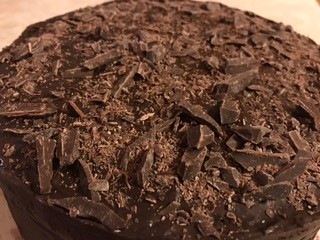
Option One (which is pictured at the beginning of this post):

Melt dark chocolate or semisweet chocolate chips (regular or Enjoy Life variety) in your microwave and stir until smooth. using a frosting spreader, coat the sides and top of the cake with the melted chocolate in a very think layer. Before the chocolate solidifies, sprinkle the top with chopped chocolate pieces.

Option Two:

Make your favorite frosting recipe and frost the sides and top of the torte.

Option Three:

Make a ganache: Warm 1 cup heavy cream or coconut cream in a microwave just until hot to the touch. Pour over 8 ounces of dark chocolate or semisweet or bittersweet chocolate pieces (regular or Enjoy Life variety) and stir until completely smooth and silky. Allow ganache to cool to a spreadable consistency.


Holiday Happenings: Cranberry Sauce

bags-of-cranberries

“Apparently cranberry sauce is underappreciated….”

My husband came home the other day and told me about a news story on the radio. The topic was cranberry sauce and how it was not as appreciated as other foods eaten during the Thanksgiving meal. This, of course, spurred discussion among our family about our own cranberry preferences. My son will only eat jellied cranberry sauce with no chunks. My oldest, my husband and I love cranberry sauce in any form. My other daughter won’t eat it, no matter the texture.

Cranberries, however, are very good for your health, containing antioxidants, fiber, and many nutrients needed by the body. What I find, though, is that because they have such a tart flavor, folks use way too much sugar when cooking with them. So, I like to make my own cranberry sauce instead of purchasing it from the store.

When I tell folks that I make cranberry sauce, they always seemed to be surprised, which I find surprising since cranberry sauce is the easiest food to make. You simply put cranberries into a pot with water and sweetener and let it cook down. The entire process takes about 10-15 minutes, at the most.

Where the creativity comes in is deciding what type of cranberry sauce you’d like for Thanksgiving. You can add other fruits to the cranberries like pears or apples or tangerines or oranges or apricots or cherries to add a contrasting fruity flavor to the cranberries. You can add red wine or port or bourban if you’d like a more complex flavor. You can add ginger or maple or anise or jalapeno if you’re looking to try something a little different this year. You can use water, orange juice, apple cider or any other liquid you can imagine to change the flavor. You can add nuts or dried fruits to add crunch and texture. You can even change up the texture of the sauce, making it chunky, relish-style or jellied.

And after Thanksgiving the cranberry sauce can be “recycled” in many ways. Swirl it into your favorite cheesecake recipe. Add the sauce as a fixing for your favorite sandwich. Mix it into a muffin recipe. Top pancakes or waffles with it. Combine it with another fruit to make the filling for a pie. Stir it into your breakfast oatmeal. Use it as a spread for a slice of quick bread like banana or zucchini. Combine it with cream cheese for a dip. Top vanilla ice cream with it. The ideas are endless.

A food as versatile as cranberry sauce is truly just begging for you to experiment this year. And what’s great is that unless you’re allergic to cranberries, people with food allergies can eat it!

Some tips:

  1. The cranberries: It doesn’t matter whether you use fresh or frozen cranberries. The general rule of thumb is that about 12 ounces of cranberries requires about 1 cup of liquid.
  2. The sweetener: For most recipes, for 12 ounces of cranberries, they’ll call for 1 cup of sugar. I’d suggest you cut that in half and save your health or use 1/4 cup Agave or 1/2 cup of coconut sugar or 1/3 cup truvia.
  3. The add-ins: Decide what type of cranberry sauce you’d like to make and add the ingredients in with the cranberries so that they all cook together and the flavors meld.
  4. Traditional Style: To make traditional cranberry sauce, simply put all your ingredients into a pot, bring the liquid to a boil, let it simmer for about 5-10 minutes until the cranberries pop and are the texture you’d like, remove from the heat, let it cool, and then refrigerate until you’re ready to use it.
  5. Relish Style: Simply use your food processor to chop up the cranberries, sweetener and additions and refrigerate. You should decrease the liquid, though, and only add just enough to moisten the relish.
  6. Jellied Style: Prepare the sauce as you would for the traditional but then push everything through a strainer, mashing the ingredients as much as you can to get as much as you can into the sauce and then refrigerate what you’ve pushed through the strainer.


Autumn Appetites: Winter Squash-Kale-Bean Soup

“Grandma’s wisdom….”

Last week I read that the folks at America’s Test Kitchen learned something which my grandmother had taught me 30 years ago and which she had known for many more years than that before she taught me. Not for the first time, I was surprised that those culinary “experts” hadn’t known something which I had figured was known by many.

As I thought more about it, though, I realized that there’s a difference between folks who have culinary jobs and people who have years and years of cooking experience. My grandmother raised eleven children and had to find ways to stretch food as much as she could, and she learned the best ways to make food and how to keep things as simple as possible whenever she could.

What I had learned from my grandmother, which America’s Test Kitchen apparently just learned this month according to their magazine, is that you never boil corn on the cob. You bring water to a boil and then you let the ears of corn sit in the hot water for a set time, depending on the amount of corn. This is how I’ve made corn on the cob ever since my grandmother showed me as a teenager. I had taken it for granted that others knew, too.

I figured my grandmother had learned it from someone before her, but she may also have simply figured it out on her own after cooking for so many for so long. I started thinking about the many other tips my grandmother had given me over the years when I was younger before she passed away, and I realized a lot of my cooking depends on things I learned from her. Just this past weekend, I made one of my family’s favorite soups, which uses tips I learned specifically from my grandmother.

My grandmother rarely had “fresh” food in the house. Dependent on food from local farms, which tended to be seasonal, certain foods simply weren’t accessible year round. So, she always had meat and vegetables frozen in a big freezer and jars of canned beans, jellies, sauces, and fruits in the “pantry” which was the walk-through area between the garage and their double-wide trailer. From her, I learned how to create foods which use staples from the freezer and pantry and which can be quickly put together to feed a lot of people.

The winter squash, kale and bean soup I made uses frozen squash, which I roasted last year, pureed, and froze; frozen kale which I always keep on hand, purchasing them by the bagfuls at the grocery store when they’re in season (early Spring and then again in the Fall); canned, unsalted, no sugar added beans, which I keep in my pantry; and no salt, fat free vegetable broth which I also keep in my pantry. I mixed everything together in my crock pot with some herbs and let it cook all day. When evening came, we had a hearty soup for dinner which warmed both the heart and the tummy.

Winter Squash-Kale-Bean Soup

Ingredients:

9 cups thawed, frozen pureed cooked winter squash (equivalent to 6 of those 12 oz packages you can purchase in the freezer section of the grocery store)

1 cup frozen chopped kale (equivalent to half a 16 oz bag you can purchase in the frozen section of the grocery store)

One 16 oz can of no salt, no sugar added white or northern or cannellini beans, rinsed and drained

1/2 tsp dried thyme, crushed between your fingers before putting in

1 tsp onion powder

1/2 to 1 tsp salt

1/4 tsp black pepper

No salt, fat free vegetable broth (amount will depend on how thick or think you like your soup, between 1 to 3 cups)

Cooking Instructions:

In a crock pot (4 1/2 quart will work), mix the thawed squash with the frozen kale, the can of beans, the thyme, onion powder, salt and black pepper. Add the desired amount of vegetable broth and let it cook in the crock pot on low all day (6-8 hrs) or on high for half the day (3-4 hrs).


Recipe Revamping: Saltine Brickle

“Please, can you help me?”

I receive emails from various types of people. Folks who have toddlers with food allergies. Mature adults whose doctors have put them on restricted diets. People who have suddenly developed food allergies after years of eating anything they wanted. Diet conscious folks who want to eat healthier. What all these folks have in common, though, is that they’ve always been adults.

This week I received an email for the first time from a child who had stumbled upon my site. She is ten and apparently really likes saltine brickle, which she had tried at a friend’s house. Her mother, however, had told her it had too much fat and sugar and wasn’t good for her. Like many folks of her generation, she went online to see if there was a solution to her problem.

In her email to me, she wanted to know if I could “fix” the recipe so it wouldn’t have as much fat and sugar but still taste good.

I confess, I found her and her email just too cute! Of course, I had to do what I could to help her out. It turned out that she has both a nut and dairy allergy, so I needed to accommodate those in the revamping of the recipe.

When you google saltine brickle recipes, you’ll find that the recipes call for anywhere from 1 to 2 cups of butter, usually about 1 cup of sugar, and anywhere from 1 1/2 to 3 cups of semi-sweet chocolate chips. The first order of business became all that butter. I opted to cut the amount down to 1/2 cup, and for the dairy allergy I used vegan soy free butter. The second item to tackle was the sugar. I could have simply cut the amount, but since I don’t like to use sugar as a general rule, I chose to use agave and cut the amount down to only 1/4 cup of it. For the chocolate, I swapped dairy and nut free dark chocolate mini chips for the regular sized semi-sweet chocolate chips, and I reduced the amount to 1 cup. To make the dessert slightly “better” I used a whole grain cracker instead of the white flour saltines. I tried Market Basket whole grain saltines, Manischewitz whole grain matzo, and Van’s whole grain gluten free crackers. For the final change, I decided to add some protein to the dessert and sprinkled pumpkin seeds on top.

The final creations were all tasty and worth the effort, and the young girl wrote to tell me that her mom let her make my version because she, one, thought it was great that her daughter showed initiative, and two, because she agreed that the reduction in sugar and butter and the addition of whole grains and protein made them “better” for eating.

Saltine Brickle

Ingredients:

40 whole grain saltine sized crackers, your choice of wheat or gluten free (you want to make a 16 inch x 10 inch rectangle; if using the matzo crackers, you’ll obviously use less because they are larger crackers) 

1/2 cup vegan soy free butter

1/4 cup agave

1 cup allergy friendly dark chocolate mini chips

1/2 to 1 cup pumpkin seeds (I used the no salt added version but I tried both roasted and raw and liked both; if you have no allergies to nuts or peanuts, try using those if you don’t like pumpkin seeds; the amount to use depends on whether you just want a few seeds on each cracker or want the crackers to be covered with them.)

Baking Instructions:

  1. Preheat the oven to 425 degrees.  Line a rectangle 17 x 11 inch pan with aluminum foil. Generously grease the foil with your favorite method.
  2. Place the crackers on the foil lined pan to make a 16 x 10 inch rectangle.
  3. Melt the vegan butter in a small saucepan over low heat, stirring frequently (should take only about a minute). Add the agave.
  4. Carefully pour the butter mixture over the crackers so each cracker is covered.
  5. Bake the crackers in the oven for  4 minutes. Remove the pan and turn off the oven.
  6. Sprinkle the mini chocolate chips over the crackers and put the pan back in the turned off oven for 1 minute.
  7. Using a spatula, carefully spread the melted chocolate so all the crackers are covered.
  8. Sprinkle the pumpkin seeds over the top of the chocolate.
  9. Put the pan into the freezer for about 10 minutes until the chocolate has solidified.
  10. Break apart the brickle and enjoy!

Creative Cooking: Zucchini Chocolate Chip Cake

“Anyone who wants them can take them!”

Every summer my husband’s family descends upon the Adirondacks to help with the family forest which has been in existence now for 60 years. When we are up there in the mountains, we have no television, can barely tune into a radio station, can only access email if we go into the town to little one room library, and still have a landline in the house because cell phone coverage is spotty at best. (This is why I’ve written no posts in the past few weeks!)

What we do have here, though, is a lot of farms with wonderful vegetables, and I love going weekly to the farmers’ markets they have every day of the week in a different town. After a while, however, I laugh because folks in the area begin to want to rid themselves of the abundance of vegetables they have, and people will show up at our place with huge bags of vegetables, and when you go to places like church, zucchini will be sitting on the table with a sign, “Please take!”

As such, I’m always looking for ways to use up vegetables like zucchini, and recently my son asked me if I could make a zucchini chocolate chip cake. I hadn’t made one in a long while so I needed to create a recipe. I was out of eggs so I used bananas instead, and because I never use white refined sugar, I chose to use coconut sugar.  In place of regular flour I used gluten free blends and single types, and for flavoring I simply used cinnamon and vanilla, which is all I had in the house. In place of milk I used soy milk but any type will work.

What follows is what we made, and we declared it a success since the entire cake was eaten within two meals!

Zucchini Chocolate Chip Cake

Ingredients:

2 cups gluten free flour blend (I used a brown rice flour blend)

1/2 cup gluten free oat flour

1/2 cup sorghum flour

1 cup coconut sugar

1 tsp salt

2 tsp baking soda

1 tsp baking powder

2 tsp cinnamon

2 to 3 ripe bananas (you’ll need one cup’s worth of pureed bananas)

1 tbsp gluten free vanilla

1/2 cup safflower oil

1/2 cup soy milk (can use any type, though)

3 cups finely shredded zucchini

1 cup Enjoy Life mini chocolate chips

2 tbsp apple cider vinegar

Baking Instructions:

  1.  Preheat oven to 350 degrees. Line a 9 x 13 pan with parchment paper (or grease as you prefer).
  2. Mix the GF flour blend with the the oat flour, sorghum flour, salt, baking soda, baking powder, and cinnamon. Set aside.
  3. Puree the bananas so you have a cup’s worth.  Add the vanilla, oil and milk and mix well.
  4. Stir in the zucchini and chocolate chips.
  5. In a large bowl mix the dry ingredients with the wet, adding the vinegar.
  6. Pour into the prepared pan and bake in the oven until the cake is puffed and golden and a toothpick inserted in the center comes out clean.  Will take between 20 to 30 minutes, depending on your oven.

Cooking Techniques: No Bake Cheesecakes

“But they’re really more like suggestions than hard and fast recipes….”

Once again some friends were telling me this week that I needed to write a cookbook….. And once again, as I thought about it, I realized that the problem with a cookbook is that it presumes you believe your recipes should be followed…. And I don’t!

I personally never follow recipes. Even the ones I put on this blog, I’m always re-creating to see if I can either make them better or differently. To me the goal of this blog is to give folks enough tips and techniques and knowledge that you can then be as creative as you want. My recipes are supposed to be jumping off points, not “hard and fast, you must follow this to the T” types of experiences. That’s why I write at length about the “how’s” of each recipe I give, and it’s also why there are so many posts on this site which give no recipes and only “techniques”.

To illustrate my point today, I thought I’d use no bake cheesecakes: Right now they’re all the rage because they’re versatile and summery without the use of an oven. I could certainly give you a recipe for a no bake cheesecake but the fact is that there are so many different ways to make them that I’d hate to limit you to just one recipe.

For instance:

The crust: For a no bake cheesecake, you can use just about any type of crust you’d like: a crust made from graham crackers, cookies (any type there is from ginger to lemon to sandwich cookies to chocolate chip to oatmeal to you name it!), pretzels, crackers,coconut, goldfish, vanilla or chocolate wafers, nuts, etc…. What type of crust you’ll make will depend on what you’re making for the filling. If you want a traditional cheesecake, use graham crackers. If you’re making a cheesecake with chocolate in it, you might want to use chocolate wafers or a cookie with chocolate pieces. Maybe you’re making a lemon cheesecake which might go well with lemon or vanilla cookies. You can experiment and see what tastes you prefer. If you have allegies, you can use allergy friendly versions of all the above which you can now find in any supermarket.

What’s key is that you should process whatever you’re using into fine crumbs and mix them with a binder such as melted butter or vegan substitute or coconut oil or a nut oil or plant oils such as olive or safflower. Rule of thumb: about 1 1/2 cups of finely processed crumbs will cover the bottom and sides of a traditional pie pan. How much binder you use depends on your tastes and health: I tend to use a low amount, about 2 tablespoons, just enough to moisten the crumbs so they’ll adhere to one another. Many recipes will call for 4 to 6 tablespoons. You can also begin with two and add more if you think it’s needed. What you use can depend on your tastes and health and allergies. If you’re allergic to dairy or have health issues, you may opt to use a plant oil instead of butter. Or maybe you want just the taste of the cookies you’re using to come through, so you might use a more neutral canola oil. Or maybe your cheesecake will do well to have the complementary flavor of a nut oil.

Whatever you choose for the crumbs and the binder, for a no bake cheesecake, the crust should be made first. You then can either pop the crust into the freezer for 15 to 30 minutes or put it into the fridge for an hour or two. Either way, you want the binder to get cold enough to keep the crumbs together so it won’t crumble when you cut into your cheesecake. So, make sure the crust is solid before making and adding your cheesecake filling.

If you’re looking to make things even easier, you can use store bought crusts. Now they even make gluten, dairy, nut free versions which you can purchase at the regular grocery stores.

The cream cheese: For folks with no allergies, regular cream cheese is what most cheesecake recipes call for. if you’re trying to watch the fat, using a light or fat free version of the cream cheese is acceptable.  If you have dairy allergies, you can use the Tofutti vegan cream cheese. If you’re allergic to soy, you can puree tofu or soaked cashews to replace the equivalent 16 oz of cream cheese.  What’s important is that if you’re using cream cheese, any version, you should bring it to room temperature so it will blend more smoothly without chunks. If you’re using the tofu or soaked cashews, make sure to puree them completely so they’re as smooth as they can be. For a traditional pie pan, two packages of cream cheese or two cups of a replacement is enough to fill the pie pan once you’ve added the rest of the ingredients.

The sweetener: Most no bake cheesecake recipes call for the use of either sugar or powdered sugar in quantities ranging from 1/2 to 1 1/2 cup. You can use either, varying the amount to your particular tastes. If you’re like me and don’t use sugar, you can substitute coconut sugar or stevia or agave which usually require half to less the amount you’d use of sugar. I’d suggest beginning with 1/4 cup and tasting to see if you need to add more. What’s important to know is that no matter what you use for the sweetener, you should add it immediately after you’ve creamed your cream cheese smooth, and you should combine the sweetener well so the cream cheese is not grainy. If you using Agave, keep your mixer going on low while you slowly pour the agave in a little at a time.

The flavor: A no bake cheesecake can be whatever you want it to be: chocolate, lemon, mint, berry, peanut butter, etc…. What’s important to keep in mind is that whether the flavoring is an extract or peel, or chunky like chopped chocolate pieces or mint cookies or pureed strawberries, or if you opt to use jello or pudding mix for the flavoring (see below), add it AFTER you’ve made your cream cheese or substitute smooth and after you’ve added the sweetener.  The first thing you always do with a no bake cheesecake is to make the cream cheese smooth. Then you want to add the sweetener, and then you can add the other ingredients, with the binder being the final ingredient.

The no bake filling binder: When making a no bake cheesecake, you don’t use eggs which is what usually helps to solidify the cheesecake as it bakes. What you can use in the place of eggs varies, though. Some recipes use heavy cream. Others use a combination of sour cream and whipping cream. Some use condensed sweetened milk. Others use whipped topping. Still more use pudding mixes or jello/gelatin or even marshmallow creme. This is why I’d rather not give you a recipe, because you may want to use one or the other depending on tastes, allergies/health, and/or what you have in the house.

What I can give you, though, are tips and information to help you: So, for example, if you are going to use heavy cream or sour cream or whipping cream or whipped topping or marshmallow creme, the ratio is usually two 8 oz containers of cream cheese to 3/4 to 1 1/2 cups of whichever you use. What’s important is that they should be added at the end after you’ve mixed the rest of your cheesecake ingredients, just before you put the cheesecake into the fridge. The quantity will depend on the type of consistency and taste you want for your cheesecake: the more you put in, the airier, lighter and less cheesecake-tasting the cheesecake will be. The less you put in, the more dense cheesecake-like and tasting it will be.

If you choose to use gelatin or pudding mix, the ratio is usually two 8 oz packages of cream cheese to one package of jello or pudding (3 oz size) or one envelope of unflavored gelatin. What’s important is that if you’re using jello or pudding mix, you have two options for how to use them.  One is to simply mix it in really, really well with the cream cheese so it’s smooth. Another is to make up the jello or pudding and let is slightly set before mixing it in with the cream cheese mixture.  If you’re using an unflavored envelope of gelatin, the gelatin needs to be dissolved according to directions (usually a couple of minutes over a tablespoon of cold water and then stirred with a tablespoon of hot water until dissolved) and added to the cream cheese mixture at the end.

For people with allergies, So Delicious makes a whipped topping out of coconut which you can substitute for whipped topping. To substitute for heavy cream you can puree an equal amount of silken tofu; or mix 2/3 cup soy milk with 1/3 cup melted vegan butter for one cup of heavy cream; or use coconut cream in a one to one ratio; or make a cashew cream (soak cashews for a day and puree really, really well) where about one and 1/4 cups of soaked cashews purees into one cup of cream.

The topping: A no bake cheesecake can be simple with just the above ingredient choices mixed together and poured into a crust, but you can also jazz up the cheesecake with toppings. You can pipe whipped topping in designs. You can melt chocolate and drizzle it over the cheesecake. You can chop up cookies or chocolate and carefully place the pieces on top. You can chop berries and put them on top. You can spread jam on top. You can cook a fruit compote and pour it over the cheesecake. The ideas are endless. Let your creative side have fun.

For folks who do like a recipe, below is one a version I made recently.  It does have coconut and soy, though if anyone has allergies to either, you can substitute with anything I’ve written about above!

Lemon Blueberry No Bake Cheesecake

Ingredients:

1 1/2 cup gluten, dairy, nut free graham cracker crumbs (I pureed Midel graham crackers)

2 tablespoons vegan butter, melted

two 8 oz containers Tofutti vegan cream cheese, at room temperature

2/3 cup coconut sugar (I like things tart; you may want to sweeten it more)

one tablespoon lemon juice (Meyer lemons are sweeter)

one tablespoon lemon peel (optional, grating fresh lemons are better; store bought dried peel can be bitter)

one teaspoon gluten free vanilla

one cup So Delicious dairy free Coco Whip

one cup fresh blueberries

1/4 cup water

one tablespoon Agave

one tablespoon cornstarch

one tablespoon water

Cooking Instructions:

  1. Combine the graham cracker crumbs with the melted butter and mix until the crumbs are completely moistened. If you need to add a bit more melted butter, do so. Carefully press the crumbs in a glass pie pan to cover the bottoms and sides. Place into the freezer for half an hour.
  2. In a mixer, blend the cream cheese until smooth. Scrape down the sides and bottoms.
  3. Add the coconut sugar and blend for a couple of minutes until completely smooth and not grainy.
  4. Add the lemon juice, lemon peel, and vanilla. Mix well.
  5. Add the Coco Whip, and mix just until blended. Pour into the prepared crust.
  6. In a small saucepan on the stove top, mix the blueberries with the water and agave and bring to a boil over medium heat.
  7. Once boiling, mix the cornstarch with the water and blend until smooth.  While stirring the blueberries, add the cornstarch mixture and keep stirring until the blueberries thicken. Remove from the heat.
  8. Carefully places spoonfuls of the blueberry mixture on the top of the cheesecake. Use a knife to run through the berries to create a pretty pattern and to mix the berries a bit into the top layer of the cheesecake.
  9. Refrigerate for at least four hours.
  10. Enjoy!


Creative Cooking: Dairy Free Dark Chocolate Mousse

“But I want it quick and easy!”

I’ve already confessed to being a lazy cook, someone who likes to make a good meal with the least amount of effort. Now, I confess that I’m also a very impatient cook. If I want to make something, I rarely like to wait the time it takes for something to get cold or to reach room temperature, and I never have patience if I try someone else’s recipe and it fails, making it a waste of my time.

Recently one of my daughter’s really wanted a chocolate mousse, but with my dairy allergy we couldn’t make it with heavy cream. Many online recipes call for using coconut milk which I have done in the past for making a whipped cream. The problem is that it doesn’t always work. Sometimes you purchase a can of coconut milk, put it the fridge, and it doesn’t solidify properly. Other times, the coconut milk tastes a little off, making your mousse not as palatable. And in both scenarios, you’ve had to wait for the coconut milk to chill, only to be disappointed.

So, we then looked at recipes which used tofu, but we found many of those recipes to be too sweet because people wanted to cover the tofu taste and did so with sugar. We also discovered that many of the tofu recipes either still called for the use of heavy cream or used almond milk, both of which I can’t have. In addition, a bunch of the recipes required a wait time for the tofu to get to room temperature or required a complicated process of straining the tofu mousse after making it.

Undaunted, though, I decided I’d make a mousse to my liking in taste, texture, and time spent. So I pulled out two cold 16 ounce containers of silken tofu and went to work. Since the process of straining the mousse seemed to be because people wanted a creamy texture which would be marred by chunks of tofu, I decided that I’d simply puree the tofu completely smooth first with my hand blender. This would eliminate any additional work needed later. And it worked really well.

Next, after looking at the too sweet recipes, many of which called for two cups of chocolate chips for one package of tofu plus additional sugar, I figured that for the two tofu packages, one 10 ounce package of Enjoy Life allergy friendly mini chocolate chips (about one and a half cups)  with no addition of any other sugar products would suffice. I microwaved the chips in a large four cup measuring bowl for one minute, stirred, and then microwaved them for another 20 seconds so that when I stirred the chips, they were melted and smooth.

Because I knew that adding the warm, melted chips to the cold tofu would result in the chocolate becoming solid again, I decided that I’d adopt the tempering process one uses with eggs to the chocolate. I added a couple of spoonfuls of the cold tofu to the warm chocolate and blended it well with the hand blender. I repeated the process three times, and then added the entire chocolate mixture into the rest of the smooth tofu, using my hand blender to completely blend the chocolate and tofu together.

When we tasted the mousse, we realized that while cutting the amount of chips made for a less sweet mousse, it also made for less of a chocolate taste, too, so I added two tablespoons of Hershey’s Special Dark unsweetened cocoa powder with 1/2 tsp of gluten free vanilla and blended one more time with the hand blender until everything was smooth and creamy. We divided the mousse among eight dishes and sprinkled chopped dairy free chocolate pieces on top as a garnish.

The entire process from start to finish was less than ten minutes, and by the time we were done eating dinner, the mousse had cooled enough in the fridge to make for a delicious impromptu dessert!

Dairy Free Dark Chocolate Mousse

Ingredients:

Two 16 oz containers of silken tofu

10 oz package Enjoy Life mini chocolate chips

2 tablespoons Hershey’s Special Dark unsweetened cocoa powder

1/2 tsp gluten free vanilla

Cooking Instructions:

  1.  Puree the tofu completely smooth first with a hand blender. If you don’t have a hand blender, use a food processor or blender. The key is to make it completely smooth and creamy.
  2. Microwave the chips in a large four cup measuring bowl for one minute, stir, and then microwave them for another 20 seconds so that when you stir the chips, they are melted and smooth.
  3. Add a couple of spoonfuls of the cold tofu to the warm chocolate and blended it well with the hand blender. Repeat the process three times, and then add the entire chocolate mixture into the rest of the smooth tofu, using the hand blender to completely blend the chocolate and tofu together.
  4. Add the Hershey’s Special Dark unsweetened cocoa powder with the vanilla and blend one more time with the hand blender until everything is smooth and creamy.
  5. Divide the mousse evenly among eight dishes and sprinkled chopped dairy free chocolate pieces on top as a garnish.


Cooking Techniques: Stir Fry

“It was magnificent!”

Our family had a recent opportunity to attend a concert my oldest was performing in which was her women’s Glee club singing with Cornell’s men’s Glee club. Over 120 voices combined in four part harmony to create a most wonderful listening experience. What was amazing was listening to the individual voices even as their voices melded to become one united sound.

I thought about this when I received an email asking about how to make a good stir fry. Stir fry is food’s equivalent to a choir. Separate types of food becoming one dish where the tastes of the individual food remains even as their flavors meld to create a delicious stir fry.

Too often, though, people think of stir fry as something difficult. “Well, I don’t have a wok,” some say. “It’s too much chopping,” others say. I’ve also heard, “I never have the proper ingredients.” The fact, though, is that stir fry can be easy, quick, and done without a wok. It’s a great way to use up leftovers or to make when you only have a little bit of a variety of food items available. It’s also versatile and can be made any number of one thousand and one ways, not to mention stir fry is very accommodating for people with food allergies.

The Pan: The reason people like woks is that their curved shape allows you to cook at different temperatures at the same time. The bottom, which is closest to the heat is hotter and the temperature gets increasing cooler as you get to the top. This means you can move cooked foods toward the top and add newer food to the bottom to begin cooking on the hottest part, and then you simply mix everything together in the end. The shape of a wok also allows you to cook in different ways. The food that hits the hot bottom sears which traps flavor into the veggies or protein. When the sauce is added, though, moisture rises in the concave center of the convex wok, allowing the foods near the middle to top of the pan to be braised, which softens the food without making it mushy. If you don’t have a wok, though, you can still make a good stir fry. The key is simply to use a skillet which is just slightly larger than your burner and which has at least 2 in sides, which most of the larger skillets have these days. The center closer to the burner will get hotter than the edges of the skillet which allows you to move food to cooler sections of the pan, and the higher sides will allow you to braise. If you don’t have a large skillet with 2 in sides, you can also simply cook in smaller batches, cooking the veggies and protein separately, then mixing the two, and thickening the sauce separately and adding it to the mixed vegetables and protein. Doing everything separately doesn’t add time, it only adds another dish, and if you use the dish you’ll ultimately be serving the food in, then it won’t even do that!

The Veggies: All good stir fry dishes have an assortment of vegetables. Varying what goes into the dish can make for a colorful presentation as well as provide a variety of nutrients, textures, and flavors. People tend to get hung up on what they see as a “traditional” stir fry with bamboo shoots and baby corn and water chestnuts, but virtually any vegetable can go into a stir fry, so whatever you may have on hand works: broccoli, green beans, carrots, peppers, cauliflower, cabbage, kale, spinach, sweet potato, zucchini, squash, bean sprouts,leeks, asparagus, beets, radishes, mushrooms, onions, eggplant, and of course, baby corn, water chestnuts and bamboos as well. What’s key is cooking your vegetables uniformly. This means chopping vegetables of similar texture into the same size. It may also mean that you start vegetables which may take longer to soften like carrots and sweet potato first and adding greens like spinach or kale at the end. What’s nice about stir fry is that your goal isn’t to cook the vegetables for a long time; it’s to cook them just long enough for their colors to become bright and deep. You want the veggies to be still have some of their crunch and crispy-ness, not for them to be mush. For folks who don’t want to do any chopping or prep at all, nowadays you can buy your vegetables pre-chopped in the vegetable section. You can also used frozen chopped veggies, which is what I tend to do because then I always have veggies on hand.

The Protein: A stir fry doesn’t need to have protein but if you’d like to add protein, just about any type can go into a stir fry. Beef, pork, chicken, shrimp, scallops, tofu, beans. As with the vegetables you want the protein to be able to cook quickly and uniformly, so make sure all pieces are similar size. Cutting the protein into smaller pieces allows you to use less, increases it’s ability to blend in with the vegetables, and spreads its flavor. Most recipes will tell you to sear the meats like beef, chicken and pork first and then to move them to the cooler section of the wok or skillet while you cook the vegetables and then to mix the two together, adding the sauce. This allows the meats to begin cooking their cooking process with the searing but then finishes the cooking with the braising which keeps the meat from becoming tough and dry. When using protein like tofu or softened beans or seafood, though, it’s often better to cook those at the last minute, just before you add the sauce because they usually only need a couple of minutes to cook, and overcooking them will make them tough or fall apart. For folks worried about the prep and chopping for these, you can find pre-sliced tofu and meats at the grocery store. For seafood such as scallops, I use the frozen variety; I simply thaw them in cold water for about 15 minutes and throw them in. You can also simply used leftovers from previous meals which you throw in at the last minute just to rewarm.

The Sauce: A good stir fry will have some flavor added more than just your veggies and protein. What you do can vary, though. If you don’t want a sauce, you can simply use herbs and spices. Stores carry premixed blends for specifically adding to stir fry. You can also experiment with herbs and spices to see what you like. For me fresh ginger, garlic, and green onions are my preferred flavors. If using dried herbs and spices, you’ll want to add them to the veggies and to the protein as you begin cooking them so the flavor have time to meld. If using fresh, add them at the end. If you opt to make a sauce, the key thing to know is that you need a thickener for your sauce. For stir fry usually cornstarch is the thickener of choice but you can also use tapioca starch or arrowroot or any type of flour. You want to whisk the thickener in with your liquid before adding the sauce to the pan to thicken. A good rule of thumb is that one tablespoon of cornstarch, tapioca starch, arrowroot, or flour is needed for every cup of liquid. When cooking the sauce, you’ll want to continually stir the sauce whether you’re cooking the sauce separately or whether you’ve added it to the pan with the vegetables and protein. If you add it the pan with food in the pan, simply move the veggies and protein to the edges of the skillet or up the sides of the wok, so you can thicken the sauce in the middle of the pan. Once thickened, combine the sauce with the veggies and protein. As for ingredients in a stir fry sauce, that all depends on your tastes. For the liquid part you can use soy sauce, hoisin sauce, oyster sauce, broth such as chicken, beef, or vegetable, red or white wine, sherry, etc…, whatever your tastes prefer. To add another dimension of flavor to whatever liquid you choose, you can add different flavored vinegars like apple cider, rice, or red wine, juices like lemon or lime or pineapple, oils like sesame or peanut, etc…. You can also add herbs and spices like garlic, scallions, ginger, shallots, lemongrass, etc…. To make the sauce, simply mix all your chosen ingredients in the ratio that tastes the best to you and which makes one cup’s worth, add your thickener, mix well, and cook over heat, stirring constantly until the sauce thickens to a consistency where it will cling to the veggies and protein in your stir fry. If you find that for some reason you need more thickener, simply mix more of your thickener with the equivalent amount of water and add it to the sauce (so, one teaspoon of cornstarch with one teaspoon of water).

The Sides: Stir fry can be eaten alone or atop something else. Good options if you want to eat them with something else are rice (brown, white, wild, jasmine, etc…), quinoa, barley, noodles such as udon, soba, lo mein or rice noodles, strips of spaghetti squash or zucchini ribbons or chopped cabbage, fresh greens like spinach, kale, arugula or swiss chard, etc…. Use your imagination and be creative.


Cooking Tutorial: Eggless Baked Macaroni and Cheese

“Third time’s the charm!”

There’s something about the number three…: We all know the folks who sneeze in three’s; there’s that belief that bad things happen in three’s; the occult, divine, and human psychology seem to value the power of three; and of course, we talk optimistically about the third time being the charm.

When I opened up my email to find a question about baked macaroni and cheese, I had to laugh because this will be the third posting about macaroni and cheese, hence my thinking about the number three this morning!

Previously I had posted a general baked macaroni and cheese recipe which was a lightened up version of an Emeril recipe. Then someone asked about a gluten, dairy free version of the lightened version. Now I’m being asked about whether you can make a baked macaroni and cheese without eggs.

The answer, of course, is yes. The purpose of eggs in a baked macaroni and cheese is to create a firm and thick texture. Combining the eggs with evaporate milk also makes for a silkier macaroni and cheese. A baked macaroni and cheese can achieve the same texture and silkiness, though, without eggs. Instead of using evaporated milk, though, you would use regular milk or milk substitute, and because you won’t be using eggs as a thickener you’ll need to make a thick sauce first as opposed to simply combining everything and baking.

Creating a thick sauce: There are a few ways to go about making a thick white sauce:

  1. Roux: You can make a roux by warming 2 tbsp of olive oil (or other plant oil or you can use butter/butter substitute, too, if you’d prefer) and adding 1/4 cup of your preferred type of flour with a whisk. Once the flour mixture has cooked for about 30 seconds, you slowly add 2 cups of your “milk”, stirring constantly to mix the roux into the liquid well. Heat over medium low heat, stirring constantly until the mixture thickens. Then you add your cheese.
  2. Cornstarch: You can simply mix cornstarch into your “milk” and heat over medium low heat, stirring constantly until the mixture begins to thicken. A good ratio is 1 tbsp of cornstarch per cup of milk, so you’d use 2 tbsp of cornstarch in 2 cups of milk, and once it’s thickened, you’d add your cheese.
  3. Flour: You can also simply mix the milk with flour and again heat over medium low heat, stirring constantly until the mixture begins to thicken. Usually 1/2 cup of whatever flour you’d like to use in 2 cups of milk will do the job. Once it’s thickened, you add the cheese.

Creating a creamy cheese sauce: Again there are a few ways you can go about making a creamy cheese sauce:

  1. Using good cheeses: One way to make a silky, gooey, cheesy sauce is to invest in cheeses with good melting and great taste. This means opting for the more full fat cheeses like gouda, fontina, sharp cheddar, etc. If you have no dairy allergies and don’t mind the expense, the taste will be worth the investment. These cheeses, when added to your thickened white sauce, will simply melt into creaminess. Depending on your tastes, you would add one to two cups of shredded cheese to the white sauce.
  2. Mixing types of “cheese”: Another way to create cheesy-ness is to use half shredded cheese of your choice and half cream cheese. Since I have a dairy allergy and can’t use real cheese, I’ve found that the non-dairy cheeses don’t provide the creamy texture, so in my mac and cheese, I mix Daiya mozzarella with tofu cream cheese, and it makes for a lovely creamy sauce. So, once my white sauce is thick, I add the mozzarella and let it begin to melt, stirring constantly; then I add the cream cheese and keep stirring until both the mozzarella and the cream cheese have completely melted into the sauce. Depending on your taste, you would use 8 oz of the mozzarella and then add between 1/2 cup to 1 cup of the cream cheese to the white sauce.
  3. Adding sour cream or yogurt: A third way to create a silky texture is to add either sour cream or yogurt to the cheese sauce. After you’ve made the cheese sauce the way you prefer, simply mix in yogurt or sour cream until it’s well blended. Depending on your tastes, you would add between 1/2 to 1 cup.

Using the best noodles: For macaroni and cheese the best noodles to use are ones with nooks and crannies, so pastas like elbows, shells, penne, rotini are all good choices. What’s key for baked macaroni and cheese is to only cook the noodles until al dente, which means they are mostly cooked but still a little sturdier in texture. The reason you slightly undercook them is because the noodles will cook more in the oven during the baking and you don’t want them to become mushy. Because of my wheat allergies, I like to use a quinoa elbow or shell variety which adds some protein to the dish.

Being creative with add-ins: Yes, you can make a straight mac and cheese but additions to the dish can intensify the flavor and texture. My children like ours best when I add chopped up bits of turkey ham or turkey sausage with chopped up bits of zucchini or broccoli, but you can opt to add whatever you’d like — chicken, spinach, peppers, bacon, tomatoes, etc….

Choosing spices and herbs: Many flavors complement cheese so you can be imaginative in your choices. I like to combine cumin, nutmeg, onion powder, black pepper, and oregano. Sometimes I simply add some red pepper flakes. Other times we opt for thyme and sage. Think about the type of cheese you’re using and what you’re adding in, and experiment with flavors.

Assembling the macaroni and cheese: The best way I’ve found to make a good macaroni and cheese is to cook my noodles al dente and then cool them with cold water, rinse and put into a bowl. Then I mix the noodles with my add-ins and spices and herbs. Then I make the cheese sauce, also adding spices and herbs to the sauce. Then I combine the cheese sauce with the noodles, before putting the entire contents of the bowl into a greased glass casserole pan.

The topping: Baked macaroni and cheese can be topped in many ways:

  1. Cheese: Most people simply put shredded cheese on top of the macaroni and cheese casserole. This adds another level of gooeyness.
  2. Bread crumbs: If you mix bread crumbs with herbs and spices and either a plant oil or butter and spread it evenly over the macaroni, you’ll get a nice crispy contrast to the creamy macaroni.
  3. Add-ins on top: Another way to top the macaroni is with more of the add-ins, so sprinkling chopped bits of bacon or broccoli on top. This makes for a colorful presentation of the baked macaroni and cheese and lets folks know what else might be on the inside.
  4. Creative toppings: Some folks like to be a bit more creative in their toppings and add foods like crushed potato or tortilla chips or crushed corn flakes. Use your imagination and see what flavor combinations work best.
  5. Herbs: Another way to make for a pretty and tasty baked macaroni and cheese is to sprinkle fresh chopped herbs on top immediately after the dish comes out of the oven. So, adding chopped fresh basil or mint or thyme — experiment and see what you like.

Baking the macaroni and cheese: Most dishes cook well in a preheated 350 degree oven for about 30 minutes. Because everything is already cooked, you simply need the casserole to set and become hot and for your topping to melt or become browned and toasty, depending on what you chose to use.


Recipe Makeover: Dairy Free Vegetarian Enchiladas

“It’s killing us.”

What my high school aged daughter seems to be learning from her science classes is that we’ve screwed up the world, and as a result, too many things in our environmental lives now have negative repercussions. In many respects, I understand and agree with what the teachers are saying. On the other hand, it’s not easy to feed the family when your daughter seems to think everything she eats will cause cancer or heart attacks or just general bad health. As her list of what she thinks we shouldn’t eat anymore grows, her father and brother find themselves devoid of the foods which they would rather eat, despite the risks. Throw in food allergies, and you can see the dilemma I’m facing with the “What’s for dinner?” question.

Tonight the family was in the mood for enchiladas, something we actually haven’t had in a while. My son and husband would have preferred a nice pork or beef enchilada but my daughter wanted nothing to do with those “cancer-causing” meats, as she expressed. I’ve always loved enchiladas but since developing a life-threatening dairy allergy, I’ve not found a cheese substitute which comes anything close to what is needed for a cheesy enchilada casserole. But enchiladas were what was wanted, so I needed to put my thinking cap on and get to work.

The first question was how to make a vegetarian enchilada which would have the umami without the actual meat. Mushrooms have always been a good “meat” substitute, but only my oldest and I like mushrooms so if I was going to use them, I would need to disguise them. I also didn’t want to simply have mushroom enchiladas. I’d like a variety of vegetables. So I chose to combine spinach, mushrooms, yellow and red peppers, and cauliflower. Cauliflower may seem an odd choice, but like the mushrooms, they have a meaty component to them.

Because enchiladas require time and effort, I lessened my work by using frozen and canned versions of the veggies. It meant I could more quickly begin the assembling process without all the cooking beforehand. I also used my food processor to finely chop everything together to both disguise the mushrooms but also to create a texture that would be more like ground meat.

The second question was how to create a cheesy taste and texture without actually using cheese. The filling was easy because the use of tofu cream cheese could impart the impression of cheesy-ness. The topping, however, required a bit more thinking. Usually a vegetable enchilada calls for a white sour cream sauce and then a liberal topping of cheese, which when baked forms a nice crust for the enchiladas. I began the process of creating a sour cream sauce using tofu sour cream and unsalted vegetable stock from my freezer (if you don’t make your own, it’s easy enough to purchase at the store, or you can use vegetable broth, but you’ll want to omit the salt in the recipe then). As I looked at the mixture, it occurred to me that if I added a gluten free flour to the sauce, it would not only thicken the sauce for me, but when it baked, the flour would slightly separate from the sauce to create a crusty top. I decided to give it a try.

In the end we had a delicious vegetarian enchilada with a meaty texture and a cheesy, crusty facsimile which we’ll make again.

Vegetarian Enchiladas

Ingredients:

Filling:

two 4 oz cans of mushrooms, drained

1 cup thawed frozen cauliflower

1/2 cup thawed frozen mixed red and yellow peppers

1/2 cup green onions

10 oz thawed frozen chopped spinach

2 tsp ground cumin

2 tsp dried oregano

1/2 tsp salt

1/4 tsp black pepper

1/4 tsp red pepper flakes

“Cheese” for Filling:

8 oz tofu cream cheese

1/2 cup unsalted vegetable stock

1 tbsp lemon juice

2 tsp cumin

2 tsp minced garlic

Sauce:

1 1/2 cup unsalted vegetable stock

12 oz tofu sour cream

1/4 cup sorghum flour

1 tbsp lemon juice

2 tsp ground cumin

1 tsp ground onion powder

1/4 tsp white pepper

12 to 16 corn tortillas

Cooking Instructions:

  1. In a food processor combine and process the mushrooms, cauliflower, peppers and green onions. Add to the chopped spinach and mix well.
  2. Add the cumin, oregano, salt, black pepper, and red pepper. Set aside.
  3. In a pan put the tofu cream cheese, vegetable stock, lemon juice, cumin and garlic, and slowly melt the cream cheese over low heat, stirring continually until the mixture is smooth.
  4. Add the vegetables to the cream cheese sauce and combine well. Set aside.
  5. In another pan combine the vegetable broth, tofu scour cream, sorghum flour, lemon juice, cumin, onion powder and white pepper. Over low heat, stirring continually with a whisk, let the mixture slowly heat and thicken.
  6. Grease a 9 x 13 pan and cover the bottom of the pan with about 1/3 of the sour cream sauce.
  7. Wet a paper towel and wrap the corn tortillas in the wet paper towel. Heat the tortillas in the microwave 20 seconds at a time until the tortillas are warm, soft to the touch and pliable enough to bend. (Mine took 40 seconds total).
  8. Divide the vegetable mixture among the tortillas evenly. (I had enough filling for 16 tortillas but I opted to fill twelve and then use the leftover filling to cover the top of the twelve tortillas to increase the “taste coverage” of the filling, but you can simply fill all 16 tortillas if you’d like.)
  9. Cover the tortillas with the remaining sour cream sauce.
  10. Bake in a preheated 350 degree oven for 30 minutes.