Handling Holidays: Serving the Meal

website serving meal

“Umm… did you just use my scoop?”

We were having a lovely gathering at our home of friends over the summer, complete with ice cream sundaes, when I realized that one of our guest’s children was using my scoop to get herself some ice cream.

For most folks, using another person’s scoop doesn’t seem like a big deal, but when you have a serious allergy to dairy and cross-contamination can potentially kill you, you tend to be a bit less friendly about “sharing”. Fortunately, I caught the “sharing” in action and was able to wash the scoop before using it for myself.

Holiday meals can be a bear when it comes to potential cross-contamination.  Even if you’ve planned ahead as I had that summer evening with a different scoop for my nondairy frozen dessert which was sitting off to the side of everyone else’s “real” ice cream, you never know when someone might accidentally upset your best laid plans.

So, what can you do?  Some suggestions:

1.  Definitely do plan ahead:  If you’re hosting, decide whether you’re going to avoid cross-contamination by simply making everything allergen friendly.  When I’m entertaining in my own home, I usually just make foods which I can eat which everyone else will enjoy, too.  Then I don’t need to worry.

If there are some foods, however, that you do want to make for your guests which you can’t eat or vice versa, then decide how many of those you’ll make and plan how you’ll separate them from the rest of the food.  Some options:

a. Put allergen free food in similar dishes and the other food in different dishes so you can point out to folks which are which.  I have round and rectangular dishes so it’s easy for folks to know which foods they should be careful to avoid contaminating.

b. Label the food.  Put little index cards in front of the food which tells folks what the dish is free of or contains.  The additional advantage to this is that if you have folks with a variety of allergies, they can see with a quick glance what they can and can’t eat.

c.  Put the food on different tables.  If you have available table space, put allergen free food on one table and the rest on another so folks can go to both tables separately to get their food.

2.  Educate:  Sometimes folks just don’t know how dangerous it can be for them to switch the serving spoons on you.  Take a minute to just explain that folks need to be careful to put the same spoon back into each dish because it would be a great service to your health for them to do so. I’ve found that folks are understanding once they know the potential consequences and take better care about how they serve themselves.

3.  If you’re going to someone else’s home for the holidays, be pro-active: Find out if the host is going to be making food you can eat, and if so, ask them if they could follow some of the above suggestions for your and the other guests’ benefit.

If you’re going to contribute a dish of your own, make sure to both label it and point out to folks at the dinner that it is a special dish made to be allergy friendly, and bring a serving utensil that is “different” to go with it. Maybe it’s an unusual color or a non-traditional size or one that matches the serving dish.  Give folks a way to recognize that that particular serving utensil needs to be used with your particular dish only.

4. Watch the children: In most cases, as with my summer gathering, it’s the little ones who don’t realize, because they are after all just little. So be sure to keep an eye on them. Enlist the help of the other adults to help serve the children and to watch the children who can serve themselves. At a certain age, the children can be told, too, about being careful, because if the food allergy is explained, children tend to be rather caring about not wanting to hurt anyone.

5. Practice avoidance in the absence of information:  Many times folks will bring a dish or purchase a dish and not know exactly what specific ingredients are, but they’ll tell you generally that it is something you can eat.  Don’t.  It’s as simple as that.   I’ve had times when folks have actually fished out an ingredient label from the trash for me and discovered that, yes, five of the six ingredients are fine, but there was that last ingredient that was deadly.

6. Be prepared:  Sometimes, because you’re in your own home or because you’re going to a trusted home which you’ve been to many times, you don’t necessarily think about keeping your Epi-Pen close by.  You just never know.  As with the little incident at my house over the summer, accidents happen.  Always be prepared and keep whatever you need, whether it’s the Epi-Pen or benadryl or the emergency phone number, close by within easy reach.  Better to be prepared than sorry.

Berry Oat Bars

These are favorite with folks I know.  I can’t make enough of them, they get eaten so quickly!

Ingredients:

2 cups gluten free whole grain oats

2 cups gluten free flour blend (I use garbanzo bean and brown rice flour)

1 tsp cinnamon

1/2 tsp salt

1/3 cup Truvia or coconut sugar

3/4 cup vegan “butter”

3 tbsp Agave divided

15 oz Polaner All Fruit with Fiber (your choice of flavor)

Baking Instructions:

1.  Line a 9 x 13 pan with parchment paper so there are “wings” hanging over the edges, and preheat the oven to 325 degrees.

2.  Mix together the oats, flour, cinnamon, salt and Truvia or coconut sugar in a large bowl.

3.  Put the “butter” into the oat mixture in pieces and use a pastry blender to cut the butter into the oat mixture until it’s crumbly and the butter is incorporated into the mixture.

4.  Remove about 1/3 of the mixture and put it aside for the topping.

5.  To the remaining 2/3 of the oat mixture, add 2 tbsp of Agave and mix it well.  Pat this into the bottom of the 9 x 13 pan to form a crust.

6.  Spread the Polaner All Fruit carefully over the crust.  (We’ve made raspberry, strawberry, apricot, blueberry, etc….) 

7.  Add the remaining 1 tbsp of Agave to the remaining 1/3 oat mixture and mix it up until the mixture is moist but still crumbly.  Evenly distribute the mixture over the top of the all fruit.  You will have open spots of jam showing.  This is fine.

8.  Bake in the preheated oven for about 30-40 minutes.  The oats will be golden brown and the jam bubbly.

9.  Remove from the oven and put the pan onto a wire cooling rack.  It’s very important that you allow the bars to completely cool.

10.  Once the bars are completely cooled, you can carefully remove them from the pan using the parchment paper and cut them into the desired size, or you can cut them directly in the pan and remove them one by one.

Handling Holidays: Truffles and Fudge

website fudge

“You’re a chink!”

I was sitting by myself at recess on my first day at a school in the United States when a older middle school, Caucasian boy welcomed me with those words. It was the aftermath of the the Vietnam War, and though the gene pool had actually given me more of my father’s Caucasian features than my mother’s Asian ones, folks back then were more cognizant of facial differences than today. (Today, no one believes me when I say I’m Korean. I have to show them pictures of my mom. So, times do change!)

Unfortunately for that gentleman, though I was  younger than he, I wasn’t so easily intimidated, and he didn’t expect my response. “Shows how much you know,” I said. “Chink is a derogatory term for Chinese people, not Korean. I believe you meant to call me a ‘Gook’, but instead you’ve only revealed just how ignorant you are. So, please just go away and leave me alone.” To his credit, he walked away as the crowd around him snickered.

My victory didn’t make me feel any better, though, about such a “welcome” to my “home” country and new school, and at the end of recess my new teacher, Mrs. Petruska found me sitting in the corner of the yard, crying. She didn’t ask me what was wrong, so I presumed she must have heard from one of the other students. Instead, she handed me a small piece of chocolate (this was long before the day of food allergy awareness), patted my back, and said,”Take your time eating this, and when you’re done, I’ll see you back at class.”

Now, some may wonder what sort of teacher would handle such a situation by giving a child a piece of chocolate, but whether you agree or disagree with her actions, I have to say that I learned that day that if savoring a piece of chocolate can make you feel better, than life is not going to end from whatever situation you feel devastated by.

And strangely enough, as I’ve grown into adulthood, the only time I even eat a piece of chocolate (allergen free variety, of course!) is when I need a reminder that I will survive whatever “mess” I’m currently dealing with in life, and the only time I make chocolate truffles and fudge is for the holidays – and it’s always for giving away.

Chocolate, though, is one of those ingredients that can be deadly if you’re severely allergic to dairy or nuts. Fortunately for me, however, Enjoy Life makes wonderful chips, chunks, and bars which are everything free, so I can continue to make, give away and enjoy chocolate truffles and fudge when I want – and so can you.

Chocolate Truffles

Ingredients:
1 cup Enjoy Life mini chocolate chips
2 tbsp Polaner’s all fruit of choice*
Cocoa powder/coconut flakes/chopped nuts/crushed candies/dried chopped fruit

Cooking Instructions:

1.  Melt the chocolate with the all-fruit over a double boiler, stirring constantly. (I put a small pan filled with water halfway on the burner and then stack a larger pan on top.)

2.  Pour the melted mixture into a shallow pan and cool in the fridge until the chocolate is solid enough to shape. (It needs to be a rollable, fudgy consistency, not hard.)

3.  Use a teaspoon sized amount of chocolate and roll into a ball. Roll the chocolate ball in cocoa or flaked coconut or chopped nuts (if you’re not allergic) or crushed candies or dried fruit and stored in a covered container in fridge.

4.  Serve at room temperature.

*Note: You can omit the all-fruit flavoring and just make the chocolate plain. You can also substitute flavoring like mint extract (use a small amount like 1/8 tsp first and taste; add in increments to the strength of flavor you want).

Chocolate Marshmallow Fudge

Ingredients:

3 cups Enjoy Life mini chocolate chips

Equivalent to 14 oz can of sweetened condensed milk*

1/8 tsp salt

2 tsp vanilla

3 cups mini marshmallows

2 tbsp melted vegan “butter”

Cooking Instructions:

1. Line a pan with aluminium foil or parchment paper or wax paper, leaving flaps overhanging on all four sides so you can pull out the fudge.

2.  Mix the chocolate chips with the sweetened condensed milk and the salt. Melt slowly over low heat, stirring constantly, until all the chips are melted.

3.  Stir in the melted “butter” and one cup of the marshmallows.  Stir until those have melted into the chocolate.

4.  Remove from the heat and add the vanilla and the remaining two cups of marshmallows.  Stir just until the marshmallows are incorporated but still firm.

5.  Scrape the fudge into the prepared pan with a rubber scraper and smooth the top of the fudge flat.

6.  Cool in the fridge for several hours until hardened.

7.  Use the flaps to remove the fudge from the pan, turn it over onto a cutting board, and peel away the foil or parchment paper or wax paper.

8. Cut the fudge into size and shape wanted and store in a container or individually wrapped in the fridge.

*If you don’t have milk allergies, use the canned sweetened condensed milk, but if you do:  You can also try making homemade sweetened condensed milk by mixing about 2 1/2 cups of your type of “milk” (rice, nut, coconut, soy) with 8 tbsp sugar or agave.  Stir well and simmer over low heat until the “milk” has reduced and thickened.  This will take a couple of hours.  Keep the heat low and stir frequently.  When it’s thickened, you can add 1/8 tsp of salt and/or 1/2 tsp vanilla, if you’d like. Put a clear plastic wrap up against the mixture before cooling in the fridge to prevent a “skin” from forming. When you need it, use the sweetened condensed milk to substitute for a 14 oz can.

Handling Holidays: The Main Entrees

website entrees

“But it’s bleeding!”

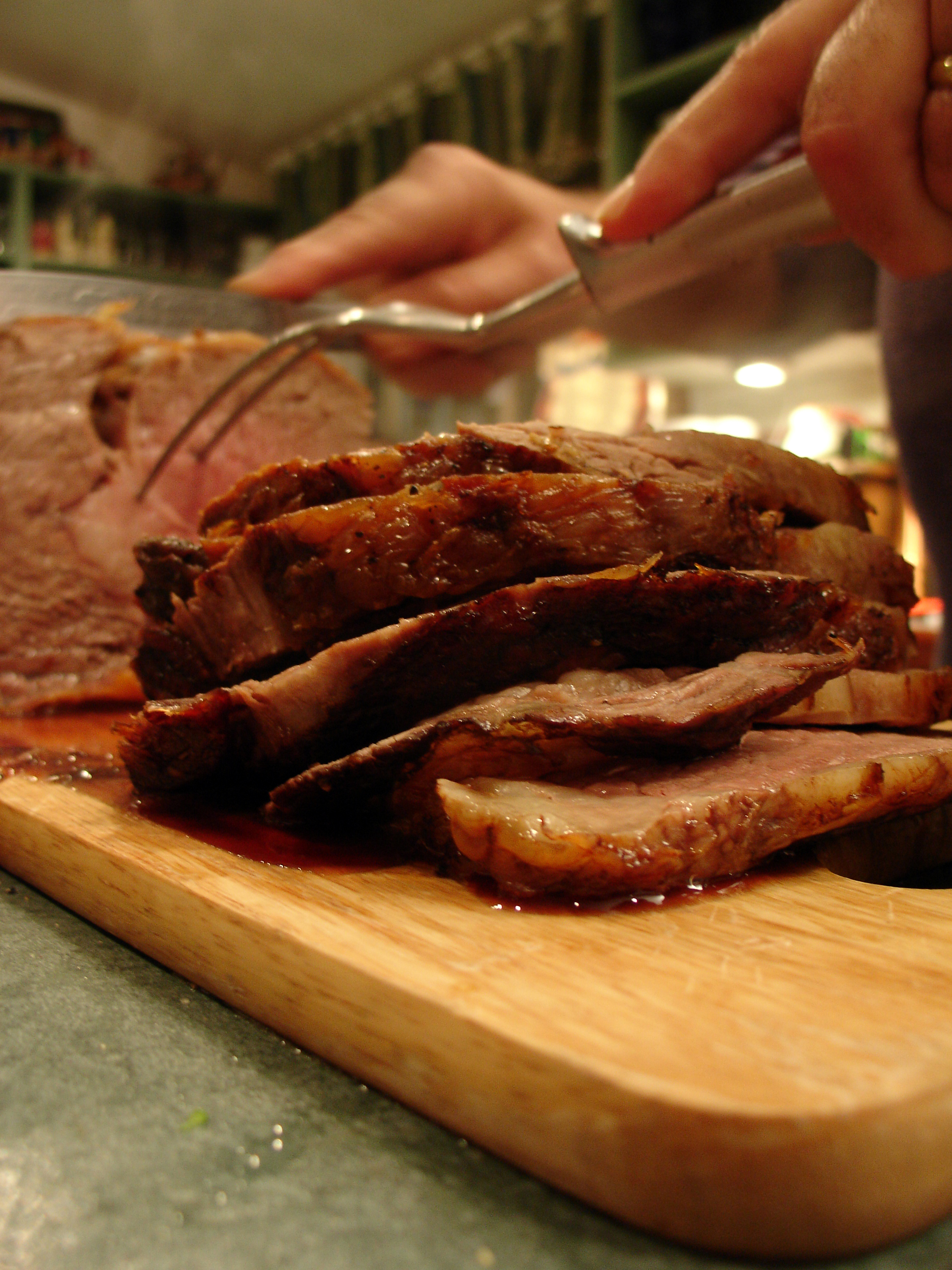
Imagine that you’re meeting your future spouse’s parents for the first time. They’ve invited you over for Easter at a cousin’s home and the cousin raises sheep. You’re already nervous because you really want his parents to like you. However, you now learn that, you who are a vegetarian, are about to be served lamb for Easter dinner. More so, the family has just had a lengthy conversation about the best way to cook lamb which apparently is to simply torch the outside a bit while leaving the lamb mostly rare.

You’re expecting the worst, but nothing prepares you for actual reality. When the lamb appears, you glance at the platter and see what looks to you like blood running in riverlets down the lamb’s sides. Your stomach, which has already been lurching horribly due to nerves, can’t take this unexpected sight, and you promptly run from the table and spend the next half an hour incredibly sick in the cousin’s bathroom, wondering if you’ve doomed your chances of ever impressing your future in-law’s.

I, unfortunately, don’t have to imagine the above scene, because I lived it. That experience, though, solidified a few things for me. One, I have never entertained without making sure that everyone who is coming will be comfortable with what I serve. Two, no new experiences where folks have made a dish I can’t eat has ever come close to topping that one, so I’ve been able to handle them with much more aplomb. And three, I’ve learned that when it comes to food, everyone’s tastes are different, and we have to be accepting of that.

So what do you do when you need to cook a main course that accommodates your health needs and is delicious for everyone who gathers at your table who may not need to watch what they eat?

1.  Plan ahead:  Don’t decide the day before what you want to try to make. If it’s something you’ve never made before, be sure to have a practice run, so you can learn what might be a potential glitch in the recipe. If it’s something you have made many times, be sure you have all the ingredients you need so you’re not running out at the last minute to purchase something you forgot.

2.  Forget the fat and focus on the cooking:  The mantra is that meat and chicken and turkey need the fat to taste good, but that’s not actually true. Whether your meat or turkey or chicken is dry and tasteless really depends on your cooking technique.

For meats and poultry, the key to seasoning is to do it everywhere.  Make a rub of herbs and spices and onions and garlic with just the tiniest bit of an oil like olive oil to create a paste and rub it everywhere.  For the meat, you can even put little slits into the meat and put seasoning into.  For the birds, use your hands to pull the skin away from the flesh and put the herbs in between the skin and breast as well as on top and inside the bird.  For inside, add an onion or garlic cloves or veggies like carrots and celery for even more flavor.

Cook the meats and poultry to maximize moisture.  Cook them on high heat for only 10 minutes to get the outside crisp immediately, then tent them with foil and cook on low heat for more even cooking. At the end you can cook them for another few minutes at high heat to finish them off with a nice brown crust or skin.  For folks who are extra wary, you can also use a reduced sodium, fat free stock to baste meats and birds during the cooking process.

Finally, let your meats and poultry rest after cooking.  If you let them sit for at least 15 to 20 minutes, all the juices which have been released will be reabsorbed into the meat and poultry, to allow for moister slices when you do cut them into pieces.

For tender cuts like a pork tenderloin or turkey tenderloin, just trust the meat. Once you season it with your herbs and spices, you can simply cook them at 350 for an hour, and they’ll taste great.  You choose to make a nice glaze to brush on instead, too.

For ham, you can omit the glazes that come packaged with the meat, and either cook it without or make your own less caloric version and just cook the ham according to instructions.

3. Make it yourself: If you’re making something like chicken cordon bleu, make your own bread crumbs. Whether you use 100% whole wheat bread or a gluten free millet bread, you’ll add more fiber to the crumbs which is good, and you can then season the bread crumbs as you’d like without all the salt. Contrary to thinking, it literally takes about two minutes to make your own crumbs.  A couple of tips:  For gluten free bread, use frozen slices.  For both breads, if the bread is already at room temperature, toast them on the lowest setting and cool before processing. If adding herbs and spices, throw them in with the slices you’re about to zoop in the processor, because that will meld the herbs and spiced into the crumbs.

If you’re supposed to use a certain type of bottled glaze or marinade, find a recipe that you like and modify to omit the salt and sugar and fat, using the tips I’ve put into past posts.

If the recipe calls for a bottled spice that includes salt, create your own mix, using herbs and spices from your cabinet which you combine with onion and/or garlic powder and black pepper.

4. Look for better options: If you’re making something like a stuffed, rolled pork tenderloin and the recipe calls for crumbled sausage, use a turkey variety. If you’re supposed to use cheese, find a lower sodium, reduced fat variety or a vegan substitute instead. If the recipe calls for ham and you really want to use ham, use half the amount and slice it into smaller pieces to distribute the taste throughout something like a cordon bleu. If you’re supposed to use meat to stuff a meat, try using sauteed vegetables instead. If butter is required, use a heart healthy and dairy free oil instead.

5. Think outside the box: Maybe this is the year you don’t make a chicken cordon bleu or ham for Christmas. Maybe you created a stunning whole wheat or gluten free roasted vegetable lasagna. Or maybe you make a spanikopita, only you use olive oil instead of butter and lower fat cheeses. Or maybe you try your hand at a vegan manicotti which used vegan cheeses and pureed cashews and is stuffed with butternut squash.

Chicken Cordon Bleu

(This is for four chicken breasts; we always double the recipe and use a 9 x 13 pan. If you aren’t allergic to dairy, you can use low fat real cheese!)

Ingredients: 

1/4 cup reduced sodium, fat free chicken broth

2 tsp minced garlic

1 tsp herbs of choice (oregano, thyme, basil, rosemary, etc…)

1/2 cup breadcrumbs (make your own!)

1 tbsp grated vegan Parmeson

1 tsp paprika

4 chicken breasts (smaller 4 to 6 ounce portion, not the huge ones!)

herbs of choice (oregano, basil, thyme, rosemary, etc…)

black pepper

4 thinly sliced pieces of fat free ham or turkey ham (the ultra thin deli style works well)

chopped fresh baby spinach

1/4 cup shredded vegan mozzarella

Cooking Instructions:

1. Lightly coat an 8 inch square pan with your choice of “grease”. (I usually brush a very light coat of olive oil.) Preheat the oven to 350 degrees.

2. Combine the broth with the garlic and herbs and microwave for 20 seconds until it’s warm.

3. Combine the bread crumbs with the Parmeson and paprika.

4. Pound the chicken breasts to a uniform thinness.  (We put the breast between parchment paper and pound them with the bottom of a heavy ice cream scoop.  If you have a meat mallet, that works, too. Recipes will often tell you to pound between saran wrap. Do what works for you.)

5. Sprinkle both sides of the chicken breasts with the herbs of your choice and black pepper.

6. Place one slice of the ham, some chopped baby spinach, and 1 tbsp of the mozzarella on top of each chicken breast and roll up the breasts in a jelly roll style.

7. Dip the rolled chicken breasts into the chicken broth and cover with the breadcrumb mixture.

8. Put the breasts into the baking pan, seam side down, and pour the remaining chicken broth over the chicken breasts evenly.

9. Bake for about 30 minutes until the juices from the chicken are clear and the chicken is golden brown.

10. You can serve immediately or cover them with foil to keep warm until it’s time to serve them.

Handling Holidays: Cakes and Tortes

KONICA MINOLTA DIGITAL CAMERA

“Why are the Christmas decorations up when it’s not even Halloween?”

My son and I had popped into BJ’s to pick up a couple of much needed bulk items. As we entered, we were greeted by twinkling lights, decorated trees, and gift wrapping.  Since it was still a week and  a half until Halloween, I could understand the reason for my son’s question.

What I didn’t know, though, was how much I should explain to an eight year old about the “pushing” aspect of the holidays — everyone trying to get us to think we need to purchase something, whether we need to or not.  For the most part, I don’t actually mind all the early decorating.  It’s pretty.

What boggles my mind is the onslaught of catalogs that begin to pile up in my mailbox. It wouldn’t be so bad if you received one for every company, but you don’t.  You receive multiple copies from October through December.

I usually simply recycle them all without looking at them.  One which my children love to pore over, though, is the Swiss Colony catalog with its different types of cakes and tortes and petit fours that they’re hoping we will purchase.

When it comes to the holidays, nothing says, “Celebrate!” like a cake.  And in many parts of the world, a torte is seen as special holiday food.  There are basically two types of tortes:  traditionally thought of torte which is made with little flour where nuts and jams take center stage in a layered extravaganza and the type of torte which is a multi-layered cake alternating cake with cream, frosting, ganache or jam.

Both types can wreak havoc with a healthy diet and/or an allergy sensitive one. Below, I’ll give you some tips for lightening cakes and substituting ingredients when necessary, but I’ll also share some thoughts for that latter type of torte (multi-layered cake alternating with filling), in case you’re thinking your holiday dinner ought to end with one.

For Healthier Cakes:

1.  Cut the amount of “filling” you use:  If your cake or torte calls for chocolate chips or dried fruit  or coconut flakes or nuts, use mini chocolate chips and/or process the dried fruit or coconut or nuts into smaller pieces. By doing so, you can distribute more of the filling throughout the cake or torte and can then cut the amount you’re using by a quarter or half without losing the flavor and texture.

2.  Swap out solid butter or shortening with coconut oil, which is actually a solid, not a liquid as the name implies.  It’s considered a healthier fat than butter and shortening.

3.  Substitute applesauce or pureed banana, pumpkin or prunes for up to half of the fat called for in a cake recipe.

4.  Swap out melted butter or vegetable oil for a heart healthy oil:  safflower oil, grapeseed oil, canola oil, a nut oil, Smart Balance, olive oil, etc….

5.  Substitute egg whites for the whole eggs.  Two egg whites equals one egg. You can also substitute ground flaxseed meal mixed with water for the eggs. 1 tbsp of meal mixed with 3 tbsp of water equals one egg.

6.  Swap out part of the flour in the recipe with a nut flour, coconut flour or soy flour.  You can substitute up to half of the flour with  a nut flour, about 1/4 of the flour with coconut flour, and up to 1/3 of the flour with soy flour.

7.  Swap the white flour for whole wheat.  100% whole wheat has a higher fiber content, but you can also use white whole wheat if you want something closer to white flour.  Since 100% whole wheat flour is denser than white, you should use about 1/4 cup less in your recipe.

8.  Use Agave or Stevia or Coconut sugar in place of the sugar in the recipe. For every cup of sugar use about half of any of these substitutes.  If you use the Agave and it’s simply a couple of tablespoons to 1/4 cup, don’t worry about it being a liquid.  If you’re using a cup or more, though, decrease any other liquid by at least 1/4 cup to 1/2 cup or increase a flour ingredient by 1/4 to 1/2 cup.

9.  Swap out any “whole” milk product (milk, yogurt, cream cheese, etc….) for a lower fat, lower sodium variety.

10.  Use date molasses instead of regular molasses.  You can use the same amount of date molasses as regular molasses.

For Allergy Friendly Cakes:

1.  Use gluten free flour instead of wheat.  Authentic Foods has a multi-flour blend that includes everything including the xanthan gum which works very well as a substitute.  You can also use your favorite flour blend and add 1/2 tsp of xanthan gum for every cup of flour your recipe needs.

2.  Substitute water, 100% fruit juice or your type of “milk” (soy, rice, almond, coconut, etc…) for any milk needed in a recipe.

3.  Swap out the heavy cream: You can substitute using coconut milk; or 3/4 cup of your type of milk with the addition of an extra 1/4 cup of your type of butter per cup of “cream” needed; or a type of yogurt you can eat; or pureed soft or silken tofu.

4.  Substitute vegan butter or coconut oil for any butter or shortening called for in a recipe.

5.  Use a recipe that calls for a liquid oil as opposed to butter so you can use safflower, canola, grapeseed, walnut, pumpkin, etc… oils instead.

6.  Substitute vanilla soy milk for evaporated milk.  1 1/2 cups is equal to those 12 oz cans usually used.

7.  Make your own dairy free sweetened condensed milk.  This recipe only works for a cake that is going to be baked:  Beat 2 eggs until thick.  Add 1 cup brown sugar and mix well.  Add 1 tsp vanilla and mix well.  Add 2 tbsp of a flour and beat for one minute.  Add 1/2 tsp baking powder and 1/4 tsp salt. Beat for another minute.  Set aside until you need to add it to your recipe. This is equivalent to one 14 oz can of sweetened condensed milk.

You can also try making homemade sweetened condensed milk by mixing about 2 1/2 cups of your type of “milk” (rice, nut, coconut, soy) with 8 tbsp sugar or agave.  Stir well and simmer over low heat until the “milk” has reduced and thickened.  This will take a couple of hours.  Keep the heat low and stir frequently.  When it’s thickened, you can add 1/8 tsp of salt and/or 1/2 tsp vanilla, if you’d like.  Put a clear plastic wrap up against the mixture before cooling in the fridge to prevent a “skin” from forming.

8.  Make a dairy free whipped cream.  Chill a can of full fat coconut milk overnight. Turn the can upside down and drained out the liquid.  Put the cold cream into a cold mixing bowl and whip into it’s light and fluffy.

9.  Substitute eggs with 1 tbsp ground flaxseed meal mixed with 3 tbsp water for every egg needed in the recipe.  Simply mix up the meal with the water and let it sit for at least five minutes to thicken to an egglike consistency.  Or if you are allergic to flaxseed, you can substitute 1/4 cup applesauce for every egg needed in the cake recipe and add 1 tsp of baking soda with 1 tbsp of vinegar to the cake recipe.

10.  Use Tofutti sour cream and cream cheese instead of the dairy versions.

11.  Substitute the dairy chocolate in chocolate cakes or fillings with Enjoy Life chocolate bars and/or chocolate chips.  Or use unsweetened cocoa powder instead of the chocolate.  Three tbsp of cocoa powder plus one tbsp of a fat (oil or “butter”) is equivalent to one ounce of unsweetened chocolate. One tbsp of cocoa powder plus two teaspoons of a fat (oil or “butter) plus one tbsp of sugar is equivalent to one ounce of semi-sweet baking chocolate.

12.  Replace nuts in a cake recipe with chopped dried fruit or coconut flakes or chocolate chips.

Allergy Friendly Torte

1.  Decide what type of torte you’d like to make:  chocolate mint (chocolate cake with mint filling); raspberry (white cake with raspberry jam filling); pumpkin spice (pumpkin cake with spiced filling); lemon (yellow cake with lemony curd filling); etc….  The options are actually endless.

2.  Make your cake:  Find a recipe that you really like and make your substitutions as needed.  Most torte recipes will tell you to bake one or two layers and then cut them.  I suggest instead that you bake thinner layers.

Line your cake pans with parchment paper and pour one cup of batter into each pan and bake for 10 minutes in a preheated 350 degree oven.  Let the cakes cool for a couple of minutes, then turn them over onto a wire cooling rack to cool, removing the parchment paper immediately from the cakes.

If you only own two cake pans or your oven will only fit two 8 or 9 inch pans at a time,  after you bake the first two cake layers and turn them over onto a wire cooling rack, put the cake pans into the freezer for a couple of minutes to cool them.  Then reline them with your previously used parchment paper and fill them with one cup of batter each again and repeat.

I usually find that a basic cake batter recipe for a two layer cake will make six of the one cup layers.  Let all the layers completely cool.

3.  Make your filling:  If you’re simply going to use jam, scoop out whichever jam you are going to use (I like to use Polaner All Fruit which has no added sugar) and whip it up in a bowl to a nice spreadable consistency. Similarly do the same if you are using a store bought lemon or fruit curd or fruit butter.

A recipe for your own lemon curd:  Heat 1/3 cup of lemon juice in a pan until it’s warm, but not boiling.  Whisk two whole eggs and one egg yolk with 1/2 cup of sugar.  Then while you’re constantly stirring, very slowly pour the hot lemon juice into the egg mixture.  Pour all of the mixture back into your pan and cook for about two to three minutes, stirring constantly.  Remove the pan from the heat and stir in 2 tbsp of “butter” which has been cut up into small pieces.  Add 1 tbsp of cream or cream substitute, 1/4 tsp vanilla and 1/8 tsp salt.  If you want the curd to be smoother, push it through a mesh strainer.  Wrap the curd with plastic wrap, pressing the wrap directly onto the curd surface.  Let it cool in the fridge until needed.

If you are making an allergy friendly cream filling: A nice versatile recipe I like to use is as follows:  Overnight, put two 14 oz cans of coconut milk into the fridge. When you’re ready to use them the next day, turn the cans upside down and open them.  Pour out the coconut water and scoop the “cream” into a cold mixing bowl (I put the bowl into my freezer for about ten minutes, along with the mixing tool.) Whip the cream until it’s nice and thick.

For a chocolate cream, add 1/3 cup special dark unsweetened cocoa powder, 1/2 cup coconut sugar, and 2 tsp vanilla.  To make it minty, reduce the vanilla to 1 tsp and add 2 tsp mint extract.  For a spice cream, add 1/2 cup coconut sugar and 2 tsp cinnamon or a mixture of cinnamon, ginger, cloves, nutmeg, etc….  For just a plain sweetened cream, just add 1/2 cup of coconut sugar and 1 tsp vanilla.

While the cream is being whipped, put 2 tbsp of cold water into a bowl. Gently sprinkle 2 tsp of unflavored gelatin over the cold water.  Let it sit for two minutes. Carefully pour 1/4 cup of boiling water over the gelatin and whisk until its completely dissolved. Let it cool for a couple of minutes. Then add it to the whipped cream.  You can either cool it in the fridge for two hours and then stir it and spread it over your layers or you can spread it directly onto your layers immediately and let the entire cake cool for two hours in the fridge.

4.  Layer your torte:  I find that the best way to layer the cake is to use a springform pan that fits your cake.  Put down one of the cake layers on the bottom of the pan, layer your filling, and then keep repeating until you reach the top layer of cake.  Cover and let the cake chill.  When you’re ready to top the torte, release the springform pan and clean up the sides with a metal spatula.

5. Top your torte:  After your torte is cooled, you can frost it with your favorite frosting or cover it with a ganache or top it with melted chocolate.

Elana’s Pantry has some nice allergy friendly frosting recipes if you’re trying to also avoid using sugar.  If you have no problems with powdered sugar, then use a recipe you like and just substitute as necessary for ingredients like butter and spread the frosting over your cooled torte.

For a ganache:  If you aren’t allergic to dairy, heat in a pan over low heat 1 cup of cream, 1 cup of sugar, and 1/4 tsp salt, stirring frequently until it begins to simmer.  Pour the hot mixture over 10 ounces of small pieces of chocolate.  Whisk until smooth.  Add 1 tsp vanilla and 1 stick of butter.  Cover and refrigerate for about an hour until it’s cool but spreadable.  Spread carefully over your cooled torte.

If you need to substitute, you can use Enjoy life chocolate, and/or water or your type of “milk” (this will just make it  bit thinner and have less of a “shine”) and/or 1/2 cup of Agave and/or your type of butter.

You can also make another type of ganache where you melt one ounce of your type of butter with two fluid ounces of your type of milk per four ounces of chocolate, cool, and then whip until thick.

For a hard chocolate topping:  Fill a small pan halfway with water.  Put a larger pan on top of the smaller pan and turn the heat to medium low.  Melt 2/3 of a 10 ounce bag of Enjoy Life mini chocolate chips, keeping the other 1/3 nearby.  Be sure to stir constantly.  Once the chips are melted, remove them from the heat and quickly stir in the remaining 1/3 of the chocolate chips until all the chips are melted.  Working quickly, pour the melted chocolate over the cooled torte, and use a cake spatula to spread the chocolate over the top and around the sides.

You can use regular chocolate if you’re not allergic to dairy.

If you use the chocolate as a topping, you’ll need to remove the torte from the fridge about an hour before you’re going to serve it so it can soften a bit. Then run your knife under hot water before slicing the torte.

Handling Holidays: Pies

website pies

“As American as apple pie.”

As the story goes, the Pennsylvania Dutch invented the two crusted fruit pie as we know it today, and apparently being able to have pies regularly with your meals was seen as a status symbol.  Whether this is all true or not, I don’t know, but I do know that my husband would rather have a pie than a birthday cake; that my members of my extended family would think Thanksgiving had gone horribly wrong if no pies were present; that figures say 700 million dollars in pies are sold every year in the U.S.; and that students everywhere are thrilled to celebrate Pi Day with pies of every type every year.

Ironically, though, pies, which are made with “good for you” ingredients like fruit and vegetables, are full of fat, sodium, and allergy triggers like wheat, nuts, and dairy.

Fortunately, when it comes to desserts, however, pies are probably the easiest to adapt for healthier eating or for an allergy restricted diet.  They usually don’t require very exact ratios of ingredients, and because you don’t need to make anything “rise”, you can pretty much substitute any ingredient with another without worry of disastrous results.

Healthier Pies

If you simply need to eat healthier, here are a few easy fixes to try:

For Crusts:

1.  Swap the white flour in the crust for whole wheat.  100% whole wheat has a higher fiber content, but you can also use white whole wheat if you want something closer to white flour.  Since 100% whole wheat flour is denser than white, you should use about 1/4 cup less in your recipe.

2.  Swap out the butter or shortening with coconut oil, which is actually a solid, not a liquid as the name implies.  It’s considered a healthier fat than butter and shortening.

3.  Make a crust using a liquid healthy oil as opposed to a solid fat.  A general recipe:  1 1/3 cup flour, 1/2 tsp salt, 1/3 cup oil, 3 tbsp “milk”.  I have used safflower oil, grapeseed oil, canola oil, etc… and almond milk, soy milk, and rice milk — all to success.

4. Substitute part of the flour in the recipe with a nut flour, coconut flour or soy flour.  You can substitute up to half of the flour with  a nut flour, about 1/4 of the flour with coconut flour, and up to 1/3 of the flour with soy flour.

For Fillings:

1.  Use Agave or Stevia or Coconut sugar in place of the sugar in the recipe.  For every cup of sugar use about half of any of these substitutes.  If you use the Agave and it’s simply a couple of tablespoons to 1/4 cup, don’t worry about it being a liquid.  If you’re using a cup or more, though, decrease any other liquid by at least 1/4 cup to 1/2 cup or increase a flour ingredient by 1/4 to 1/2 cup.

2.  Swap out any “whole” milk product (milk, yogurt, cream cheese, etc….) for a lower fat, lower sodium variety.

3.  Substitute egg whites for any whole eggs.  If you’re worried about the texture of a certain type of pie like pecan pie, use half whole eggs and half egg whites.

4.  Use date molasses instead of regular molasses.  You can use the same amount of date molasses as regular molasses.

Allergen Friendly Pies

If you need to substitute traditional ingredients, here are a few things you can try:

For Pie Crusts:

1.  Make a gluten free crust instead of a wheat flour type.  There are tons of recipes online you can follow.  Companies like Bob’s Red Mill also have their own pie crust mixes which you just add water to and roll out.  HINT:  These always need slightly more water than the instructions indicate, though, and you’re best rolling them out between wax paper.

2.  Substitute water or your type of “milk” (soy, rice, almond, coconut, etc…) for any milk in a crust recipe.

3.  Substitute vegan butter or coconut oil for any butter called for in a recipe.

4.  Use a recipe that calls for a liquid oil as opposed to butter so you can use safflower, canola, grapeseed, walnut, pumpkin, etc… oils instead.   A general recipe:  1 1/3 cup flour, 1/2 tsp salt, 1/3 cup oil, 3 tbsp “milk”.

For Fillings:

1.  Substitute vanilla soy milk for evaporated milk.  1 1/2 cups is equal to those 12 oz cans usually called for in a pumpkin pie recipe.

2.  Substitute vegan butter or a liquid oil or coconut oil for any butter called for in a recipe.  If you’re making a fruit pie that calls for “dotting with butter”, you can just omit the butter altogether and still have a tasty pie.

3.  Use a gluten free flour like garbanzo bean instead of a wheat flour.

4.  Make your own dairy free sweetened condensed milk.  This recipe only works for a pie that is going to be baked:  Beat 2 eggs until thick.  Add 1 cup brown sugar and mix well.  Add 1 tsp vanilla and mix well.  Add 2 tbsp of a flour and beat for one minute.  Add 1/2 tsp baking powder and 1/4 tsp salt.  Beat for another minute.  Set aside until you need to add it to your recipe.  This is equivalent to one 14 oz can of sweetened condensed milk.

You can also try making homemade sweetened condensed milk by mixing about 2 1/2 cups of your type of “milk” (rice, nut, coconut, soy) with 8 tbsp sugar or agave.  Stir well and simmer over low heat until the “milk” has reduced and thickened.  This will take a couple of hours.  Keep the heat low and stir frequently.  When it’s thickened, you can add 1/8 tsp of salt and/or 1/2 tsp vanilla, if you’d like.  Put a clear plastic wrap up against the mixture before cooling in the fridge to prevent a “skin” from forming.

5.  Use a frozen non-dairy dessert to replace the vanilla ice cream as a topping.

6.  Make a dairy free whipped cream.  Chill a can of full fat coconut milk overnight.  Turn the can upside down and drained out the liquid.  Put the cold cream into a cold mixing bowl and whip into it’s light and fluffy.

7.  Make a soy cream:  Mix one pint soy creamer, 1/2 cup soy sour cream, 1/4 cup Agave, 2 tablespoons cornstarch, and 1/4 teaspoon salt.  Cook over low heat until it thickens, stirring constantly.  Remove from the heat and add 2 teaspoons vanilla.  Scrape into a heat safe bowl and press plastic wrap directly against the cream to prevent a “skin” from forming.  Cool in the fridge.  Before serving, whisk the cream to make it lighter and fluffier.

8.  Substitute eggs with 1 tbsp ground flaxseed meal mixed with 3 tbsp water for every egg needed in the recipe.  Simply mix up the meal with the water and let it sit for at least five minutes to thicken to an egglike consistency.

Crustless Dairy Free Gluten Free Pumpkin Pie

Ingredients:

2 cups cooked, pureed pumpkin or 1 15 oz can of pumpkin

1 1/2 cup vanilla soy milk (or milk of your choice: evaporated milk, rice, almond, coconut)

1/2 cup liquid egg whites (or two whole eggs or 2 tbsp flaxseed meal mixed with 6 tbsp water)*

1/2 cup Agave

1/2 cup garbanzo bean flour (or other gluten free or wheat flour of choice)

1 tsp ground cinnamon

1 tsp dried orange  peel

1 tsp gluten free baking powder

1/2 tsp ground ginger

1/2 tsp ground nutmeg

1/4 tsp ground cloves

1/8 tsp salt

1/2 cup gluten free whole grain rolled oats

1/2 tsp ground cinnamon

1 tbsp Agave

1 tbsp melted vegan butter or oil such as grapeseed

Baking Instructions:

1.  Preheat an oven to 350 degrees.  Lightly grease a 9.5 or 10 inch pie pan with your preferred method.

2.  Mix the pumpkin with the soy milk, egg whites, and Agave.

3.  Mix the garbanzo bean flour with the cinnamon, orange peel, baking powder, ginger, nutmeg, cloves, orange peel, and salt.

4.  Mix the dry ingredients into the pumpkin mixture and pour into the prepare pie pan.

5.  Mix the rolled oats with the cinnamon.  Add the Agave and melted “butter” or oil, and combine well to make an oat topping.

6.  Use clean hands to evenly top the pumpkin mixture with clumps of the oat topping.

7.  Bake in the preheated oven for about 50 minutes.  The pie will be puffed and golden.

8.  Cool for 15 minutes on a wire cooling rack.  Then put into the fridge to cool completely.

* If you like your pumpkin pie denser, simply whisk in the egg whites with the rest of the liquid ingredients.

If you prefer a lighter, creamier version, though, whip the egg whites with 1/8 tsp of cream of tartar until they’re stiff. Mix the wet and dry ingredients together, and then gently fold the egg whites into the batter until they’re fully incorporated.

To fold egg whites:  Used a large curved spatula and be sure to put your batter into a large bowl.  Gently scoop your egg whites on top of the batter.  Then go along the curve of the bowl along the bottom of the batter with your spatula to gradually get some of the batter.  Scoop the batter gently into the center of the egg whites.  Then scoop your spatula back up toward the top of the batter and start all over again.  Essentially you’re just really, really gently incorporating the batter into the egg whites.

Handling Holidays: Strategies for Surviving Food Stress

website holidays

The Holidays.

In our home, the holidays can sometimes have a lot in common with schizophrenia. With two of our three children on the autism spectrum, there’s a disconnect between the fantasy of holiday love and cheer and the reality of life with it’s unexpected and unanticipated twists and turns.

When life’s reality prevents us from doing the “tradition” which must always be done every single year, our autistic children, like the schizophrenic, will declare that everyone and everything is against them.  Then, like the schizophrenic, they’re incapable of managing their emotions and relating to the real world, so they withdraw,

As a result, holidays aren’t always fun in our home.  The stress and pressure for everything to be “perfect” is that much more, and the effort it takes to help our children learn how to live in reality and be more flexible can drain all my husband’s and my energy and reserves.

So, imagine adding to this the fact that you also can’t eat any of the lovely traditional dishes that the majority of your family and friends will be serving for holiday dinner.  Suddenly you’re not only concerned with keeping your family life constant, but you’re depressed because you know you’ll only be eating turkey at Thanksgiving because you’re going to be served green bean casserole, mashed potatoes, and pecan pie at Thanksgiving when you can’t have wheat, dairy, nuts or sugar. (True experience one year!)

For those of us who need to watch what we eat, whether for dietary or allergy reasons, there are ways to still enjoy the holidays, but it takes some initiative on our parts.

1.  You can host:  If you invite folks to your place, you can simply incorporate what other family members want to bring into a menu of your own choosing. Then you’ll have a combination of the foods you make which you can eat and the traditional dishes the rest of the family still like to enjoy.

2.  You can contribute:  If you know there are certain dishes which everyone wants like a green bean casserole, you can offer to bring a revamped version so you can enjoy it as well as the others.  If folks are nervous about you messing up their favorite dish, you can offer to bring a similar dish so folks can have a little bit of both.

3.   You can  inquire:  If a family member or friend is hosting, ask them how they are going to cook a particular dish and whether they might be able to do it a tad bit differently this year.  Can they roast the butternut squash with olive oil instead of butter?  Would they be willing to purchase a dairy free “ice cream” for that apple pie?

4.  You can teach:  What I’ve encountered most is that folks are very willing to help me be able to eat at a holiday dinner, but they simply don’t know how to go about doing it.  So, I’ve learned to answer their questions with particular tips. If they want to replace ricotta cheese in a recipe, I tell them how to use silken tofu.  If they think that making a gluten free apple pie might be too difficult for them, I suggest a gluten free apple crisp.  If they don’t know where to purchase a certain type of flour, I tell them.  If you’re prepared to provide the necessary information, people are usually happy to accommodate your needs.

5.  You can learn:  The other situation I’ve experienced is that many folks with newly acquired dietary restrictions or food allergies don’t know for themselves how to revamp traditional holidays dishes which accommodates their needs and which the non-food issue people will actually like.  In these cases, you can learn how to cook to meet the needs.  In the posts following this, I will focus on certain traditional holiday foods to show folks how to create healthier, allergen friendly versions.

With the colder weather setting in, we’ve been enjoying hearty soups more, so below is one of my daughters’ favorite crockpot soup.

Crockpot Split Pea Soup

Ingredients:

2 lbs of dried split peas (I buy two 16 oz bags)

1 red pepper

1 zucchini

1 squash

12 oz bag of broccoli slaw*

1/2 cup chopped onions (I just use frozen chopped onions)

16 oz diced ham pieces**

1 tbsp minced garlic

1 tsp black pepper

1 tsp dried thyme leaves

12 cups fat free reduced sodium chicken or vegetable broth

2 bay leaves

Cooking Instructions:

1.  Put the split peas into a large bowl and fill the bowl with water, enough to cover the split peas.  Running your fingers over and around the split peas to loosen any white coverings still on the split peas.  (They’ll float to the top of the water, making it easy for you to pick them out.)  Drain the peas and sort through to pick out any stones that might be residing within the group of split peas.  Put the picked over split peas into a 6 quart slow cooker/crockpot.

2.  Using a food processor, chop up the red pepper, zucchini, squash, and broccoli slaw into tiny pieces and add them to the split peas.

3.  Add the onions, ham pieces, garlic, black pepper and thyme.  Mix well.

4.  Pour in the broth and stir carefully.  Your Crockpot will be filled almost to the top.

5.  Stick the two bay leaves into the center of the soup, and cook on high for 8 hours.  (Note:  During the cooking, the spices will rise to the top.  Some time during the 8 hours, after the halfway mark, stir the soup and recover to resume cooking.)

6.  When you’re ready to serve, remove the bay leaves and stir the soup well, smashing the peas a bit with your spoon.  (Note:  My children love to put some reduced fat shredded cheddar cheese into this soup.) 

*  If you can’t find the broccoli slaw, simply chop up a carrot or two and half a cup of broccoli.

** My grocery store sells packaged really finely diced ham pieces.  If you can’t find something similar, simply use some leftover turkey ham from a previous meal, just make sure to dice it into small pieces so the flavor will incorporate into the soup.  If you’re vegan, you can simply omit the meat altogether.  To get a similar flavor, though, when you serve the split pea soup, put a spoonful of diced, cooked, smoked tofu or veggie burger into the bowl of soup.

Going Uphill: The Possible Obstacles

website obstacles

“I’m sorry but I can’t make it up the hill.”

One cold, crisp December morning a professional hairdresser and make-up artist turned my everyday cute self into a beautiful cover bride.  Snow had swept in the evening before, leaving the countryside picture perfect white.  Unfortunately, the snowplows, dirt and salt had left the parking lots and roads grimy and filthy.

Residual light snow fell onto the umbrella my maid of honor carried over my head while faithful bridesmaids valiantly tried to hold up my dress above the filth and grime as we slowly and carefully stepped to the limousine.   The driver assured me that the roads were clear, and we were on our way to the moment I had been planning for the past six months.

My husband-to-be was waiting at the church with the family and friends who represented the first twenty-two years and twenty-three years of both our lives. In less than an hour our new lives together would begin.  Or so I thought.

“Ma’am, I’m sorry but the main road up to the church is closed because of ice.  I’ll have to go around.”  The road “around” unfortunately was closed as well.  As was the third route option.  We could see the church sitting at the top of the hill, its steeple standing tall in the middle of the swirling snow, but we could not get to it.

Would my wedding be thwarted by the mercilessness of nature?  Would I break my leg if I got out and walked up the icy road?  Maybe getting married in December wasn’t such a great idea after all.

In the end, we made it to the church half an hour later as the sun broke through the clouds and melted away some of the offending ice, but for a moment, it had seemed as if the obstacle might be too great to overcome.

We can have the same overwhelming feeling when it comes to changing our eating habits to fit a food allergy or a healthier diet as obstacles we hadn’t anticipated loom before us.

The Obstacles

For most folks the biggest obstacle is price.  Allergen free foods are more expensive than regularly processed items.  Fruits, vegetables, whole grains, and other fresh produce cost more than white flour goods and boxed and canned foods.  As well, some people find it difficult to find resources which might help them with their new lifestyle while others discover that it’s not easy to create or revamp their own recipes for healthier or allergen free cooking.  Add on that suddenly folks have to “educate” their friends and family about their allergies or dietary restrictions with not always the best responses, and it can seem like one might not be able to make the changes after all.

The Helps

Cost:  When everything you make has to be gluten, dairy, nut, sugar and occasionally egg free at the same time, cooking can become a bit expensive. There are ways to cut back on costs, though.

1.  Many “regular” foods ARE gluten, dairy, nut, egg, etc… free.  Sometimes we get caught in the mindset that everything we buy has to be “special”, but that’s not the case.  You just need to read the labels, but you’ll be surprised by the number of items you find you can still eat.

2.  Whole is better than parts.  If you’re eating healthier and purchasing more fruits and vegetables, don’t buy the separately packaged, pre-washed, cut up varieties.  They always cost more.  Purchase the whole lettuce head.  Buy the loose vegetables and not the ones already on the foam trays.  Get a whole melon and not the halves.

3.  Buy when there are sales.  Most of the grocery stores in my area will have a sale on different allergen free items at least weekly, so I stock up when the prices are good.  You can also find sales online.  Comparison shop between the brand companies and Amazon.

4.  Frozen is good.  Fruits and vegetables which are frozen are cheaper than fresh.  While you definitely want to get fresh when it’s in season, you don’t want to when it’s not.  It’s too expensive.  Go with the frozen and read my post on the “frozen chosen” to learn all you can do with them.

5.  Buy in bulk.  Places like BJ’s and Costco’s now have many allergen free items in stock for purchase at better prices.  At the supermarket, an 11.5 oz of Agave costs me between $4 and $5.  At BJ’s I can buy a 48 oz container for $6.99.  Also, online, if you purchase more, often the price is less per unit and you ultimately save on shipping and handling, too.  For veggies and fruit:  If there’s a good price on something you regularly eat, you can purchase it and freeze them for later use.

6.  Shop at discount places.  In my area Ocean State Job Lot is a wonderful place for picking up gluten free items with good expiration dates for a cheaper price than I’d find it at the store or online.  I don’t make a special trip to the Job Lot but if I’m passing by, I stop in and stock up.  Look around for stores in your area that provide the same option.

7.  Shop with friends.  If you have friends who have similar allergy or health issues, purchase even larger quantities of needed items, together and split the costs.  I’ve found this helpful, because sometimes a friend wants a little of something while I want a lot or vice versa, and we can take the proportional amounts that we each want while saving some money.

Resources:  The biggest question I always get is “Where do I start?”  The nice thing about today’s age is that resources abound online so you don’t even have to spend money purchasing books.  You can get help for free.  Google any food allergy and numerous sites will pop up.  Type in “healthy” before whatever recipe you want, and you’ll get a “bazillion” hits.  Because it is “numerous”, though, ask around.  Friends can tell you what sites have been helpful to them.  Once you are at a site, see what other sites are linked to that one.  People are very open about sharing site they “like”.  If you do want a book, Google your particular allergy and see what pops up.  Read the reviews, and you’ll find that people are very vocal about whether a book works or not.

Recipes:  If you find that you’re simply are not cut out for revamping or creating your own recipes, don’t worry.  There are plenty of people out there who have recipes you can simply follow.  Those sites and books you found will always have recipes you can use, and you’ll find allergen free recipes for just about anything under the sun you want to create.  And if following recipes isn’t your thing, either, you still don’t need to stress, because there are many, many products on the market, both online and in stores.  I personally don’t make my own pie crusts from complete scratch.  Bob’s Red Mill has a wonderful gluten free baking and biscuit mix which makes a great pie crust, so I use it.  I add my own little touches, a little cinnamon and spice added, a bit of vegan butter brushed on the top, etc…, but I’m using a store bought product.  No one says you have to do it all yourself, especially when there are plenty of options out there for you to use.

Education:  This is usually the most difficult obstacle, more than even the cost. Too often the obstacle are well-meaning friends and family who simply don’t understand.

1.  “But I only used a little.”  Sometimes folks don’t seem to understand that “a little bit” can be deadly for someone with a food allergy.  In these cases, it’s important to be patient and to take the time to gently explain that a little bit can trigger a reaction which could lead to death.  Don’t be dramatic, but matter of fact.  In time, people usually begin to get it.  If you’re eating healthier for a health issue, simply explain that you really can’t eat certain foods because of your health.

2.  “But I can cook for you.”  Sometimes folks turn down your offer to bring something you know you can eat.  They’ve invited you and don’t want you to have to go through any effort.  Occasionally, they’re actually hurt that you want to bring something, as if there won’t be anything they’ve made you can eat.  In these cases, you need to be honest and simply explain that it’s no reflection upon them, but you’ve learned to be careful because you’ve had bad experiences in the past.  Usually people understand when you explain it that way.

3. “But I’ve read that you can be misdiagnosed with an allergy.”  Sometimes people don’t believe you have an allergy.  With all the information out there about “sensitivities” verses “intolerances” verse “allergies”, it’s easy to be confused.  People aren’t trying to call you a liar.  They’re genuinely concerned that your whole life may be changing when it doesn’t need to be.  Simply tell folks that you’re aware of the differences and can assure them that you do indeed have a confirmed allergy.  If you’re firm, in time people accept the truth.

4.  “But don’t you want to eat it.”  Sometimes people just can’t understand how you can resist eating foods which are so tempting.  They’re not intentionally trying to make you feel badly.  They just think they’d have less self-control if they were in your place.  This is another time when you can simply be honest.  Yes, you’re tempted, but you know it could have terrible consequences – anaphylactic shock, another heart attack, whatever….  People usually do get it eventually.

5.  “But what’s left for you to eat.”  This one may only apply to folks like myself who are allergic to multiple foods, but sometimes people just can’t take it in.  They think you’re somehow going to be deprived.  If this is the case, you simply need to tell them all the wonderful foods you’re still able to eat, or better yet show them.  Below is a recipe for a chicken piccata that I serve to guests which is not only delicious but easy to make.

Chicken Piccata

Ingredients:

1/2 cup Gluten Free Flour*

1 tsp dried oregano

1/2 tsp black pepper

1/2 tsp dried thyme leaves

1/2 tsp dried basil

1/4 tsp ground onion powder

1/4 tsp ground garlic powder

10 chicken cutlets**

2 tsp olive oil

1/2 cup vegan friendly white wine***

1 cup low sodium, fat free gluten free chicken broth

1/4 cup lemon juice

2 tsp minced garlic

2 tbsp vegan soy free “butter”

Cooking Instructions:

1.  Mix the flour with the oregano, pepper, thyme, basil, onion powder and garlic powder.

2.  Coat both sides of the chicken cutlets with the flour, making sure to shake off any excess and stack them on a plate.

3.  Heat 2 tsp of olive oil in a large skillet over medium heat and add the chicken cutlets.

4.  Brown the cutlets one minute on each side and place back onto your plate.

5.  Deglaze your pan with the white wine and cook until the wine is almost gone.

6.  Mix the chicken broth with the lemon juice and garlic.  Add to the wine in the pan.

7.  Add the cutlets back into the pan and cook for one to two minutes on each side until the chicken is cooked through.

8.  Remove the cutlets to a warming dish, and add the “butter” to the sauce left in the pan.

9.  Cook the sauce until it’s reduced a bit and thicker.  Pour over the chicken.

* I like to use a garbanzo bean flour, but you can use whatever type you prefer.  If you have no wheat or gluten issues, use 100% whole wheat flour.

** I rarely actually buy cutlets because they’re more expensive.  I keep frozen chicken breast in the freezer which I defrost only partially, then cut into half both lengthwise and widthwise so I have cutlet sized chicken.  (Because the chicken breasts they sell these days are so large, you can do this.  If you buy normal sized chicken breasts, you should only cut them widthwise so you don’t have tiny portions.)

*** If you go to vegnews.com or barnivore.com, you can find lists of wines not contaminated with casein.

Food Allergies and Store Bought Products

website brownies

“It’s not fair.”

My son is at that age – you know the one – where everything is “unfair”.  If he doesn’t get what he wants, “It’s unfair.”  If things don’t go as planned, “It’s unfair.” If his older sisters get to do something he’s too young to do, “It’s unfair.”  If people around him have something he doesn’t, “It’s unfair.”

And unfortunately for him, “it’s unfair” that he doesn’t have very sympathetic parents or older sisters.

“Sorry, life’s not always fair, kiddo,” is what he gets from his father.

“Life’s not fair; get used to it,” is what his oldest sister says.

“I learned life isn’t fair; you need to learn it, too,” is what his other sister tells him.

And from his mother, the poor child gets, “Where in the world did you ever get the notion that life is supposed to be fair?  No matter what they tell you in school, life is not about fairness.  It’d be nice if it was, but it’s not.  So, get over it.”

Ideally, we’d live in a world that is “fair”, meaning that all the rules would be consistent without any universal partialities and obstacles to life.  It’s not the case, however, and quite frankly, I think “it’s unfair” that there are people like myself who are allergic to so many foods that it prevents us from being able to enjoy eating whatever we want when we want.

Just because it is unfair, though, doesn’t mean we have no options.  The question I get most frequently from folks is “What is out there for me to eat in terms of store bought items?”And the answer is “plenty”.

Just to name a few:

1.  Gluten Free Breads:  Udi’s, Kinnikinnick, Whole Foods, Rudi’s, Food for Life, EnerG, and Glutino all make breads which are you can choose from.  Try different brands.  Try different varieties of bread from the same company.  You may find that you like a variety of the brands.  You may find you only like one type of bread from one company.  You will, however, find something that you do like.  I can tell you that if you’re looking for a bread that tastes like a “regular” bread, that Rudi’s multigrain bread is one that even my children will eat.

2.  Dairy Free Yogurts:  Trader Joe’s, Silk, and So Delicious are actual dairy free yogurts that I’ve tried.  You have to be careful, because even yogurts that are “soy” still might have dairy in them, so for example, O’Soy yogurts are not dairy free, though they are “mostly” free of dairy.  But there are others besides the three above like Whole Soy and Co, Wildwood, Ricera, and Amande.  If you used to be a “regular” yogurt eater, you may have to try a bunch to find one that has the consistency and taste you like.  I prefer the So Delicious brands myself.

3.  Almost everything free Chocolate:  Enjoy Life, Chocolate Gelt, Premium Chocolatiers, Amanda’s Own Confections, Divvies, and Sweet Williams are just a few companies that make chocolates which are dairy free, nut free, egg free, soy free, gluten free, and peanut free for those of us who have too many allergies to count.  I’m eternally grateful to all these companies!  I do tend to buy the Enjoy Life products, though, because their products are readily available in most grocery stores these days for reasonable prices (as compared to other brands like them, not as compared to “regular” chocolate).

4.  Store bought Cookies:  Lucy’s, Pamela’s, Kinnikinnick, Enjoy Life, Schars, Barbara’s, and Home Free are some companies that make “everything free” cookies.  I really like the Home Free double chocolate cookies and Pamela’s ginger cookies.  I tend to prefer a crisper cookie, though.  If you prefer a soft cookie, Enjoy Life makes those, but I personally find them rather pasty.  Mi-Del, Glutino, and Tate’s makes gluten free cookies which aren’t necessarily dairy, egg, or nut free.

5.  Dairy Free Gluten Free Pizza:  Amy’s Kitchen and Bold Organics makes dairy free and gluten free pizzas.  Tofutti’s makes a vegan pizza.  My favorite is Amy’s Kitchen rice crust dairy free pizza.  It tastes almost like “real” frozen pizza.

6.  Dairy Free “Milk” Products:  Earth Balance, Shedd’s, Olivio, Nutive, and Silk all make dairy free “butters”, “milks” and creamers whether it’s using soybeans, almonds, coconut, rice or other ingredients.  Daiya, Go Veggie, Toffuti, and Follow Your Heart make cheese which is actually dairy free.  You have to be careful, because as with the yogurts, a lot of the “shreds” do have casein in them even though they may not have “milk” in them.  So be sure to read labels if you find a brand that’s not one of the above.

7.  Non-dairy frozen desserts:  Rice Dreams, Luna and Larry’s, So Delicious, Tofutti, Double Rainbow, Almond Dream, and Purely Decadent all make “ice creams” which are dairy and/or gluten free and/or soy free.  Tofutti also makes “ice cream” sandwiches and other novelty desserts.  What’s great these days is that I can find most of these brands at grocery stores in our area!     

8.  Store bought canned/processed foods:  If you have food allergies, you’re a label reader. You have to be because your life is at stake.  If you go to http://www.eatallergyfree.com/index.html?c=Main.GetPreparedFoods though you can find a list of soups, snacks, crackers, cookies, etc… with specific notes about certain “regular” store bought foods which tend to be gluten, dairy, nut, egg, shellfish, etc… free.  While you don’t want to give up reading labels for yourself, it’s helpful to know where you can begin your search, though, for foods you can most likely eat from the store.

9. Cereals:  If you like a nice bowl of cereal in the morning that’s a brand you know, General Mills makes a gluten free Chex, Kellogg’s makes Rice Crispies, and Post makes Fruity and Cocoa Pebbles.  If you don’t mind trying other brands, Enjoy Life, Nature’s Path, Arrowhead Mills, Kashi, and Glutino all have some gluten free cereals.

Dairy Free Gluten Free Soy Free Brownies

Ingredients:

1/2 cup Gluten Free flour mix

1/3 cup Hershey’s special dark unsweetened cocoa powder

1/4 tsp gluten free baking powder

1/4 tsp salt

1 cup Enjoy Life allergen free mini chocolate chips

1/2 cup Earth Balance Soy Free “butter” or coconut oil, melted and cooled

1/2 cup Agave or 1 cup coconut sugar

1 tsp gluten free vanilla

2 eggs or 2 tbsp ground flaxseed mixed with 6 tbsp water

Baking Instructions:

1.  Preheat the oven to 350 degrees.  Line a 7 x 11 pan with If You Care parchment paper.  (You can use an 8 x 8 or 9 x 9, too.  Just remember that it will affect the thickness and therefore, maybe your baking time.)

2.  Mix the flour, cocoa powder, baking powder, and salt well with a whisk until there are no clumps of the gluten free flour.

3.  Stir in the chocolate chips.  Set aside.

4.  Mix the butter or coconut oil, agave or coconut sugar, vanilla, and eggs or flaxseed mixture. until well blended.

5.  Stir the dry ingredients into the wet and combine until they are well mixed.

6.  Spread the batter into the prepared pan and bake for 20-25 minutes.  The brownies will be pulling away from the sides and mostly firm to the touch.

Birthdays and Food: When you have allergies

OLYMPUS DIGITAL CAMERA

“I’m sorry, but I can’t come.”

The general consensus is that December 25th is  the worst date for a child to have as his or her birthday.  I disagree.

Adults have sympathy for children who have to share their limelight with Jesus. While it’s true that the child’s birthday and Christmas present will most likely be rolled into one, the adults in his or her life usually try in some way to make the birthday special to compensate for having to share their special day.  And because the birthday is a traditionally celebrated family holiday, the child is usually surrounded by relatives, wishing him or her a “Happy Birthday!” in addition to “Merry Christmas!”

The worst dates to have as a birthday are January 1st and around Memorial Day weekend.  No one is available at either of these times to celebrate a child’s birthday.  After the craziness of the holidays, most folks are looking for a quiet respite on January 1st, and Memorial Day weekend is traditionally the start of summer and when folks are opening up summer places or having family gatherings.

I know because my brother and I have those birthdays, and time after time our birthday parties were cancelled because the responses were “So sorry, but we have . . . already scheduled for that day.”

My parents were great about compensating, though, and we had the family tradition of going to a movie (which was a treat for us) and having pizza and ice cream cake (also a treat) on our birthdays instead.

As a child, though, whenever I was at someone else’s birthday party, I felt a little left out, because I was like that bridesmaid adage – always celebrating another child’s birthday, but never knowing the thrill of having my own birthday party celebration.

When you’re a child with food allergies, you can feel the same way.  It’s awkward to be the person who can’t eat the birthday cake and ice cream with everyone else.

So what can parents do to help their children?

1.  Take initiative on your child’s behalf:  If the party is hosted by a relative, ask them if they’d like your help with the birthday cake.  My relatives are always willing to let me bake an allergy friendly cake, because it’s one less thing for them to do for the party!  If the party is given by a friend, ask if they’d mind if you baked some cupcakes to add to the cake choice.  I’ve never had a friend say, “No.”  And if the party is being hosted by someone you really don’t know, simply explain to them that your child has severe allergies and ask if they’re fine with you contributing some allergy friendly “ice cream” to the celebration.  Once again, I have never had anyone refuse my request or not understand.

2.  Educate people:  I realized early on that most people simply are not aware of the types of food allergies children can have, and once they know, they are quite happy to do what they can to help a child feel included.  Early on, as we were invited to other people’s homes, I would talk with them about my children’s food allergies and how difficult it can be at parties, and it wasn’t long before the invitations began to change.  Included on them most often now is a little question about whether anyone has any food allergies that the host should be aware of, and when my children arrive at these parties, the host has made sure to provide food for all the food restricted children.

3.  Start a new trend:  The highlight of birthday parties always seems to be the cake, but it doesn’t have to be.  Because of my own history, I’ve always tried to make my children’s birthday parties memorable, but we’ve always hosted parties where the children are busy creating their own pizzas (allergy friendly, of course!) or making crafts or doing a science experiment or playing creative games.  And what I’ve found is that the children don’t really have an interest in the cake and ice cream part anymore.  And what’s happened is that some of my friends have begun to do the same thing.  So now, more often than not, even though cake and ice cream are served, once the “Happy Birthday!” has been sung, the children haven’t even stuck around to eat the cake but have gone back to the fun!

4.  Be prepared:  Sometimes “it’s just what it is”, and your child needs to be prepared for that reality.  If it seems like he or she will be the odd man out, unable to partake of the food at the festivities.  In that case, I simply make a special cupcake that I send with my child in a container, so he or she can enjoy eating with the rest of the children.  Have your child help you make and decorate the “special” cupcake, and he or she will most likely be even more thrilled with his or her cupcake than what is being served — or at least my children were always boasting about the cupcakes they got to make themselves!

5.  Talk with your child positively:  It’s easy to feel upset ourselves that our children are being “left out”, so we need to remember to share with our children all of the reasons to be happy about attending another child’s party.  Good feelings are contagious, and they’ll pick up on our positive attitude.

6.  Educate your child:  Children are bright.  They understand a lot at even a young age.  Make sure your children understands why they can’t eat foods at parties, and help them to think about their food allergies as just another part of what makes them the special people that they are.  My children don’t see their food allergies as handicaps.  They actually view it as an opportunity for mommy to continue to work on revamping even more recipes for them to taste test!

As I’ve become an adult, I’ve begun my own tradition of throwing myself a birthday brunch the week before Memorial Day weekend.  I invite local friends and give myself the gift of some time off from the hectic busyness of life with three children. To make my cakes special, I use the following frosting which is enough to frost a three layer cake.  It’s very tasty and not extremely sweet which is the way I like it.  It’s a slightly revamped version of a couple of frosting recipes you can find at http://www.elanaspantry.com

Chocolate Frosting

Ingredients:

2 cups Enjoy Life allergen free mini chocolate chips

2/3 cup safflower oil

2 tablespoons Agave

1 tablespoon gluten free vanilla

Cooking Instructions:

1. Put all ingredients into a microwave safe measuring cup and stir.

2.  Microwave for one minute, and quickly and vigorously stir until the chocolate chips are completely melted and the mixture is starting to be a little thick.

3.  Scrape the chocolate mixture into your mixing bowl (a metal bowl is best), and put into the freezer for about 15 minutes.  (You want the mixture to be hardening almost the whole way through with only the middle being slightly runny still.)

4.  Take out the mixing bowl and with a mixer, mix the frosting on a medium to high speed, occasionally scraping down the sides of the bowl, until the frosting is completely whipped and creamy.  (The mixture taken from the freezer will be a dark brown with a glossy texture.  When it’s been whipped, it’ll be a lighter brown and a thicker, creamier, frosting-like texture.)

5.  Use the frosting to frost cooled cake layers.  Unused frosting will keep in the fridge.

Cross Contamination: Preventing It

website contamination

“Don’t kiss a boy with your mouth open.  Boys have germs.”

It was the summer before I was slated to begin my first year at college when my mother decided to have “the talk” with me.   What I was expecting, I really don’t know, but the statements above were not it.

I wisely refrained from telling my mother that I had already violated her late-coming mandate, and only later, with my friends, did I laugh about the “cooties” theory of relationships.  I knew my mother meant well, and having been raised in an entirely different time and culture, she had no way of knowing that my modern American teenage life was unlike her Korean childhood.

Contamination concerns

I realized, as well, that my mother simply wanted to protect me as I left home to begin my “independent” life.  She cared, and I was glad she did.

In the same way, people tend to care about and be protective of family members who have food allergies.  They worry about possible cross-contamination, and since cross-contamination can be a matter of life or death for some folks, it’s definitely worthy of thought and concern. The two concerns most people have are that they might accidentally contaminate food being served or that they think it’s difficult to prevent such a thing from occurring.

Some Tips

My personal tips, though, are:

1.  Don’t stress! Avoiding cross contamination is not difficult.  You just need to be pro-active.

2.  If the allergies in the family are severe, keeping two separate sets of cooking utensils and pots or pans is one way method to use.  Have different styles and colors of each so you can easily identify which ones you use for regular cooking and which ones you use for the allergy cooking.   So, for example when I make eggs for the rest of the family using a little bit of butter (which they prefer), I have a larger egg pan which I use to make their eggs.  On the burner next to theirs I use a smaller pan to make my egg which I usually cook with olive oil.

3.  Another thing you can do either in conjunction with or instead of having two separate utensils and pans for everything is simply to wash things in hot water and soap in between the uses. Whenever I’m cooking for someone with a peanut allergy which happens to be one of the few food allergies no one in our family currently has, I first wash everything I’m going to use for baking or cooking in hot, soapy water and dry them with a clean fresh towel even before I begin cooking. Numerous studies have shown that any contaminating residue from what you’ve cooked before is definitely washed away with a good scrubbing in hot, soapy water.

4. A third method you can utilize is to invest in parchment paper which I use all the time. It’s great because you can line your cookie sheet or insert it in your tube pan or put it on your casserole dish for any cooking or baking and then simply remove it, which keeps the food from contaminating your pans.  During the holidays when I have to bake all sorts of different items — gluten free, egg free, sugar free, nut free, etc… — along with traditional baked goods, the parchment paper comes in very handy as I simply remove and reline with each different goodie I’m baking.

Chocolate Chip Bars

Ingredients:

2 1/4 cup whole wheat flour or 2 cups Authentic Foods gluten free blend

1 teaspoon baking soda

1 tsp cinnamon

1/2 tsp salt

1/2 cup soy free Earth Balance “butter”

3/4 cup Agave

2 eggs, at room temperature

1 teaspoon vanilla

3 cups Enjoy Life allergen free mini chocolate chips

Baking Instructions:

1.  Preheat the oven to 350 degrees.

2. Line a 11 x 17 x 1 inch cookie sheet with parchment paper slightly larger than the pan, so the ends hang off.

3.  Mix the flour, baking soda, cinnamon and salt together.  Set aside.

4.  In a mixer, cream the butter until smooth.

5.  Slowly pour the Agave into the butter with the mixer mixing on low speed until the Agave is completely incorporated into the butter.

6.  Add the eggs, one at a time, mixing well in between each addition.

7.  Add the vanilla.

8.  Slowly add the flour mixture, about 1/2 cup at a time, mixing on low until all the flour is incorporated.

9.  Add the chocolate chips.

10.  Carefully spread the batter into the pan, using a rubber spatula to make sure the batter is evenly spread throughout the entire pan.

11.  Bake for about 20 minutes until the batter is golden and puffed.

12.  Cool in the pan on a wire rack.  (This stores well by simply covering it tightly with plastic wrap or foil.)

Comfort Foods: Revamping Them

website mac and cheese

“We need a depression session.”

As high school students, my three best girl friends and I knew exactly how to handle any teenage angst that came our way.  A break-up, issues with our parents, school problems — all could be handled with a carton of ice cream and a package of cookies.  Armed with both, we’d meet up at one of our houses and just dig in — the cookies were sturdy enough to scoop the ice cream so no utensils would be required!

There was something about creamy vanilla ice cream topping a crisp chocolate chip cookie that was satisfying not just to the taste but to the soul as we talked, cried, and laughed our way to the end of both the carton and the package.

Comfort Eating

We don’t have to look far these days to know that “comfort-eating” has been tagged as a no-no.  It’s been linked to obesity.  It encourages consumption of “unhealthy” foods over “healthy”.  And psychologists say it prevents us from tackling what the real issues in our lives are.

Knowing all this, though, we have to admit that most of us do it.  For some, certain foods bring back the comforting memories of a better time.  For others, a little sugar rush helps get through the bump in the day.  For many, the fact that certain foods encourages the release of serotonin is exactly what we need to turn a bad mood into a happy one.

What can we do

While I’ve learned over the years to curtail eating just for comfort, there are still those times when I yearn for one of those traditional comfort meals — just because.  And when I have those moments, I want to be able to eat them without feeling guilty.

So, over the years, I’ve revamped many a recipe so my family and I can enjoy those occasional bouts of comfort eating.  Below is an Emeril recipe for mac and cheese that was just too much of everything which I revamped because my children loved it so much.  I’m including it here so you can see how easy it is to alter a favorite recipe without sacrificing taste and “comfort”.

Macaroni and Cheese

Emeril’s Recipe:

one pound of elbow macaroni

6 slices of bacon

1 tbsp minced garlic

6 large eggs

2 cans evaporated milk

1/2 tsp cayenne pepper

1/4 tsp ground nutmeg

3 cups grated sharp Cheddar cheese

1 cup grated Monterey Jack cheese

1 cup grated Parmesan cheese

Paula’s Revamped Version:

one pound 100% whole wheat pasta (can also use gluten free pasta)

2 links chicken Italian sausages (fully cooked type)

one 16 oz thawed frozen broccoli florets

2 tsp minced garlic

1/4 cup chopped frozen onions (can use fresh, too)

1 tsp ground black pepper

1/2 tsp ground nutmeg

3 cups Cabot 50% reduced fat cheddar cheese (shredded)

2 12 oz cans fat free evaporated milk

4 eggs plus 1/2 cup liquid egg whites

1/2 cup Cabot 50% reduced fat cheddar cheese (shredded)

Cooking Instructions:

1. Preheat oven to 475 degrees and very lightly grease a 9 x 13 pan. (I normally use a little bit of olive or grapeseed oil.)

2. Prepare the whole wheat or gluten free noodles as directed on the package, but cook it one minute less than indicated.  Drained the noodles and put them into a large bowl.

3. In a food processor, chop up the two sausage links into fine pieces and add to the noodles.

4. In a food processor, chop up the thawed broccoli florets into fine pieces and add to the noodles.

5. Add the garlic, onions, black pepper and nutmeg, and 3 cups of the cheese, mixing well with the noodles.

6. Whisk well together the cans of evaporated milk with the eggs and egg whites.  Pour into the noodle bowl and combine.

7.  Using a ladle, scoop out the mac and cheese into the 9 x 13 pan.  When you reach the end of the noodles, pour any leftover milk/egg mixture from the bottom of the bowl onto the noodles in the pan.  Gently tap the noodles to make them even in the pan.

8. Sprinkle the remaining 1/2 cup shredded cheese over the top of the noodles.  (You can increase this to 1 cup if your family really likes a more gooey mac and cheese.)

9. Bake in the preheated oven for 15 minutes or until the sauce is bubbling at the edge and no longer liquidy in the center.  Let the mac and cheese sit for 10 minutes before serving.

“Herb”ivore: Using Herbs for Flavor

website herbs

“You can’t kill this.  It’s a succulent.”

True Confessions:  I am a plant killer.  Since I have no malicious intent and do not deliberately intend to kill my plants, I am, however, only guilty of involuntary plant-slaughter at most and not actual murder or even voluntary plant-slaughter.

And since I know this about myself, I don’t ever buy plants to have in my house; and friends and family who know me well don’t buy plants for me as gifts.  One day, however, a friend arrived for brunch with a plant in hand called a succulent.  (If you’re not familiar with a succulent, as I was not, it’s what a cactus is, though there are other varieties of succulents which are not cacti.)

My friend, who is absolutely marvelous with plants, assured me that she had brought me a plant that even I could not kill.  As you can imagine, with my track record, I was skeptical.  But my friend was right.  It’s a year and a half later, and the little succulent is still going strong.

It’s probably because you can basically ignore it, and it will still thrive on its own. As long as I remember to water it at least once a month, it’s good to go. Essentially it’s my type of plant, and if my friend had not given me the succulent I would never had learned that I could be free of my identity as a plant killer.

Why use herbs

For some people, they feel similarly about herbs and spices.  They don’t know exactly what to do with them and haven’t used them a lot, so they don’t.  They stick with salt and pepper and bottles of Mrs. Dash which just combine many herbs and spices together for use with anything.

Herbs and spices, however, are wonderful to use in cooking, because they can bring nuanced flavors to your food and allow you to cut back on your sodium use. Today, the variety you can find at the grocery store is remarkable.  You can buy it dried, freeze-dried, frozen, packaged in refrigerator tubes, ground, pureed, as leaves, and of course, fresh.

Fortunately for me, my husband has a green thumb, and he grows wonderful herbs for me in small planters we keep on the back porch which I can just snip as I want. When I don’t have fresh herbs available, though, I freely use the dried, freeze-dried, and refrigerator tube versions as well.  And I always have a variety of ground spices in my pantry for my use.

Tips for using herbs and spices

There are a few things to always keep in mind when using herbs and spices.

1.  Fresh herbs are usually added near the end of your cooking time, because they lose their flavor if cooked for too long, while dried herbs and spices are added at the beginning because they need the heat to bring out their flavor.

2.  Dried herbs have a more concentrated flavor so you use less than you would  of fresh herbs.  1/2 to 1 tsp of a dried herb is usually equal to a tablespoon or two of a fresh herb.

3.  Since the oils in a dried herbs are essentially “trapped” inside, before you add dried herbs to your dish, you should “crush” them a bit between your fingers to release their flavor.

4. Spices such as cloves, cinnamon, nutmeg and ginger are usually associated with baking and fruit dishes, but they add wonderful flavor to meat and seafood dishes and even to soups, beans, and macaroni and cheese.

5. Most herbs go well with just about anything from meat to vegetables to even fruit.  Experiment to see what flavors you like with what.

6. When you really want to bring out the flavors in a recipe, creating a base aromatic is the best way to go.  Simply put a little bit of oil in your pot and add dried herbs or spices, along with chopped onions or peppers or garlic, and slowly cook them over low heat for a little while before adding your meat or vegetables or fish or soup or whatever.

7. If you’re making something like a soup or stew or roast which needs a long time to cook, dried herbs are really better to use than fresh.  If you want to use fresh herbs, you can add those at the end as a garnish.

8. If you buy fresh herbs in a package from the store and don’t use it all up immediately, wrap the leftover herbs in a slightly damp towel and put it in sandwich baggie to keep it fresh a little longer in the fridge.

9. If you buy dried herbs and spices, they will lose their potency after a while, but the length of time varies.  Essentially, the rule of thumb is that if you can’t smell anything when you gently rub the spice or herb and/or they’ve completely lost all their color, most likely they should be tossed.

10. When using dried herbs, you should shake the herbs into your hands and then add them carefully to your dish.  If you shake the container over the dish itself, the steam from the cooking gets into your container and can spoil your dried herbs more quickly.

11. Dried herbs should be kept in a dark, dry, cool place.  Those little spice racks we buy are actually not very good for storing the herbs and spices, because usually those are put on the wall, near the stove where the light, heat and moisture all work together to spoil the herbs and spices.

12. If you want to buy dried spices or herbs but get that “fresh” flavor, buy whole dried spices which you can grind in a spice grinder just before using.

Herbed Shrimp and Vegetables

Ingredients:

1 – 2 tbsp olive oil (depends on how much you prefer to use)

1 cup frozen chopped onions (can use fresh if you have)

1-2 tsp dried herbs of your choosing (depends on how you prefer to use)

1-2 tsp minced garlic (jarred, tube, freeze-dried, fresh, whatever in the amount you prefer)

4-6 zucchini, 5-6 inches long, cut into 1/2 inch half moons*

2 yellow peppers, diced into 1/2 inch squares

1 14.5 oz can no salt added petite diced tomatoes, drained

1 lb thawed frozen deveined cooked shrimp**

4 cups fresh herbs of your choosing, chopped (will reduce to about 2 cups when diced)***

1/2 tsp coarse sea salt (you can add more or just omit altogether)

1/2 tsp black pepper

Cooking Instructions:

1. In a large stovetop skillet combine the olive oil with the onions.  Saute over low heat, stirring occasionally, for ten to 15 minutes until the onions are caramelized, which essentially means they’ve turned darker in color and become a bit thicker in texture.

2.  Add the dried herbs and garlic and saute for another five minutes over low-medium heat, being careful to stir so the garlic doesn’t burn.

3. Add the zucchini and peppers and saute over medium heat for about 3-4 minutes until the colors become a bit darker and more vibrant.

4.  Add the tomatoes and saute another 3-4 minutes.

5. Add the cooked shrimp with the herbs, salt and pepper, and stir until well coated and shrimp becomes slightly warm, about 1-2 minutes.

6. Serve by itself or over pasta or rice or couscous or quinoa or whatever.

* I prefer to buy or grow and use smaller zucchini because the flavor is better and it’s not as seedy.  If you purchase a larger store zucchini, then you should adjust your amount accordingly and scrape out the seeds from the zucchini before slicing.

** I love frozen deveined cooked shrimp because it’s cheaper and always ready when I want to use it.  You can use fresh shrimp but you then need to add it after the vegetables with the tomatoes so they can cook during that 3-4 minutes.  If yo use the frozen shrimp and forget to take it out ahead of time like I always do, you can just put the shrimp in a bowl of cold water to defrost them.

*** I use a lot of herbs for this recipe because my family likes it that way, but you can use reduce the amount by half.  As for the types of herbs we use, we like to vary it every time, but we usually use some combination of oregano, basil, mint, ginger mint, cilantro, rosemary, thyme, dill, chives, and/or parsley.