Cooking Techniques: Ratatouille

website ratatouille\

“Can we PLEASE have vegetables for the rest of the summer?”

My children and I just returned home from a whirlwind trip, visiting many relatives and friends within a four state radius. While we enjoyed being with the people we loved, we ate a lot more meat than we are used to eating. Breakfast, lunch and dinner, we ate meat at everyone else’s homes, because they either ate more meat in general than we do or because they thought they were giving us a treat by cooking meat.

Still, I laughed in surprise to hear my middle child practically begging me to purchase only vegetables when we stopped at the grocery store on our way home from our trip. I asked her if there was anything in particular she wanted me to make for dinner that evening when we arrived home, and she promptly answered, “Ratatouille.”

For any folks unfamiliar with ratatouille, it’s a wonderful vegetable dish originating from France. The main vegetable ingredients are usually eggplant, tomatoes, zucchini and peppers, though recipes may vary. It makes for both an excellent side dish or a main entree. My children like to eat it sprinkled with reduced fat shredded cheese and with a side of nice, crusty whole grain bread.

I love to make it in the summer time when we can pick the vegetables fresh from our garden. It’s a light and refreshing meal for a hot, summer day, especially if you simply cook it quickly on the stove top or in your crockpot, both of which don’t heat up your kitchen too much.

Ratatouille Information:

1. Cooking Methods: There are a variety of ways to make ratatouille, and if you google it you’ll see that many chefs actually are very particular about the best method for making ratatouille. I have tried all methods and find that there are pros and cons to each.

The most used method is to simply saute the vegetables in a pan on the stove top. This is nice because you can make the dish quickly for a family that is complaining that they’re “starving”.  In addition, it requires very little additional oil to saute. You need to be sure, though, to cut all the vegetables into sizes which will saute equitably and to cook them in order from longest cooking to shortest so you’re not serving a ratatouille which has overcooked zucchini with undercooked eggplant.

Another method is to roast the vegetables. What’s nice about roasted vegetable ratatouille is that all the pleasant, sweet tastes of the vegetables come out when roasted. The downside is that you usually need to roast the vegetables separately or precisely time the addition of each of the vegetables to the dish, both of which take time. As well, in the summer time, your kitchen will heat up quickly at the high temperatures needed for roasting. You’ll also find that you need a bit more oil to keep the vegetables from sticking to your pan as they roast.

A third method is to simply put your vegetables into a crockpot to slow cook over time. This method is extremely useful if you’re going to be out all day and want something done when you arrive home. The crockpot does make for a softer ratatouille, though, unless you’re home to take it out as soon as you see that the vegetables are at the slightly firmer texture you want. This method, however, does completely cut out the need for any fat which is nice for folks who need to watch their fat intake.

A fourth method is baking the ratatouille in the oven as a casserole. I like to do this when I’m going to have company and don’t want to be cooking instead of chatting. You simply layer the vegetables into a casserole dish and bake the entire casserole at once. This method is convenient and easy. It does, however, make for a moister dish because the liquids from the vegetables won’t evaporate like they do when you saute the vegetables. If, however, you like cheese with your ratatouille, layering the vegetables with the cheese makes for a very tasty casserole.

A fifth method is to layer the vegetables like you would for baking in the oven, only you do so in a pot and simmer the ratatouille over the stove top instead. This doesn’t warm your house as much as using the oven would, and it doesn’t require the constant watch and stirring that sauteing the vegetables does. The results, however, are more soupy than the other methods.

2. Main Vegetables: Eggplant is the base for ratatouille. You want a nice firm eggplant which isn’t under ripe or over ripe, though. When you press with your finger into the skin of the eggplant, you should leave an imprint which slowly comes back to shape. If your indent goes deep and doesn’t press back, it’s a bit riper than you might want. If you press and it’s hard, leaving no indent, it’s not ripe enough. A ripe eggplant will have a nice glossy purple skin with a bright green cap. Eggplant with bruises or dark splotches are to be avoided.

To cut eggplant for ratatouille I recommend peeling the eggplant first, then slicing into 1/4 inch rounds which you then cut into 1 inch squares which are a good size for both cooking and eating. You should cut your other vegetables up first before you cut your eggplant, though, because eggplant starts to brown pretty quickly after it’s been cut.

For your zucchini and squash, I recommend using smaller ones over the larger sized versions. They’re tastier, sweeter, moister, and less seedy. If you only have larger sizes, though, simply scoop out the seeds and cut the zucchini and summer squash into bite size pieces.

If you’re using the smaller sized zucchini and summer squash – think 6 inches in length – I recommend cutting them in half and then slicing them into 1/4 inch half moon shapes. These cook quickly and provide nice bite size eating pieces.

For peppers, you can use whatever pepper you like, but I prefer the sweeter bell peppers. One, the taste complements the eggplant well, and two, using different colored peppers (red, orange, yellow) makes for a prettier ratatouille. I recommend cutting the peppers into 1 inch square pieces so they cook readily with the other vegetables and are easy to eat.

3. Other Additions: Some people believe a ratatouille should only have eggplant, zucchini, squash and peppers. Others like to add more ingredients. It’s really up to you.

We like the versions which add mushrooms so if we have mushrooms on hand, we’ll use them. I usually slice white button or cremini mushrooms into 1/4 inch slices for adding to the ratatouille.

Another nice addition if you want to add protein is beans. Chick peas, cannellini beans, and black-eyed peas are all tasty in a ratatouille. And some people even like to add cooked chopped chicken, though, as a family we don’t really make it that way.

4. Tomatoes: Ratatouille always uses tomatoes. Purists will say you should only use fresh tomatoes which you peel, seed and dice yourself. I must admit, it’s rather delicious to make ratatouille with fresh tomatoes. I, however, tend to use dice tomatoes which I’ve frozen or get in a can, because it’s faster, more convenient, and simpler. For my tastes, I prefer the tomatoes to be petite-sized diced tomatoes because they blend better with the other vegetables, but larger sized dices tomatoes are fine, too.

5.  Seasonings:  Ratatouille will most always call for onions, garlic, basil and oregano, but from there recipes vary. Some add more herbs like thyme and parsley. Many call for salt and pepper. A few like to mix things up and call for a bit of red pepper or balsamic vinegar.

I find that using fresh herbs gives the ratatouille the best taste, but often I use dried herbs because that’s what I have in the house and on hand. If you’re using fresh herbs, be sure to add them at the end of the cooking. If you’re using dried, add it near the beginning of the cooking time.

For the garlic, you’ll find that recipes call for different ways of preparing it. Some say to use slivers. Others call for minced garlic. A few will suggest roasting the garlic first. Occasionally recipes will tell you to add smashed garlic. It really depends on your tastes and your time.

Roasted garlic is delightful in a ratatouille but then you have to take the time to roast it. Mince garlic incorporates more evenly throughout the ratatouille. Slivers give you more of a garlicky bite. Smashed garlic exudes more of the flavor.

As for salt and pepper: I rarely add salt, but using a small amount will bring out the flavors a bit more. I always add pepper because I like pepper but if you don’t want the pepper to overpower your other flavors.

6. Oil: Ratatouille usually calls for olive oil. The flavor of olive oil goes exceptionally well with ratatouille. Sometimes, though, recipes will call for another type. I would recommend sticking to a plant based oil which is a bit healthier for you and using as little as you can to keep the fat intake to a good level. My preference is to use an extra-virgin olive oil but most any olive oil works well and tastes good.

Quick and Easy Sauteed Ratatouille

Ingredients:

1 tbsp olive oil

1 cup mushrooms, washed and sliced into 1/4 inch pieces (can omit if wanted)

2 to 3 peppers (yellow, red and/or orange; varying the colors is prettier), seedede and cut into 1 inch squares

1/2 cup chopped onions (frozen chopped onions work wonderfully)

one eggplant, about 8 inches in length and 4 inches in width

6 to 8 zucchini, about 6 to 8 inches in length, cut in half and then into 1/4 inch half moons (if using larger sizes, scoop out the seeds)

6 to 8 summer squash, about 6 to 8 inches in length, cut in half and then into 1/4 inch half moons (if using larger sizes, scoop out the seeds)

1 tbsp minced garlic

2 tsp dried basil or 1 to 2 cups loosely packed fresh basil

1 tsp dried oregano or 1/2 to 1 cup loosely packed fresh oregano

1/4 to 1/2 tsp black pepper, according to your tastes

3 cups petite diced tomatoes (if using canned, that’s about a 28 oz can)

Cooking Instructions:

1. Prepare all the vegetables first, washing, peeling, seeding and chopping and have them ready on hand to cook.

2. Heat olive oil for about 30 seconds in a large size pan over medium high heat or in a wok or in a deep dish griddle at 350 degree heat.

3. Add the mushrooms, peppers and onions to the olive oil and cook for 2 minutes, stirring frequently.

4. Add the eggplant and cook for another 2 minutes, stirring occasionally.

5. Add the zucchini and squash and cook for 3 to 4 minutes, stirring occasionally, until the eggplant is greenish-purple.

6. Add the tomatoes, basil, oregano, garlic and black pepper and cook for 6 to 8 minutes, stirring occasionally, until the vegetables are tender. (If you want a soupier ratatouille cook with a cover on. For a thicker ratatouille saute without a lid.)

7. Serve with reduced fat shredded cheddar cheese and crusty bread.


Cooking Techniques: Lettuce Salads

website salads

“There’s a reason your favorite restaurant puts grated carrots on the salads.”

I came home from my family vacation to find a phone message waiting for me. A friend wanted to know if her husband was correct:  Does cutting lettuce make it brown more quickly?

I had to laugh because my own husband and I have the same discussion every time I make salad. He was a “professional” salad maker at a restaurant as a teenager where he was taught to always rip the lettuce, not cut. I, on the other hand, prefer to cut my lettuce for salad.

The fact: whether you cut or tear, your lettuce will eventually brown around the edges, no faster or slower one way or the other. Numerous reputable chefs have tested the “browning” theory and found no difference; yet the myth persists. Hence the continuing debate between me and my husband for over 20 years!

My friend’s question got me thinking, though, about salads in general. While cutting or tearing makes no difference to how quickly your lettuce browns, it does affect both the taste and texture of salads. In fact, how we choose to cut all the vegetables we put into a salad makes an enormous difference. So, I thought it might be nice to write a post on salads.

For me, salad is not just a side dish you eat because you’re supposed to be healthy. It is a dish worth preparing with time, care, and thought to the ingredients going into it. Salads can be as versatile as everyone’s preferences dictate. How you make a salad affects the taste and how aesthetically pleasing it is to your other senses as well. Made well, it’s a wonderful addition to a meal or a meal in and of itself.

In addition, salad is very friendly to most dietary restrictions and food allergies because 1) vegetables are healthy and good for you to eat and 2) you can make a salad with what you can eat and leave out what you can’t.

Lettuce, Greens, and Spinach: There are a variety of lettuces to choose from for salad:  romaine, bib, green leaf, red leaf, escarole, chicory, frisee, raddicchio, mesclune, butter, Boston, iceberg. The list goes one. The best salads are a mix of different types of lettuce because you accost your taste buds with different textures and tastes and nutrients. That’s why those bagged mixed leaf lettuces are so popular.

I would recommend, though, that unless you really and truly have a love for iceberg lettuce, opt for some of the other varieties for your salads. Iceberg lettuce really is only good for providing water to your diet, and as far as I’m concerned, it’s the most tasteless of the lettuce lot.

Adding spinach to your salad, however, is always a plus because it’s so nutrient rich. In the same way, using other greens like arugula and kale and turnip greens are a wonderful way to add to and enhance the taste and texture of the lettuce in your salad. For some of these, though, you may want to be judicious in the amount you add, because too much may make your salad too bitter. You want to balance the tastes for the most savory eating experience.

As for cutting versus tearing: If you slice your lettuce into thin strips, the dressing can more easily cover the lettuce. This is why cabbage for cole slaw is always cut into strips. If you tear or leave your lettuce in leaf shape sizes, the dressing will get caught in the small crevices of the lettuce leaves or slowly drip downward off a large part of a lettuce leaf. Some people like their dressing only partly covering their lettuce. Others prefer more coverage.

Also, if you slice the lettuce into smaller strips, you can more easily combine the other sliced vegetables with the lettuce. Slicing does, however, increase the amount of lettuce you need for your salad. This is why restaurant salads are always served to you with larger lettuce leaves. It looks like you’re getting more for your money.

You’ll notice, though, that because restaurants do serve leaf lettuce that all your other vegetables are simply put on top in large slices, because it is more difficult to “mix” the vegetables into a leaf lettuce salad. Again, some people prefer to eat their salad vegetables separately, one at a time. I like my veggies to be mixed altogether in each savory bite.

Carrots, Jicama, and Cabbage: Most restaurants put grated carrots on top of a salad. This is because it stretches the carrot, allowing them to use a smaller amount per salad, but it also is more flavorful in a salad. If you shred carrots, jicama, or cabbage it will more easily incorporate into a salad, allowing their flavors to meld with the lettuce without overpowering the lettuce. This also gives your salad some pretty color, especially if you opt for different colored and types of these vegetables. My husband always grows pretty purple, red, orange, pink and white carrots for us which make our salads simply beautiful.

Sometimes you’ll find the carrots, jicama or cabbage in shaved shapes. This is more for effect, to be pleasing to the eye – though, shaved carrots do have a nice texture for eating.

If you want to simply cut carrots or cabbage into pieces, it’s always worth the time to slice them thinly. It can be rather unpleasant for the taste and for the mouth to suddenly bite into a chunk of carrot or cabbage when eating your salad.

Cucumbers and Radishes: Restaurants love to make pretty flowers out of radishes and to place artistically peeled cucumbers on top of salads. If you’re artistic, go for it! For the best taste, though, I prefer to cut cucumbers in half, scoop the seeds out, and then thinly slice the cucumber. The resulting quarter moon shape looks pretty in a salad, and the thin cucumber pieces are easy to eat and give just the right amount of crisp to a salad without being overly chunky.

Radishes have a strong flavor, so if you’re going to actually put them into your salad instead of just using it as a pretty garnish, shredding a small amount or thinly slicing just one radish or two is enough to add some flavor without overpowering the rest of the ingredients.

Broccoli and Cauliflower: People are very split when it comes to adding these cruciferous vegetables to salads. In their raw form, they can be chunky and detracting to a salad. If you’re going to put them in a salad raw, the most pleasing texture and taste is to chop them into thin pieces.

What I like to do is to do a quick blanch where you put them into boiling water just for a few minutes to bring out their beautiful color and to slightly soften them. Then when you slice them into bite size pieces and add them to your salad, they won’t be too hard, too chunky or displeasing to the eye.

Zucchini and Summer Squash: These are lovely additions to a salad, especially if you grow them or purchase them small in size. The smaller they are, the more sweet and tasty they are. You can chop them into thin, bite size pieces and add them to your salad for some wonderful color and added texture and taste.

If the only varieties you can get are large, though, you’re best doing as I suggest for the cucumbers: halve the zucchini and/or squash, scoop out the seeds, and thinly slice them to achieve those quarter moon shapes.

You can also do as you might with the broccoli or cauliflower and blanch them before slicing into thin, bite size pieces.

Sprouts: Green sprouts, lentil sprouts, alfalfa sprouts, bean sprouts, radish sprouts, pumpkins sprouts. There are many types which can add lovely texture and taste to a salad. For most, I recommend simply chopping them as you would an herb and adding to your salad.

For bean sprouts, though, some people prefer them slightly cooked, so blanching them before cutting would eliminate that hard, raw taste. If you like them raw, though, chopping them into smaller pieces makes them easier to eat.

For all sprouts, though, you should tailor the amount to your taste preference. Some can have a sharper bite to them which some people like and others prefer in smaller amounts.

Peppers: Peppers are a lovely addition to a salad because you can add beautiful color by using red, purple, orange, yellow, and green peppers and you change up the taste by using hot or sweet peppers. It’s always best to seed your peppers. One, the seeds aren’t pleasant to bite into in a salad. Two, they aren’t pretty in a salad.

For peppers, how you slice them is all about the texture and taste you prefer. I like to slice my thinly and into small bite size pieces so they can be mixed well into the salad to incorporate their color and their taste. Some people prefer their peppers in square chunks. To stretch a pepper, you can chop one into tiny pieces and mix them throughout a salad, much like shredded carrots. This adds a pleasant taste and some color without using too much of your pepper supply.

Tomatoes: Tomatoes come in so many varieties that you can add color and taste and texture to any salad simply by using a couple of different types. For most tomatoes, though, you should plan to add them to the top only of your salad just before serving. If you leave tomatoes mixed into a salad for too long, they make your salad too moist and cause it to wilt.

For smaller tomatoes like cherry and grape and pear, I like to slice them in half and sprinkle them across the top of the salad because it’s pretty that way. For larger tomatoes, you should cut them into bit size pieces. Restaurants always give you just one or two large quarters, because they’re trying to save on money, but I know you find those hard to eat and moan as you try to cut them with your knife and they fly across your plate!

Other Vegetables: The list can go on because there are so many more delicious vegetables out there! The tip is this: No matter the vegetable, decide what you want it to do for your salad. Is it going to add color? Is it going to add texture? Is it going to add additional flavor or taste? Is it doing all three?

Once you know the answer to the above, then you can decide how it will best add the color, taste or texture. Should you thinly slice it? Should you chop it into bite size pieces? Should you chop it into tiny pieces to incorporate into the salad? Do you need a lot of it? Do you only need a small amount? Should you blanch it first or use it raw? Once you decide, then just do it.

Seasoning and Additions: Once you’ve chopped, sliced, diced and grated all your wonderful vegetables, you’re not necessarily done. You can add other items to your salad to amplify it’s taste, color and texture.

Seeds, Nuts, Fruits, and Beans: Different types of seeds like pumpkin seeds and sesame seeds and sunflower seeds make tasty additions to salads. They add crunch and good nutrients.

Nuts, if you’re not allergic, are also quite tasty in salads and have good nutrients as well. Just make sure not to use too much because they can be high in fat. Slicing or chopping them into thin pieces can stretch them and add flavor without needing to use too much.

Beans like chickpeas and kidney beans and black-eyed peas and white beans are great in salads. It’s best that they’re cooked, though. *grin*

Fruit like dried apricots or cranberries or fresh blueberries or strawberries or sliced oranges or grapes all make for a tasty salad, too. It’s always best to add these at the last minute, though, because like the tomatoes, they can wilt your salad if left in for too long.

Herbs, onions, celery and garlic add lovely taste to a salad. It’s always best to thinly slice these or chop them into tiny pieces so you can best incorporate their flavor throughout your salad. Be wary of using too much and overpowering the other tastes in your salad.

Meat, Tofu, Chicken and Cheese: If you’re making your salad into a meal, adding protein is always a nice plus. You should make sure to balance the portion of protein accordingly, though. You should have more salad than protein, not protein with a tiny bit of salad underneath it! For all, shredded or bite size pieces add the best texture and taste and aesthetic look to a salad.

Dressing a Salad: How you dress your salad is as versatile as how you make your salad. You can have it plain. You can make up a simple vinaigrette. You can drizzle honey, yogurt or sour cream over it. You can squeeze a lemon or lime over it. You can opt for putting just a bit of balsamic vinegar or another type on top of it. The list is endless.

What’s important to keep in mind is that you never want to overpower or drown your salad with however you dress it. The purpose of a dressing is to help bring out the flavor of your vegetables, not mask it!


Menu Suggestion: Trifles

Don’t trifle with me!

My daughter was slated to bring a dessert to her Youth Group dinner, but the dinner fell during one of our craziest weeks — the end of the school year. As such we were hurriedly baking two allergy friendly cakes the night before the event, knowing that the next day would be chock full of other events before the dinner.

Everything seemed to be on schedule until we tried to cut the cake in the morning. We must have done something wrong because the cake simply fell apart. Seeing the meltdown coming, I quickly spoke. “No worries. We’ll make trifle.”

If you are not familiar with trifles, they are truly a godsend. They are a mixture of something cakey with something fruity (or not) with something creamy. As such you can make them quickly with just about anything you have on hand, which is absolutely wonderful if your cake doesn’t work out the way you planned and you’re suddenly in need of a quick fix. Also, it’s a very lovely dessert. If you have a nice round clear glass bowl, the layers are truly pretty to view. Often people will tell me that they don’t want to be the first ones to scoop out the dessert because it’ll mess up how pretty it looks. Finally, you can adjust the recipe to fit any allergy or dietary restrictions you may have.

Making Trifles:

1. The base: The foundation for trifles is always something cakey but that can be just about anything – cake, brownie, muffins, scones, etc…. So if you suddenly need a dessert in a hurry, you can use any leftover item you might have in the house or in our case a cake that didn’t come out well. The cake or muffin or brownie or scone can be crumbled or cut into small bite size pieces.

2. The fruit: The delightful aspect of a trifle is what you decide to layer between the cakey part. It can be any type of fruit, cut into bite size pieces, but it can also be something not-fruity like chocolate chips or coconut flakes. It also can be fruit pureed into a sauce instead of whole pieces. When our cake fell apart, I only had frozen strawberries on hand, so I pureed them in my food processor and carefully poured the pureed strawberries over the chocolate cake pieces.

3. The creamy sauce: The final layer to a trifle is usually something creamy or saucy like pudding or whipped cream or yogurt. You can use just about anything you can imagine actually. For our disastrous cake, I didn’t have anything on hand for making a pudding or whipped cream and neither did I have yogurt in the house (we were planning on going away for a week, and we had basically been eating out the fridge), but I did have some Tofutti cream cheese. So, I whipped the cream cheese in my mixer with a little bit of Agave and some soy milk until it was a pourable, creamy texture. It tasted so good!

On another note: You will also find trifles which use alcohol to flavor the cake — some bourbon or sherry or other such beverage. If that floats your boat, go for it! As well, a tiramisu which is a popular dessert with lady fingers and coffee and coffee liquor is basically just a trifle which layers the lady fingers with the liquor and coffee and whipped cream, so if you’ve ever eaten tiramisu at a restaurant, you’ve had a trifle.

4. The assembling process: Once you’ve decided what you want to layer, the layering itself is fairly simple. Put a little bit of your creamy sauce on the bottom, layer cake pieces, layer your fruit, and finally end with your sauce. Repeat until you reach the top of your container. So, I put some of the tofu cream cheese sauce on the bottom, then some of my allergy friendly chocolate cake (dairy, nut, gluten, peanut, sugar, soy free), some of the strawberry puree, and then more of the cream cheese sauce. I was able to make three layers in my clear, glass bowl.

5. The top: How you want to finish the top layer of your trifle is up to you. For our trifle that day I crumbled the remaining pieces of cake on top because the cream cheese sauce didn’t seem the prettiest way to end. For some I make up a whipped cream out of coconut cream which I dollop on top. For others, I generously sprinkle cut pieces of fruit. For many I like to put little allergy friendly chocolate curls or chips. Your imagination is the only limit.

6. Final Tips: Your trifle should be refrigerated until you’re ready to serve it. This will help all the wonderful flavors to meld into one another and allow the cake to soften. When you serve a trifle, it’s best to use a large spoon which you can scoop down to the bottom of the bowl and upward with. Then when you put it into the bowl for someone, you can reveal all the wonderful layers.


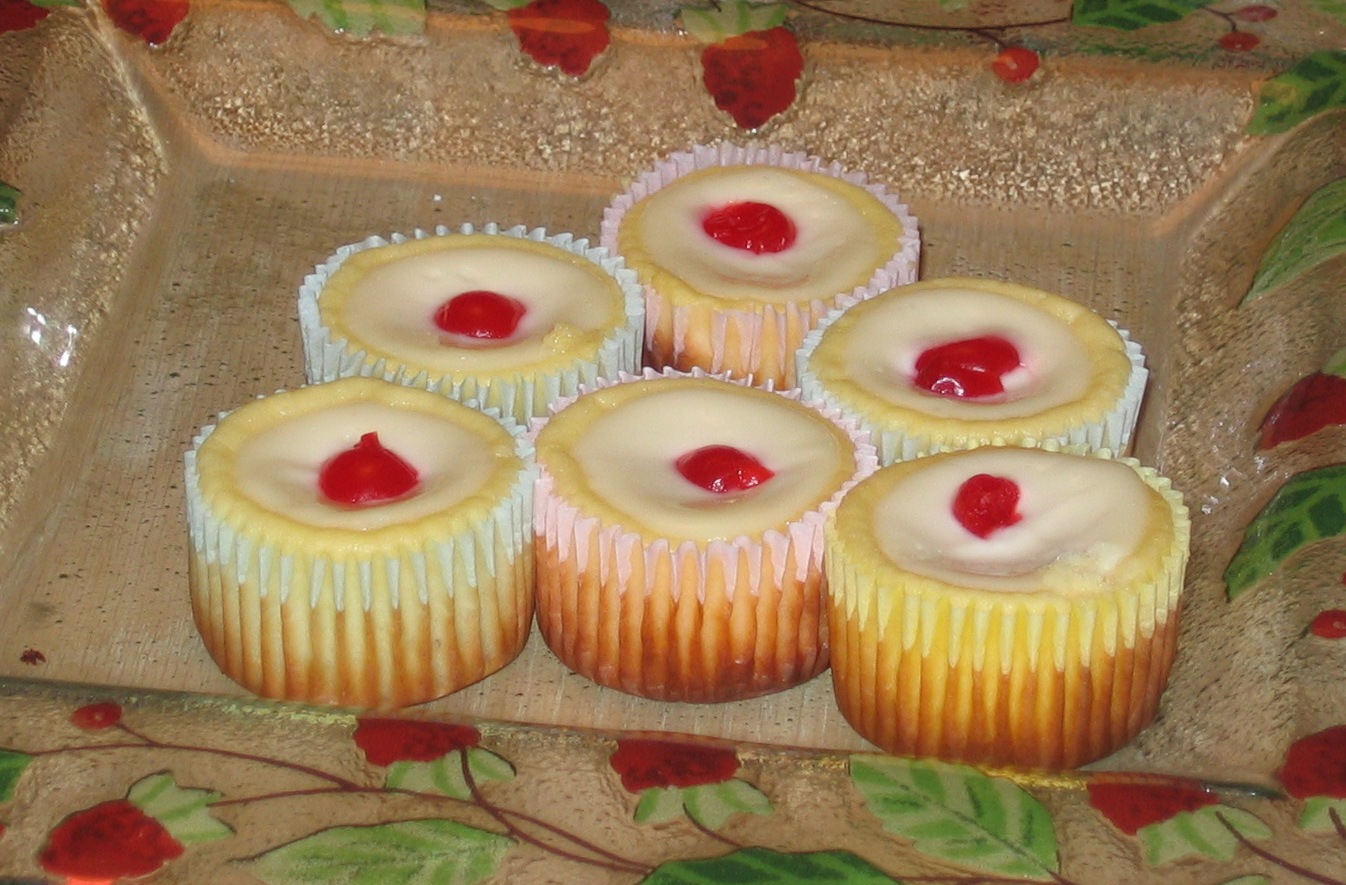
Menu Suggestion: Mini Cheesecakes

website mini cheesecakes

“You’re going to host a brunch? With everything you have going on?”

Even after 20 years together my very introverted husband doesn’t fully understand his more extroverted wife. The more he has happening, the more likely my husband is to retreat to a corner of the house for time alone because being with people drains him. For me, the crazier my life is, the more I need time with people with whom I can “refuel”. Extroverts are invigorated by the energy they get from spending time with people.

So, when I had an article due, a baking workshop to prepare for, several recitals, baseball games, and volunteer meetings to attend, my daughter’s graduation to prepare for, relatives coming in from town, and literally a dozen doctors’ appointments for myself and my children, it seemed a good time to host a brunch of some of my closest friends.

We had a great time, and I received the laughter and love I needed to sustain me through the hectic weeks to follow.

So, when I received a question this past week at a baking workshop about what I’d recommend as the perfect dessert to take to a potluck brunch if you had to make something gluten, dairy and tree nut free, I was ready with an answer: mini cheese cakes.

Mini cheesecakes are elegant, easy to make, versatile, and very adaptable for dairy, gluten and tree nut allergies.

Cheesecake Tips:

1. The crust: Crusts for cheesecake can be made from just about anything you want – honey graham crackers, animal crackers, shortbread cookies, oreo cookies coconut cookies, chocolate grahams, ginger cookies  – your imagination is your only limitation. And today we live in a time where all the above can be found in gluten, dairy, and nut free versions at the grocery store. Depending on the type of cheesecake you want to make, you can vary which type of crust you want to make.

Making crusts are ridiculously easy, too. Simply zoop up your cookie or graham crackers in a food processor to make crumbs, or if you don’t have a food processor, put the cookies or crackers into a ziploc bag, seal, and whack away with a rolling pin or the end of an ice cream scoop or a clean meat mallet. then you mix the crumbs with a little bit of a sweetener like Agave or coconut sugar and a little bit of a fat like melted vegan butter or safflower oil. A good ratio is one tablespoon each of the sweetener and fat for every 1/3 cup of crumbs.

And if you’re trying to watch your overall caloric, carb and fat content, you can always omit a crust altogether.

2. The cheesecake filling: Cream cheese is the main ingredient in cheesecake. Today, folks with dairy allergies can find vegan versions of cream cheese at their local grocery store which makes for a nice substitute. Sometimes, though, folks prefer to use straight tofu, which works well, too.

The key tip for making good cheesecake is to be sure all your ingredients come to room temperature. If your cream cheese or tofu are cold, you’ll get lumps in your cheesecake, which doesn’t affect the taste but definitely detracts from the texture. To make sure your cream cheese isn’t affected by other ingredients, all other ingredients like your eggs should be at room temperature, too.

You should always cream the cream cheese alone before adding any of the other ingredients. Sometimes an online recipe will tell you to just mix all the ingredients together. Don’t. It will affect the texture of your cheesecake. Also, if you start to cream your cream cheese and find it’s still too cold, you can then just wait a little bit and resume creaming. If all the ingredients are together, you’ll never get the lumps out, no matter how long you wait.

If you are using cream cheese instead of tofu, you should decide on the type of texture you want for your cheesecake. Using only cream cheese makes for a nice, thick, “cheesy” cheesecake. If you want your cheesecake to be a bit silkier, adding sour cream (a vegan version) or silken tofu or a dairy free yogurt will lighten the cheesecake. If lightening the cheesecake, use a 3 to 1 ratio (e.g. 3 containers of cream cheese with 1 container of sour cream).

If you’re making cheesecake with tofu, I like to use the silken tofu because it’s so much smoother. One 15/16 ounce container is about equivalent to two containers of cream cheese.

3. The flavoring: You can make just about any type of cheesecake you desire. For a regular cheesecake, you only add vanilla and some sweetener. If you want a flavor, you can add lemon or orange zest, unsweetened cocoa powder, raspberry liquor, pureed cooked pumpkin or squash, or even herbs like rosemary and basil for a more savory type of cheesecake.

If you’re in a fun mood, you can make a layered cheesecake where you layer two different flavors of cheesecake or you layer cheese cake on top of a brownie crust or layer a mousse on top of cheesecake. The ideas are endless.

4. The sweetener: Regular cheesecake will often call for about 1/4 cup of sugar per one 8 ounce container of cream cheese. If you’re watching sugar, you can always use Agave (half the amount of sugar called for) or coconut sugar (same ratio as sugar) or Truvia (half the amount you’d use for sugar).

If you’re using Agave, the best way to incorporate it into the cream cheese is to slowly pour the Agave into the creamed cream cheese mixture while the mixer is constantly stirring and incorporating the Agave into the mixture. For coconut sugar and truvia, simply follow the instructions for sugar.

5. The eggs: Most cheesecake recipes call for eggs to help give the cheesecake structure. If you’re trying to watch your cholesterol, you can use egg whites only. The cheesecake will be slighly drier and a little less creamy but some people actually prefer their cheesecake that way.

If you want to avoid eggs altogether you can simply omit the eggs, but you’ll need to add a little flour or cornstarch to give the cheesecake some structure, about a 1/4 cup of either. I make an eggless chocolate cheesecake where I mix  a 6 oz container of yogurt with cornstarch as a substitute for the eggs.

6. Making the cheesecake mini: The advantages of mini cheesecakes are several. For one, they bake up more quickly. Secondly, they are easier to serve. Thirdly, if you’re taking them to a party, they’re easy to transport. Fourthly, when you decorate them, you can vary the toppings and have a variety of cheesecakes to offer to the guests.

To make mini cheesecakes, you just use muffin tins. I like to line my muffin tins with paper liners to prevent any cross-contamination and for easy removal of the cheesecake, but you can also simply spray or grease the tins, too.

7. Baking the cheesecake: Cheesecakes are usually baked at low heat to prevent cracking and drying out the cheesecake. So, the best temperature is about 325 degrees. If you want to have extra smooth cheesecakes and really prevent cracking,it’s best to add some moisture to your oven. You can fill a pan with some hot water and put it at the bottom of your oven while the cheesecakes cook or you can put the muffin tins into another larger pan which is filled halfway with hot water. If you don’t do either of these steps, it is not a big deal. The cheesecakes just may crack a bit on top or be a little less smooth and moist. They’ll still taste good.

When your cheesecake is done, the edges are more done than the center. A knife inserted into the edges should come out clean while the middle should still be less stiff. It shouldn’t be liquidly and runny still, but it shouldn’t be as stiff as the edges. If you overcook the cheesecakes and the middles are stiff and cracked, don’t sweat it. the cheesecakes won’t be as creamy, but they’ll still be good and you can cover the cracks with your lovely toppings.

8. Cooling the cheesecakes: Cheesecake needs to cool before you eat it because it’s the coolin process that finishes cooking the cheesecake center and which solidifies the cheesecake. It’s best to let the cheesecakes cool at room temperature first and then to put them into the fridge.

9. The toppings: You can top your cheesecakes with just about anything. Slices of fruit like strawberries, kiwi or blueberries or a chocolate drizzle or crushed cookies or a whole cookie or a raspberry drizzle or shredded coconut. Your imagination is the only limit.

You can wait to add fruit garnishes until right before you’re taking them to a party or before you serve them so the fruit will stay fresh. Drizzles can be added while the cheesecakes are still warm or when they are cold. Cookies should be put on while the cheesecakes are still soft enough for you to push them down into the cheesecake.

10. Transporting mini cheesecakes: Always keep your cheesecakes in the fridge until it’s time to take them to the party. If you’re going a short distance, you don’t need to worry about keeping them cold, but if you’re going far away, pop them into a cooler with an ice pack or into a bag with a ziplock baggie full of ice.

Since the mini-cheesecakes are muffin size, you can usually fit them into a rectangular tupperware container or cupcake holder and transport them easily.

Mini Cheesecakes

Ingredients:

2 cups Smorables Gluten Free Graham crackers (about one box)
6 tbsp melted vegan butter
3 tbsp Agave
4 8 oz containers Tofutti vegan cream cheese, at room temperature
1/2 cup Agave
2 tsp gluten free vanilla
4 eggs, at room temperature

Baking Instructions:

1. Preheat oven to 325 degrees and line 24 muffin cups with cupcake liners.

2. Crush the graham crackers into crumbs by either processing them in a food processor or by whacking them with a rolling pin or mallet in a sealed bag.

3. Mix the melted butter with the Agave and blend well into the graham cracker crumbs until the crumbs are moist.

4. Evenly divide the crumbs among the muffin cups, about one tablespoon per muffin cup. Press the crumbs down to form an even crust.

5. Bake in the oven for 5 minutes and remove onto a cooling rack.

6. Cream the cream cheese in a mixer until smooth and creamy.

7. Slowly pour in the Agave while continually stirring until all the Agave is incorported into the cream cheese

8. Add in the vanilla.

9. Add the eggs, incorporating them one at a time.

10. Divide the cheesecake filling evenly among the muffin cups. They will be almost to the top of the muffin cups.

11. Bake until the cheesecakes are dry on the edges and mostly firm but still slightly soft in the center. This will take between 15 and 25 minutes depending on the thickness of your muffin tins and how evenly your oven is heating food.

12. Remove the cheesecakes to a wire cooling rack and cool to room temp. Put into the fridge so they can cool completely and solidify.

13. Garnish with fruit or chocolate drizzle or raspberry drizzle or cookie crumbs and serve.

Cooking Techniques: Chicken Salad

website chicken_salad

“I dream of a world where chickens can cross the road without having their motives questioned.”

I confess: We are a family that loves stupid jokes. We probably know just about every chicken joke out there. Dinner conversations are speckled with jokes about trumpet players versus French horn players, both of which my two daughters play. My son’s quest is to stump the family with his own made-up jokes about what the mayonnaise might have said to the refrigerator.

So, we thought it was funny when we saw the above quote in an online picture. Then I laughed when I received an email about chicken salad. Just as there are numerous chicken jokes around, there is a bounty of chicken salad recipes. Curried chicken salad, buffalo chicken salad, waldorf chicken salad, tarragon chicken salad. You name it, the variety exists.

As such, I wasn’t surprised by the question asked: What type of chicken salad is the best? The answer is, “What do you like?”

Chicken Salad Parts:

1. The chicken: Chicken salad needs chicken – obviously. But what part of the chicken used can vary. Traditional chicken salad will use chicken breasts, usually poached so they’ll still be juicy and tender, and cut up into squares. Other varieties will use the dark chicken meat. Still more simply tell you to pick apart a whole cooked chicken for a mixture of dark and light chicken meat. It’s really up to you and your tastes and health needs. Chicken breasts will yield a chicken salad with slightly less fat than a mixed or dark meat chicken salad. Chicken breasts can be drier, though, and require more dressing. I usually only make chicken salad with leftover chicken so my chicken salad will vary with whatever we had for dinner – whether it was chicken breasts or a whole roasted chicken.

2. The dressing: Traditional chicken salad uses mayonnaise. Some use a vinaigrette. Others use yogurt. A few simply tell you to use a dressing such as Ranch. Again, it’s what you like and need. If you are allergic to eggs, you’re not going to want to use an egg-based mayonnaise. Fortunately, there are plenty of tofu-varieties around if you do prefer a mayonnaise-type texture and flavor. If you are looking to eat healthier, yogurt makes a good dressing. If you like your chicken salad light, a vinaigrette is the best way to go.

3. The additions: What should go in a chicken salad depends on you. Some folks are traditionalists and only ever add celery and onions to their chicken salads. Others like more vegetables and add things like grated carrots and zucchini. I like to add fruit like red grapes or chopped apples to mine.

4. The seasoning: A basic chicken salad just adds salt and pepper. Nowadays, though, we’re into jazzing up our chicken salads. Herbs such as tarragon and rosemary and thyme are good flavors for chicken salad. For people looking for something a little different, adding curry powder to the dressing is a nice change. If you like a little tang, lemon juice and ground mustard work well.

5. The Tips: If you’re starting with a freshly made chicken or chicken breasts, let the chicken cool before adding your dressing. If you have the time, refrigerate your chicken salad for the flavors to meld.

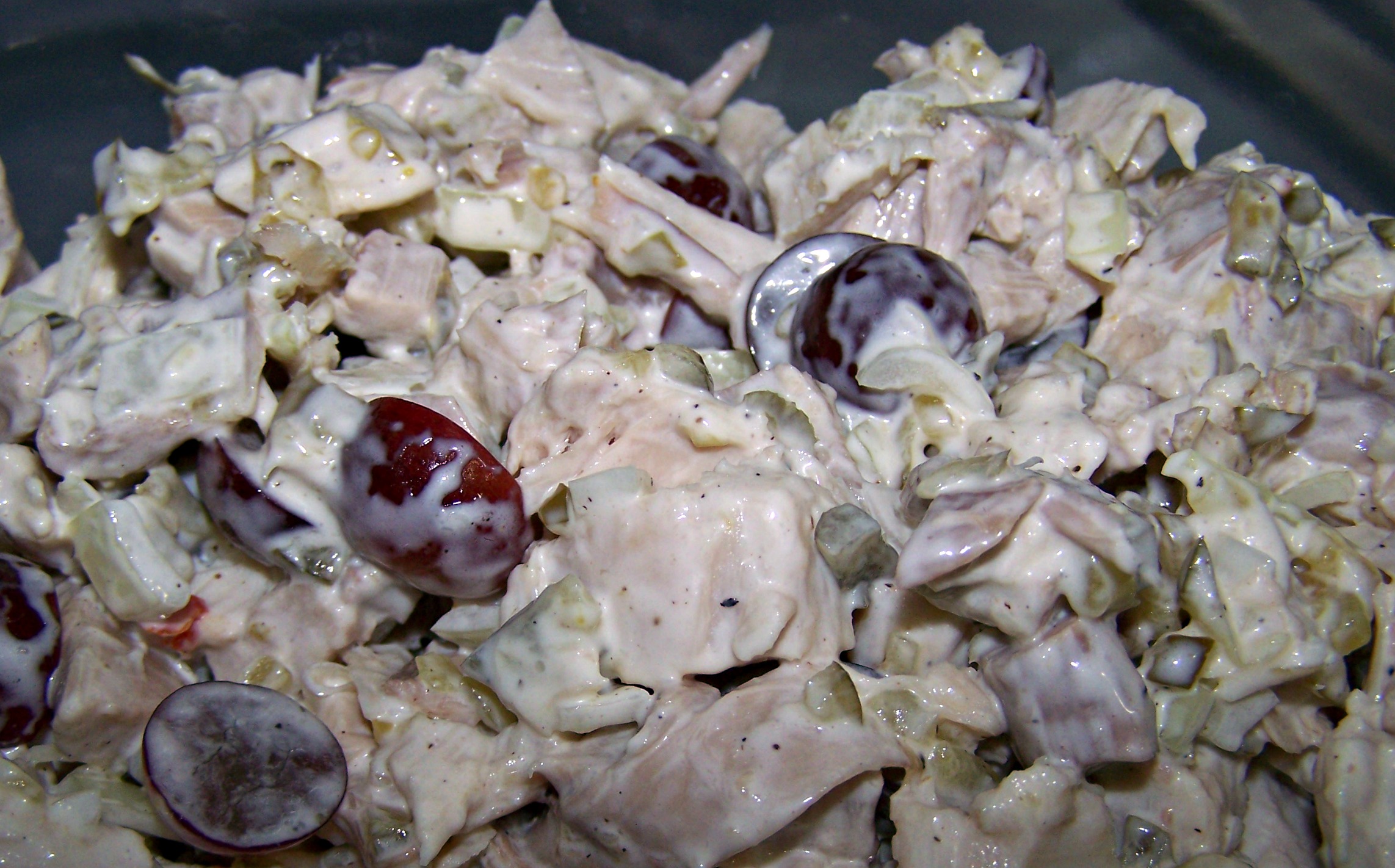
Fruity Chicken Salad

Ingredients:

3 cups cooked, shredded chicken

1 cup small red grapes, cut in half

1/2 cup shredded carrots

6 oz mango-apricot coconut milk yogurt

2 tbsp olive oil mayonnaise

1/2 tsp thyme

1/2 tsp oregano

1/8 tsp black pepper

Cooking Instructions:

1. Mix the chicken with the grapes and carrots.

2. Mix the yogurt with the mayonnaise, thyme, oregano, and black pepper.

3. Mix the chicken with the yogurt dressing.


Recipe Makeover: Dairy Free Gluten Free Mac and Cheese

“Could you remake your own recipe for me?” I had to chuckle when I opened up an email the other day. Months ago I had posted a baked mac and cheese recipe which was simply a healthier version of a common comfort food. Now someone needed me to remake it so it would be dairy and gluten free. Fortunately, that’s quite easy to do.

The milk: Good baked macaroni and cheese recipes call for evaporated milk. Evaporated milk is simply milk where some of the liquid is evaporated out to concentrate the milk proteins. As such, it’s easy to make your own vegan evaporated milk. One method is to use soymilk powder where you make two times the serving with one serving of liquid. Another method is to start with double the amount of soymilk or flaxmilk or coconut milk you need and slowly cook it down over low heat, stirring frequently, until you have about one half the amount of milk. One can of evaporated milk is equal to 1 1/2 cups so for the mac and cheese you need to make 3 cups of evaporated milk. A third method is to add soymilk powder to a serving of soymilk. All three methods give you the concentrated protein to liquid ratio you need for evaporated milk.

The cheese: Daiya is the vegan cheese easiest for me to get at the grocery store so it’s the brand I use, but I’m not always happy with the flavor. So for a macaroni and cheese, I mix cheddar and mozzarella cheese together and use the onions and garlic and seasonings to flavor the cheese before adding it to the rest of the casserole.

The noodles:  For mac and cheese you want noodles which stand up well when cooking, which have a good flavor, and which will cradle all the yummy cheese sauce. For a gluten free pasta, I like Ancient Harvest Gluten Free Quinoa shells. It has a nice texture and flavor and the bonus is you get extra protein and fiber.

 Gluten Free Dairy Free Macaroni and Cheese

Ingredients:

one pound Ancient Harvest Gluten Free Quinoa shells

2 links chicken Italian sausages, fully cooked variety

one 16 oz thawed frozen broccoli florets

2 cups Daiya mozzarella shreds

2 cups Daiya cheddar shreds

2 tsp minced garlic

1/4 cup chopped frozen onions (can use fresh, too)

1 tsp ground black pepper

1/2 tsp ground nutmeg

3 cups homemade vegan evaporated milk

4 eggs plus 1/2 cup liquid egg whites

Cooking Instructions:

1. Preheat oven to 475 degrees and very lightly grease a 9 x 13 pan. (I normally use a little bit of olive or grapeseed oil.)

2. Prepare the gluten free noodles as directed on the package, but cook it one minute less than indicated. Drained the noodles and put them into a large bowl.

3. In a food processor, chop up the two sausage links into fine pieces and add to the noodles.

4. In a food processor, chop up the thawed broccoli florets into fine pieces and add to the noodles.

5. Mix the two cheeses well with the garlic, onions, black pepper and nutmeg.  Divide out 3 cups and leave the leftover one cup for the topping.

6.  Mix the cheese well with the noodles.

7. Whisk well together the vegan evaporated milk with the eggs and egg whites. Pour into the noodle bowl and combine.

8. Using a ladle, scoop out the mac and cheese into the 9 x 13 pan. When you reach the end of the noodles, pour any leftover milk/egg mixture from the bottom of the bowl onto the noodles in the pan. Gently tap the noodles to make them even in the pan.

9. Sprinkle the leftover shredded cheese over the top of the noodles.

10. Bake in the preheated oven for 15 minutes or until the sauce is bubbling at the edge and no longer liquidy in the center.

11. Broil the top for a minute or two so the vegan cheeses can “melt”.

12. Remove from the oven, and let the mac and cheese sit for 10 minutes before serving.

Menu Suggestion: Tetrazzini

What about a dinner suggestion?

I opened up my email the other day and found a note, thanking me because this young mother had found my blog and used the advice I had given my friend to make quiche for brunch for her in-laws,  and it was apparently a success for her as well. Now, however, she wanted to know if I had any good suggestions for a dinner entree to serve to company which could easily accommodate food allergy restrictions.

Within in two seconds, I had the perfect suggestion: Tetrazzini.

If you’re not familiar with tetrazzini, it’s a pasta dish which incorporates protein and vegetables into the pasta with a creamy white sauce. With the exception of mushrooms which every recipe you’ll find seems to have, everything else is pretty much up to your imagination and available food staples.

For a company dish, it’s perfect because you can assemble the dish ahead of time and then just pop it into the oven. It’s filling so you can simply add a salad to accompany it, and it’s pretty when it comes out of the oven. For folks with allergies, it’s highly adaptable.

Some thoughts on Tetrazzini:

1. The pasta: Almost every recipe you’ll find online has too large a pasta to protein/vegetable ratio. For your health and for good eating, I recommend cutting the pasta by half for any recipe. When I make the dish for company in a large 9 x 13 pan I cut the 16 oz of pasta to 8 ounces. Your ratio of protein and vegetables to pasta will be healthier but it’s also tastier in my opinion.

Also the usual pasta used is a long noodle like spaghetti. I like to use small shells because they capture the sauce in their crevices well and are easily spoonable and mix well with any meats and vegetables you add. Ancient Harvest has a gluten free quinoa small shells which taste really good and have a wonderful texture.

2. The meats and vegetables: You can use just about anything in tetrazzini. The most popular meats are turkey and chicken. For company, if there are no seafood allergies, I like to use cooked frozen shrimp. It’s easy and it makes the dish special. The nice thing about tetrazzini is that it’s a great dish for using up your leftovers, so feel free to be creative with whatever you have on hand. You can even use firm tofu. You should cut the tofu into small squares and saute them on all sides first, though, before adding them to the dish.

The same goes for the vegetables. As I mentioned above, a key ingredient in most tetrazzini recipes is mushrooms, but you can leave them out if you don’t like fungi. I happen to adore mushrooms, so I usually use mushrooms and asparagus or broccoli because I like the flavor and color combination. Again, whatever leftover vegetables will work. I’ve often just chopped up leftover zucchini, squash, peppers, etc… and thrown them in with good results. The key is to make sure your vegetables are bite-size.

3.  The sauce: The sauce for tetrazzini is just a basic white sauce, so for folks with food allergies, it’s easily adaptable. While many recipes will call for butter, you can substitute olive oil or use a vegan allergy friendly butter. I prefer the taste of olive oil and the added health benefits. For the milk, I’ve found just that other “milks” work just as well, though I tend to use either flax or soy milk myself. For the flour, just about any type will work. I’ve used garbanzo bean, sorghum, gluten free oat, and brown rice flour with success.

Many recipes call for you to just use a cream based soup like cream of celery or broccoli or chicken. You can always go this route as well. It’s certainly easier than making your own white sauce and if you don’t have to worry about sodium or allergies, the taste doesn’t suffer in any way.

4. The seasoning: Most tetrazzini recipes just call for salt and black pepper. I usually omit salt and add thyme, oregano, and paprika. I also use garlic and onions for flavoring.

5. The topping: Many tetrazzini recipes call for a topping but the topping varies. Some say just to put cheese on top, usually parmesan. Others use a nutty topping with almonds combined with the cheese. Some call for bread crumbs. Some just tell you to top with chopped green onions. It’s really up to your tastes and preferences. There’s a lot of vegan parmesan-style cheese these days. I like to lightly saute gluten free bread crumbs in a little bit of olive oil with herbs and mix in the vegan parmesan with the crumbs with some garlic and evenly spread that on top of the tetrazzini because it then gives a little crunch to the dish plus it makes the casserole look pretty.

Shrimp Tetrazzini

Ingredients:

8 oz Ancient Harvest Quinoa small shells

2 tsp olive oil

2 cups sliced fresh mushrooms

one bunch asparagus, cut into bite size pieces

1 tbsp minced onions

1 tsp mince garlic

2 tbsp olive oil

3 tbsp sweet white sorghum flour

2 cups flax or soy milk

1/2 tsp black pepper

1/2 tsp dried thyme leaves

1/2 tsp paprika

16 oz thawed frozen cooked shrimp, tails removed

1 tsp olive oil

1/2 cup gluten free bread crumbs

1 tsp dried oregano

1/2 cup vegan parmesan

Cooking Instructions:

1. Preheat the oven to 350 degrees.

2.Thaw shrimp and remove tails.  Set aside.

3. Prepare the shells as directed on the packaging. Drain and rinse well with cold water.  Set aside.

4.  In a pan saute mushrooms over medium-low heat with 2 tsp olive oil for about 4 minutes, stirring occasionally.

5. Add the chopped asparagus with 2 tbsp water, the minced onion, and the garlic. Saute for another 4 minutes and remove from heat.

6. In a pan heat 2 tbsp olive oil. Whisk in the sorghum flour and cook, stirring for a minute. Slowly add the “milk”, whisking continually until the flour is fully mixed into the milk. Cook until the sauce has thickened, stirring continually, about five minutes.

7. Add the pasta, mushrooms and asparagus mixture, and shrimp to the sauce and blend well.

8. Pour the casserole into a 9 x 13 pan.

9. Saute the bread crumbs with the olive oil and oregano for a minute or two. Mix in the paremsan and evenly spread the bread crumb mixture over the tetrazzini.

10. Bake the casserole for about 20-30 minutes until the dish is warmed through and the sauce is bubbling.


Recipe Makeover: Wacky Cupcakes

website wacky cake

“It’s just not wacky enough.”

The saying is that “necessity is the mother of invention”, and certainly for families in the Depression and World War eras, lack of rations led to the creation of what we know as wacky or Depression cake. These are cakes made without eggs and milk which were scarce, and today many people with egg and dairy allergies have turned to them gratefully for countless number of birthday and family parties.

The email I received yesterday, though, made me laugh because it said, “Unfortunately, the recipe just isn’t wacky enough for my family.” This particular person also needed the cake to be gluten and sugar free in addition to egg and dairy free.

And I’m finding that to be a common problem among folks who send me emails. The world has come a long way: grocery stores, online sites and even restaurants carry gluten free products, nut free foods, dairy free items, and sugar free versions of just about everything. Unfortunately, for the person who is allergic to more than one of these, it can still be difficult to find foods which meet all the needed “free” criteria.

So, this morning, I took a gander at reworking the two recipes sent to me. I had signed up to bring some allergy friendly desserts to the Teacher Appreciation luncheon my children’s elementary and middle schools were hosting, so I decided I’d use the recipes to make cupcakes.

The first recipe sent was for a plain wacky cake calling for 3 cups of all purpose flour, 2 cups of sugar, 2 tsp baking soda, 1 tsp salt, 2 tbsp vinegar, 2 tsp vanilla, 3/4 cup vegetable oil, and 2 cups of water.

The second recipe was for a chocolate wacky cake calling for 3 cups of all purpose flour, 2 cups of sugar, 2 tsp baking soda, 1 tsp salt, 1/2 cup unsweetened cocoa powder,  3/4 cup vegetable oil, 2 tsp vanilla, 2 tbsp vinegar, and 2 cups cold water.

For both recipes, it just called for mixing everything together.

The Makeovers:

1. The flour: Since it needed to be gluten free, I had to decide which type of flour blend to use. Since the recipe is already compensating for the loss of eggs with the use of vinegar and baking soda, I was concerned about the batter’s ability to rise. As such, I decided that Bob’s Red Mill Biscuit and Baking Gluten Free Mix which is a blend of garbanzo bean flour, rice flour, cornstarch, xanthan gum, and baking powder would be best.

Why? Because 1) the mix of rice and garbanzo bean flour would allow for the higher fiber and protein without being too heavy; 2) the mix already has the xanthan gum in it which means one less item to mix in myself; and 3) the extra baking powder would help to compensate for the lack of leavening ingredients.

Folks who can have gluten could always use a white whole wheat or red whole wheat to boost the nutrients and fiber in the recipe.

2. The sugar: I decide that I would opt for two different sugar substitutes. For the chocolate wacky cake, I used coconut sugar because I wanted to try a dry substitute and because I thought the brown sugar flavor of the coconut sugar would complement the chocolate flavor better. I used a one for one substitute.

For the plain wacky cake, I opted for Agave, wanting to experiment with a liquid substitute. Also, I had decided I’d turn the cake into a chocolate chip spice cupcake which I felt the Agave would complement better. For the Agave, though, I used half the amount of called for sugar, and added 1/2 cup to the amount of flour needed to counter the extra liquid.

3. The oil: Because I prefer healthier plant oils, I chose to swap the vegetable oil with other types. For the chocolate cake, I used a blend of olive, grapeseed and canola oil which would lend a fruity undertone to the chocolate flavor. For the vanilla cake, I chose to use safflower oil to lend some flavor without overpowering it to the vanilla.

4. The vinegar: Since the recipe didn’t specify, I was presuming they were calling for regular distilled white vinegar. Since I prefer to always add a little “something”, I decided to use a raspberry vinegar for the chocolate cake and an apple cider vinegar for the vanilla cake.

5. The additions: I chose to keep the baking soda, salt and vanilla the same for each recipe, but I added cinnamon and nutmeg to the vanilla cake to make it more a vanilla spice cake, and I swapped the regular unsweetened cocoa powder for Hershey’s Special Dark unsweetened cocoa powder to lend a deeper chocolate flavor.

I also decided to throw in chocolate chips to help give the cakes more structure. For the chocolate cake, I added a package of Enjoy Life mini chocolate chips. For the vanilla cake, though, I wanted more of the taste to exude from the batter so I put a package of Enjoy Life mega chunks into my food processor and ground them to tiny pieces which I incorporated throughout the batter.

6. The assembling: The original recipes called for simply mixing everything up. Since I wanted to make sure the batter would fully incorporate all the necessary ingredients for adding structure and leavening, I opted to do the cake batter in steps. First, I mixed all the dry ingredients minus the chocolate chips/pieces together. Then I used a spoon to incorporate the chocolate chips/pieces into the dry ingredients. Then I mixed all the wet ingredients minus the vinegar together. Finally, I added the liquid mixture to the dry mixture, adding the vinegar last and mixing until everything was well-blended. By doing this, I ensured that the effects of the vinegar would last through putting the batter into the muffin tins and into the oven.

7. The cooking: Since I needed to bake for the luncheon and because I wanted to see quickly if the structure of the batter would hold up, I opted to make cupcakes instead. I lined 24 muffin cups per each recipe with muffin liners and scooped batter into each cup all the way to the top of the muffin liner, being careful to simply scoop the batter in without squashing it down. Then I baked the cupcakes for 20 minutes in a preheated 350 degree oven, turning them halfway through the cooking time.

Upon removing them, I left them in the muffin tins for about 15 minutes before removing them. This allowed the cupcakes to begin their cooling inside the tins which allows the structure of the cupcake to gain stability before being removed. After the 15 minutes, I removed the cupcakes to wire cooling racks to cool completely.

8. The new recipes:

For the chocolate wacky cupcakes, the new recipe was: Mix 3 cups Bob’s Red Mill Biscuit and Baking Gluten Free flour with 2 cups coconut sugar, 1/2 cup Hershey’s Special Dark Unsweetened cocoa powder, 1 tsp salt, and 2 tsp baking soda. Then add one 10 oz package of Enjoy Life chocolate chips. Set aside. Mix 3/4 cup healthy blend oil (olive, grapeseed, canola mix) with 2 tsp vanilla, and 2 cups cold water. Add the liquid mixture to the dry mixture with 2 tbsp raspberry vinegar. Blend well. Gently scoop mounds of the batter into 24 lined muffin cups, filling to the top. Bake in a preheated 350 degree oven for 20 minutes, turning halfway through cooking time. Cool in tins for 15 minutes. Remove to wire cooling racks.

For the vanilla spice wacky cupcakes, the new recipe was: Mix 3 1/2 cups Bob’s Red Mill Biscuit and Baking Gluten Free flour with 1 tsp salt, 2 tsp ground cinnamon, 1 tsp nutmeg, and 2 tsp baking soda. Food process one one 10 oz package of Enjoy Life chocolate mega chunks into tiny pieces and add to the dry mixture. Set aside. Mix 3/4 cup safflower oil with 1 cup Agave, 2 tsp vanilla, and 2 cups cold water. Add the liquid mixture to the dry mixture with 2 tbsp apple cider vinegar. Blend well. Gently scoop mounds of the batter into 24 lined muffin cups, filling to the top. Bake in a preheated 350 degree oven for 20 minutes, turning halfway through cooking time. Cool in tins for 15 minutes. Remove to wire cooling racks.


Menu Suggestion: Quiche

website quiche

“Okay, it needs to be something filling but it can’t have any nuts, dairy, soy, wheat, oats, or coconut in it. Also, it shouldn’t be too complicated, something easy for me to make, and quick, too, because I won’t have a lot of time; but it needs to look like it took some time, because, well, you know, I don’t want them to say anything snide. And it would be great if it could look pretty and elegant. Oh, and it should taste good, of course.”

I couldn’t help myself. As my friend’s rambling came to a halt, I laughed at her. “Well, I’m glad you’re not asking me for much,” I said.

My friend had just learned that she was expected to host her in-laws (parents-in-law and sister-in-law and her husband) for Mother’s Day, and unfortunately while my friend has many wonderful skills, she really does not like to cook – at all! Hence, the frantic SOS phone call to me.

Fortunately, I had a perfect solution to offer my friend: Quiche.

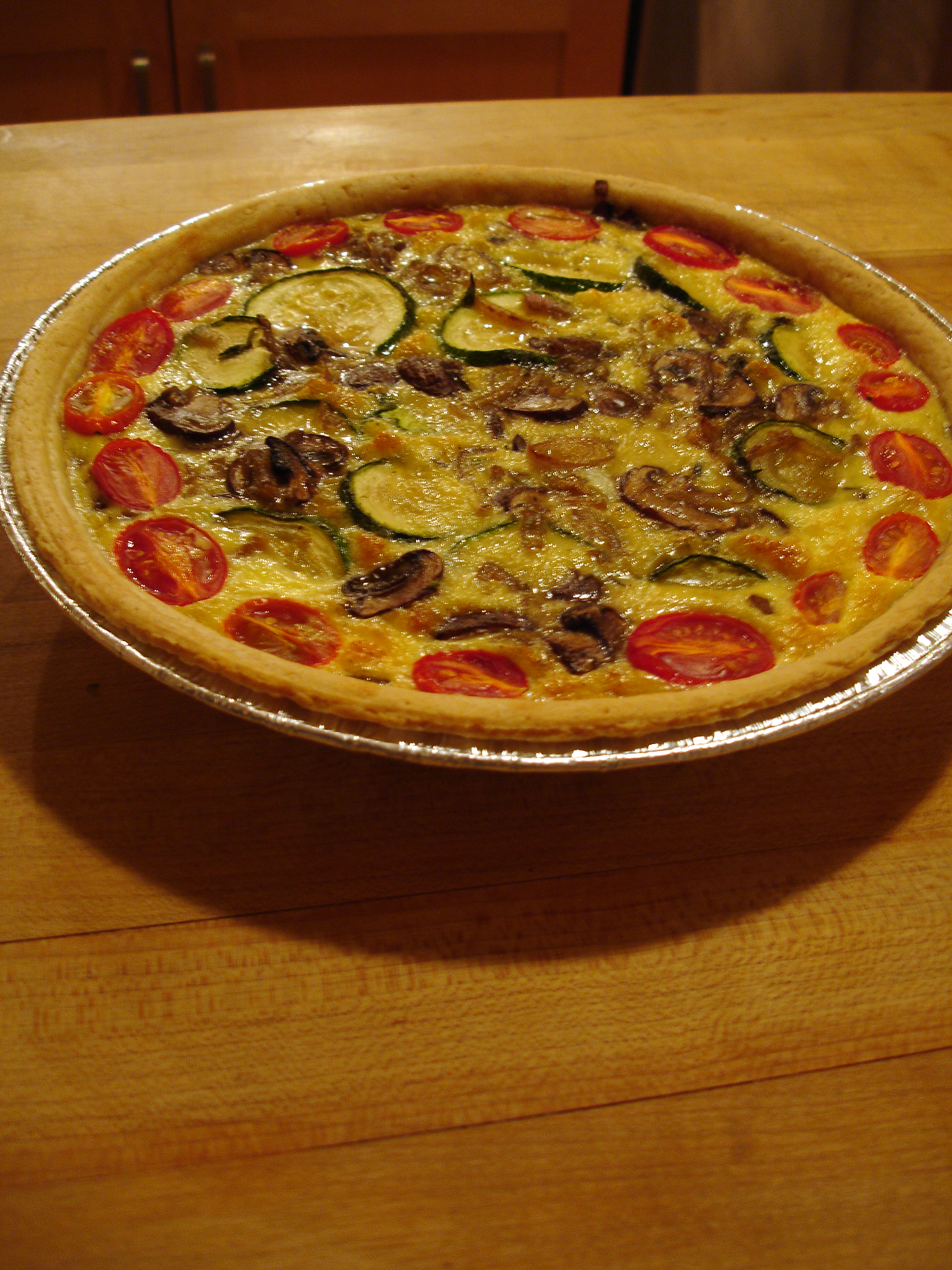
Quiche is a wonderful dish for company. It’s quick and easy to make, but looks elegant and is wonderfully tasty. You can also use up leftovers from your fridge to make it, and it’s incredibly versatile. You can adapt it for many food allergies, and you can even make it for folks who have egg allergies or are vegan, provided they have no soy allergies. As well, you can make up two, three or four different types in your oven at the same time, depending on the size of your oven.

Quiche Making Tips:

1. The crust: What’s lovely about quiche is that you can make a pie crust recipe of your own, you can purchase a ready-made crust, you can use a pre-made crust mix, or you can use the recipe I will provide below which doesn’t require any rolling at all and is adaptable to fit your allergy needs. I’ve even seen people use tortillas as the crust.

Crusts can be traditional with wheat, or they can be gluten free. Obviously, a ready-made crust is fastest, but even making one home-made doesn’t take very long at all. Like with pie-making, though, sometimes you will find that you need to cover the edges if you don’t want them to be too browned.

2. The filling: Quiche is lovely because you can put in whatever you want. Any type of meats, cheeses, and vegetables you have on hand will work in a quiche. What you should keep in mind, though, is that small, chopped up cooked pieces are best. Leftovers work well, because it’s already cooked, and you can just chop them up into bite size pieces.

If you’re starting from scratch, though, you can quickly saute chopped vegetables or meats in a few minutes. Make sure you cool them slightly, though, before adding the egg mixture. My favorite combination is spinach, mushrooms, broccoli, and chicken sausage, but you can make up any combination you can imagine.

You only need a cup or so of the filling to fit into your pie crust. How much filling to egg ratio you have, though, depends on what you like. The more filling, the less egg you’ll taste; the less filling, the more egg part you’ll taste.

3. The egg mixture: Quiche is essentially eggs mixed with cream or milk. The ratio between the eggs and the milk determines the texture of your quiche. For a 9 to 9.5 inch pie pan, you want to use the equivalent of three to four eggs. If you want a solid, sturdy, eggy quiche, you would use less milk, maybe about 1/2 cup. If you want a creamier, airier quiche, you would use more milk, like 1 cup.

Using cream versus milk makes for a richer quiche. Just about any type of milk or cream will work in quiche. I’ve used soy, flax and rice milk without any problems. I’ve also used soy and rice creamers.

You can also use egg whites to cut back on the cholesterol. Half liquid egg whites and half whole eggs works the best, but you can also use 3/4 cup liquid egg whites with just one whole egg.

If you can’t have eggs at all, tofu works wonders. Just blend up a block of tofu (I like the silken tofu) with the type of milk you prefer (2 tbsp to 1/4 cup) and mix your cooked filling ingredients and seasonings into it before pouring it into your crust.

How you make up your quiche with the egg mixture is versatile, too. You can put your cooked ingredients into the center of your crust and pour your egg mixture over the filling. Or you can mix your filling into the egg mixture and pour the entire thing into your crust. It depends on the texture and taste you want. For example, if I caramelize onions for a quiche, I like to layer that on the bottom of the crust and then add more layers of mushrooms or spinach or meat and pour my egg mixture over it, because then when I cut a bite of my quiche, I have the lovely layers to look at and the tastes to hit my tongue one at a time. However, if I’m using a chicken sausage and spinach, I prefer those tastes to be throughout my quiche, so I’ll mix them into the egg mixture before pouring the whole thing into the crust.

4. The seasonings: Quiche can be seasoned however you like. Italians herbs, Mexican spices, different types of cheeses, caramelized onions, minced garlic – whatever you want to experiment with works. I never use salt but I always use fresh ground black pepper and some combination of the afore- mentioned herbs and spices. What’s great is if you saute your vegetables or meats with your choice of herbs and spices and then adding some more to the egg mixture. The more flavor you can infuse into your quiche, the better. When I make my crust, I will often add crushed herbs and onion powder to it, as well. However, if you prefer things more on the mild side, simply using a little salt (if you aren’t going to use any other herbs and spices, you should use a pinch) and pepper is fine, too.

5. The baking: Cooking up a quiche is rather simple. Once your quiche is assembled, it’s like baking a pie. You choose what you want to do: Bake the entire thing at 350-375 for about 30-45 minutes (will vary, depending on our oven heat and the thickness of your filling and whether it’s a 9 in pan or a 9.5 or 10 in). Or you can first heat your oven to 425 degrees, cook the quiche for 10-15 minutes, and then turn the heat down to 325 for 15-30 minutes.

Easy Gluten Free, Dairy Free Vegetable Quiche Recipe

(This recipe can be adapted to use wheat and dairy if desired.)

(You can also use whatever filling you prefer instead of the option below.)

Ingredients:

1 1/2 cup Garbanzo Bean flour

1/4 tsp ground onion powder

1/4 tsp salt

1/2 tsp crushed dried rosemary

1/4 tsp crushed dried thyme

1/4 tsp dried oregano

1/8 tsp black pepper

1/3 cup safflower oil

3 tbsp flax or soy milk

4 eggs (or 1/2 cup liquid egg whites mixed with 2 whole eggs)

1 cup flax or soy milk

1/4 tsp black pepper

1/2 tsp dried oregano

10 oz thawed, chopped spinach

1/4 cup sauteed chopped mushrooms

1/4 cup chopped cooked broccoli

1/8 cup chopped caramelized onions

Cooking Instructions:

1. Preheat the oven to 425 degrees.

2. Mix the flour with the onion powder, salt, rosemary, thyme, oregano and pepper.

3. Whisk the safflower oil with the milk until it’s creamy. Pour into the flour mixture and stir with a fork until a dough ball forms.

4. Press the crust into a 9 or 9.5 inch pie pan, using your clean hands to form an even crust along the bottom and sides of the pan. Set aside.

5. Whisk the eggs with the milk, pepper and oregano. Set aside.

6. Combine the spinach, mushroom, broccoli and onions and arrange on the bottom of the crust.

7. Pour the egg mixture carefully over the filling and put the quiche into the center on the center rack.

8. Bake for 15  minutes. Reduce the heat to 325 degrees.  Bake for another 15-25 minutes. The quiche will be done when the center is slightly puffed and the egg is no longer runny. NOTE: When you reduce the heat, you may want to put aluminum foil around the edges of your crust to prevent too much browning. (My children like it toasty, so we dispense with that particular step, though.)


Recipe Makeover: Banana Sheet Cake

OLYMPUS DIGITAL CAMERA

“I need it to taste good.”

For the beginning cook, the most nerve-wracking part of experimenting with a recipe is that niggling thought which you can’t banish, no matter how hard you try:  “What if it doesn’t taste good?”

When I received an email a few days ago with a request for help in making over a family favorite recipe, the plea was “I need it to taste good.” As I finished reading the email, I thought about the number of times I’ve made something that “didn’t taste good”.

Once.

Really. I know it’s hard to believe, but in all my years experimenting, only once has something come out so badly that I couldn’t eat it. All the other times, the texture and/or taste may not have been exactly as I wanted, but it’s always been edible and/or fixable to be edible.

I share this, because worrying about how something will taste can be paralyzing. The only thing we can do is to simply forge ahead and see what happens. Might it be less than perfect? Sure, but will it be such a disaster that you can’t serve it? Most likely not.

The request received was about a banana sheet cake which the family has always enjoyed. Unfortunately new food allergies have hindered the mom’s ability to make the cake anymore, and she was wondering whether it was possible to recreated it.

The answer, of course, is “yes”, but the caveat is that the cake will obviously be different once you make the adjustments. I took a stab at making over the recipe over the weekend, and the result was something that my family liked very much. Below I’ll explain what I did and other possible ways for recreating the recipe.

The recipe for the original banana sheet cake is:

2 1/2 cups sugar, 1 1/2 cup vegetable oil, 2 tsp vanilla, 4 eggs, 5 cups flour, 2 tsp baking soda, 1 tsp salt, 1 1/3 cup buttermilk, and 2 to 3 mashed bananas — all of which combines to make an 11 x 15 sheet cake.

Makeover:

1. The Flour: This mom needed the recipe to be gluten free. Here’s the tip: Banana cake can be dense, so if you’re going to use a gluten free flour blend, you should opt for something that is lighter like a brown rice flour blend as opposed to a heavier flour like a garbanzo bean flour blend. For this makeover, I used Authentic Foods Gluten Free Multi-Flour blend because it’s a lighter flour and already has the xanthan gum mixed in.  If you use a blend that doesn’t have the xanthan gum, be sure to add it in: 1/2 tsp per cup of flour.

If you don’t need your cake to be gluten free but you’d like to make it a bit healthier, opting for a white whole wheat flour will make for a more fibrous but still light cake. Otherwise, you can use a whole wheat flour which works well but will give the cake a slightly denser texture and a nuttier taste.

2. The Sugar: This mom didn’t care about replacing the sugar, but since I try to avoid as much refined sugar as I can, I’m letting you know that you can replace the sugar in a one to one ratio with coconut sugar or use half as much of the called for sugar by replacing it with Agave or Stevia.

If you use the dry options (coconut sugar or Stevia), you don’t need to adjust any of your other ingredients. If you use Agave, though, you should either increase your flour by 1/2 cup or decrease your liquids by 1/2 cup.

I chose to use Agave and decreased the oil which decreased the overall fat for the recipe.

3. The Vegetable Oil: I always suggest replacing vegetable oils with an oil like olive oil or safflower or grapeseed or a blend like Smart Balance because the fats are considered good fats. I also like to reduce the fat if at all possible. For this recipe I used a Mediterranean blend of olive, grapeseed, and canola oils, and I reduced the oil from 1 1/2 cups down to 1/2 cup since I was increasing the liquids with the use of Agave.

4. The Eggs: This mom didn’t have any egg allergies, so I kept the eggs, but to decrease the fat and cholesterol, I opted to use liquid egg whites instead of whole eggs.

If you have an egg allergy, though, I’d recommend using ground flaxseed meal mixed with water. You use 1 tbsp of flaxseed meal mixed with 3 tbsp of water for every egg you replace. Let the mixture sit for at least five minutes so it can thicken.

Because this cake calls for buttermilk, omitting the eggs and replacing it with the flaxseed mixture will actually work quite well since the acid in the buttermilk will help with the leavening you lose from the eggs.

5. The Buttermilk:  This mom needed to avoid dairy so I chose to make a nondairy buttermilk. I used flax milk but you can use any type you prefer like soy or rice or almond or coconut milk.

To make your own buttermilk, simply mix your “milk” with one tablespoon of an acid per cup of milk. For the acid I prefer to use either lemon juice or white or apple cider vinegar. Mix the lemon juice or vinegar with the milk and let it sit for about five minutes to thicken before using it in your recipe.

6. The Sodium:  Since I always try to reduce salt use, I cut the salt in half and decided to add some other spices instead like cinnamon, nutmeg and ginger; and because I added the spices, I decreased the vanilla to 1 teaspoon, but you can even omit it altogether if you like.

7. The Bananas: Since the recipe called for bananas by amount, I decided to change it to a measurement. If you simply say 2 to 3 bananas, the question becomes, “What size banana?” and the size is important because your entire recipe can be messed up if they meant two to three small bananas versus the larger sized ones you normally find at the store.

Working off my knowledge of most banana recipes, I figured about two cups of ripe mashed bananas would be good for the recipe. This worked out to 5 5 inch in length bananas.

8. The Additions:  Banana cake is not actually a favorite for two of my three children, so I decided that if I was going to make this, I would need to liven it up a bit. To do so, I chose to add some allergy friendly chocolate chips, but I didn’t want to have actual chips affecting the texture of the banana cake. So, I put the chocolate chunks into my food processor and processed them into pieces smaller than mini chips but not quite ground up, which I mixed into the flour mixture. The result was quite tasty.

9. The Topping: The original recipe simply said to frost with a cream cheese frosting, but my children aren’t fond of cream cheese frosting. Instead, I used a chocolate frosting recipe from Elana’s Pantry (www.elanaspantry.com) to top the cake instead. Since I had put the chocolate pieces into the cake, I figured chocolate frosting would top the cake well.

10. The Final Recipe:  Banana Sheet Cake

Ingredients:

5 cups Authentic Food Multi-Flour Gluten Free Blend (whisked well)

2 1/4 tsp baking soda

1/2 tsp salt

2 tsp ground cinnamon

1 tsp ground ginger

1/2 tsp ground nutmeg

10 oz Enjoy Life chocolate chunks, processed smaller in food processor

2 cups ripe, mashed bananas (about 5 five inch bananas)

1 1/3 cup flax milk mixed with 1 tbsp plus 1 tsp lemon juice

1/2 cup Mediterranean Oil Blend (olive, grapeseed and canola)

1 cup liquid egg whites

1 1/4 cup Agave

1 tsp gluten free vanilla

Baking Instructions:

1. Preheat the oven to 350 degrees. Line a 11 x 15 pan with parchment paper. Set aside.

2. Mix the flour, baking soda, salt, cinnamon, ginger and nutmeg well. Combine the processed chocolate pieces with the flour mixture.

3. Mix the mashed bananas, flax milk, oil, egg whites, Agave, and vanilla together.

4. Mix the dry ingredients slowly into the wet ingredients until they’re combined. Give the batter a quick stirring for about 30 seconds to make sure everything is well mixed.

5. Carefully spread the batter into the pan and bake for about 35-40 minutes. The cake will be puffed and golden when it’s done and a toothpick inserted in the center will come out clean.

NOTE: Because of the Agave, the cake may brown more quickly than you’d like. About halfway through the cooking time, you can always place a piece of foil or parchment paper lightly across the top to prevent darkening of the cake.

6. Cool the cake completely in the pan on a wire cooling rack. When cooled frost with your favorite frosting.


Cooking Techniques: Roasting Vegetables

Roast Vegetables

“Tell me, honestly, do you think it can be done?”

Three weeks ago my middle school daughter’s principal called. The director for her play had quit suddenly with no notice, after having done very little in the first place to ready the students and the production for their performance which was just over two weeks away.

He wanted to know if I thought it would be possible for the students to actually pull together an entire production in two weeks and whether I would be willing to step up to be the director who would attempt and achieve such a feat.

Having run a summer theater program where essentially that is what we did – pull together a production in about two weeks worth of time – I told him that the kids and parents could definitely do it and that I’d be happy to help.

There’s a difference, though, between directing a production which you’ve planned from the start where you put into place ahead of time the variables which you know you need to and what I just did in these past couple of weeks – which was essentially scramble like a mad person to discover what needed to be done and having it done as quickly as possible with the few options I had available.

Sometimes mealtime can have the same feel. Certain days you’re able to plan ahead and create an extraordinary meal with items you were able to purchase from the grocery store ahead of time. Other days you find yourself scrambling, wondering what you have available and how you can pull something nutritious and tasty together in a short period of time.

That’s where roasting vegetables becomes a literal godsend. You can quickly roast most any vegetable you have on hand, whether fresh or frozen, and make a nice meal for your family on those days like the ones I’ve recently had where you’re literally figuring out dinner with less than thirty minutes to serve it.

The first advantage of roasting vegetables as a dinner meal is that you’re serving something healthy to your family because vegetables contain good nutrients you need. Secondly, roasting intensifies and brings out the flavor in vegetables which make them tastier. Thirdly, roasting quickly cooks vegetables through, better than cooking them stovetop or grilling. Fourthly, you can use small amounts of good, healthy fats like olive oil to roast the vegetables. Fifthly, once you have the tasty roasted vegetables you can easily add beans or leftover meats to it for a more filling, yet quick, meal.

Some Tips for Roasting Vegetables:

1. High heat is better: Temperatures of 450, 475 and 500 degrees are best for roasting. I always roast at 500 degrees. The high heat reduces the opportunity for your vegetables to “steam”, and it caramelizes the outer “skin” of your vegetables, bring out the flavors and sealing in the tasty “juices”.

2. A clean oven is necessary: Because you’re cooking at high temperatures, your oven must be clean. A dirty oven will smoke and set off your smoke detector and add an unpleasant odor to your kitchen. If you have a self-cleaning oven, use the feature. If you don’t, it really doesn’t take that long to use a little hot water and soap and a scouring pad to get off any grime and crusted on pieces which might burn.

3. Rack positioning is key: Roasting your vegetables in the center of the oven will cook more evenly. Putting the pan on the top rack usually browns the food more. Putting the pan near the bottom rack gives the food more of a sauteing effect. Depending on what you’re going for, you should be sure to place your rack before preheating your oven.

4. Pan size and type are important: You always want to roast your vegetables in a single layer without them being on top of each other, so your pan should be large enough to fit all the vegetables your are roasting. You don’t, however, want a lot empty space around your vegetable pieces because this will cause burning, so your pan should also be just right for the amount of vegetables you want to roast.

The type of pan you use is important, too. You want a pan that can withstand high temperatures and which won’t cause your vegetables to stick to it. If possible, you should invest in a basic roasting pan which will serve you well.

5. The type of vegetable matters: If you are cooking a variety of vegetables, you should always cook root vegetables like carrots first, because they take longer to roast. Vegetables like zucchini take less time, so you will need to plan accordingly. You’d start the carrots first and roast them so they’re halfway done, and then add the zucchini, so the two vegetables will finish together.

6. Size also matters: You always want to roast the same type of vegetables of the same width and length, because if your vegetables are different sizes, they won’t cook evenly. If your vegetables are different textures, however, such as peppers and green beans, you want the area of the peppers to match that of your green beans, which may mean cutting your peppers into large squarish chunks as opposed to cutting them into slices which match the length and width of the green beans.

Also, if you’re in a hurry, this is obvious, but the smaller your pieces, the more quickly they’ll roast. I usually chop my vegetables so that I can have fully cooked roasted vegetables anywhere between 10 to 20 minutes.

7. Turning the vegetables is helpful: If you don’t want your vegetables to burn on one side, you should be sure to toss or turn the vegetables as you roast them. I usually toss the vegetables every five to 10 minutes, depending on the vegetable (root vegetables need the longer time).

8. Plant oils are better: One, oils like olive oil, have good fats, but cooking-wise, animal fats like butter or bacon drippings will brown your vegetables much more quickly than you want when you’re shooting for even cooking. As well, you can more easily very lightly coat the vegetables with a smaller amount of a plant oil than you can with animal fats.

9. Season wisely: I don’t like to use salt unless I have to. Many folks argue that you need salt to bring out the flavor. I have found that seasoning in certain ways is just as flavorful. For one, you can use flavored olive oil like a roasted garlic olive oil or a rosemary olive oil to coat your vegetables. Two, you can add freshly chopped herbs just after roasting. Three you can creatively flavor your vegetables – mix a little balsamic vinegar with a tiny bit of maple syrup; stir curry powder into your olive oil; make a lemony vinaigrette; make a sauce of your choosing – the options are endless.

10. Enjoy the roasted vegetables alone or as a larger meal: Once your vegetables are roasted, you can eat them as a meal in and of themselves or you can use them to create an entree. For example, tonight in less than thirty minutes, I roasted butternut squash, carrots and Brussel sprouts in the oven while I sauteed some onions in olive oil stovetop. I added curry powder and fat free, low sodium chicken broth, and when it had come to a boil, I added a can of no salt added chickpeas and let it simmer for about five minutes. By then the vegetables were roasted, and I threw them into the chickpea curry mixture, and dinner was done.

Cooking Techniques: Healthy “Meat”loaf

website meatloaf

“But… it’s just meatloaf!”

I was making dinner for some company when a friend called.  When she learned I was planning on serving meatloaf, she was rather shocked. I both understood and didn’t understand where she was coming from.

On the one hand, meatloaf for all intent and purposes was invented to stretch meat for the humble housewife trying to feed her family with what she had, so I realize it has a certain perception by the outside world. On the other hand, you find meatloaf served at fine restaurants all over the United States, because people LIKE meatloaf. It’s comforting. It’s tasty. It’s very American. It’s also extremely versatile.

One of the reasons I like meatloaf so much is that you can make it out of anything you want – even without meat! I have made salmon loaves, tofu loaves, lentil loaves, turkey loaves, chicken loaves, tuna loaves… the list can probably go on because I’ve even made a mashed sweet potato loaf!

So, I wasn’t very surprised by the email I received, asking about an article which indicated that meatloaf was high in saturated fat and a terrible meal to serve. The person emailing wanted to know if it was true and how she might be able to lighten up her favorite meatloaf recipe.

The true fact is that meatloaf made with traditional high fat beef definitely is not something you want to be eating on a regular basis. The good news, though, is that you don’t have to.

Tips for Making Healthy Meatloaf:

1. The “meat”: You can use anything you want for meatloaf. Low fat ground turkey or chicken, extra lean ground beef or pork, mashed lentils, flaked salmon, mashed tofu, the list is extensive. What’s important to keep in mind is that to get the right texture, your meat or beans or tofu or vegetables really should be either ground or mashed. If it’s too chunky, you won’t be able to mold it properly into a loaf which adheres. On the other hand, you don’t want pureed lentils or meat, either. Then your meatloaf will be too pasty and won’t have enough texture to hold together.

If you’re using actual meat, it should be uncooked as you put your mixture together. If you’re using fish like salmon or tuna, I’ve found that cooked, flaked fish or canned fish is better to use than uncooked fish. Lentils should be softened and not hard. Tofu can be any variety you like but I find that the firm versions work better.

2. The filler: One of the other problems with meatloaf is that traditionally folks use either white bread crumbs or saltine crackers as the filler. If you’re going to use bread crumbs or crackers, opt instead for whole wheat or a whole grain gluten free option instead. The higher the fiber, the better. I personally use whole grain gluten free oatmeal instead. It has a lot of health benefits, and it absorbs the liquid ingredients well to make for a moister meatloaf.

Another thing to consider is the amount of filler to meat. Sometimes people use an awful lot of the filler to stretch the meat. For the best taste and for better health, I wouldn’t recommend using more than 1/2 cup for every pound of meat.

3. The binder: Meatloaf which is made with leaner meats or fish or beans or tofu can end up being a bit dry, so you want to be sure to bind your meatloaf with something moist. Most recipes simply use eggs. If you’re allergic to eggs, though, you can use other things like a type of milk you’re not allergic to or a favorite soup. You can also do a combination of liquid ingredients. If I’m making a salmon or tuna loaf, I find that it needs both a liquid like “milk” and egg whites to keep its shape while also adding moisture.

A tip to keep in mind is that if you mix your filler (bread crumbs, oatmeal, crackers) in with the “milk” or soup and let the filler absorb the binder, it’ll make for a moister meatloaf plus bind your meat better. If you’re using eggs, you should do the same thing with the filler.

If you’re using eggs, usually recipes call for two eggs per pound. If you need to refrain from eating yolks, egg whites work just as well. If you’re using milk, about 1/2 cup mixed with the binder is what you’ll need. I like to use tomato soup, so I mix one can with 1 cup of oatmeal for a meatloaf made with 2 pounds of “meat”.

NOTE: A couple of weeks after giving birth to my third child, I was so exhausted that I poured some homemade split pea soup into the meatloaf instead of the tomato soup. It was one of the most delicious meatloaves we ever had! So, don’t be afraid to experiment.

4. The seasonings: Meatloaf can be rather bland so you should always use something to season it. Aromatics are a great way to go: saute onions, garlic and herbs and add it to the meatloaf when you’re mixing it all together. Another option is to experiment with flavors. My oldest loves to put cumin into everything. In meatloaf it adds a bit of an exotic flavor. My second daughter loves everything salsa, so she likes meatloaf with salsa added to it. If you don’t have dairy allergies, adding small chunks of cheese adds a new dimension to meatloaf. Let your imagination take over and see what you can create.

5. Additions: Traditional meatloaf is just meat and the filler, but you can make your meatloaf healthier by adding more than just those two ingredients. I like to saute spinach or grated zucchini and add it to my meatloaves. If you are using a ground meat, you can substitute half of the ground meat with mashed lentils or tofu. Sauteed multi-colored peppers adds both flavor and pretty colors. As with the seasonings, experiment and see what you like.

6. Shaping and preparing: Meatloaves are supposed to be in a loaf shape. That’s why they’re names as such. But you can do what you want. Sometimes I put the meatloaf mixture into muffin tins and make mini meatcakes. Other times I use little bread tins. Most of the time I use a glass pan which I pat the meat flatly into.

The tip to keep in mind is that you should always use a pan or muffin tin that just fits your meat mixture. Go all the way to the edge of the pan with the meat. If you form a loaf and leave space between the meat and the edge of the pan, the juices from your meatloaf mixture will fill that space and burn.

When you’re shaping your meatloaf, it helps to lightly wet your hands. This keeps the mixture from sticking but also allows you to smooth the meat mixture down as you pat it.

7. Cooking: Meatloaf made with actual uncooked meat should cook slowly at a temperature no higher than 350 degrees if you want it to be moist and tasty. My 2 pound meatloaf usually takes about an hour or so at 350 degrees. If I’m making them in muffin tins, I reduce the heat to 300 degrees and cook for half an hour.

If you’re making the meatloaf with salmon or lentils or tofu, then your ingredients are usually cooked so you can cook the loaf at a higher temperature of 350 to 375 degrees for half an hour or 45 minutes, just until the loaf is warm and cooked through.