Healthy Habits: Triple Chocolate Avocado Brownies

“You’d have to do the impossible….”

As a child my father told me that I could do anything I set my mind to, and I believed him. His words served me well as I grew, helping me to succeed at things folks were quick to say I could not, to endure difficult situations I felt ill-equipped to handle, and to learn how do things I might not have otherwise tried.

I did learn that simply setting one’s mind isn’t always enough, of course, but at the end of the day, having confidence that you can achieve does tend to open up possibilities which are closed to folks who don’t even make the attempt.

So, when a friend who is allergic to wheat, dairy, soy, rice, apples, nuts, peanuts, coconut, flax seed, eggs, and bananas told me she hadn’t had a brownie in 15 years, I took up the challenge. How could I not? What did it matter that I couldn’t use any of the usual substitutions for traditional ingredients in brownies? I was determined to make a brownie my friend could eat.

My friend wasn’t convinced I could make a brownie from “nothing” as she said, and especially not one that would taste like a brownie, but it helped that she wasn’t allergic to avocados and that she wanted a fudgy brownie as opposed to a cakey or chewy one.

The beauty of avocados is that they can substitute for eggs and the fat as one item so both eggs and butter could be substituted for in the traditional brownie recipe. Most nontraditional recipes would then use a dairy free milk but my friend is allergic to most versions. I opted to use water but I needed the water to be thick. Using unsweetened chocolate as part of my flavoring added the thickness I needed to the water. Then, I only needed to refine the chocolate-ly taste by adding unsweetened special dark cocoa powder, Enjoy life mini chocolate chips, and cinnamon.

I tried the brownies out on a group before taking them to my friend, and the reviews were positive, and one person commented, “The whole piece tastes like the inside of a brownie, which is the best part!”

When I took a pan to my friend, she couldn’t believe I had done it – made a brownie she could eat. I, of course, had trusted that once again my father’s words would be true!

Triple Chocolate Avocado Brownies

Ingredients:

1 cup mashed ripe avocado (usually two avocados)

2 ounces unsweetened chocolate

1 cup boiling water

2 tsp vanilla

1 cup agave

2 cups gluten free flour blend (I used King Arthur’s whole grain version)

3/4 cup Hershey special dark unsweetened cocoa powder

1 tsp baking powder

1/2 tsp salt

1 tsp cinnamon

1 cup Enjoy Life mini chocolate chips

Baking Instructions:

  1. Preheat the oven to 350 degrees and line a 11 x 15 pan with parchment paper.
  2. Mash the avocado in a large bowl and set aside.
  3. Place the unsweetened chocolate into a measuring cup or bowl which can sustain heat and pour the boiling water over it. Stir until the chocolate is melted and the liquid is slightly thick.
  4. Add the chocolate water mixture to the avocados, along with the vanilla and agave.
  5. In a smaller bowl, mix the flour with the unsweetened cocoa powder, baking powder, salt and cinnamon.
  6. Add the dry ingredients to the wet and mix just until moistened.
  7. Add the chocolate chips and stir until the batter is well mixed.
  8. Spread the batter into the prepared pan and bake for 20-25 minutes until the brownies are slightly puffed and just a slight indent remains in the center when you touch it.
  9. Allow the brownies to cool in the pan on top of a cooling rack.
  10. Remove the brownies from the pan by lifting the parchment paper, and slice the brownies into squares to enjoy.

Recipe Revamping: Carbonara

“It’s just that it was one of his favorites….”

Most folks ask me to revamp baked recipes since that is what I mostly post about, but I received a request this week from a mom after she saw my roasted garlic bread recipe, asking if I might help with one of her son’s favorite recipes, carbonara. Her son is eight, and the family recently learned that much of his stomach issues were due to eggs, dairy and wheat, all three of which are in carbonara.

For anyone who might not be familiar with carbonara, it is an Italian pasta dish which is essentially a creamy, cheesy sauce over noodles which tends to use cured meat products such as bacon, pancetta, prosciutto, or Italian sausage to flavor the sauce. To make the sauce creamy, recipes usually use cream or half and half and egg yolks with a variety of fancy cheeses and then adds the cured meat and white pasta to the dish. So, as a rule, even if you do not have food allergies, you probably should not make carbonara a regular part of your diet.

Unless, of course, you can find a way to create a healthier, allergy friendly version….

My first order of business was to tackle the cheesy sauce. The beauty of a carbonara sauce is that it clings to the noodles, so the sauce needs to be a thick, heavy sauce, which is why usually cream and egg yolks are utilized. I opted to make a basic white sauce with olive oil, millet flour and dairy free milk. To that I added Daiya cheddar cheese, garlic, onions, oregano, basil, and a tiny bit of red pepper.

The next item to tackle was the cured meat. To make it a tiny bit healthier, I chose to chop just four low fat, reduced salt, no nitrates, sweet Italian style fully cooked chicken sausage links into small pieces. This distributed the flavor without all the extra added fat and sodium and nitrates.

The final decision I made was to nix pasta altogether and use spiral cut veggies. I used a mixture of turnips, yellow squash and zucchini. Because I like my food to have lots of color, I also added diced petite tomatoes, which added a slight flavor twist to the whole dish. The result was quite yummy!

Vegetable “Noodle” Carbonara

(This recipe makes a lot because I wanted to feed a family of five and have leftovers for a second meal. You may want to halve the recipe.)

Ingredients:

2 tbsp extra light olive oil (you don’t want a heavy taste)

1/4 cup millet flour (or any other variety you’d like to use)

2 cups dairy free “milk” (I used soy but any variety will work)

8 oz shredded Daiya cheddar cheese

garlic, onions, oregano, basil, and red pepper (to your taste and liking)

16 oz each spiral cut turnip, yellow squash, and zucchini (you can change up the spiral cut noodle veggies as long as you have 48 oz total so the sauce and “noodle” amounts are in a good sauce to noodle clinging ratio)

4 low fat, reduced salt, no nitrates sweet Italian style fully cooked chicken sausage links

garlic, onions, oregano, basil, and red pepper (to your taste and liking)

14 oz can of no salt, no sugar added petite diced tomatoes (optional)

Cooking Instructions:

  1. In a shallow sauce pan, heat the olive oil for a minute over medium-low heat, and then stir in the millet flour until well mixed and cook for another 30 seconds.
  2. Slowly add one cup of the milk, stirring until the flour mixture is incorporated into the milk. Let the mixture begin to thicken. Time will vary, depending on how shallow your pan is but shouldn’t take more than a couple of minutes.
  3. Slowly add the second cup of milk, stirring to evenly mix the sauce.
  4. Add the Daiya cheese and stir well. Add the spices, and stir until the cheese is all melted, and turn the heat to low, stirring occasionally.
  5. In a larger shallow nonstick pan (if you aren’t using a nonstick pan, drizzle a tiny bit of olive oil), cook the turnips until softened, usually about 3 to 5 minutes.
  6. Dice the sausage links into small bits and add to the turnips. Mix well and cook for a minute.
  7. Add the yellow squash and zucchini with the spices, and cook just until the squash and zucchini begin to soften.
  8. If you are using the tomatoes, add the diced tomatoes to the cheese sauce and stir well. Then add the sauce to the veggie noodles, mix well and serve. (As a garnish, you may sprinkle a mixture of fresh basil and chopped garlic as I did in the picture.)
  9. If you are not using the tomatoes, simply add the cheese sauce to the veggie noodles, mix well, and serve.


Roasted Garlic Bread

“It’s the simple pleasures….”

I celebrated another birthday this year, and unlike many people, I don’t mind that I did. While I am not thrilled that my metabolism is slowing down and that aches tend to last longer, I am grateful for the maturing process which only aging and experience can bring. One gets to know oneself better as time goes on, and that’s a good thing, in my opinion, because only then can you really embrace your strengths, recognize and work on your weaknesses, and allow yourself to be the best version of yourself.

My husband wanted to know what I wanted to do for my birthday this weekend, because we have had a particularly stressful couple of weeks with a funeral and a graduation and time at a hospital with a dear friend. As I thought about what I wanted, I realized I simply wanted to hang with my family, particularly to have a good meal and to watch a movie while all three of my children were actually with me on my birthday for the first time in a few years.

Now, both cooking and watching a movie are not my husband’s ideas of a good time, but as a loving husband, he dutifully grilled the zucchini and chicken I prepared and sat through a movie. My gift to him for being kind enough to grill for me was to figure out a starch to go with the meal. Since I do have that slowing-down metabolism, I tend to eat less carbs these days, but I know that my husband thinks a meal is not complete without bread.

So, I decided I’d make garlic bread, but I didn’t want to use traditional white bread or the large amounts of butter. As I thought about garlic bread, I realized what I love best is the garlic so it occurred to me that garlic should be the the “showpiece” of garlic bread as opposed to the minced versions usually made, which led me to the idea of roasting the garlic and making a garlic bread similar to bruschetta which used olive oil, tomatoes and basil, only I used a gluten free whole grain bread instead.

The roasted garlic bread was ridiculously easy to make and added a nice dimension to the grilled dinner!

Roasted Garlic Bread

Ingredients:

peeled garlic cloves

olive oil

whole grain bread (gluten free or whole wheat or multi-grain)

fresh basil

grape tomatoes (optional)

Cooking Instructions:

  1. Preheat the oven to 500 degrees.
  2. Mix a couple of cups of peeled garlic cloves (how much you need depends on how many slices of bread you are making; also if you buy them already peeled, it makes life easier) with just enough olive oil to coat them, and roast them in the oven, turning them every five minutes until the garlic has darkened in color. (Usually this only takes ten to 15 minutes.)
  3. Remove the garlic from the oven and reduce the oven to 350 degrees. Let the garlic cool for a few minutes.
  4. While the garlic is cooling, slice your whole grain bread (whether gluten free or not) into thin slices (unless you bought the already sliced version, in which case you’re set) and place the slices on a cookie sheet or shallow pan.
  5. Chop up a couple of cups of fresh basil into small sprinkle-able pieces (how much you need depends on how many slices of bread you are making; also, if you don’t have fresh basil, you can also use dried basil, but you’d only need a couple of teaspoons then).
  6. Slice the roasted garlic into thin slices and sprinkle evenly among all the bread slices. Then sprinkle the basil. (Optional: slice grape tomatoes into think slices and sprinkle in between the garlic before sprinkling the basil.)
  7. Drizzle a small amount of olive oil over each bread.
  8. Bake in the reduced-heat oven for five to ten minutes until the bread is toasted.
  9. Serve immediately and enjoy.
  10. Leftovers keep well in the fridge. Simply reheat in the oven for a few minutes for crispy bread or microwave for a few seconds if you simply want it warm.

Creative Cooking: Cranberry Orange Chocolate Cupcakes

“It’s your decision….”

Few of us like uncertainty. Not knowing what we should do in a situation, being unable to predict the outcome of a choice we make, having to wait upon someone else’s decision which will impact our lives.

My middle child has to decide by tomorrow between two colleges and whether or not to take a gap year. She continues to seek my advice, wanting in many ways that she did not have to choose herself. Unfortunately for her, she has a mother who believes it really does need to be her decision.

In our conversations recently, she has talked about her friends’ parents, all of whom are handling this life stage of their children differently. Some parents have issued ultimatums about where their children will go. Others have given no help to the process at all.

I like to think that I have been in the middle and not at either extreme. My husband and I have shared our thoughts about the strengths and weaknesses of all her choices, but have also given our daughter the freedom to think about who she is and what she thinks would be the better choices.

Being able to take the middle ground, though, is not always easy. Extremism is a simpler path in many ways. You do not need to work as hard to consider all the options and everyone else’s thoughts and feelings.

I recently sat in on a meeting where a parent coordinating a school-wide breakfast told me that if a parent had a child with food allergies, that it was up to the parent to provide food for their child. On the one hand, I understood the parent’s position. Parents who don’t have children with food allergies are not going to think about the need for providing food which is not traditionally made. On the other hand, if an event is being put on for all students by the school, then shouldn’t the folks in charge be considering all students’ needs?

Where is the middle ground?

In this case, the middle ground is that I will be providing food for the students with allergies because I am on the committee and understand such needs. This is actually a middle ground I have been in for many years for other events, and recently I made cupcakes for a staff appreciation event which are free of the major allergens and which I thought I’d share for this post. The recipe is below. Enjoy!

Cranberry Orange Chocolate Cupcakes

Ingredients:

3 cups Gluten free whole grain flour blend

2 tsp baking soda

1 tsp salt

1/2 cup Hershey Special Dark unsweetened cocoa

10 oz package Enjoy Life mini chocolate chips

2 cups finely chopped dried cranberries (I give them a whirl in my food processor to make tiny pieces.)

1 cup Agave

3/4 cup safflower oil

2 tsp vanilla extract

1 cup unsweetened orange juice

1 cup water

2 tbsp apple cider vinegar

Chocolate Ganache Ingredients:

3/4 cup vegan soy free butter

10 oz Enjoy Life chocolate chips (I use dark chocolate chips but you can use semi-sweet if you like a sweeter cupcake)

Frosting Instructions:

  1. Put the chocolate chips into a large microwave safe bowl with the vegan butter and heat for one minute. Stir. Then continue to heat for 15 seconds at a time, as needed, just until stirring melts all the chips.
  2. Put the mixture into the freezer for 10 to 30 minutes, depending on the type of bowl you opted to use. The more shallow the bowl, the faster the mixture will begin to freeze. You just want the mixture to freeze around the edges and the center to still be soft.
  3. Mix the partially frozen mixture with a Kitchen Aid or hand blender, scraping down occasionally, until light and fluffy.
  4. Set aside until needed for frosting.  Just before using re-blend to make it light and fluffy again.

Baking Instructions:

1. Preheat the oven to 350 degrees. Line 30 muffin cups with liners and set aside.

2. Mix together the flour, baking soda, salt, and unsweetened cocoa powder. Add the chocolate chips and cranberries.

3. Blend together the Agave, oil, vanilla, orange juice, and water.

4. Add the dry ingredients to the wet with the vinegar, and mix quickly just until the dry ingredients are moistened.

5. Pour into the prepared muffin tins, and bake for 15-20 minutes until the cupcakes are puffed and firm to the touch and a toothpick inserted in the center comes out clean.

6. Cool the cupcakes on wire cooling racks; then frost and enjoy!

Creative Cooking: Pumpkin Melts

“I need to organize something….”

My middle child came downstairs yesterday and asked me if there was something she could organize for me. This may seem a rather strange request from a teenager, but for my daughter the question is one I associate with her either being stressed or wanting to procrastinate. Those are the only two times she gets into what my husband and I term her “organizing frenzy”. Given the multitude of ways a teenager could choose to deal with stress or to procrastinate, we are thankful that her method is not only harmless to herself but quite helpful to the rest of the family, and yesterday I got an organized bathroom closet out of the deal!

For me, stressing or procrastinating leads to cooking. It used to lead to cooking and eating but as middle age and extra pounds crept up on me, the emotional eating part had to go! This meant the cooking part had to be extra wonderful for dealing with the stress or giving me an excuse to procrastinate.

Right now, as a family, there is a lot of uncertainty for every single member of the family and for the family as a whole which can be quite stressful when you are someone who is type A, OCD, and control-freakish. God has been teaching me, though, not only how to wait, but all that waiting has to teach a person, which is good both for my brain and for my emotional well-being.

To help wait, though, I need something to do, and creating new recipes has become a welcome respite and oasis in the midst of the the desert of waiting. So, last week I created a cookie recipe which I had been wanting to make for a long while… pumpkin melts. I have always been disappointed by pumpkin cookies which seem to lack flavor and are dense and heavy. I wanted a pumpkin cookie reminiscent of pumpkin pie and which would literally melt in your mouth. When the children tasted these and literally said, “They taste like pumpkin pie and just dissolve in your mouth,” I knew I had hit the mark! And better yet, these cookies are gluten, dairy, nut, peanut, soy, and egg free, too!

Pumpkin Melts

Ingredients:

2 cups millet flour

1/2 cup gluten free oat flour

2 tbsp egg replacer (just measure out the powder and add to the dry ingredients; I used the Bob’s Red Mill brand)

1 tbsp baking powder

2 tsp cinnamon

1 tsp nutmeg

1 tsp ground ginger

1/2 tsp salt

1 cup agave

2 cups cooked, pureed pumpkin (can use either fresh or canned)

1/4 cup unsweetened orange juice

1/2 cup safflower oil

Baking Instructions:

  1. Preheat the oven to 375 degrees and line cookie sheets with parchment paper.
  2. Mix together the flours, egg replacer, baking powder, cinnamon, nutmeg, ginger, and salt. Set aside.
  3. Blend together the agave, pumpkin, orange juice, and safflower oil.
  4. Add the dry ingredients into the wet and mix until everything is well-blended.
  5. Drop the cookie dough by rounded tablespoons onto the prepared cookie sheets, leaving space in between for spreading of the cookies.
  6. Bake for 12 minutes until the cookies are puffed and golden orange and slightly stiff to the touch. (Since everyone’s measuring of a rounded tablespoon is different, you may want to check your cookies after 10 minutes, and if they are “large” rounded tablespoons, yours could take more than 12 minutes. For me, a slightly rounded tablespoon of batter took exactly 12 minutes.)
  7. Allow the cookies to cool on the cookie sheets for a couple of minutes before moving them to a wire cooling rack to completely cool. Be careful to get the spatula completely under the cookie when transferring the cookie because they will still be very soft until they cool completely.
  8. To store leftover cookies, layer them in a container with parchment paper and put them into the fridge. Because they have the pumpkin and no preservatives, they won’t last as long if left out on the counter.


Creative Cooking: Cinnamon Chocolate Chip Cupcakes

“Well, it’s not actually my birthday….”

Growing up, my family did not have birthday parties because every person’s birthday was near a major holiday which made parties a bit difficult. Either life was too busy to plan a party or everyone else was too busy and unable to come. So, we developed a family tradition of going to see a movie as a family, followed by pizza and ice cream cake.

I never really thought too much about how my family celebrated birthdays until I had children and their friends began inviting them to birthday parties. It seemed that every 3 year old in preschool was having a party, and not just any party, but a big blowout party at some special location charging exorbitant amounts of money to entertain the entire preschool class for two to three hours.

Never one to follow the trends, I was not inclined to throw a big birthday bash, but I did come to see how celebrating our children’s birthdays with others, even on a small scale, could be special. Unfortunately, two of our children were born in the summer and one just before Christmas which made parties difficult. So, we began a tradition of hosting birthday parties a month or two before their actual birthdays, which confused people but allowed our children to experience the joy of marking their birth with friends.

All my thoughts about birthdays swirled together this week when a mom asked about a dilemma she had: Her young daughter did not like either chocolate or yellow cupcakes but wanted cupcakes for her birthday party. She also is allergic to eggs, wheat, soy, and dairy, and can’t eat bananas or berries for non-allergy health reasons. The mom needed a suggestion for something which would be “special” for her daughter’s party.

I had just the thing: cinnamon chocolate chip cupcakes. Chocolate chips make everything special, or at least according to my children! And cinnamon is a different but complementary flavor that is not yellow or chocolate cupcakes. And if you add cinnamon frosting, it’s a hit with everyone, children and adults alike.

Cinnamon Chocolate Chip Cupcakes

(makes 24 cupcakes)

Ingredients:

2 2/3 cup gluten free flour blend (I used a whole grain sorghum flour blend by Bob’s Red Mill for this recipe)

4 tsp baking powder

1 tsp ground cinnamon

1/2 tsp salt

4 tsp egg replacer (I used Bob’s Red Mill for this recipe)

1 cup Enjoy Life mini chips

2 tbsp ground flax seed

1/2 cup “milk” (I used coconut milk for this recipe since the girl was allergic to dairy and soy but any other type will work too)

1 cup solid “fat” (I used coconut oil but a vegan soy free butter or vegan shortening will work just as well)

2 cups coconut sugar (folks can always use sugar if that is preferable)

1 cup additional “milk” (I used coconut milk for this recipe since the girl was allergic to dairy and soy but any other type will work too)

Baking Instructions:

  1. Preheat the oven to 350 degrees and line cupcake tins with paper cupcake liners.
  2. Mix the flour, baking powder, cinnamon, salt and egg replacer. Stir in the chocolate chips, and set aside.
  3. Mix the ground flax seed with the milk and set aside.
  4. Cream the coconut oil (or chosen fat) with the coconut sugar (or sugar), scraping down as needed.
  5. Add the additional milk to the thickened flax seed mixture, and add the flour and the wet ingredients to the creamed sugar mixture, alternating dry and wet in batches, blending just until all the ingredients are incorporated into one another.
  6. Divide the batter evenly among the cupcake tins.
  7. Bake for 15 minutes until the cupcakes are golden and puffed and firm to the touch.  A toothpick inserted in the center will come out with only a dry crumb or two attached.
  8. Allow the cupcakes to cool for a five minutes in the tins, and then remove them to a wire cooling rack to cool completely.
  9. Frost with favorite frosting and sprinkle with cinnamon.

Cinnamon Frosting: Cream 1/2 cup vegan butter or coconut oil or vegan shortening with 1 cup powdered sugar. Add 1/4 cup coconut cream and blend well. Mix in enough powdered sugar to make a soft frosting. (Usually another cup.) Chill the frosting in the fridge until ready to frost the cupcakes.


New Year Visions: Vegan Spanakopita

Happy New Year!

A friend of mine wrote in on December 31, 2017, that this was a day where all the adults living (as in over 18) were born in the 20th century (1900s) and all the minors (under 18) were born in the 21st century (2000s). It made me think about the changes I’ve seen in life from the 1970’s until now and also consider what I’d like to see going forward into 2018. The result was an ABC’s of wishes I wrote. If folks are interested in reading it, feel free to click here: Wishes

In addition, I thought about all the ways food has changed from the 70’s until now.  Cheese Whiz to organic, artisan cheeses… Chef Boyardee ravioli to whole wheat, butternut squash, kale ravioli…white flour noodles to gluten free quinoa pasta… Nestle Tollhouse chocolate chip cookies to Enjoy Life cookies free of 12 major food allergens. The list goes on, and the point is the same: what we consider to be “normal” eating conventions is different going into 2018.

This was evident in our home as we were deciding what to make for a New Year’s dinner we were hosting with some friends. Between food allergies and vegan children, coming up with a satisfying entree wasn’t easy. In the end we opted to make a vegan spanakopita which would have protein, fit dietary needs, and be a satisfying holiday-ish entree for the folks who neither have food allergies or are vegan. To make the dish, though, required work, specifically how best to alter a “normal” spanakopita recipe.

For folks not as familiar with spanakopita, it is a traditionally Greek dish which mixes spinach and feta cheese as a filling to go between layers of phyllo or filo dough which are thin sheets of a low-fat flour dough. Folks with gluten or wheat issues cannot use the filo dough found in stores, and folks with dairy issues cannot eat the cheese, so in the past, these folks could not have spanakopita, but those days are now gone.

How to make spanakopita:

  1. The filo dough: Folks with no wheat or gluten issues can purchase filo dough at the store. A variety of companies sell them in sheets of 20 which is what you usually need (10 sheets for the bottom and 10 sheets for the top). If people want to make their own, The Spruce has a good recipe: Filo Dough Recipe.  If folks have allergies, though, the only option currently is to make your own gluten free filo sheets.  Gluten Free on a Shoestring has the best recipe that I have tried: Gluten Free Filo Dough Recipe . It is not really all that hard, and it is worth the work.
  2. The cheese: Traditionally, spanakopita uses feta cheese. Some folks combine feta and ricotta. Others combine feta and cottage cheese, but feta is always a key ingredient. If there are no food restrictions, there are plenty of recipes online using feta which one can follow. If dairy is an issue or one is vegan, there are basically two options for replacing the cheese: nut or tofu, both of which require making your own “cheese”. For folks who might be allergic to both nuts and tofu, I have not tried any of the cheese, but One Green Planet has “cheese” recipes made from other food like zucchini and hemp and paprika which might be worth trying: Nut and Dairy Free Cheese Recipes
    1. Nut “feta”: Folks who do not have nut allergies can consider making “feta cheese” out of cashews. You simply soak cashews overnight, drain them, and crumble in a food processor with lemon juice, salt and nutritional yeast to your taste and liking and to a feta consistency.
    2. Tofu “feta”: Folks with nut allergies can crumble firm tofu into a bowl to resemble feta chunks, and mix with lemon juice, nutritional yeast, white miso and/or apple cider vinegar, and salt to your taste and liking. I have found that to get the most “feta-like” texture, that it also helps to add a little bit of “milk”. (I usually use soy milk.)
    3. “Ricotta”: If you want to have the texture of “feta” with the texture of “ricotta” in your spanakopita, you can make your own ricotta, too. For tofu ricotta, puree tofu with lemon juice and nutritional yeast to taste and until smooth. For cashew ricotta, soak cashews overnight and then puree with lemon juice, water or “milk”, and nutritional yeast to taste and liking.
  3. The filling:  Usually spanakopita is a mixture of the cheese with cooked spinach which you combine with just enough beaten eggs to hold it together. You can saute fresh spinach. You can use thawed frozen spinach. Your choice. If using frozen spinach, it is best to squeeze out as much of the excess liquid as possible.  When I made our spanakopita, however, I wasn’t going to be using eggs because I needed it to be vegan, so I used a combination of thawed frozen spinach and kale and didn’t squeeze out the liquid. Instead, I added extra nutritional yeast as well as ground flaxseed to absorb the liquid and help bind the “cheese” and veggies which worked incredibly well.
  4. The seasonings: Spanakopita traditionally uses garlic and onions to season the dish. Recipes will vary as to what else is added. Oregano and basil and black pepper are common but it really depends on your tastes and liking. You can experiment and see what you prefer.
  5. Assembling the dish: To make spanakopita, you layer the filo sheets on the bottom of your dish (at least a 9 x 13; I use an 11 x 15 pan) by brushing the dish with olive oil or melted butter, layering on a sheet, brushing the sheet with olive oil or melted butter, and repeating until the top of the last sheet has been brushed with oil or butter. (Olive oil is a healthier fat and you can brush a thinner layer of it than butter so you end up using much less than you would of the butter.) Then you spread the spinach-cheese mixture onto the filo layers and begin the process of layering filo dough on top of the spinach mixture. If your filo dough is larger than your pan, simply tuck the excess into the sides. It is important to be sure to brush the top and final sheet of filo dough with oil or butter.
  6. Baking the dish: Because the filo dough crisps and fluffs up, it can be difficult to cut after it is cooked, so it’s best to cut through the top layers before you put the spanakopita into the oven. Don’t cut through to the bottom, though. Just the top. Then when it cooks, it puffs up around your cuts and makes it easy for you to cut the final slices after it is done. You can bake the spanakopita at any temperature between 325 degrees and 375 degrees. Depending on the temperature you choose, it will take between a half an hour and a hour usually to brown and crisp.

Paula’s Vegan Spanakopita Recipe:

Ingredients:

Tofu Ricotta: 14 oz firm tofu, 1 tsp lemon juice, 1/4 cup nutritional yeast

Tofu Feta: 14 oz firm tofu, 2 tbsp nutritional yeast, 2 tsp lemon juice, 2 tsp apple cider vinegar, 1/4 cup soy milk, 1/4 tsp salt

Seasonings: 1 tbsp minced garlic, 1/2 cup chopped onions, 1 tsp oregano, 1 tsp basil, 1/2 tsp black pepper

Veggies: 10 oz thawed frozen chopped kale, 32 oz thawed frozen chopped spinach

Filling Binders: 1/4 cup nutritional yeast, 1/4 cup ground flax seed, 8 oz Daiya mozzarella

Olive oil

20 sheets preferred type of filo dough

Cooking Instructions:

  1. Make the tofu ricotta by pureeing all the ingredients together in a food processor. Set aside.
  2. Make the tofu feta by crumbling the tofu into feta size chunks and mixing it with the rest of the ingredients in a bowl. Set aside.
  3. In a small pan, saute the seasonings with a small amount of olive oil just until fragrant. Set aside to cool.
  4. In a small bowl, mix the filling binders together and set aside.
  5. In a large bowl, combine the thawed kale and spinach with the ricotta and feta and seasonings. Add the filling binder.
  6. Preheat the oven to 350 degrees.
  7. Brush an 11 by 15 pan with olive oil. Just enough to very lightly coat it.
  8. Layer a filo sheet and lightly brush the layer with olive oil. Repeat until ten sheets have been done.
  9. Spread the spinach mixture atop the filo layers.
  10. Layer a filo sheet and lightly brush the layer with olive oil. Repeat until ten sheets have been done. Be sure to brush the top layer.
  11. Cut the spanakopita into slices, slicing only through the top layers of filo dough and not the bottom.
  12. Bake in the preheated oven 30 minutes, then turn the spanakopita around and bake for another 15 to 30 minutes, until the top has browned and crisped and the filling is hot.

Holiday Happenings: Holiday Dried Fruit Cake

“I just don’t understand why….”

Recently I picked up a Cooking Light magazine which had slow cooker recipes. (If you’ve followed my blog for any length of time, you know how much I love my crock pots!) To my disappointment, the recipes only proved how crazy this world is when it comes to healthy eating.

Cooking Light is a magazine which focuses on healthier eating, so can someone explain to me why their recipe for apple cider, which has a lot of natural sugars from the apples, tells you to add brown sugar?! Or why a recipe for green beans calls for sugar in the balsamic glaze when balsamic vinegar is usually used by chefs precisely for its sweetness?! Or why a pork chop recipe uses a can of Coke?! Coke!!

This is a perfect example of how the world falls into the trap of compartmentalizing. Cooking Light‘s idea of healthier eating is focusing on reducing fat and introducing more whole grains, which does add to healthier eating but it’s not the whole story. Similarly, folks who buy store bought products will find reduce fat food with higher levels of sugar or sugar free foods with higher levels of fat.

Healthy eating is about moderation in all respects. That doesn’t mean giving up all foods which might not be the best for you. It just means doing what you can to make those foods healthier for you when you do eat them.

Several weeks ago, someone asked me about fruit cake. She wanted to know if it was possible to make one without all the sugar usually in fruit cake and whether it could be made “vegan” and gluten free. Since she asked, I decided to try, and the result was actually such that a person at a recent workshop I came up to me at the end and said, “You shouldn’t call it fruit cake.”

“Why,” I asked, “it is fruit cake.”

“Yes, but I wasn’t going to try it because it said, ‘fruit cake,’ but I did and it’s so good.”

And it is good. For folks who like fruit cake or for folks who would like to try a vegan, gluten free, reduced sugar fruit cake, the recipe follows below. This version has no added white refined sugar because the fruit and peel mix has more than enough! It does use natural sugars from bananas and other dried fruit to give it a sweetness which is just enough but not overpowering. In addition, I chose some higher fiber and protein flour to add to its nutritional heft to help counter some of those natural sugars, and I reduced the fat to just 1/2 cup and used a healthier plant based oil at that.

Holiday Dried Fruit Cake

Ingredients:

1 1/2 cups ripe, mashed bananas

1/2 cup avocado oil

3 tbsp ground flax seed mixed with 6 tbsp of water

16 oz pkg of Paradise Old English Fruit and Peel mix

1/2 cup currants

3/4 cup dried chopped dates

2 cups boiling water

2 cups gluten free flour blend (I used King Arthur’s whole grain version)

1 cup gluten free oat flour

2 tbsp Hershey’s Special Dark unsweetened cocoa powder

1 tbsp ground cinnamon

1 tsp baking soda

1 tbsp apple cider vinegar

Baking Instructions:

  1. Preheat the oven to 350 degrees and line eight 4 x 6 pans with parchment paper so you have wings on all four sides to pull the breads out at the end.
  2. In a large bowl mix the mashed bananas and oil.
  3. In a small bowl mix the ground flax seed and water.
  4. In a medium bowl mix the Old English mix, currants, dates, and boiling water.
  5. In another medium bowl, mix the gluten free flour, oat flour, cocoa powder, cinnamon, and baking soda.
  6. To the large bowl with the bananas and oil, add the flax seed mix, the dried fruit mix and the dry ingredients, along with the vinegar, and blend really well until everything is moist and incorporated.
  7. Divide the batter evenly among the eight pans and put them onto a cookie sheet large enough to hold all eight pans.
  8. Slide the cookie sheet into the oven and bake the breads for 20 minutes. Then turn them around and bake for another 20 minutes. When the breads are done they’ll be slightly puffed and a toothpick inserted in the center will come out clean.
  9. Remove the breads to a cooling rack by pulling them out of the pans by the wings you created.
  10. Let the breads cool for about 15 minutes before removing the parchment paper and allowing them to cool completely on the wire racks.
  11. The breads can be stored by wrapping them well in plastic wrap and putting them in the fridge. They also freeze well if you then wrap them again in aluminum foil and put them into the freezer.

Holiday Happenings: Chocolate Mousse and Chocolate Pudding Pies

“Well, I prefer chocolate….”

Thanksgiving is just around the corner, and that means pies. If your family is like ours, everyone has a different favorite. My husband prefers apple pies. My son and mom like pumpkin. My dad wishes folks would go back to making traditional minced meat pies. I enjoy experimenting and making pies like pear-cranberry or sweet potato. My oldest will eat any pie. For my younger daughter, however, who is a chocoholic, there’s nothing like a chocolate pie.

For folks who are in agreement with her, there are two different ways that I make a chocolate pie, one version uses my dark chocolate mousse recipe which is made with tofu. The other adapts a chocolate pudding recipe because some folks are allergic to soy.

For both I make a chocolate cookie crumb crust. Often I make my own chocolate cookies but when I’m pressed for time I like to use Enjoy Life’s chocolate or chocolate mint cookies because they are free of 12 of the major food allergies.  Most recipes call for 1 1/2 cup to 2 cups of crumbs mixed with 1/3 cup to 1/2 cup butter.  Since I tend to use a 10 inch pie pan, I process enough chocolate cookies to make 2 cups of crumbs but I have found that 2 tbsp of a fat is all you really need. So, choose a plant based oil or melted vegan butter or coconut oil and mix it well with the crumbs. Press the crumbs into your pan to cover the bottom and all the way up the side. Then you can choose to either bake the crust in a preheated 325 degree oven for 10 to 15 minutes to set the crust or you can simply freeze it for half an hour which will also set it.

To make the first version of the chocolate filling, you make the dark chocolate mousse recipe and then sprinkle two teaspoons of unflavored gelatin or agar powder or Vegan Jel over 2 tbsp of cold water. Let it sit for a couple of minutes to soften, then dissolve with 2 tbsp of hot water. Mix well into the mousse and then pour the mousse filling into your prepared pan and put it in the fridge for several hours to set.

To make the second version of the chocolate filling, you make the dark chocolate pudding recipe with whatever “milk” suits your allergy need, only before you thicken the pudding, add 1/4 to 1/2 cup of dark chocolate or mini chocolate chips and stir until they’re melted to make for a richer-tasting pudding and increase the cornstarch to 4 to 5 tbsp to make a thicker pudding. Then pour the pudding into the prepared cookie crust, cover with plastic wrap to prevent a skin from forming, and put into the fridge for several hours to set.

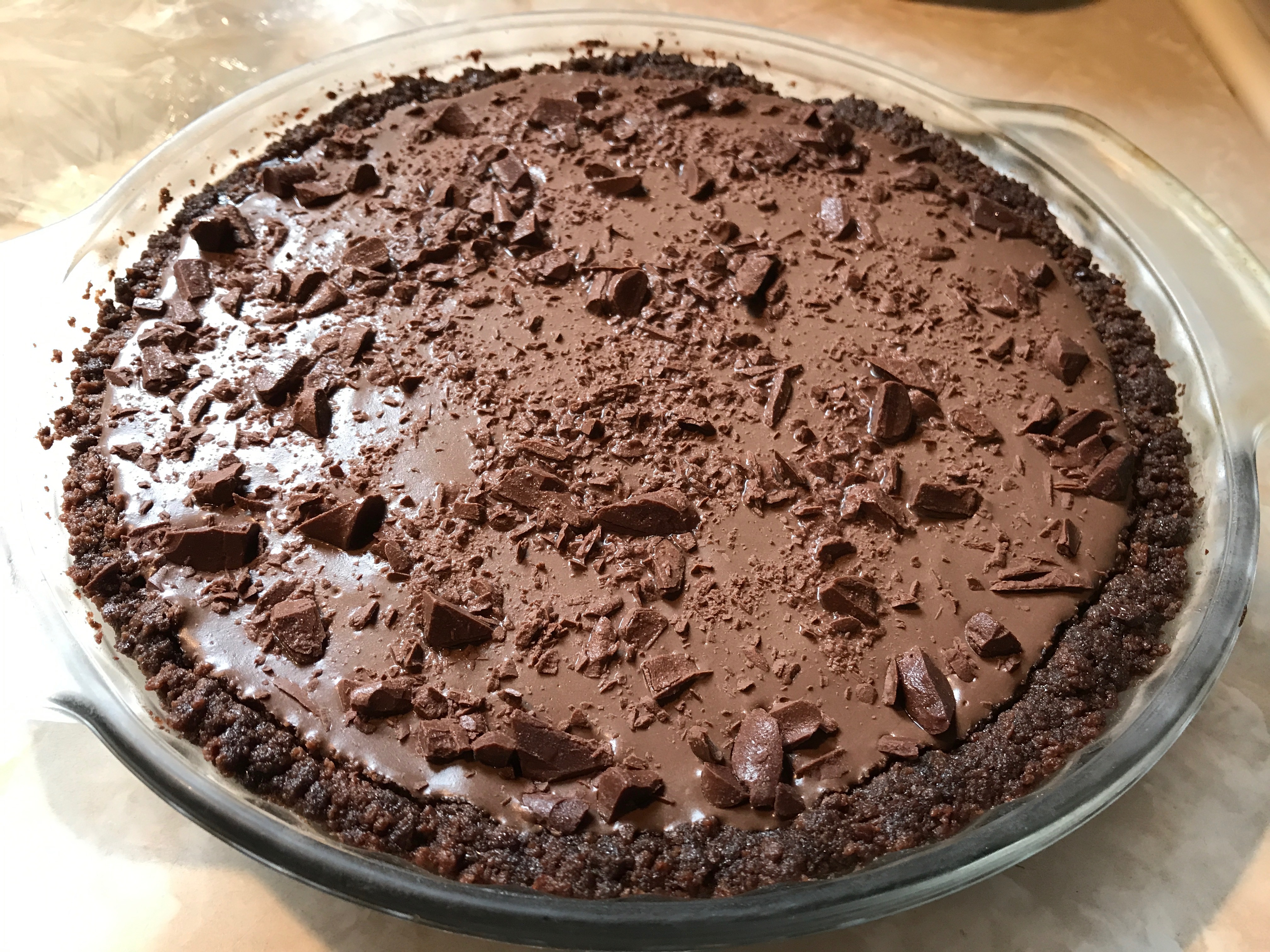
You can leave the pies as they are, or to make them prettier, you can sprinkle chopped dark chocolate over the top. Then enjoy!


Autumn Appetites: Fruit Butter Muffins

“But it doesn’t look like butter….”

When my oldest was in preschool, I asked if she wanted to try apple butter on her toast, and when I placed it on the table, I could tell by her face that she was confused. “But it doesn’t look like butter,” she said.

For folks who haven’t enjoyed the taste of a fruit or vegetable butter, it’s basically a spread like jam or jelly, only with a softer, more paste-like consistency, and it is extremely easy to make your own, especially if you own a crock pot. You simply slowly cook the fruit for a long time so that it breaks down completely. And homemade fruit or vegetable butters are very allergy friendly because you control what goes into the recipe.

Folks who have been reading my posts for a while know that I like recipes which require little work, and making fruit or vegetable butter in the crock pot fits the bill perfectly. And this time of year, when I’m looking for a myriad of ways to use apples and pumpkin, making them into “butters” is ideal, though fruit and vegetable butters can be made with just about any fruit or vegetable… apples, plums, pumpkins, squash, peaches, mangoes, strawberries, turnips, cherries….

You simply chop the fruit or vegetable into pieces which you place into your crockpot. For fruit like apples, pears, plums, etc… I don’t even peel the fruit. I simply core and slice, because the nutrients are in the skins, and you’re cooking the fruit for so long that the skins break down. Vegetables with hard rinds like pumpkin and squash, though, you’ll want to peel.

Once the fruit or vegetables are in the crock pot, you can decide if you want to make the butter plain or spice it up. Adding spices like cinnamon, nutmeg, ginger, coriander, cloves, etc…, or flavors like lemon or vanilla or orange peel, etc… adds dimension to the flavor. For folks who want a sweeter butter, you can add some agave or truvia or coconut sugar (or sugar if you use it). Unless my fruit is very tart, however, I don’t add any sweetener.

Then you just turn your crock pot to low and let the fruit break down over a long period of time. How long will depend on the amount you’re making and the thickness of your fruit or vegetable, anywhere from 6 to 12 hours. You want to cook the fruit or vegetables long enough that the consistency is very thick, way past applesauce consistency. Some folks recommend propping the top of your crock pot lid to help with evaporation. I’ve never done that and haven’t had any problems with the fruit being too watery, but you can choose which way you’d like to try.

Once your fruit or vegetables are completely cooked down, you can cool them and have a chunky butter or you can puree the fruit or vegetables with a food process or blender into a smoother butter. Your choice. The butters will keep well in the fridge for a couple of weeks, or you can freeze them for several months. If you want to extend the life of the fruit butter in the fridge, you can add sugar and lemon juice which help to preserve the fruit and keep mold from growing. And of course, you can always can the butters if you are one the type to can, which I am not. *grin*

Fruit butters can be used in place of butter and jams on toasts, muffins and scones. It can be used in place of applesauce in recipes. It can be used to thicken sauces. It can be added to cookies and pies for a richer flavor. The list is endless. For myself, I like to make muffins with the butters, and below I’ve pasted in recipe that is one of my favorite creations. I have used apple butter, pumpkin butter, winter squash butter, and strawberry butter so far, and I can’t wait to try some others!

Fruit Butter Muffins 

Ingredients:

8 ounces of chopped dried fruit, your choice

1 cup gluten free instant oats

1 1/2 cup boiling water

2 tbsp ground golden flaxseed

6 tbsp water

3 cups gluten free flour blend (I like to use a garbanzo bean, sorghum, and oat flour blend)

2 tsp baking powder

1 tsp baking soda

1/2 tsp salt

2 tsp cinnamon

1 tsp nutmeg

1 tsp ginger

3/4 cup plant base oil (extra light olive, safflower, avocado, etc…)

1/2 cup fruit or vegetable butter

2 tbsp apple cider vinegar

Baking Instructions:

1. Preheat the oven to 350 degrees and line 24 muffin cups with cupcake liners or grease them so the muffins won’t stick to your pan.

2. Mix the chopped dried fruit with the oats in a bowl, and pour the boiling water over them, pushing the dates and oats down into the water so they are covered. Let sit.

3. Whisk together the ground flax seed with the water, and set aside.

4. Whisk together the flour, baking powder, baking soda, salt, cinnamon, nutmeg, and ginger. Set aside.

5. Mix the oil with the fruit butter, oatmeal mixture, and the flax meal mixture.

6. Make a hole in the center of the dry ingredients and pour in the wet ingredients along with the apple cider vinegar. Mix up quickly just until the dry ingredients are moist.

7. Evenly scoop the muffin batter among the 24 muffin cups and bake for 15 minutes or until the cupcakes are golden and puffed and a toothpick inserted in the center comes out clean.

8. Remove the muffins to a wire rack and cool completely. These keep well in a tightly covered tupperware container.

Creative Cooking: Dried Plum Muffins

“It’s the bacon song….”

Last night we discovered that our fridge is not working as it ought. Specifically, the refrigerator part (but not the freezer) is not staying as cold as it needs to be to keep meat from being spoiled, and when I went to start dinner, I learned that the ground turkey I had bought had gone bad. Since it was close to dinner time, I opted to do what I usually do in a crunch… we had breakfast for dinner.

The children love when we have breakfast for dinner. Pancakes, waffles, sausages, bacon, eggs… these are some of their favorite foods. Given what we had in the pantry and the freezer, last night ended up being pumpkin pancakes and turkey bacon with salad as our veggies. This, of course, meant there were pancakes and bacon available for the children to eat again this morning for breakfast.

When our son went to get bacon to eat, he began to sing. It turned out it was the “bacon song” he was making up and singing. When we laughed, he switched to the “apple doesn’t fall far from the tree” and reminded my husband and me that we do strange things all the time!

In fact, I was just accused of oddness last week when I made dried plum muffins. Someone thought it weird that I would even use dried plums. Another wondered why I did not call them prunes. I explained that dried plums have a lot of fiber, potassium, good vitamins like K, A and B, and are naturally sweet so you don’t need to add sugar. The reason I call them dried plums is because that is what prunes are, and I find people react oddly when you say you’ve made something with prunes. Of course, I discovered that dried plum muffins received the same reaction, so it may not be the name!

The fact, though, is that the muffins I made are healthier muffins with rolled oats and flax seed and garbanzo bean flour, so in addition to having no sugar, they are higher in fiber and protein. The version below have mini chocolate chips because I was making them for a children’s party, but you can omit the chocolate chips and then serve them as a breakfast muffin!

Dried Plum Muffins

Ingredients:

7 ounces of pitted, chopped dried plums (prunes)

1 cup gluten free rolled whole oats

1 1/2 cup boiling water

2 tbsp ground golden flaxseed

6 tbsp water

1 cup gluten free oat flour

1 cup garbanzo bean flour

1/3 cup potato starch

2/3 cup arrowroot starch

2 tsp baking powder

1 tsp baking soda

1/2 tsp salt

2 tsp cinnamon

1 tsp nutmeg

1 cup Enjoy Life mini chocolate chips

1 cup mashed, ripe bananas

1/2 cup safflower oil

1/2 cup water

2 tbsp apple cider vinegar

Baking Instructions:

1. Preheat the oven to 350 degrees and line 24 muffin cups with cupcake liners or grease them so the muffins won’t stick to your pan.

2. Mix the chopped dried plums with the oats in a bowl, and pour the boiling water over them, pushing the dried plums and oats down into the water so they are covered. Let sit.

4. Whisk together the ground flaxseed with the water, and set aside.

5. Whisk together the oat flour, garbanzo bean flour, potato starch, arrowroot starch, baking powder, baking soda, salt, cinnamon, and nutmeg.  Stir in the chocolate chips and set aside.

6. Mash the bananas and mix with the oil and the dried plums and oatmeal mixture and the flaxseed mixture.

7. Make a hole in the center of the dry ingredients and pour in the wet ingredients along with the apple cider vinegar. Mix up quickly just until the dry ingredients are moist.

8. Evenly scoop the muffin batter among the 24 muffin cups and bake for 15 minutes or until the cupcakes are golden and puffed and a toothpick inserted in the center comes out clean.

9. Remove the muffins to a wire rack and cool completely.  These keep well in a tightly covered tupper ware container.

Creative Cooking: Gingerbread Cupcakes

“It’s about coming together as a community….”

Some friends of mine decided recently that we should put all the walking we have been doing to good use, specifically, I walked my first 5K last weekend, and we did another this weekend.  The first supported community living in general and raised funds for a local community initiative; the second was to help raise awareness and aid for cancer research and care for children.

Not having done a 5K before, I did not know what to expect, and I was surprised by the diversity that one finds at such events. Race, politics, religion, lifestyles, level of health, even reasons for doing each of these particular 5K races varied from person to person. Something about participating in a 5K transcends everything other than the fact that everyone is there, which seems to make you automatically a part of a special group.

I was also marked by the optimism and positive vibes which steep such events. People cheer you on from the get-go and continue to encourage you the entire way, and even if you are last, you receive the same accolades as the person who was first, sometimes even more so! Whether you run, walk or are in a wheelchair, you are accepted and permitted to do the race at your own pace in the manner which works best for you. Best of all, though, is that you become a part of a community as opposed to being alone.

People I did not know felt comfortable chatting with me before, during and at the end of the races because of that common bond, which was that we were all participating in the 5K. We were all part of “the group”.

I thought about this yesterday as a mom told me about her worries for her middle child who just started her first year of college. The daughter has a lot of food issues but has difficulty watching what she eats because she does not want to be different from her friends; she does not want to miss out on the foods they are eating… pizza, pasta, desserts. She just wants to “be a part of the group,” as she tells her mother quite frequently.

We all want to be a part of something bigger than just ourselves. Being a part of a community that runs and walks and wheels together for the good of community and humanity is a good thing to be a part of. Being a part of a close-knit group of friends is also a good thing. Sometimes, however, that community we are choosing to join needs some education, and sometimes we have to remember that we can be a part of community life and still be different, and more than that, our differences are what most of the time make for a more vibrant community life. As with the 5K, we should be able to be accepted and permitted to do the same thing differently.

This week, I had a workshop with a very large group of much older folks who had never considered trying to eat healthier or allergy friendly… ever. They wondered, as they rightly should have, whether it was even possible to make the foods they loved in the manner which I promised them they could. As such, I had my work cut out for me to create desserts which fit their expectations. To that end, one of the items I made was gingerbread cupcakes.

The folks had indicated that they loved gingerbread, and how could I possibly make gingerbread without using at least two cups each of molasses and sugar and without white flour and butter. It simply would not be the same! Well, I am happy to say that they loved the gingerbread cupcakes so much that they took all my leftovers home, leaving nothing for me to share with the family after! Fortunately, the family had been able to taste test a couple before!

So, below is a recipe for gingerbread cupcakes which is dairy, gluten, soy, and egg free. I did opt to use coconut sugar to get the texture that I needed for the gingerbread but any folks with a coconut allergy can feel free to use the traditional brown sugar or substitute agave, using half the amount you would for the coconut sugar. The coconut milk can also be changed to any type of milk that best suits one’s food needs. I also used date molasses instead of regular molasses which is made entirely from dates but if you cannot find that, you can use regular molasses.

Gingerbread Cupcakes

Ingredients:

3 cups gluten free flour blend (I used King Arthur’s Whole Grain version)

1 cup coconut sugar

2 tsp baking soda

2 tsp cinnamon

2 tsp ginger

1 tsp nutmeg

1 tsp salt

1/2 tsp cloves

1 cup date molasses

1 cup coconut milk

1 cup safflower oil

2 tbsp apple cider vinegar

Baking Instructions:

  1. Preheat the oven to 350 degrees and line 24 muffin tins with cupcake liners
  2. Mix together the flour, coconut sugar, baking soda, cinnamon, ginger, salt, nutmeg and cloves. Set aside.
  3. Blend together the date molasses, coconut milk, and oil.
  4. Add the dry ingredients to the wet with the apple cider vinegar. Blend quickly just until the dry ingredients are moistened.
  5. Divide the batter evenly among the cupcake tins.
  6. Bake for 20 to 25 minutes until the cupcakes are puffed and dark golden and a toothpick inserted in the center comes out clean.
  7. Allow the cupcakes to sit for five minutes and then remove them to a wire cooling rack to cool completely.
  8. These cupcakes are extremely flavorful and need no frosting at all. If you would like to frost them, though, as I did for the workshop, the frosting I used is below.

“Cream Cheese” Frosting

Ingredients:

1/4 to 1/2 cup vegan butter (how much you choose to use depends on how buttery tasting you want your frosting versus cream cheese tasting)

agave (I suggest starting with one tablespoon and tasting to see if you need more sweetness)

4 oz to 8 oz tofu cream cheese (how much depends on how much butter you used, how much of a cream cheese taste you want and how thick you want the frosting; if you don’t have a dairy allergy and want to use real cream cheese instead of the tofu version, you may)

cinnamon, nutmeg, ginger and/or cloves (add to your tastes, starting with 1/4 tsp of your choice or choices.

Frosting Instructions:

  1. In a mixer, mix the butter until smooth.
  2. Slowly drizzle in the agave with the mixer on low to blend the agave in with the butter until creamy. Taste to see if you need to add any more agave.
  3. Add the tofu cream cheese and blend well until the frosting is to the desired thickness for easy spreading.
  4. Add the spices to your liking. I use all four for a nice spice frosting.
  5. If the frosting is too thick, you can thin it with milk of your choice. If it is too runny, thicken it with a little powdered sugar, using only 1 tsp at at time.