Cooking Techniques: White Sauce

Something simple yet versatile….

Every August finds me and my family up in the mountains of the Adirondacks where my husband’s family has been managing a forest for 60 years. Driving to the nearest major highway might get me two to three bars on my cell phone.  If I want to use the internet, I have to drive down into the local town to the library. Television viewing is limited to VHS tapes watched on a VCR. The radio picks up two stations, one of which is in Canadian French; and the house we stay in lacks modern amenities such as my coveted food processor, though we did upgrade the oven a couple of years ago from the kerosene/electric version to just plain electric.

For a number of years now I’ve been chief cook for the duration of my family’s stay, catering for dinners we have with the many folks who work for the family forest. While I enjoy the cooking, every summer I am reminded why modern conveniences such as food processors and hand blenders and Kitchen Aids are a joy to have in one’s kitchen. Chopping veggies for a ratatouille to feed 16 people takes about 5 minutes in my food processor — about five times as long by hand. A hand blender can turn lumps smooth in seconds — no matter how long you mash or stir with a masher or wire whisk, you’ll never get a puree. With a Kitchen Aid you can make a cake in minutes — creaming butter by hand takes a lot longer than one imagines it will.

As such, I love it when I can make something spectacular with little time and energy, so upon my return home I was thrilled to see a request for something “simple yet versatile.” My answer is just as simple: a basic white sauce.

White sauce is usually just milk, flour, and butter. On a stove top, you melt the butter (usually about 1/4 cup), stir in the flour (about 1/4 cup), add the milk (about two cups), and continuously stir until the sauce thickens. That’s it. Takes about 2 minutes.

But what you can do with a white sauce is amazing:

  1. You can adapt it to your needs: Have food allergies? You can use any type of “milk”, any type of flour, and any type of “butter” as a substitute. Trying to eat healthier? You can substitute 2 tbsp of olive oil for the butter or you can even omit the butter entirely and just stir about 1/2 cup of the flour into the milk and cook and stir until it thickens.
  2. You can add herbs and spices of any type. You want a curry sauce? Add curry powder. You want a garlic sauce? Simmer with minced garlic or stir in garlic powder. You want to try something a little different? Mix in a lot of thyme with a little bit of nutmeg.
  3. You can change-up the sauce: Want a cheesy sauce? Stir in shredded cheese or slowly melt in cream cheese. Want something with a more adult taste? Substitute a 1/4 cup of the milk with sherry or white wine or vodka. Want something a little less “milky”? Substitute half of the milk with a fat free, low sodium broth such as chicken or vegetable.
  4. You can add vegetables and meats: Looking for a veggie sauce to put over pasta or fish? Saute leeks, mushrooms and spinach and add to the white sauce with black pepper, thyme, and minced garlic. Want a nice sauce to use turn your leftover rice into a casserole? Chop leftover ham and chicken and throw it into a white sauce you’ve seasoned with curry powder.
  5. You can use it for anything: Like to make casseroles? Change up a white sauce to mix into any type of casserole — rice, pasta, veggie, meat…. Want to jazz up the side veggies or the chicken or fish? Make a sauce with freshly chopped herbs. Have just a little bit of leftover meats and veggies which you’re not sure how to use up? Throw them all into a more thickly made white sauce and serve them with toast triangles to the family.
  6. You can even use it for dessert: Want to jazz up your pie when you serve it? Make a slightly thinner white sauce sweetened with a little bit of agave with cinnamon, nutmeg and cloves. Looking for a nice topping for bread pudding? Make a vanilla white sauce by steeping vanilla beans in your milk before making the sauce. Want something to contrast with your chocolate cake? Make a sauce adding white chocolate which you can drizzle over the cake.

Recipe Revamping: Banana Cheesecake

“I wouldn’t have thought of that!”

At a baking workshop I had last week where 32 people were present, the comment I kept hearing in response to my answers to their questions was “I wouldn’t have thought of that!”

I found this intriguing, because I don’t really think it’s that folks wouldn’t have thought of it. I think it’s more that sometimes we tend to accept things as they are as opposed to giving any thought to whether something can done be different.

This week I received an email asking if I could revamp a recipe, which always thrills me. I enjoy thinking about a recipe and seeing if I can make it healthier, allergy friendly, and yummy all at the same time.

It was a gentleman writing in this time about a cheesecake recipe. I was interested immediately simply because it was a banana cheesecake which I had never actually heard of before. He needed it to be dairy, nut and gluten free, but he also wanted to cut back on the refined sugar and fat.

The bananas:

Original Recipe: 2 large bananas, diced, cooked with 1 tbsp lemon and 2 tbsp brown sugar

I thought about the folks who said they “wouldn’t have thought of that” because one of the first changes I made to the recipe was to roast the bananas. The recipe called for cooking the bananas on the stove top with sugar. The easiest way to sweeten bananas without the use of sugar is to bake them so their own sweetness becomes concentrated.

The idea of roasting a banana, though, isn’t something people usually consider for home cooking. It’s quite easy to do, though. There are several different ways to go about it, but the way I prefer is to simply bake the banana in its peel. You preheat the oven to 400 degrees, put your bananas in a line on a cookie sheet and bake for about 20 minutes. Allow the bananas to cool until you can safely peel them, and then use the bananas as you’d like.

The crust:

Original Recipe: 1 1/2 cup finely crushed vanilla wafers, 1/2 cup chopped pecans, and 1/4 cup butter (plus 17 vanilla wafers for the sides and 1/2 cup coarsely topped wafers for the top) 

This recipe called for the use of a lot of vanilla wafers.  It needed crushed wafers for the crust, then more wafers for the sides, and finally coarsely chopped wafers for the topping. This is a lot of sugar, fat, and just plain empty carbs. It’s also not great for folks with food allergies.

For folks who want to use vanilla wafers, Kinnikinnick actually makes a gluten, dairy, nut free vanilla wafer. I’d recommend just using it for the crust, though, and forgetting about the sides and top. That alone will cut back on the calories, sugar and fat. Since I’m always in favor of adding something better if possible, I opted to use Jo-Sef’s gluten, dairy, nut free dark chocolate cookie squares, because these cookies are made with soy flour, which adds protein, and not just the usual rice flour. In addition, because it’s a dark chocolate cookie, the sugars in it are much less. I zooped an 8 oz box of cookies in my food processor for the crust.

To make it dairy free, I used a vegan butter instead. Since 1/4 cup is actually a reasonably small amount compared to most crust recipes, I kept the amount as is. To make it nut free, I simply omitted the pecans altogether, which also cuts back on the total fat, though nuts are considered good fats in general.

(FYI: If you want to make your own vanilla wafers, Gluten Free on a ShoeString actually has a gluten free recipe which can easily be adapted to also be dairy, nut, soy, etc… free.http://glutenfreeonashoestring.com/nilla-wafers/)

The filling:

Original Recipe: 3 8 oz pkgs cream cheese, 1 cup white sugar, 3 large eggs, 2 tsp vanilla

Since the crust was made with a store bought cookie which had some sugar, even if less than other cookies, I omitted sugar from the cheesecake filling, choosing to use Agave instead because I could then use half the amount of what would have been required of sugar.

To cut back on the fat, I replaced the whole eggs with egg whites, and to make it dairy free, I simply used tofu cream cheese instead. The vanilla, I kept as is.

The topping:

Original Recipe: 1/2 cup coarsely crushed vanilla wafers

As mentioned earlier, omitting the use of more vanilla wafers cuts back on the sugar and fat. It does, though, leave the cheesecake a little naked. So, I opted to make a sour cream topping with some amendments.

Usually a sour cream topping for a cheesecake calls for 2 cups of sour cream. I opted to use only one cup, though, to cut back on overall calories, and I used tofu sour cream to make it dairy free.

Sour cream topping usually also calls for anywhere from 1/4 cup to 1/2 cup of sugar. I used 2 tbsp of coconut sugar, and I added 1/2 tsp of cinnamon for some additional flavoring.

The size:

Original Recipe: Bake in a 9 inch spring form pan.

A simple trick for cutting back on overall calories, fat and sugar, is to change the size of the cheesecake. Instead of using a 9 inch pan, I used a 10 inch, which slightly spreads the cheesecake to thin the overall layer out. So when you go to cut the cheesecake, you can cut it into more slices which have a little less height to them, thus making for a little less of everything you’re eating.

Banana Cheesecake

Ingredients:

one 8 oz package chocolate cookie wafers (I used Jo-Sef’s gluten, dairy, nut free ones)

1/4 cup vegan butter, melted

three 6 inch bananas

three 8 oz packages Tofu cream cheese, at room temperature

1/2 cup agave

3/4 cup liquid egg whites, at room temperature

2 tsp vanilla extract

1 cup tofu sour cream

2 tbsp coconut sugar

1/2 tsp cinnamon

Baking Instructions:

1. Preheat the oven to 350 degrees.

2. In a food processor process the chocolate cookie wafers into crumbs. Empty the crumbs into a bowl and mix them with the melted butter.

3. Put the chocolate cookie mixture into a 10 inch springform pan, and evenly press the mixture into a bottom crust for the cheesecake.

4. Bake the crust in the preheated oven for 10 minutes. Remove and allow it to cool.

5. Increase the oven heat to 400 degrees.

6. Line the three bananas on a cookie sheet, and bake them for 20 minutes. They will be black and soft with some moisture oozing out of them when they’re done. Allow the bananas to cool.

7. Decrease the oven to 325 degrees.

8. In a mixer, gently blend the cream cheese until it’s smooth.

9. With the mixer on low, slowly pour in the agave until it’s all incorporated into the cream cheese. Be sure to use a rubber spatula to scrape the sides and bottom occasionally.

10. With the mixer on low, slowly add the egg whites until they’re fully incorporated into the cream cheese batter.

11. Add the vanilla.

12. Remove the roasted bananas from their peels, and mash them. Then add them to the cream cheese batter until they’re fully mixed in. Be sure to scraped down the sides and bottom with a rubber spatula once or twice.

13. Completely cover the bottom of the springform pan with aluminum foil and put the pan into a larger pan which will hold it.

14. Gently pour in the cream cheese batter into the prepared pan, and level off the filling so it’s even.

15. Pour boiling water into the larger pan until the water is halfway up the sides of the springform pan.

16. Bake in the oven for one hour.

17. Mix the sour cream with the coconut sugar and cinnamon. When the cheesecake is done at the hour mark, carefully spread the sour cream mixture evenly over the top of the cheesecake, and bake for 10 minutes.

18. Remove the cheesecake from the larger pan when it’s done, and allow it to cool for about half an hour to an hour on a cooling rack.

19. Remove the outside of the springform pan, and put the cheesecake into the fridge to completely cool. Usually it needs at least three to four hours.

20. Slice, serve, and enjoy!


Recipe Creations: Chocolate Chip Carrot Snack Cake

“Yeah, but I’d rather eat that than cardboard.”

A couple of weeks ago, my son and I enjoyed a visit to a science museum where I was surprised by a new exhibit. They had created a room filled with information about healthy eating with a couple of hands-on activities for the children looking at skeletal bones and experimenting with food.

As we left the exhibit, we found ourselves behind a group of teenagers and overheard their conversation. One of the girls commented about the display that talked about how bad sugar was for our bodies, and one of the boys responded with, “Yeah, but I’d rather eat that than cardboard.”

I understood what he meant. Too often the “healthy” desserts don’t match up with our expectations for taste, and unfortunately, once someone’s had a negative experience, it turns them off to trying again.

Recently, my high school daughter had a couple of friends over, and they wanted something “sweet”. Since I don’t like to serve “junk”, I thought about what I could make, and carrot cake came to mind. The problem is that carrot cake in its traditional form is so utterly bad for you, despite the carrots. The fat content is really high because of the butter in the cake, the traditional use of nuts, and the cream cheese frosting, and to keep carrot cakes moist and binding, you use a lot of eggs.

I didn’t want to give up on this dessert, though, so I decided to work on a snack cake version, something without frosting and which would be considerably lighter in texture, taste, and calories — and of course, I wanted to eat it, too, so I made it allergy friendly for my allergies to wheat, dairy and nuts, making sure to add some flours higher in protein and fiber and minimizing the use of white refined sugar.

The result? My daughter, who has never actually liked carrot cake, loved it, and one of my daughter’s friends said it was the best carrot cake she’d ever had in her life. While I take that as the hyperbole it was, it is a reminder to me that if we continue to serve good tasting food which also happens to be healthy, then maybe, just maybe, we’ll find a way to reverse the trend of obesity, diabetes, and heart attacks….

Chocolate Chip Carrot Snack Cake

Ingredients:

1 1/2 cup gluten free brown rice flour blend (I used Authentic Foods)

3/4 cup gluten free oat flour

1/4 cup sorghum flour

2 tsp baking powder

1 tsp baking soda

1 tsp ground ginger

1 tsp ground cinnamon

1/2 tsp ground cardamom

1/2 tsp ground nutmeg

1/4 tsp salt

1 cup Enjoy Life mini chocolate chips

20 oz container crushed pineapple in its juices only

3/4 cup agave

3/4 cup safflower oil

1 cup egg whites

2 cups loosely packed shredded carrots

1 tbsp apple cider vinegar

2 tbsp agave

1 tsp ground cinnamon

1 tsp ginger

Baking Instructions:

1. Preheat the oven to 350 degrees and line a 9 x 13 pan with parchment paper.

2. Mix together the brown rice flour blend, the oat flour and the sorghum flour with the baking powder, baking soda, ginger, cinnamon, cardamom, nutmeg and salt.  Add the chocolate chips. Mix well, and set aside.

3. Drain the crushed pineapple and remove 1/2 cup of the crushed pineapples. Reserve the remaining pineapple. Puree the 1/2 cup pineapple in a food processor until it’s smooth.

4. To the pureed pineapple add the agave, safflower oil, egg whites, and shredded carrots. Mix well.

5. Add the carrot mixture to the dry ingredients with the apple cider vinegar. Blend just until everything is incorporated together and the dry ingredients are moist.

6. Pour into the prepared pan and bake in the oven until the cake is golden and a toothpick inserted in the center comes out clean. It took about 25-30 minutes for me, so I suggest setting the timer at 25 min and then checking.

7. While the cake is cooking, take the remaining crushed pineapple and mix it with the agave, cinnamon and ginger. You can put it into the fridge if you want it cold.

8. When the cake is done, serve slices of the cake with dollops of the spiced crushed pineapple.


Happy Fourth: Berry Crisp

website berry crisp

“I want something easy….”

Happy Fourth of July! I received an email yesterday, asking for a dessert that could feed a large amount of people, would be allergy friendly, was Fourth of July-ish, and would be easy to make. Fortunately, I had just the suggestion.

Berry Crisp. It’s one of my children’s favorites, and my son always says that it reminds him of the Fourth of July because of the color of the berries. What I love is that if you keep frozen berries in your freezer, you can whip this up quickly and easily any time of the year.

Berry Crisp

Ingredients:

one 16 oz pkg frozen blackberries*

one 16 oz pkg frozen raspberries*

one 16 oz pkg frozen blueberries*

one 16 oz pkg frozen strawberries*

1/4 to 1/2 cup favorite GF flour (I use either garbanzo bean or sorghum or GF oat flour because they have more fiber and protein than others; use the smaller amount if you want a juicier crisp and the larger amount if you prefer a drier crisp)

1/2 cup Agave (if you like a sweeter crisp, increase this to 3/4 c)

1 tsp cinnamon

1/2 tsp nutmeg

1/4 tsp ginger

4 cups gluten free whole grain oats

1/2 cup GF flour (I use either garbanzo bean or sorghum or GF oat flour because they have more fiber and protein than others)

1 tsp cinnamon

1/2 tsp nutmeg

1/4 tsp ginger

1/2 cup melted vegan butter

1/4 cup Agave

Baking Instructions:

1. Preheat oven to 375 degrees. Lightly grease an 11 x 15 pan with your favorite method. (If you don’t have a large pan like this, you can use several smaller dishes like the three pictured above.)

2. Empty into and mix all the frozen berries in a large bowl with the flour until they’re coated.

3. Combine the agave with the cinnamon, nutmeg and ginger and coat the berries with the agave mixture.

4.  Cover the pan tightly with aluminum foil, and bake the berries in the preheated oven for about half an hour until the berries are warm and soft and starting to bubble a little.

5.  While the berries are cooking, mix the whole oats with the flour, cinnamon, nutmeg and ginger. Mix together the melted butter and agave, and mix the oats with the butter mixture. Set aside and let the oat mixture cool.

6.  After the berries have cooked for the half hour, remove the foil from the pan, and reduce the oven to 325 degrees.

7.  Give the oat mixture a good stir. (The oats should be cooled now and have formed little clumps.) Evenly spread the oat mixture over the berries.

8.  Bake the crisp in the lower heat oven for another 15 to 20 minutes, just until the oat mixture has begun to crisp up and brown just a little.  The berries will be bubbling. (Be sure to check after 15 minutes because the oats can become too toasty very quickly.)

9.  The crisp can be served while warm with vanilla “ice cream” or “whipped cream” or just plain. It can also be eaten room temperature or cold.

If you have leftovers, you can wrap it and leave it on the kitchen counter or you can put it into the fridge.  My son thinks it’s a great breakfast food!

* NOTE: Obviously, if the season is right or if you simply prefer and don’t mind paying more, you can use fresh berries instead of frozen. If you use fresh berries, then you don’t need to use very much flour at all, so reduce the flour coating to about 2 tbsp or leave it out altogether, depending on how juicy or dry a crisp you prefer.

Menu Munching: Avocados

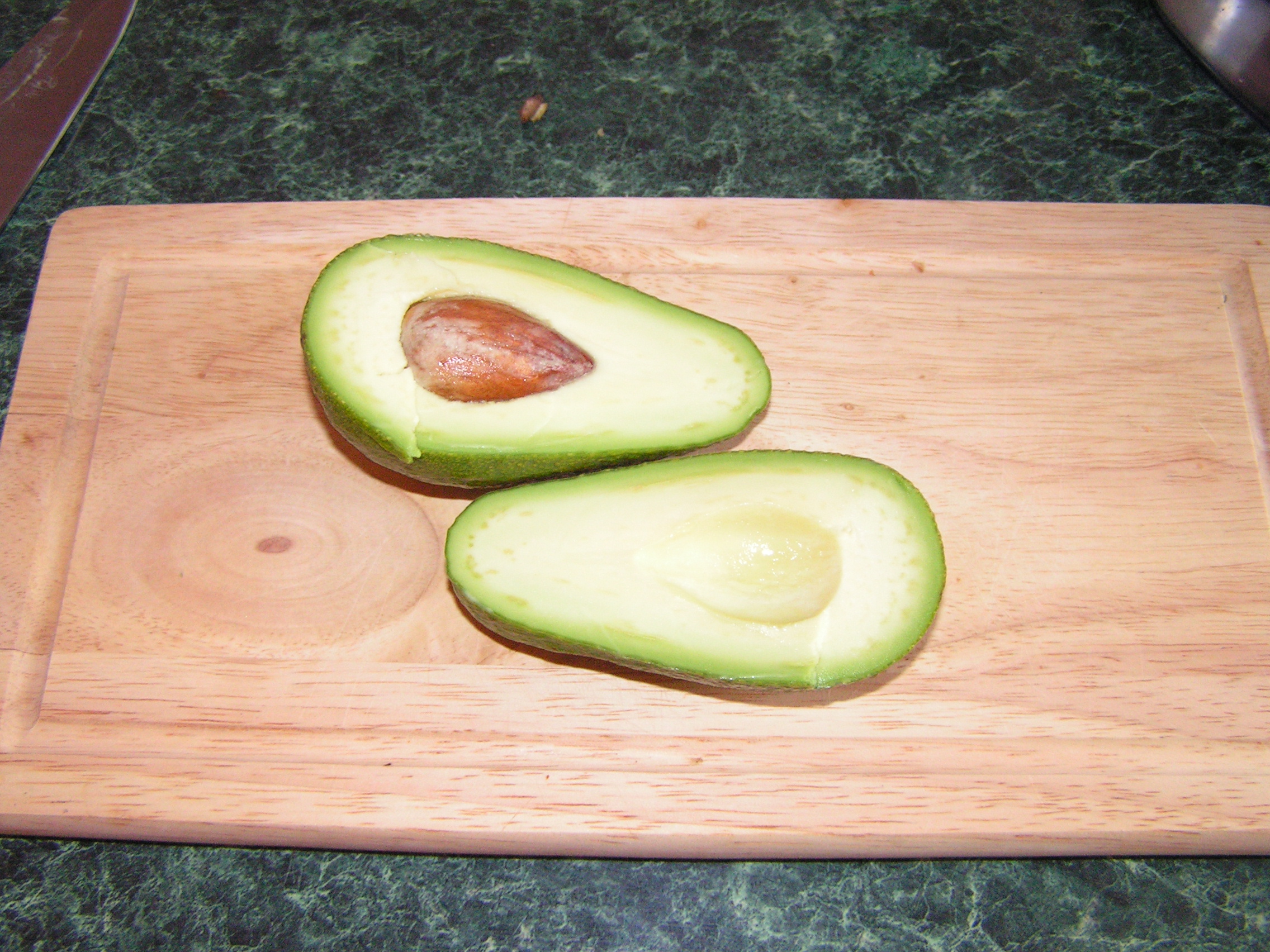
KONICA MINOLTA DIGITAL CAMERA

“The best is an orchestra.”

At a recent event for writers, a gentleman shared a story about his grandfather who said that people should be like an orchestra, each complementing one another in harmony to make the world a better place for everyone.

I thought about this when I received an email this week asking me about the hype around super foods. If you look at the list of super foods, you’ll see that they’re fruits, nuts, veggies, beans, whole grains, fish, and spices – essentially and simply an orchestra of naturally existing, non-processed, complementary foods which when eaten make for better health.

It’s not that they’re super. It’s that we unfortunately have fallen away from eating them, and our bodies are craving them. For some folks, it’s the cost. The fact is that the natural foods are a lot more expensive than processed. For others it’s the maintenance. Fresh foods don’t last as long, so they need to be eaten quickly and replaced more regularly which requires more trips to the store. For many it’s that our lives are busy, and we need food which have longer shelf-lives because we’re simply not home to eat the fresh food in the fridge.

The fact, though, is that our bodies need certain vitamins and nutrients to function optimally, and eating a wide variety of fruits, veggies, nuts, whole grains, beans, fish and spices provides what our bodies need in ways that processed foods simply cannot.

In the email, the question was specifically about avocados and why the hype and how to incorporate it into one’s diet.

Avocados are high in fiber, nutrients like potassium, vitamin K and folate, and the good monounsaturated fats our bodies need, so yes, people are advocating it as a super food. Like all the foods on the list, though, it needs to be a part of a healthy varied diet to have any benefit. If you’re eating unhealthy all the time, simply adding avocado to your menu isn’t going to make your body super.

As an addition to a healthy diet, though, avocados can add variety if you’re in a food rut. You can add them onto salads and sandwiches, make soups with them, stuff them, put them into smoothies, and you can even add them to cake recipes. For most folks, avocados mean guacamole, though, so I’m going to focus on that today.

Guacamole often gets a bad rap because it’s most always associated with the tortilla chips people tend to eat with them. It’s the tortilla chips that are unhealthy; not the guacamole. Guacamole is actually a combination of super foods: avocado, garlic, onions, citrus juice, jalapeno peppers, and sometime tomatoes. So, eating it is a good thing, though one should eat it as a veggie dip or a sandwich spread as opposed to a tortilla chip dip.

Making Guacamole:

1. Purchase good avocados: You want avocados which are dark green, soft to your touch, but without any brown, overly soft spots. When you go to the store, though, the avocados are almost always unripe. So, look for ones which are green with no brown and/or soft spots in them, firm to the touch and heavy in your hand. When you bring them home, put them into a paper bag, and check them after a day or so. When they’re ripe, they’ll be soft when you press into the skin with your finger. If you have the time to wait, you can also simply leave the avocados in a bowl on your counter, and they’ll ripen over time.

2. Prepare the avocados: Avocados are easy to cut. You simply cut in half around the pit and twist. When the avocado is ripe, the seed will simply slip out with very little aid from a spoon or knife. If the pit is sticking to the avocado flesh, it’s a clear sign that the avocado isn’t ripe. When avocados are ripe, you can put a spoon around the edge between the skin and the flesh and the avocado flesh will simply fall out of the skin. If the flesh is sticking to the skin, it’s either unripe or overly ripe.

3. Decide on the ingredients: Guacamole is usually a combination of avocados, citrus juice, garlic, onions, and jalapeno peppers with folks sometimes adding tomatoes, too. You can decide what you want to use. Since I don’t always have fresh jalapeno peppers and onions in the house, I often use dried red pepper flakes and onion powder. I also prefer to use Meyer lemons over lime juice, and since my children don’t like tomatoes in their guacamole, I don’t include it. You can decide whether you want to use all fresh ingredients or some dried like me. You can choose whether you prefer the taste of lime or lemon juice. You can decide whether to be a purist or to add tomatoes or even experiment with other additions. Some folks like to add herbs like basil to their guacamole. Most add salt and pepper to taste.

4. Begin with a basic recipe: A basic recipe I follow is:  Put the flesh of two avocados into a large bowl. Begin with 2 tablespoons of squeezed citrus juice, 2 tsp of minced garlic, and 1/8 tsp each of onion powder, black pepper, salt, and red pepper flakes. Mash the ingredients into the avocados so everything is combined but the avocados are still chunky. Taste and see what you need to add more of to your liking. If you’re using all fresh ingredents, start with 2 tsp of minced onions and seeded, jalapeno peppers and then see if you need to add more or not.


Spice Suggestion: Ginger

“You’re a gook.”

A recent event brought back some memories of my youth….

Growing up in the 70’s was not the best time to be Asian. It would be many years before I’d be old enough to understand the politics of Vietnam and the generalizing that strengthened the animosity aimed at me; so I remember being confused as to why people kept calling me a vulgar name for being Vietnamese when I was Korean.

As I grew up, I rebelled not only against the prejudice in general but the idea that there weren’t any differences among the various Asian ethnicities.

In some ways, I feel the same today about the spice, ginger. Too often when I mention using ginger, people will say something like, “Oh, it makes sense that you’d like ginger, being Asian and all.”

And when they do, that rebellious feeling sweeps over me again, and I find myself wanting to argue against the notion that ginger is somehow the spice of Asians and should only be relegated to Asian foods….

From medicinal to cooking uses, ginger has been a staple of Greek, Middle Eastern, and European countries for as many centuries as Asian countries. Even in the United States people have used ginger without considering it an “Asian” spice. Colonial recipes for gingersnaps and gingerbread and ginger teas and ginger ales abound as well as records of its use as medicine for upset stomachs.

Admittedly, ginger can be strong, so sometimes folks who are used to bland foods might find it a bit much, but a little can add an abundance of flavor.

In this day and age, ginger comes in a variety of types: fresh, dried, candied, crystallized, freeze dried, pickled, as a paste, and grated in a tube or container for the refrigerator. Fresh ginger obviously is the strongest in terms of flavor, but the convenience of the options with a longer shelf life is not to be underestimated.

If you’re using fresh ginger, you want look for ginger root with a nice, tan color which is firm to the touch and has smooth ends. If it looks dried out or moldy or is soft to the touch, don’t buy it. To use, simply peel and chop as desired. Ginger keeps for a good few weeks in the fridge, and you can even freeze it for several months.

Obviously the more you use, the stronger the ginger flavor, and fresh ginger will have a stronger taste than the other varieties. Ginger is like garlic and onions, and the more ginger cooks, the mellower its flavor becomes, so if you prefer the spicy, pungent taste, add the ginger near the end.

Some ways to use ginger:

1. Homemade ginger tea: The way my mom makes it is to put some fresh ginger root and cinnamon sticks into a pot of water and just let it simmer and steep for a while. Add a little bit of honey, and it’s quite delicious plus has added health benefits.

2. Vegetables: Grated fresh ginger root or ground ginger adds a bit of zest to sauteed vegetables.

3. Omelettes and Egg dishes: Make a paste of ginger and garlic to add a little zing which is quite tasty.

4. Baked goods: Add dried ginger or chopped crystallized ginger to muffins, pancakes, scones, waffles, cakes, cookies, pies, for a new taste.

5. Meats, chicken and fish: Add grated or chopped fresh or freeze dried ginger or ground ginger to any entree to add another flavor dimension to the dish.

6. Soups and dressings: Ginger adds a nice tang to soups and homemade dressings, whether for salad or entrees.

On this site there are already recipes for ginger snaps and a ginger cake and gingerbread, but I’ll add another couple below for a ginger cheesecake which is creamy and spicy and yummy and pumpkin custard squares which my kids love and which are great when you don’t want to take the time to make a pumpkin pie. Both recipes are dairy, gluten, nut and mostly refined sugar free.

Pumpkin Custard Squares

1. Preheat the oven to 350 degrees. Grease an 8.5 x 11 pan with your preferred method.

2.  In a large bowl, mix 1 can of pumpkin with 2 eggs, 1/2 cup agave, 2 tbsp melted butter, 1 cup soy or flax milk, 1 cup water, 2 tsp cinnamon, 1 to 2 tsp ground ginger (if you love ginger, use the higher amount; if not use the smaller amount), 1/2 tsp nutmeg, 1/2 tsp salt, and 1/4 tsp ground cloves.

3. Mix in 3/4 cup Gluten Free Bisquick until the batter is smooth and creamy with no lumps.

4. Pour into prepared pan and bake for 50-55 minutes. The custard will be stiff and dry on top and the custard will be slightly puffed.

5. Cool completely on a wire cooling rack. Cut into squares and serve.

Ginger Spice Cheesecake

(Be sure ALL ingredients are at room temperature for best results!)

1. Preheat the oven to 350 degrees.  Grease a 10 inch springform pan with your preferred method.

2. In a food processor pulse one 8 ounce box of gluten, nut and dairy free gingersnaps until you have crumbs. Mix well with 1/4 cup melted vegan butter. Spread evenly onto the bottom of the prepared springform pan and bake for 10 minutes. Remove from the oven and cool on a wire cooling rack. Decrease the oven temperature to 325 degrees.

3. When cool, carefully cover the outside of the springform pan with aluminum foil and put the pan into a larger pan. Begin to boil some water, enough to fill the pan at least halfway up the springform pan but no more than 3/4 way up (this you’ll do after you put the cheesecake batter into the springform pan).

4. In a mixer, cream four 8 ounce room temperature Tofutti cream cheese packages until smooth and creamy. Use a rubber spatula to scrape the cream cheese down from the sides.

5. Slowly drizzle in 1/2 cup Agave while mixing the cream cheese on low.  Once incorporated slowly mix in one 12 ounce package Tofutti sour cream.

6. Blend in 1/2 cup liquid egg whites. Then 2 whole eggs, being careful to mix them in one at a time.

7. Mix in 1/4 tsp salt, 1/2 tsp nutmeg, 1 tsp cinnamon, and 1 to 2 tsp ground ginger (choose the amount based up on your preference for mild or strong ginger taste).

8. In a food processor chop up crystallized or candied ginger so you have at least 2 tbsp (you can use more if you want). Add to the cheesecake mixture and blend only until the ginger is incorporated.

9. Carefully pour the cheesecake batter into the springform pan. Place the larger pan with the springform pan into the oven. Very carefully pour the boiling water in the larger pan until it’s at lease halfway up the springform pan. You can go as high as 3/4 way up.

10. Bake for one hour and 30 minutes. When done, the cheesecake will be firmer around the edges, the batter won’t be jiggly, and the cheesecake will be slightly puffed.

11. Remove the cheesecake from the oven and from the larger pan. Remove the aluminum foil, and cool for 15 to 30 minutes on a wire cooling rack. Run a knife around the edge of the springform pan and remove the outer side of the pan.

12. Cool the cheesecake completely in the fridge for several hours.


Recipe Revamping: Coffee Cake

“It’s different but also the same.”

We were fortunate this past weekend to attend the world premiere of an orchestral piece by a composer from Singapore. My oldest was playing her French horn in the orchestra so my other daughter and my son drove with me to watch the performance.

For the selection, the composer began with an opera by Beethoven and imagined a different way of composing the piece. As the orchestra played his version, speakers placed at the four corners of the the building piped singing from the original opera piece. The conductor invited the audience to experience the “difference” and “sameness” by moving around the room. The conductor also asked the audience to add to the entire experience by downloading different variations of Beethoven’s work onto our phones and to play those, too, as we listened and walked around.

One would imagine this would be cacophonous but it was not, and in fact, the experience was quite pleasing and delightful; and we were glad we had been able to attend and participate.

As I thought about what the composer did – taking something known and creating something different, all the while keeping the essence of the original – I realized that this is precisely what I did when I set about perfecting a healthier and allergy friendly coffee cake. I wanted to create a coffee cake which I could eat but also which was better than traditional coffee cake.

Coffee cake is one of those foods which everyone enjoys but which truly is quite awful for your body, because it’s mostly white flour, butter and sugar. To create a coffee cake which kept the essence of what folks liked about it but which was allergy friendly and healthy was a very tall order.

But I like a challenge, so I created a recipe the other day which hit a home run the first time out….

Revamping Coffee Cake:

1. The butter: With a dairy allergy I obviously wanted to substitute the butter with a vegan version, but I also wanted to cut how much butter is usually in a coffee cake. I thought about what makes coffee cake most appealing and realized it’s really that streusel topping. As such, I didn’t want to get rid of the butter in topping which meant I needed to get rid of it in the cake part.

To substitute for the butter, though, I needed to find a perfect substitute which would mimic what butter does for the flavor and texture of coffee cake.  Simply substituting a healthy plant oil wouldn’t work. Neither would using mashed fruit or vegetables. I finally decided to use a combination of tofu sour cream and frozen bananas. The tofu sour cream would add some fat without adding as significant an amount as butter, especially if I used half the amount I might otherwise have by mixing it with bananas. I wanted something which had the texture of butter, though, so I froze the bananas and pureed it with the tofu sour cream which mimicked the texture of soft butter.

2. The flour: Besides having gluten which I can’t have, white flour also adds nothing nutritionally to one’s body. I needed to substitute a gluten free flour, but I also wanted to use flours which protein and fiber. This meant foregoing the usual gluten free blends which use rice flours which are just carbs. I didn’t want to use the heavier blends, either, though, with the garbanzo and fava bean flours because the texture would be compromised.

In the end I made my own blend which was a mixture of 1/2 cup quinoa flour, 1 1/2 cup gluten free oat flour, 1/4 cup coconut flour, 1 1/4 cup sorghum flour, 1 cup potato starch, and 2 tsp xanthan gum. The oat and sorghum flours have low glycemic indexes with high fiber. The oat and quinoa flour have a good amount of protein, and the quinoa and coconut flours add nutty lightness to the heavier oat and sorghum flours. The potato starch is necessary for binding and adds smoothness to the flour blend.

3. The sugar: Since refined sugar is poison to one’s body, I wanted to get rid of it altogether in the coffee cake. Agave would affect the texture of the coffeecake, and Stevia would affect the flavor. So, I opted to use coconut sugar which has a very low glycemic index and which would not affect the texture of the cake.

4. The eggs: Coffee cake usually utilizes a generous amount of whole eggs. To keep the cake healthier, I used liquid egg whites instead.

5. The cake pan: Since I wanted the cake to be healthier, I wanted to use less streusel topping than regular coffee cake recipes call for, but I still wanted a nice topping to cake ratio. As such, I opted to put my coffee cake batter into a larger 11 x 15 pan instead of the usual 9 x 13. This made for a slightly thinner coffee cake which meant the thinner layer of streusel was perfect.

6. The additions: One of the fun things about coffee cake is that there’s a variety one can purchase or make, so I wanted to experience with flavor. What I found worked well was to drop small dollops of Polaner’s All Fruit on top of the batter before I sprinkled on the streusel topping. The all fruit would melt while cooking and spread but then re-solidify with the streusel when cooling to mix the flavors.

7. The streusel: To make the streusel topping I decided to use garbanzo bean flour because it would add protein and fiber. Also, it is a heavier, denser flour which would make for a thicker streusel topping. I blended the flour with coconut sugar and added some cinnamon and nutmeg for flavoring. For the butter, I substituted a vegan butter which worked really well.

Allergy Friendly Coffee Cake

Ingredients:

1/2 cup garbanzo bean flour

1 cup coconut sugar

1 tsp cinnamon

1/2 tsp nutmeg

1/2 cup vegan butter

3 cups Paula’s flour blend**

2 cups coconut sugar

4 tsp baking powder

1 tsp baking soda

2 tsp cinnamon

1/2 tsp nutmeg

1/2 tsp salt

1/2 cup vegan tofu sour cream

2 frozen bananas (medium 5-6 inch in length)

1/2 cup soy milk mixed with 1/2 tbsp lemon juice

3/4 cup liquid egg whites

1/2 cup Polaner All Fruit

Baking Instructions:

1. Preheat the oven to 350 degrees. Grease 11 x 15 pan with favorite method or line with parchment paper.

2. Combine the garbanzo bean flour with the coconut sugar, cinnamon and nutmeg. Using a pastry knife cut the vegan butter into the flour mixture until coarse crumbs form. Set the streusel topping aside.

3. Mix the gluten free flour blend with the coconut sugar, baking powder, baking soda, cinnamon, nutmeg and salt. Set aside.

4. In a food processor or blender, blend the tofu sour cream with the frozen bananas until thick and creamy. You should have 1 1/4 cup yield to use for the recipe.

5. Mix the sour cream-banana mixture with the soy milk mixed with lemon juice. Blend well, and then add the liquid egg whites.

6. Quickly mix the liquid ingredients with the dry ingredients and spread the batter evenly into the prepared pan.

7. Drop small dollops of the Polaner All Fruit onto the cake batter so they’re evenly spaced on the surface. You won’t cover the entire surface of the cake.

8. Evenly distribute the streusel topping over the cake batter.

9. Bake in the preheated 350 degree oven for about 30 minutes. The cake will puff and be golden brown and a toothpick inserted into the center will come out clean.

10. The cake is delicious warm. It’s also good at room temperature after it’s cooled a little bit.

** Paula’s coffee cake gluten free flour blend: 1/2 cup quinoa flour, 1 1/2 cup gluten free oat flour, 1/4 cup coconut flour, 1 1/4 cup sorghum flour, 1 cup potato starch, and 2 tsp xanthan gum. You’ll only use 3 cups of this which will leave you with some leftover flour which you can use for something else.


Simple Pleasures: Chocolate Chip Muffins

website choc chip muffins

“Well, can you make it a junky, healthy snack, then?”

My son has a sweet tooth – there is no doubt about that – and every day he looks for a way to finagle a treat. For a mom who’s trying to feed her children healthy foods, it can become tiresome to always be “fighting” about what is good and what it isn’t. So, I’m always creating recipes which can be a compromise between what my son considers a treat and what I think is healthy.

The other day, my son really wanted something “junky” as he called it, and I advocated for something healthy. When he asked me for a “junky, healthy snack” I laughed, but then I got to work. After all, if I could create something he thought was “junky” but it really wasn’t, then we’d both be happy.

I asked my son what he wanted, and he replied that he wanted a chocolate chip muffin. He, of course, meant one of those monstrosities they sell at the store which is all white flour and butter and huge chocolate chips, a lot of them. I wasn’t going for that, but it did give me an idea, and the result was a low fat chocolate chip muffin which was full of potassium from bananas, antioxidants and fiber from dates, and protein (and fiber) from oat and garbanzo bean flour – plus the muffins were free of dairy, soy, gluten, eggs, nuts, and refined sugar. What more could a mother ask?

And my son plus my daughters, and later, my writing group, all enjoyed the muffins immensely.

Chocolate Chip Muffins

Ingredients:

8 ounces of pitted, chopped dates

1 cup gluten free rolled whole oats

1 cup boiling water

2 tbsp ground golden flaxseed

6 tbsp water

1 cup gluten free oat flour

1 cup garbanzo bean flour

2/3 cup potato starch

1/3 cup arrowroot starch

2 tsp baking powder

1 tsp baking soda

1/2 tsp salt

2 tsp cinnamon

1 tsp nutmeg

1 tsp ginger

1 cup Enjoy Life mini chocolate chips

Four 6 inch bananas (comes to about 1 1/4 cups mashed)

1/4 cup safflower oil

2 tbsp apple cider vinegar

Baking Instructions:

1. Preheat the oven to 400 degrees and line 24 muffin cups with cupcake liners or grease them so the muffins won’t stick to your pan.

2.  Use a food processor to finely chop your dates into tiny pieces. (This will distribute the dates throughout your batter.)

3. Mix the finely chopped dates with the oats in a bowl, and pour the boiling water over them, pushing the dates and oats down into the water so they are covered. Let sit.

4. Whisk together the flaxmeal with the water, and set aside.

5. Whisk together the oat flour, garbanzo bean flour, potato starch, arrowroot starch, baking powder, baking soda, salt, cinnamon, nutmeg, and ginger.  Stir in the chocolate chips and set aside.

6. Mash the bananas and mix with the oil and the dates and oatmeal mixture and the flaxmeal mixture.

7. Make a hole in the center of the dry ingredients and pour in the wet ingredients along with the apple cider vinegar. Mix up quickly just until the dry ingredients are moist.

8. Evenly scoop the muffin batter among the 24 muffin cups and bake for 15 minutes or until the cupcakes are golden and puffed and a toothpick inserted in the center comes out clean.

9. Remove the muffins to a wire rack and cool completely.  These keep well in a tightly covered tupper ware container.


Simple Pleasures: Blondies

“I’d rather be a stromboli.”

My son loves pizza, and if he had his way, he’d eat pizza morning, noon, and night, seven days a week. His great sadness in life is that he only gets pizza every couple of months. The nice thing is that he doesn’t care what type of pizza it is – whether it’s frozen from the grocery store or fresh from a pizza parlor or homemade; so occasionally I’ll also make a pizza stromboli where I roll the dough like a cinnamon bun with the tomato sauce and cheese and filling wrapped up inside.

The other day I was teasing him that he’d turn into a pizza if he wasn’t careful, and he responded by saying that he’d rather be a stromboli because it’s neater, easier to pack for his lunches at school, and that people ask questions about it.

As I thought about our conversation, I started thinking about blondies. Blondies are to brownies what stromboli is to pizza. It’s similar but different enough that people don’t often associate the two. Simply put, blondies are brownies which aren’t chocolate. They have the same fudgy texture and are made just like brownies, and if you’re feeling like something just a little bit different, these are just the thing.

My family loves them, and when I make them for company, they love them, too. When it came to revamping a recipe, though, it took a little bit of creativity because blondies usually get their rich, caramel and butter taste from butter and sugar, both of which we don’t use, plus we were making them gluten and egg free. We found a recipe on the back of an Enjoy Life package, and after tweaking it a bit, we were able to create a recipe that is quick and easy to make and delicious.

Blondies

Ingredients:

1/4 cup ground golden flaxseed

3/4 cup water

2/3 cup safflower oil

1 tbsp gluten free vanilla

2 cups coconut sugar

1 cup Gluten Free flour blend (we use Authentic Foods brown rice version)

1 cup sorghum flour

1/4 cup gluten free oat flour

1 tsp baking soda

1/2 tsp baking powder

1/2 tsp salt

2 cups allergen free chocolate chunks (we use Enjoy Life)

Baking Instructions:

1. Preheat the oven to 350 degrees and lightly grease an 11 x 15 pan. (Can use whatever you prefer.)

2.  Mix the flaxseed with the water and let it sit while mixing the other ingredients.

3. Mix the oil, vanilla and coconut sugar. Stir the flaxseed mixture to be sure it’s thickened and looks like beaten eggs, and add it to the we ingredients.

4. Whisk together the gluten free flour blend, the sorghum flour, the oat flour, the baking soda, the baking powder, and the salt.

5. Add the dry ingredients into the wet ingredients, along with the chocolate chunks, and mix quickly until the batter is well mixed.

6. Spread the batter evenly into the prepared pan and bake for 20 to 25 minutes until the blondies are a golden brown. The batter will have puffed and be slightly firm to the touch.

7. Cool completely on a wire rack before cutting into pieces to be eaten. (You can certainly cut them while warm, but like brownies they won’t cut as well.)

Simple Pleasures: Cranberry Scones

website scones

“May your troubles last as long as your New Year’s resolutions.”

When my husband and I married, one of my two newly minted degrees was in Psychology, and having gotten married in late December, our first New Year’s celebration came upon us pretty quickly. Being a wise 22, I decided we could do resolutions “better”. So, I made up a three page chart which would assess how our year had been physically, emotionally, mentally, psychologically, and spiritually, stating that we’d then make goals under these categories for our new year, both individually and for us as a newly married couple.

It’s a testament to my husband’s sainthood that he humored my insanity, not only that evening, but over the course of the year as I continued to drag out the bedraggled sheets to assess how we were doing.

When our second New Year’s came around, my husband very gently asked me whether we should assess the successfulness of my better resolution experiment before we embarked on another year of it; and of course, what we discovered is that we hadn’t done any better with our resolutions than we had any other time in our lives.

What it had done, though, was to make us more conscious of the fact that a better life is all about those daily decisions, not the one time a year ones; and for those of us trying to be healthy and take care of our allergies and be in better shape and wanting to love better, it’s what we do each day that makes the difference, not what we simply say we want to do on January 1.

So, for today’s post, I’m sharing another simple pleasure recipe for scones. In the past, I wouldn’t make scones because normal versions use a lot of butter and cream, and they took too much time and required more effort than I liked to expend. Over time, though, I realized that there were ways to make them healthier and that I could make drop scones instead which took much less time and effort. These cranberry ones don’t take much time to make, and you get lots of good health benefits from the cranberries, protein and fiber, which is one way you can improve your health today on your first day of 2015.

Gluten and Dairy Free Cranberry Scones

Ingredients:

12 oz bag fresh cranberries (I actually keep them frozen in my fridge so I can just pull one out when I need it)

1/4 cup unsweetened orange juice

2 tbsp Agave

1/3 cup vegan butter

2/3 cup flax milk mixed with 2 tsp lemon juice (You can use another type of milk if you prefer)

1 cup vegan ricotta

1 tbsp coconut sugar

1/4 cup safflower oil

2 tbsp Agave

3/4 cup sorghum flour

3/4 cup garbanzo bean flour

2 cup Gluten free brown rice blend (I use Authentic Foods)

1/2 tsp salt

1 tsp cinnamon

1/2 tsp ginger

2 tbsp coconut sugar

Baking Instructions:

1. Preheat the oven to 425 degrees and line cookie sheets with parchment paper.

2. In your food processor, chop up your fresh or frozen cranberries with the orange juice and agave. Set aside.

3. Measure out the vegan butter and put it into the freezer while you are assembling the rest of the ingredients.

4. Mix the flax milk with the lemon juice and let is sit for a minute while you mix the ricotta with the coconut sugar.

5. Add the milk mixture to the ricotta mixture, along with the safflower oil and agave. Set aside.

6. Mix together the sorghum, garbanzo bean, and gluten free flour blend with the salt, cinnamon, ginger, and coconut sugar.

7. Take your butter out of the freezer and cut in the butter into the flour mixture with a pastry blender or two knives until the flour mixture is a bit crumbly.

8. Gently stir in the cranberries so they are coated with the dry ingredients.

9. Make a well in the center of the dry mixture and pour in the wet ingredients. Quickly mix the batter up just until the dry ingredients are moist.

10. Drop the batter by 1/4 cup onto the lined cookie sheets, and bake for about 20 minutes. The scones will be puffed and golden. You may eat them immediately while warm or cool the scones on a wire cooling rack for later eating.

NOTE: Your cooking time may vary, depending on your measuring cup. I usually use a deep cup so it takes 20 minutes, but once I used a shallower cup and the scones took less time, so be sure to gauge accordingly. Basically you want your scones to be puffed and airy and cooked through.


Menu Suggestion: Tenderloin Dinner

“When I grow up, I’m only going to do the things I like to do.”

My son has lived a charmed life so far. In addition to two older sisters doting upon him and a mother and a father who find it difficult to resist the impish grin he inherited from his dad, he has a fun-loving nature which usually protects him from any drudgery that comes his way. This Autumn, though, he’s been a bit disgruntled by a change in his comfortable life.

With his oldest sister going off to college, he no longer can stay at home while my husband and I are attending meetings and carpooling our other daughter to various activities. The other day, while he was being taken against his will, to a meeting of mine, he declared that he was only going to do things which he liked when he grew up.

Being the terrible parent that I am, I laughed, and my confused son wanted to know what was so funny. I told him that unfortunately for him, life is very much made up of activities which people don’t often like to do but simply must. He didn’t understand, so I asked him how he’d feel if I gave up doing things I didn’t like as much as other activities such as playing 20 questions with him on car rides or reading the same book to him over and over again or doing his laundry or washing his dishes three meals a day every single day.

It’s been a couple of days now, and my son still hasn’t answered my question. *laugh* I’m thinking he didn’t quite like the picture I had painted for him!

I was reminded of this conversation last night when I received an email: “Dear Paula,” it said. “I hate to cook, and I have to host Christmas dinner. Do you have any suggestions for something easy which will still impress my family?”

The fact is that many people don’t like to cook, and holidays can be stressful if suddenly you’re the one selected to host. Fortunately there are many easy menu suggestions, and I’ll share what I shared in my email:

If you’re hosting a large gathering, don’t want to do a lot of work, and want something which will taste good no matter how poor a cook you may be, you can’t go wrong with a tenderloin. It’s a very tender meat, needing very hands-off cooking, and can withstand any overcooking you might do. Plus you have choices: beef, pork, or turkey, and if you make a special sauce to spoon over it, people will think you’ve slaved away when in reality you’ve done very little.

Easy Holiday Dinner Menu:

1. The tenderloin: Choose which type you prefer, mix together some dried herbs of your choosing with a tiny bit of olive oil and rub all over the tenderloin. Put the tenderloin into a pan which just fits the meat, cover with aluminum foil, and cook in the oven for 15 to 20 minutes per pound. Most packages will suggest you use a preheated 400 or 425 degree oven, but you can also cook the meats at 350 or 375 degrees for a slower roasting time. When it’s done, you can simply turn off your oven, and let the meat sit in the oven until you’re ready to serve it.

2. The sauce: You can find all sorts of sauce recipes for tenderloin online, but one I always get rave reviews for is an artichoke cream sauce which I make: Drain a 14 ounce container of artichoke bottoms (can be found at the grocery store next to artichoke hearts), keeping the liquid. Mix the liquid with enough “milk” to make 2 cups. (I usually use soy or flax, but any will do.) Puree the artichoke bottoms in a food processor with 1/4 cup dry or cooking white wine (if you don’t want to use the alcohol, just use 1/4 cup of water or “milk”). In a large shallow pan, heat 2 tbsp of olive oil for about 30 seconds. Add 1/4 cup flour (I usually use a gluten free oat flour, but any will do), whisking well. Slowly pour the artichoke liquid/milk mixture into the rue, whisking well to combine the liquid with the flour mixture. Keep stirring, and let the mixture thicken, usually just a few minutes will do it. Add 1/8 tsp of black pepper and 1/4 tsp of dried thyme. Mix in the pureed artichoke bottoms until the sauce is smooth and creamy. Serve in a pretty dish with a ladle or in a gravy boat. Note: This can be made ahead of time and then just reheated before use. 

3. The veggie side dish: Choose any frozen vegetable you like, but one my children love is green beans. Put the frozen veggies into a large shallow pan with 1/2 cup or more of frozen diced onions. Add dried herbs of your choosing and black pepper to taste. Sprinkle a bit of olive oil, maybe a tsp or two, and simply saute the frozen veggies over low heat until they are cooked through. Starting with frozen veggies and cooking them over low heat means you don’t have to do more than occasionally stir the veggies, and if you forget about them, and overcook them a little, they still taste good, because the slow cooking allows the flavors to meld more.

4. The starchy side dish: You can’t go wrong with rice, ever. It doesn’t require a lot from you, and you can jazz it up very easily. I have a rice cooker which makes things even easier, but even if you have to make the rice in a pot on a stop, it’s still very hands-off: Purchase an uncooked rice medley. I like a Trader Joe’s mix which is long grain brown rice, black barley, and daikon seeds, but any will do. Cook the rice according to instructions (which is usually to just let it simmer over low heat, stirring occasionally) but instead of water use a low sodium, fat free vegetable or chicken broth, and add finely chopped veggies like carrots, zucchini, broccoli, peppers, or squash. When the rice cooks, the flavors of the broth and veggies, as well as the pretty colors, will make for a special side dish which required very little work.

5. The dessert: If you want something which seems fancy and is very pretty, but also quite easy, an upside down pineapple cake is the way to go. You can prepare this ahead of time.

At your grocery store, pick-up a fresh, peeled, cored pineapple. My store usually has it in a clear 18 oz container in the fruit section. Remove the core, and slice the pineapple into eight slices (they’ll be about 1/2 inch thick). Decide what you want for your cake: circles, half circles, or 1/4 fans. (I usually cut the circles into the 1/4 fans, because I think it’s prettier that way.)

In a shallow, large pan, melt 1/4 cup “butter” (I use Earth Balance soy-free, vegan butter) with 1/4 cup Agave. Add the pineapples and cook for 5 minutes, flipping them after about 2 1/2 minutes. Remove the pineapple slices, putting onto the bottom of a greased 9 x 13 pan. Cook the butter mixture another minute until it’s thickened, and then evenly pour it over the pineapple slices.

Mix 2 cups of a brown rice gluten free flour blend like Authentic Foods or King Arthur with 1/2 cup sorghum flour, 1 tsp baking powder, 1 tsp baking soda, 1/2 tsp salt, and 1/tsp cardamom. Set aside.

Mix 1 cup Toffuti sour cream with 1/2 cup safflower oil, 2 eggs, and 2/3 cup Agave.

Add the dry ingredients to the wet and quickly mix them together just until the dry ingredients are moistened. Carefully spread the batter over the pineapples. If the batter doesn’t go completely to the edges, don’t worry, it’ll spread when cooking.

Bake in a preheated 350 degree oven for about 30 minutes. The cake will be golden brown and a toothpick inserted in the center will come out clean. When you take the cake out of the oven, you can cool it on a wire cooling rack and then flip it or you can flip it immediately and then let it cool on a wire rack. Either way, though, be sure to flip it onto a pretty platter which has a rim for catching any of the syrup. If a pineapple is stuck on the bottom of the pan, just pull it off and insert it back into its missing space.

When you serve the cake, you can serve it with whipped cream or ice cream or just plain, by itself.


Creative Cooking: Chocolate Raspberry Cupcakes

“Can we make something chocolate?”

My few weeks have been beyond crazy.  On top of our usual busyness of school, work, and activities, we’ve continued to deal with my oldest’s recovery from being hit by a car, we’ve grieved the death of a friend’s daughter, we’ve agonized over a loved one being in the hospital in an induced coma, and we added rehearsals for my son to be in “It’s A Wonderful Life” and auditions for a play I’m directing.

So, it’s now just a few days before Thanksgiving, and I’m finally turning my attention to the menu for that day and returning to this blog which I have ignored for these past three weeks. When I asked my children what we should have my middle child responded with the question:  “Can we make something chocolate?”

Now, two of my three children are well-rounded dessert lovers. When presented with choices, they may choose a slice of apple pie or a piece of zucchini cake or a ginger cookie or a slice of pumpkin cheesecake. My middle child, however, when given options to choose from, will opt for the chocolate cream pie or the chocolate fudge cake or the double chocolate cookie or the chocolate cheesecake.

So, I wasn’t surprised when she asked if we could make something chocolatey. She always does, and I always suggest that we stick to the traditional pies for Thanksgiving and make something chocolate for another time. I surprised myself yesterday, though, by actually contemplating the idea of making chocolate cupcakes.

Why? Three reasons: One, I just had a really, really long week and the thought of something comforting like chocolate cupcakes was enticing; two, with the death of my friend’s daughter at such a young age (20’s) and my own daughter being alive after being hit by a car, I’m realizing that life’s too short to NOT have chocolate, no matter the season; and three, we just watched my son’s performance in “It’s A Wonderful Life” where I was reminded that it’s all really about family and friends and time together and not the menu.

So, if you need assistance in revamping your holiday menu to fit allergy or health needs, please read my posts from last year (Nov and Dec 2013) where you’ll learn all sorts of lessons for how to do so; but for this Thanksgiving, I’m offering a creative addition to the Thanksgiving menu:  Chocolate Raspberry Cupcakes which are gluten, dairy, nut, soy, peanut, and egg free. Enjoy and have a most Happy Thanksgiving!

Chocolate Raspberry Cupcakes

Ingredients:

3 1/2 cups gluten free flour (I used Authentic Foods Multi-Blend)

1/2 tsp salt

2 tsp baking soda

1 cup Enjoy Life allergen free mini chocolate chips

1/2 cup Hershey’s dark unsweetened cocoa powder

3/4 cup oil (I used safflower)

1 cup Agave

2 tsp vanilla

2 cups water

2 tbsp vinegar (I used raspberry but apple cider or white will do)

Polaner’s Raspberry All-Fruit

Baking Instructions:

1. Preheat the oven to 350 degrees and line 24 muffin cups with cupcake liners.

2. Whisk together the flour, salt, baking soda and cocoa powder. Add the chocolate chips and set aside.

3. Whisk together the oil, agave, vanilla, and water.

4. Mix the dry ingredients into the wet, adding the vinegar.

5. Divide half of the batter evenly among the muffin cups. I usually put about 1 1/2 tbsp of batter into each.

6. Carefully put one teaspoon of raspberry all fruit into the center of the batter.

7. Evenly distribute the remaining batter among the muffin tins, carefully putting the batter over the raspberry all fruit.  Again, this is usually about another 1 1/2 tbsp.

8. Bake the cupcakes until a toothpick inserted in the center comes out clean, about 15 to 20 minutes.

9. Cool in the muffin tins on a wire rack for about five minutes before removing them from the tins and completely cooling them on a wire rack.

10. For a festive touch, put the cupcake into a bowl with a scoop of vanilla ice cream or nondairy frozen dessert next to it with a raspberry and mint leaf on top.