Cooking Techniques: Stuffed Cabbage

OLYMPUS DIGITAL CAMERA

How do you feel about cabbage?

I was a Freshman at Amherst College, speaking on the phone with the mother of a host family who had invited me to dinner. Since I had never met her, I wasn’t sure if she was asking me if I liked to eat cabbage or whether she was waiting to deliver the punchline for a joke.

“Um…,” I said.

Apparently she was skilled at interpreting monosyllabic responses, because she replied, “Oh, sorry. You’re probably wondering if this is a joke, but we like cabbage, and I was thinking you might because you’re Korean, but I didn’t want to presume.”

I was able to assure her, that yes, I did indeed eat and like cabbage, and I went on to have a very lovely dinner at their home later in the week which included a wonderful cabbage soup as the part of the meal.

I was reminded of this experience early this week when I received an email on my pajama living gmail account: “How do you feel about cabbage for company?”

Cabbage is one of those foods which people seem to either love or hate, like brussel sprouts. There’s something about the smell and color (regardless of which variety – green, purple, white) which tends to put some people off. Cabbage, however, is a wonderful vegetable to incorporate into one’s diet, rich in vitamins, folates, and fiber, but also extremely versatile.

I’ve noticed that here in the United States people think of cabbage only in relation to cole slaw, Chinese egg rolls or corned beef and cabbage, but there are many, many ways to eat and prepare cabbage, including soups, entrees, salads, and sautes.

So, I responded to the email in the affirmative: “Cabbage is lovely to serve to company.” I did, however, indicate caution: “Just make sure whomever you’re serving either likes to eat or is willing to try cabbage.” I then sent a recipe for stuffed cabbage which my family likes to eat, which I’m going to talk about below.

If you’ve never had stuffed cabbage, you really ought to try it. Not only is it delicious, but you can change it up to fit whatever you actually have in your fridge.

Some tips:

1. Choosing cabbage: Don’t limit yourself to just the standard green head of cabbage. Try red, Napa, Savoy, Bok choy, etc…. Napa and Savoy have milder, sweeter flavors and are a more tender leaf cabbage. Bok choy and red cabbage have slightly thicker stems and a heartier flavor. All are wonderful for stuffing.

2. Preparing the cabbage: There are a variety of ways to prepare your cabbage for stuffing. It really comes down to preference, I think.

Some chefs recommend wrapping your cabbage in plastic and microwaving it in a bowl until the outer leaves are soft and pliable. I’m not so fond of the idea of cooking anything in plastic, though, and it means you have to keep removing the outer leaves and repeating the process several times to get all the leaves you want.

Others recommend removing the leaves you want to cook and cooking them in boiling water until they’re soft and pliable. This method is actually fine, but I find that the leaves get a little water-logged and I have to then dry them which takes time and uses up my paper towels or adds more kitchen towels to my laundry for the week.

So, the method I prefer is: I bring a pot of water to boiling. Then I core a cabbage but keep it whole and put the entire cabbage into the pot of boiling water. I boil it for six to eight minutes with the lid on and then remove the entire cabbage to a strainer to drain and cool for a few minutes. Then I’m able to simply peel off the leaves one at a time as I need them, and whatever is leftover is still intact for me to use for another recipe.

One final method that people sometimes use: Wrap the cabbage tightly and freeze for a day. Defrost it. The leaves will be soft and pliable.

3. Preparing a filling: Fillings are fun. You can do whatever you want. Do you like ground meat? Only vegetables? Rice? Bread crumbs? Chicken? Ham? Sausage? Anything and everything can be a filling for stuffed cabbage. You can suit the stuffing to your taste, or like me, it simply depends on what is in the house on hand for me to use.

The key thing to remember is that whatever you use should be cooked first, though. Don’t put raw ground beef or raw vegetables into the filling. Brown or cook your meats, and saute your vegetables. If you want rice, use cooked leftover rice from another meal. I’ve seen recipes which tell you to use converted rice or raw vegetables, and they really don’t cook up well in my experience. Some recipes even use raw meat, which does cook but then the juices from the raw meat run out of the cabbage into the sauce, leaving something to be desired for the texture and the taste.

The second thing to keep in mind is the seasoning. How you season it will depend on what flavor you have in mind. Do you want an Italian style stuffed cabbage with ground meat? Then you’ll want to use garlic and onions and herbs like oregano and basil. Do you want an Asian style stuffed cabbage with rice? You might then prefer to use coriander and ginger. Do simply want the taste of your filling to come through? Just use some salt and pepper.

4. Preparing a sauce: Stuffed cabbage can be prepared with a variety of sauces – a tomato sauce, a sweet and sour sauce, a lemon-egg sauce, a soy sauce. The list is endless. It depends on the taste you’re going for – Asian, Greek, Italian, etc….

What you should keep in mind is that no matter what type of sauce you use, it’s always best to coat the bottom of your pan with some as well as pouring the sauce over the top.  That way the flavor seeps from both sides into the cabbage rolls. I also usually use some of the sauce in the filling mixture as my moist binder.

5. Cooking the cabbage rolls: You’ll find a variety of ways to cook the cabbage rolls. You can cook them on the stove top in a single layer, but you need to make sure to watch them carefully so they don’t burn and stick to the bottom of the pan. You’ll need to keep the pot covered for even cooking.

You can cook them in a slow cooker over the entire day, which is something I like to do. Just be sure to layer the rolls alternately in your layers so there are good gaps for the heat to generate around all the rolls and so the sauce can seep down between the layers.

You can bake them in the oven, which I also like to do. Just be sure to cook them first covered with foil for about 45 minutes so the cabbage leaves will soften. Then remove the foil for the last little bit of cooking so your sauce will thicken a bit.

Sweet and Sour Stuffed Cabbage

Ingredients:

Head of cabbage, 18 leaves

Two 14.5 oz cans of no salt, no sugar diced tomatoes

One 6 oz can of tomato paste

3 tbsp apple cider vinegar

1/3 cup coconut sugar

2 tsp olive oil

3 cups finely diced or 2 cups pureed vegetables (zucchini, squash, carrots, peppers, mushrooms, your choice)

1/4 cup chopped onions

2 tsp minced garlic

1/2 tsp ground black pepper

1 tsp ground ginger

1 tsp roasted or regular ground coriander

1 tsp cinnamon

2 packed cups of finely diced ham (1/4 inch) (16 oz)

3 loosely filled or 2 packed cups of cooked brown and wild rice (16 oz)

Cooking Instructions:

1. Bring a pot filled with enough water to cover the cabbage head to boil.

2. Core the cabbage and put the whole head into the boiling water. Cover and boil for six to eight minutes.

3. Remove the head of cabbage to a strainer and allow it to drain and cool.

4. In a food processor, puree the diced tomatoes with the tomato paste, cider vinegar and coconut sugar.  Remove one cup to use in the filling. Set the rest aside.

5. Heat the olive oil in a  pan over medium-low heat. Saute the vegetables with the onions, garlic, pepper, ginger, coriander, and cinnamon until they are soft and most of the water has evaporated off, about three to five minutes.

6. Put the vegetables into a bowl and mix well with the chopped ham, rice, and one cup of sweet and sour sauce.

7. Remove 18 leaves from the cabbage, and trim the thick part of the center ribs so the cabbage leaves are flatter all around.

8. Preheat the oven to 350 degrees.  Put about one cup of your sweet and sour sauce on the bottom of a 9 x 13 pan.

9. Scoop 1/3 cup of the filling into each leaf. Pull the edge of the cabbage leaf that was closest to the core over the filling and wrap the sides in over the edge. Then pull the opposite edge of the leaf over the sides. Essentially you’re making an envelope for the filling.

10. Place the cabbage roll seam side down into the prepared pan. You can make three rows of six in a 9 x 13 pan.

11. When all 18 cabbage rolls are completed, cover the rolls with the remaining sauce and cover the pan tightly with foil.

12. Bake the rolls in the oven for 45 minutes. Remove the foil, and finish cooking for another 15 minutes.
Cooking Techniques: Leftover Makeovers

website leftovers

There are risks, and then there are risks.

I recently read an article about people who like to ski on mountains with risks of avalanches. The article detailed the number of deaths from such risky skiing but then went on to talk about the numerous devices now available to skiers in the event of an avalanche. I couldn’t help but wonder about the type of people who would willingly ski on a mountain that requires you to carry a tracker in your pack in case someone needs to locate you underneath a mound of snow; to carry special poles which allow you to dig in case a friend is trapped underneath snow; and to strap an inflatable device to your backside with the hopes that in the event of an avalanche, you might be able to “ride” the avalanche out instead of being killed by it.

It occurred to me, though, that several friends have made similar comments about me with respect to my cooking. They have wondered aloud to me about what type of person willingly makes recipes up on the spur of the moment for company, using whatever leftovers she has in her fridge and not knowing whether the food will actually be edible or not. For some of them, that is risky behavior they are not inclined to follow.  When a friend asked such a question of me the other day, I knew it would have to be a topic for our series on cooking techniques.

The fact is that turning leftovers into a scrumptious meal for company or the family is not risky behavior. It’s being creative, and being creative is easy if you know where and how to begin.

Techniques for utilizing leftovers:

1. Make soup: Meat, beans, vegetables, fish, pasta, rice, potatoes, anything actually, can be turned into a good soup. If you have leftover vegetables, puree them with garlic, onions, black pepper, and herbs of your choosing, and add a fat free, no salt broth of your choosing to the consistency you like. Warm, and serve with assorted garnishes of choice like shredded low fat cheese or crushed croutons or chopped chives or sliced turkey bacon. Your guests will never know you were using leftovers.

If you have a little of this and a little of that leftover from a variety of meals, chop everything into bite size pieces and throw it all into a slow cooker. Don’t worry that you’re mixing a Mexican dish with an Italian one. Add a can of no salt, no sugar diced tomatoes and broth of your choosing with dried herbs and black pepper, and let it cook all day. You’ll be surprised at how tasty the soup is. If you don’t have quite enough leftovers, you can always add some thawed, frozen vegetables or a can of no salt, no sugar beans. Your soup will be a minestrone of sorts which your guests will thoroughly enjoy.

2. Make egg dishes: If you have a small amount of leftovers, you can chop your leftovers, place them into a greased pan, mix eggs with some “milk”, herbs, onions, and black pepper, pour over the chopped leftovers, and bake for a straightforward egg bake. For an egg bake, your eggs to leftover ratio is such that you have more eggs than leftovers.

If you have a large amount of leftovers, you can make a timbale or souffle. A timbale is similar to an egg bake because you use beaten eggs and milk, but your ratio of eggs to leftovers is such that you have more leftovers than egg mixture. Instead of pouring the mixture over your leftovers, you want to puree the leftovers and mix your egg mixture into your leftovers before spreading the mixture into a greased pan.

For a souffle, you separate the eggs, mixing the egg yolks into the pureed leftovers.  You then whip the egg whites until they are stiff and gently fold them into the leftovers before putting them in a pan to cook. I’ll be doing a post on souffles soon since people seem to think they’re difficult when they’re really not, and they’re wonderful to serve for company.

3.  Make enchiladas: Just about any type of meat, bean, fish, quinoa, or vegetable can become a filling for enchiladas. Simply finely chop your leftovers, add cumin and cilantro and salsa, add your type of “cheese” and scoop the mixture into your favorite wrap, whether it’s a corn, whole wheat, gluten free spinach or other type of tortilla. I make an enchilada sauce by combining tomato soup, salsa, garlic and cumin which I pour over the top of the enchiladas and then cover with “cheese”. One of my kids favorites is when I use leftover quinoa mixed with leftover black beans and vegetables.

4.  Make pasta salad: Any leftover meats, beans and vegetables go well with pasta. Just decide whether you want a cold salad or a warm one. If going with cold, make a marinade of olive oil, lemon juice, garlic, onions, black pepper, and ground mustard where the lemon juice is half your amount of olive oil and the rest is to your taste preference. Mix your leftover with your pasta of choice and blend well with the marinade. The salad should be in the fridge for at least an hour or two for the flavors to meld, but then let it sit for 30 minutes to come to room temperature for serving.

If making a hot pasta salad, decide on the type of sauce you’d like. A white sauce? A tomato sauce? A pesto sauce? A cheesy sauce? It depends on the type of leftovers you have. If it’s just vegetables leftover, any type will go well. Anything with ground meat or beef or pasta tends to go well with a tomato sauce. Chicken and turkey or ham goes well with a white or cheese sauce. Make your chosen sauce, mix your leftovers with your pasta and the sauce and pop the entree into the oven to warm, usually about thirty minutes.

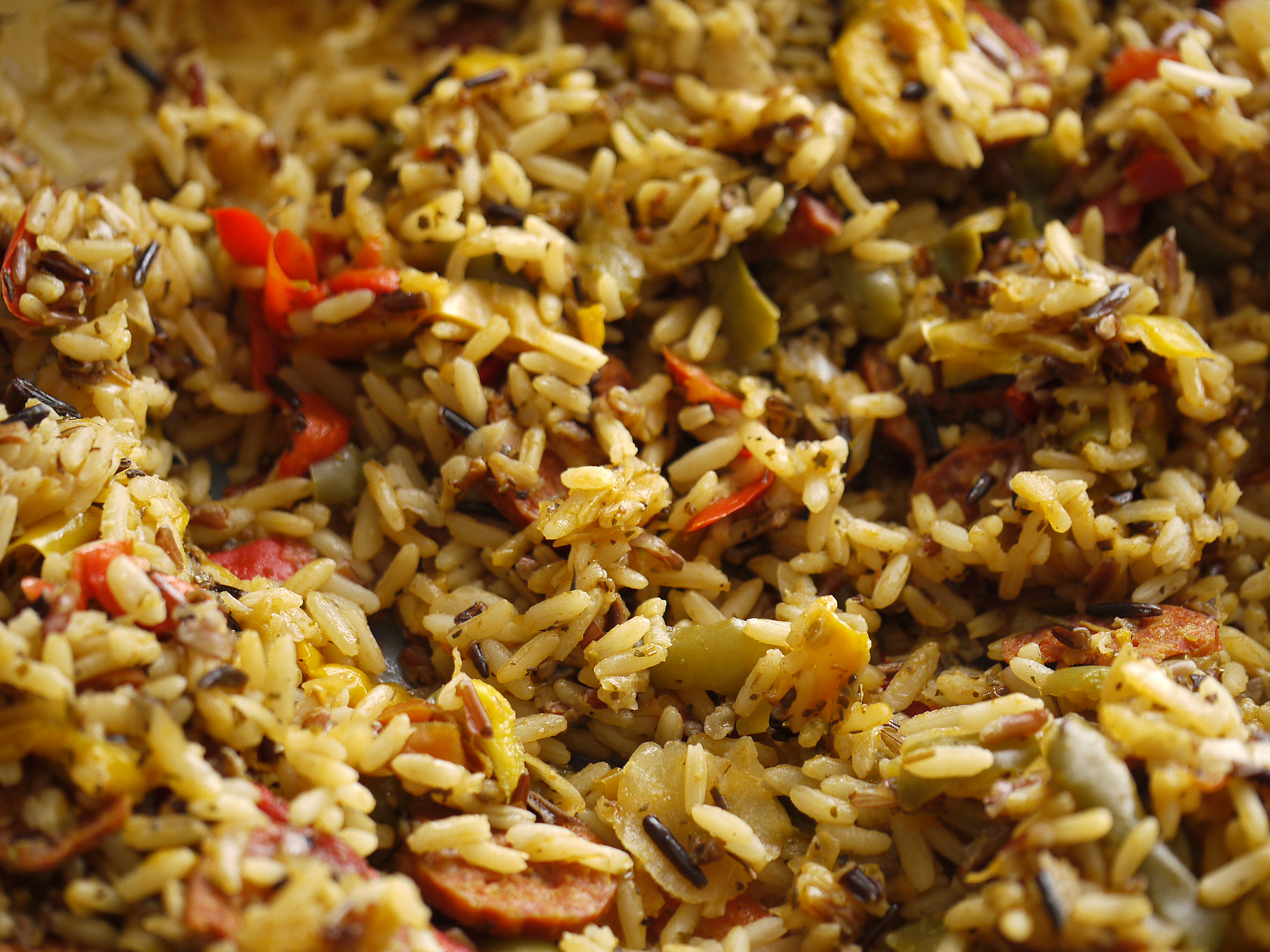
5.  Make rice dishes: Leftover meat, vegetables, fish and beans are great with rice. If you have meat like sausage, chicken, seafood and vegetables leftover, make a jambalaya or paella.  Both are simply rice, broth, tomatoes and spices mixed with meats, seafood and vegetables, so they’re a great way to utilize leftovers.

You can also make a stir fried rice. Take whatever leftovers you have, chop them into bite size pieces, and stir fry them in a little sesame oil just until warm. Add them to cooked rice and stir fry a little more with garlic, soy sauce to taste and onions.

Or you can make a rice casserole. Two types I like to make are a rice parmagiana where I mix the leftover meats and vegetables with rice and beaten eggs and layer the rice mixture alternately with slices of tomatoes and mozzarella “cheese” and bake in a greased pan until golden brown and crispy around the edges, about thirty minutes.

The other way is to make a nice “cheesy” white sauce or a curried white sauce which I mix into rice and the leftover meat or seafood and vegetables and bake in the oven until warm. The curried rice dish is always especially well-liked.

The final way to utilize leftover rice and meat or seafood and vegetables is to make rice muffins. Mix everything up with herbs and black pepper. Beat some eggs and mix them into the rice and leftover mixture, and evenly distribute them among greased muffin tins.  Bake until warm and browned.

6. Make pies: Pot pies and shepherd’s pies are great ways to revamp leftovers. Chop leftover meats and vegetables into bite size pieces. For a pot pie, heat two tbsp of olive oil and stir in 1/4 cup of chosen flour.  Slowly add 2 cups of a chosen broth, and stir until the broth thickens. Add herbs and black pepper and pour over the leftover meat and vegetables. Spread into a pan and top with a biscuit or crust recipe of your choosing. and bake until the biscuits or crust are golden and the pot pie is bubbly.

For a shepherd’s pie, chop the leftovers into bite size pieces and mix them with your favorite tomato soup. Spread into a greased pan and top with mashed potatoes (shepherd’s pie is great to make when you already have leftover mashed potatoes) and a layer of cheddar “cheese”.  Bake until warm and bubbly.

7. Make chili: Throw all the leftover meat and vegetables and beans into a slow cooker. Add tomatoes and chili peppers or spices and garlic and onions and more beans if needed, and just let it simmer all day.

8. Stuff something: If you puree leftover meats and vegetables and beans and add “cheese” and sauteed bread crumbs of your choosing, along with herbs, garlic, and onions, you have a wonderful filling for stuffing mushrooms or eggplants or zucchinis or peppers or squash or anything else you can stuff.

9. Make “cakes”: Finely chopped leftovers mixed with bread crumbs, spices, and beat eggs can be made into seafood or meat and vegetable cakes. Let the mixture meld in the fridge for half an hour, and then form into little patties which you can bake in the oven or fry on the stove top.

10. Make mac and cheese: When all else fails, make your favorite baked macaroni and cheese but add chopped up leftover meat and vegetables before baking. It adds a little something to your mac and cheese as well as extending the amount to accommodate a lot of guests.

Luncheon Rice Dish (made with leftovers)

Ingredients:

2 tbsp olive oil

1/4 cup flour of choice

1 1/4 cup milk of choice

1/2 cup fat free reduced salt chicken broth

1/4 cup white cooking wine

1/2 to 2 tsp curry powder, depending on how much you like curry

1/2 tsp black pepper

2 1/2 cups finely chopped leftover ham, chicken and vegetables

2 to 3 cups cooked brown rice, depending on the ratio of rice to leftovers you want

Optional: cheddar “cheese” of choice

Cooking Instructions:

1. Preheat the oven to 350 degrees. Lightly grease a casserole dish.

2. Heat the olive oil in a saucepan over medium-low heat. Whisk in the flour and brown for a minute.

3. Slowly add the milk and broth. Whisk until the flour is completely mixed in, and cook, stirring constantly, until the mixture has thickened.

4. Add the wine, curry powder and black pepper.

5. Mix the chopped leftovers with the rice and the sauce.

6. Pour into the prepared pan and if using, top with the cheddar “cheese”. Bake for thirty minutes until the entree is warm and bubbly.

Cooking Techniques: Omelets

OLYMPUS DIGITAL CAMERA

“Do I look like a ma’am to you?”

I was 15 and working at a military base Burger King.  I asked a woman, “Ma’am, would you like cream and sugar in your coffee?”

“Ma’am?” she asked. “Ma’am? Do I look like a ma’am to you?”

At 15 I didn’t understand what I had said to make her so upset, but fast forward fifteen years later….

I had been out shopping, using the gift cards I had received for my 30th birthday.  Arriving home, I dropped my bags on the floor and slumped into the nearest kitchen chair.

“What’s wrong?” asked my husband.

“What’s wrong? I’ll tell you what’s wrong.  Pimply-faced teenage clerks kept calling me ma’am.  Do I look like a ma’am to you?”

As the words slipped from my mouth, that woman’s face from fifteen years earlier swam before my face. I had one of those “ah-ha” moments where everything is so clear that you wonder how you hadn’t realized it before.

Those ah-ha moments come in all sorts of situations. I still remember my first cooking “ah-ha” moment. I had taught myself at a young age to make omelettes. I had the basic principles down – mixed eggs; setting the eggs to form a base for the meat and/or cheese and/or vegetables; and folding. My omelets, however, lacked a certain something. They were flat, and quite often they broke when I folded them over. I wanted thick, fluffy omelettes which would hold the filling and provide a good  egg to filling ratio.

One weekend, as a teenager, my parents took me to a conference where the breakfast buffet included the chef making fresh omelettes for the guests right at the table. As I watched him, everything I had been doing wrong became clear.

I was reminded of this particular ah-ha moment this past week when my middle child wanted me to teach her how to make omelettes, so for this post, we’ll look at omelette technique.

Figuring Out Omelettes:

1. Eggs alone verses eggs and liquid: My grandmother always told me that she put water into her eggs because they made them fluffier than putting milk, and if you google omelettes and scrambled eggs, you’ll find “advice” on all sides of the issue. After experimenting, I have not found that adding milk or water affects the fluffy factor at all. Adding any type of liquid simply makes your eggs more “liquidy” and less “eggy”. Whether you add liquid or not is really a taste preference: Eggs blended on their own will be a little dryer. Water added will make for thinner but slightly moister eggs. Milk adds some flavor as well as moisture. Cream makes for a richer omelette. If you do add water or milk or cream, though, don’t add more than 1 tbsp per egg, because too much liquid will only cause liquid to separate out from your eggs.

2. Low heat heat verse higher heat: I always cooked my omelettes over low heat because I feared burning them while I was waiting for them to set, but the chef I watched made his omelettes over a medium-high heat. If you google the subject, you’ll once again find many differing opinions. The one consensus among the opinions and my own experience is that you shouldn’t ever cook eggs over high heat. It doesn’t give the eggs time to set properly, and if you’re not watching like a hawk, they will burn. After experimenting, I’ve found that starting the omelettes on a medium-low heat and turning down the heat to low actually works best for cooking an omelette more quickly while also setting it without burning it.

3. Setting the eggs: I had always set my omelettes by cooking the blended eggs over low heat with a lid on top. This worked well, but it made for a very flat omelette which wasn’t very solid nor was it fluffy. Watching the chef that day, however I realized that he knew the secret. You have to create layers to your egg. To do so, you bring the liquid egg sitting on the top to the more solid bottom part of your egg.

How do you do this? When you pour your egg mixture into your pan, within a minute, it will start to set around the edges. Just it begins to set, you gently lift a sold edge of the omelette and tilt your pan so that the egg that hasn’t solidified can run underneath your omelette. You keep doing this around different parts of your edge until no more eggs will run down underneath. What this does is to create depth to your omelette which makes the omelette thicker and fluffier and more stable for your filling.

4. Pan size and type: Once again, people have a lot of opinions about what you should use for cooking omelettes. The only two things you really need to know are: 1) No matter what type of pan you use, it should be one that your eggs won’t stick to. That doesn’t necessarily mean a nonstick pan. It just means that you need to grease your pan well. I normally put a tsp of olive oil into my pan and make sure I spread it all around the pan, including up the sides. 2) Your pan should be properly sized. A omelette made with two eggs or equivalent should not be cooked in a pan larger than 6 to 8 inches wide. The larger the pan, the more your eggs will spread, and the thinner the omelette will be. Similarly, if you’re making an omelette to share and are using four eggs, you want your pan to be 9 to 10 inches wide so you’ll have proper heat distribution and enough egg space for your filling.

5. Fillings: Few people make omelettes plain with nothing in them. If they want their eggs plain, they simply scramble them. Omelettes are specifically designed for filling, even if it’s simply with cheese. A couple of tips for really good omelettes: 1) Since an omelette usually cooks in about 3 to 5 minutes, if you want your filling to be warm, you should saute them first. I like to saute chopped mushrooms, broccoli, peppers and spinach. My husband likes to saute chopped ham. Whatever you prefer, if you saute the meat or veggies for a minute or two, they’ll be warm and you can season them with the spices and herbs you like for added flavor. 2) If using cheese, shredded is always best. You want something that will melt quickly just from the heat of the folded over egg. About a tablespoon of shredded cheese or cheese substitute for a two egg or equivalent omelette is good.

6. Flavoring: Most recipes for omelettes simply use salt and pepper, but for really good omelettes you should always consider adding herbs or spices, and for health reasons, omit the salt. I make my omelettes with black pepper, chopped chives and paprika. My oldest likes to make hers with cumin. One friend of mine swears by thyme. Another believes only oregano and basil should allowed in an omelette. Experiment and see what flavors you prefer.

Okay, for a recipe. Here’s how I make my omelettes these days:

Omelette

Ingredients:

olive oil (2 tsp, divided)

fillings (meats and/or veggies), about 1/4 to 1/2 cup worth, chopped

seasonings for the filling (pepper, herbs, spices)

two egg whites or 1/4 cup liquid egg whites

one whole egg

1 tbsp flax milk (or whatever you prefer)

ground black pepper (a pinch, about 1/8 tsp)

chopped chives (a good sprinkle, about 1 tsp)

paprika (a dash, about 1/4 tsp)

1 tbsp of shredded Daiya cheddar “cheese”

Cooking Instructions:

1. Spread 1 tsp olive oil in a pan and heat on medium-low.

2. Chop vegetables and meat into small pieces and saute in the pan with seasonings like pepper, oregano, basil, onion powder, whatever, just until the vegetables begin to soften and meats are warm.  Remove from the pan and set aside.

3. Re-coat the pan with another 1 tsp olive oil and warm over medium-low heat.

4. Whisk with a fork: the egg whites, whole egg, flax milk, pepper, chives, and paprika until well blended.

5. Pour the eggs onto the hot pan and let the edges begin to set. Should do so pretty quickly. Once setting begins, lower the heat to low.

6. Using your spatula, gently lift a solidified edge and tilt your pan so some of the liquid egg runs down underneath. Do the same with an edge side opposite the one you just did and continue until your liquid eggs are gone. This will only take a minute.

7. Add your filling to one side of the omelette, and add the shredded cheese on top.  Using a spatula fold the empty side of the egg on top of the filling. Turn the heat off and cover the omelette with a lid for about 30 to 60 seconds.

8. Remove the lid and slide the omelette onto a plate to enjoy.

*NOTE:  If I’m serving omelettes for company, I make three to four, but instead of putting all the cheese and meats into the omelettes, I keep some back for the top. I make the omelettes and then lay them side by side in an ovenproof dish. Then, I sprinkle the remaining cheese and meat on top of the omelettes, sometimes adding thinly sliced tomatoes and spinach leaves on top as well. After I put the dish into the oven at 170 degrees which not only melts the cheese but keeps the omelettes warm until we’re ready to eat.

Cooking Techniques: Crab Cakes

website crab cakes

Proceed to Rte 2.  Proceed to Rte 2.

Until recently, I had traveled the old-fashioned way: Jotting down directions on a piece of paper which I figured out using a map. This past year, however, my father gave us a GPS, which I have been using whenever I’m going someplace new.

For the most part, the GPS has been very helpful. I enjoy no longer trying to look at written directions and drive at the same time.  I appreciate that the “woman who lives in the GPS” tells me exactly when to turn and in which direction.  I have fun with the kids as we laugh when the GPS tries to phonetically pronounce New England towns which are never pronounced as they are spelled.

The other day, though, I was driving to a new destination which I knew I’d need to take Rte 2 to find.  The GPS, however, seemed to believe I wasn’t actually on Rte 2 itself.  The little arrow which indicates where you are had me off to the side of Rte 2.  So, for the next ten minutes, I listened as the poor woman in the GPS valiantly tried to get me onto Rte 2.  At every intersecting road, she would tell me to turn in a direction which would supposedly get me back to Rte 2.  Finally, as those intersections ceased to exist, the poor GPS simply continued to say over and over again, “Proceed to Rte 2.  Proceed to Rte 2.”

I confess, I was torn between feeling quite sorry for the machine and being frustrated with the absurdity of technology.  On the one hand, the machine was only doing what it was programmed to do – get me onto the correct route. On the other hand, with all our technological advances, someone hasn’t figured out how to correctly input the longitude and latitude of Rte 2?

These similar feelings were aroused when a friend of mine called last week about her crab cakes. She wanted to impress some dinner company, and the recipe she had found online wasn’t working.  On the one hand, I felt terrible for my friend who was doing her best to make a nice dinner.  On the other hand, I was frustrated by the number of recipes which are published which don’t actually work well.

So, for this post of our continuing adventures in cooking techniques, we are going to focus on crab cakes. I realize some folks will have shellfish allergies and never actually make crab cakes, but the fundamental principles also apply if you want to make a vegetable panccake instead.

Some problems with crab cakes:

1. If you try to make crab cakes, you quickly realize that trying to keep the crab in an actual cake or patty shape without the crab cakes falling apart as they cook can be difficult.  So, the key to helping with this problem is in how you make the crab cakes.

I have found that doing two things in conjunction with each other works best. First, mix all your binding ingredients together before adding them to the crab. Whatever you’re using – cracker crumbs, bread crumbs, cornmeal – mix that up with your eggs and herbs and liquids first and let it sit for a few minutes.  Then, mix the binder into your crab pieces.  You’ll need to take a few minutes to incorporate the binder well, but it’s worth those few extra minutes to do so.

The second thing to be done is to chill your crab cake mixture before forming the crab cake patties.  Chilling allows the ingredients to better meld with another so that when you form the patties, they’ll hold together better. So, after you make your crab cake mixture, cover it well with plastic wrap or foil and let it rest in the fridge for a little bit.  I find that fifteen minutes is really the minimum you should keep it in the fridge.  I usually opt for about 30 minutes.  You will find recipes that suggest an hour or two.

2. Another potential problem with crab cakes is the taste. People differ on their expectations about crab cakes. Some folks like the cakes to have a strong flavor of something other than crab so you’ll find recipes which use mayonnaise and mustard which make for a heavier taste. Other folks prefer the taste of the crab to come through and would rather use just some herbs. For my friend, the recipe she found was heavy on the mayonnaise, and she didn’t really like it. If you’re trying to compromise, you can do what I do which is to make a lighter crab cake with lemon juice and herbs and accompany it with a nice remoulade sauce which is essentially mayonnaise with herbs and seasonings.

Folks also differ about the type of crab to use. Fresh is said to be the best, and I would agree. Unfortunately budget limitations and availability of fresh crab can limit the opportunity to use fresh. I personally use frozen or canned crab meat. This time of year (winter) it’s usually canned. While you lose some of the texture and taste of fresh crab, you can still have great tasting crab cakes, so do what works for your budget and what’s available for you to purchase.

If using frozen, though, make sure thaw the crab pieces first, and if using canned, be sure to drain the crab pieces.

3. The final potential issue with making crab cakes is how you cook them. Recipes vary from deep frying to cooking them in the oven. It really comes down to preference and health issues. If you are trying to eat healthy, then baking the cakes in the oven is the best, but you will find that the flavor is lacking a bit. What I do is to put a teaspoon or two of olive oil in a bowl and lightly brush the olive oil on the top of the crab cake; then halfway through the cooking time, flip the cakes and do the same with the other side.

For my preference for cooking crab cakes, I cook them on top of the stove in a pan lightly coated with olive oil. This works well and is quicker than cooking the crab cakes in the oven.

If you do choose to deep fry the crab cakes, the key is to have hot oil, 350 to 375 degrees, so you can fry them quickly which reduces the amount of oil the cakes absorb.

So, for a recipe that I use:

Crab Cakes

Ingredients:

1 tbsp dried dill

2 tbsp chopped chives (dried or fresh)

2 tbsp lemon juice

1/2 tsp ground black pepper

1/2 cup liquid egg whites

3/4 cup gluten free bread crumbs (whatever you’d prefer)

24 ounces of crabmeat (six 6 oz cans will give you 24 oz of meat)

Cooking Instructions:

1. Whisk the dill, chives, lemon juice, black pepper and egg whites together.

2. Add the bread crumbs and mix well.  Let sit for a few minutes.

3. Drain the crabmeat and put into a bowl.  Add the breadcrumb mixture and combine well.

4. Cover the crabmeat and refrigerate for at least 15 minutes, 30 if you have the time.

5. Form the crabmeat mixture into patties. (I use a 1/4 cup measuring cup to scoop out the crabmeat so my patties are uniform.) Loosely and lightly pat the crab cakes into shape.

6. Coat the bottom of a nonstick skillet with about 1 tsp of olive oil. Heat to medium-low.

7. Place the patties onto the skillet and slightly flatten them. Cook for 4 to 5 minutes until the side is browned.

8. Flip the crab cakes and again slightly flatten. Cook for 4 to 5 minutes until the second side is browned.

9. Serve with remoulade sauce.

Remoulade sauce: Mix 1/2 cup mayonnaise (I like to use a reduce fat olive oil mayonnaise.) with 2 tbsp finely chopped green onions, 1/2 tsp ground mustard, and 1/2 tsp Old Bay seasoning.  Add lemon juice until the sauce is at the consistancy and lemony flavor you like. (I usually use about 3 tbsp.) Put it into the fridge for the flavors to meld while you’re cooking the crab cakes.

Cooking Techniques: Puddings

website pudding

Diaper boxes.

When my oldest was a toddler, she loved to play with other people’s toy kitchen sets. I wanted her to have one of her own, but all our money was going toward our first home and diapers.

One day I looked at the number of Costco diaper boxes piling up in the basement and realized just how sturdy those boxes actually were. I had a brainstorm. Maybe I could make a kitchen set using those boxes.

If you had asked me before that day whether I was capable of even thinking up such an idea, let alone following through with it, I would have said, “No way!” Growing up, my best friend was the artsy, creative one. I was the math and science nerd. I didn’t “do” crafts.

As life often proves, though, necessity can breed skill. My daughter loved to play “cook”, and I was going to make it happen for her. Using the diaper boxes, duct tape, and contact paper, I created a complete kitchen for her which included a stove, a fridge, and cabinets. I even added a diner style counter with a cash register to go with it.

That kitchen set lasted us for years, and my daughter loved it. And other people loved it, too. I got so many compliments on that set that, to this day, I am still amazed by what I accomplished.

I share this because recently folks have been telling me that they’re not capable of revamping their recipes like I do; but if I can create a kitchen set out of diaper boxes, folks can most definitely learn how to accommodate their food needs. And I’m going to help folks do it!

For the next several posts, I’m going to focus on technique, specifically the “how-to’s” of certain dishes with special reference to making them healthier and allergy friendly. For today’s post, we’ll look at puddings, because someone recently wanted to know how to make it.

Puddings are ridiculously simple, but people rarely make it homemade. They think it’ll take too much time or that they’ll mess it up. Neither is true. There are, however, some tips to keep in mind.

1. Make sure your recipe is a good one. Don’t just presume that because it is online or in a recipe book that it actually is correct. For some reason there are a lot online and in books that tell you to do things incorrectly like add the cornstarch by itself to the mixture, which leads me to point two.

2. Cornstarch (or another thickener like arrowroot or tapioca starch):  The key to pudding is how you thicken it. Cornstarch is the traditional thickener used, but it should never, ever be added to pudding by itself. Doing so will simply “gummy up” your pudding. Cornstarch is always to be mixed with your sugar (if you’re using it) and salt before adding it to your liquid or it needs to be mixed with liquid before adding it to the rest of your pudding mixture. The same should be kept in mind if you use arrowroot or tapioca starch.

Cornstarch also thickens best when your cooking temperature is even, so a stainless steel pan or enamel covered is best which leads us to point three.

3. Cooking Method: The best way to make pudding is to use a double boiler. I don’t own one so I simply put one pan on top of another. There are two ways of doing so: put a smaller pot filled halfway with water on the bottom and a slightly larger one on top or put water halfway in a pot that another pot will fit snugly into without touching the water below.

Whichever method you use, you want to bring your water to a boil before you begin making your pudding, because the heat from the boiled water is necessary for thickening your pudding.

When you do begin making your pudding, it’s important to stir the mixture well in the beginning so all ingredients are evenly mixed and there are no lumps.  Then, after your mixture has come to a boil, when you’ve added your thickener, it’s important to continually stir the mixture so it doesn’t burn on the bottom, which brings us to point four.

4. Patience: Pudding doesn’t actually take all that long, maybe fifteen minutes or so to completely cook, but when you’re standing over it, stirring constantly, fifteen minutes begins to feel like a long time. When it does, do not be tempted to try to speed things up or to stop stirring. Use the time to relax. Allow yourself the luxury of not being rushed and being able to reflect. Before you know it, the pudding will have thickened, and you’ll have a nice treat.

Okay, for a recipe: I have a chocolate recipe that is simple to make. If you are simply trying to lower your fat intake, use skim milk. The pudding won’t be as rich and thick, but it’ll still be delicious. If you have food allergies, I’ve successfully made this with flax milk, soy milk, almond milk, coconut milk, and rice milk. If you actually use sugar, then use 1/2 cup of sugar instead of the 1/4 Agave. You can also use 1/4 cup Stevia instead or 1/2 cup coconut sugar instead. If you want a really rich pudding, use soy or coconut creamer (or heavy cream if you don’t need to worry about milk allergies or fat intake.)

Chocolate Pudding

Ingredients:

1/4 cup Agave

1 3/4 cup “milk” (whichever type you want to use)

1/8 tsp salt

3 tbsp cornstarch

1/4 cup “milk”

1 oz unsweetened chocolate*

1 tsp vanilla

Cooking Instructions:

1. Bring water to a boil in a double boiler or makeshift boiler.

2. Mix together the agave, 1 3/4 cup milk, and salt. Set aside.

3.  Mix together the cornstarch and the remaining 1/4 cup milk. Set aside.

4. Stirring continually, melt the unsweetened chocolate.

5. Slowly, while continuing to stir, add the agave-milk mixture.

6. Bring the mixture to a boiling point. (Little bubbles will begin to appear at the top. You don’t need to continually stir here, but you’ll want to occasionally stir it until it begins to boil. Usually it’s less than five minutes to bring the chocolate liquid to a boil.)

7. When the mixture begins to boil, re-stir the cornstarch mixture and slowly pour it into the hot chocolate liquid, stirring continually.

8. Continue to stir the pudding until it begins to thicken.  (It’s okay to stop stirring for a few seconds at a time, but not for minutes, because once the pudding begins to thicken, it’ll thicken quickly. Usually it takes less than ten minutes for the cornstarch to thicken the pudding. You’ll know when it’s thickening because it’ll go from its liquid state to more of a solid.)

9. When the pudding thickens, remove it from the heat and stir in the vanilla until well blended.

10. Scrape the pudding into a shallow bowl and press a piece of plastic wrap directly against the top of the pudding. (This keeps that “skin” from “growing” on top of your pudding as it cools.)

11. Cool the pudding completely in the fridge before eating. If you put it into a shallow dish, you can usually eat the pudding within half an hour.

*Chocolate Note: If you don’t have unsweetened chocolate on hand, you can make your own.  Three tablespoons of unsweetened cocoa powder mixed with one tablespoon of shortening or oil is equivalent to one ounce of unsweetened chocolate.

You can also substitute an ounce of chocolate chips which is one tablespoon of chips. This will make for a sweeter pudding so if you don’t want it that sweet, simply reduce the agave by half.

If you like to use carob powder instead, 3 tablespoons of carob powder mixed with 2 tablespoons of water is equivalent to one ounce of unsweetened chocolate.

Also, if you don’t have allergies to it, you can use one of those pre-melted chocolate packages they make these days.

Finally, if you want, you can also just use chocolate flavored soy or rice or almond or coconut milk and skip the chocolate step and leave out the Agave.  I often use unsweetened chocolate soy milk with the Agave so I can control the amount of sweetener.

New Year’s Food Resolutions

website tempura

New Year’s Resolutions.

I was 12 years old when I made my first New Year’s resolution to be better behaved. That was the summer I spent two months grounded for recurring infractions. When I was 15 I decided to give up on boys. I had three different boyfriends before the year was out. At 18, I resolved to watch my weight better. I started college and gained 15 pounds. When my husband and I got married (in December), we decided (in January) that we’d finish grad school before starting a family. We became pregnant with our oldest despite three different forms of birth control, and I never attended grad school. After she was born, my husband and I resolved to give up making resolutions, and we’ve been faithful to that for almost 18 years.

For many people, the new year is a time for making changes to their lives, especially health-related ones. Studies, though, reveal that less than 10% of people always succeed in keeping their New Year’s resolutions. I believe it.

Interestingly enough, however, studies say that folks who continue to make New Year’s resolutions are 10 times more likely to succeed with their goals than those who don’t. So, I have to wonder….

Maybe resolutions aren’t such a bad thing.

How to keep them, however, requires making resolutions wisely, especially when it comes to food related ones.

Some thoughts I have, not as someone who’s actually made and kept resolutions, but as someone who’s had to make and keep lifestyle changes because life required it:

1. Don’t resolve to change everything: If you’re shooting for healthier eating, just resolve to do one thing better this year. Maybe you’ll try incorporating more vegetables into your diet. Or this could be the year you daily drink your eight glasses of hydrating fluids. Or how about simply adding a walk three times a week for half an hour each time.

2. Do resolve to try something different: Often we make resolutions about a habit we need to change by simply trying to stop the habit. When it comes to food, eating something healthier and different in place of what you’re trying to quit works much better. If you’re a chocoholic, try eating a piece of fruit when the craving hits or drink a glass of a fat-free “milk” that you’ve added dark cocoa powder to with a tiny bit of sweetener.  If you love sandwiches, try making an open-faced sandwich on one whole grain piece of bread. If you always take the elevator, take the stairs at least once each day.

3. Don’t go it alone: Friends and family are wonderful for this. If you’re going to start walking, ask a friend to if she wants to join you a couple times a week. If you’re starting to eat gluten free, don’t just cook for yourself – make it a family affair. If you know you won’t be able to resist that piece of chocolate, phone a friend and chat.

4. Do try to be fun and creative: If your resolution is to exercise and you’re doing so reluctantly, put on your favorite fast beat music and dance around your living room instead. If you don’t like vegetables, don’t eat them plain. Make tempura (recipe will follow below) or a stir fry where you experiment with different spices and herbs to see what flavors you like best. If you have to change your diet, find ways to “jazz” up the meal – peel your carrots into spirals (one of my kids’ favorites); stuff the zucchini with sauteed vegetables and herbs which you stir a little bit of real or tofu cream cheese into to make creamy; toast some gluten free bread crumbs with herbs and sprinkle it onto your fish.

5. Don’t set unrealistic expectations: If you need to lose weight, you’re generally not going to lose 30 lbs in six months. Shoot for ten lbs over 12 months, and you’ll be more likely to achieve your goal. If you’ve eaten white flour your whole life, it may take trying a few different types of whole grains before you find one that you actually like. If you always reach for junk food when you’re stressed, expect to slide occasionally, even if you’ve been doing well for a while.   

6. Do search out help: If you need to eat differently, read some magazines about allergy free or healthy eating to learn tips which can help you. If you want to exercise, ask your doctor the best way to begin. If you crave everything all the time, search online for tips for how to curb cravings.

7. Don’t be hard on yourself: Remember the statistics. If you fail at keeping your resolution, you won’t be the only one. And if you aren’t successful this time, it doesn’t mean you can’t be. Again, remember the studies – just make a new resolution, and you’ll improve your chances of success next time simply by continuing to make the resolutions.

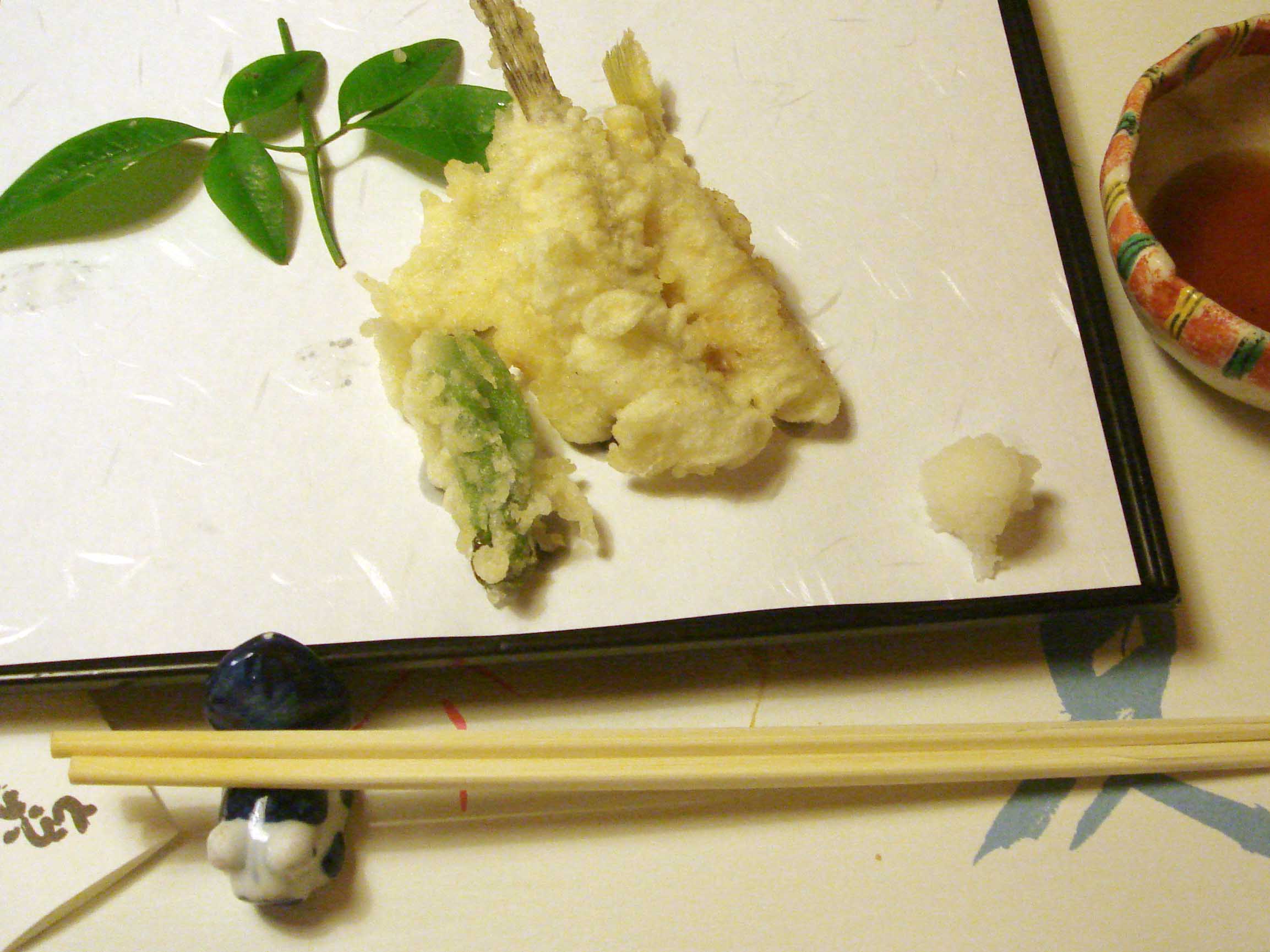
So, now for that tempura. My children love my mother’s tempura, but of course, it’s made with wheat. I wanted to make something which could compete in taste and crispiness, and after a couple of different versions, I finally came upon one that is absolutely delicious and works well. The bonus: My children eat tons of veggies! And if you keep your heat high and use a heart healthy oil, it’s been shown that your veggies don’t absorb a lot of oil.

Tempura

Ingredients:

Heart healthy oil (I like to use Smart Balance for this)

Bob’s Red Mill Gluten Free Pie Crust (Make sure it’s the “pie crust” only mix, not the “biscuit and baking mix” or the gluten free “baking flour”)

ground black pepper

cold water

ice cubes

Quinoa flour

Veggies (broccoli, petite baby carrots, green beans, mushrooms, zucchini, etc…)

Cooking Instructions:

1. Heat your oil to about 375 degrees in a pan suited for doing so. (I actually own a fryer which the only two things I ever fry are tempura and mandu, which is a Korean dumpling.) 

2. Put some of the pie crust mix into a bowl. How much depends on how much you’re making. I always start with at least two cups.

3. Add some black pepper to taste. I usually use 1/2 tsp per 2 cups of crust mix.

4. Fill a large measuring cup half-filled with ice cubes and add cold water. Slowly add water and ice cubes to your flour mix, whisking as you do so, until the batter is just about to the consistency you want. (I test it by pulling up my whisk. If the batter easily flows off the whisk like water, it’s good.) You’ll have some unmelted ice cubes in the batter.  That’s perfect. Those will continue to melt and keep your batter cold while you turn your attention to the veggies.

5. Put some quinoa flour in a bowl and dip your veggies into the flour to coat them.  Shake off any excess.

6. Dip the floured veggies into the tempura batter and shake off any excess.

7. Put just enough veggies into your oil as the pan can accommodate. You don’t want to overfill the pan because the tempura batter will expand. You want to put the veggies in as quickly as you can and then cover the pan. Immediately put two minutes on your timer.

8. When two minutes are up, remove the veggies, making sure to lightly shake off any excess oil. Put the veggies into a pan lined with paper towels to absorb any excess oil.

9. Tempura is best eaten while still warm. Eat plain or with soy sauce or a sauce of your own choosing.

Handling Holidays: Truffles and Fudge

website fudge

“You’re a chink!”

I was sitting by myself at recess on my first day at a school in the United States when a older middle school, Caucasian boy welcomed me with those words. It was the aftermath of the the Vietnam War, and though the gene pool had actually given me more of my father’s Caucasian features than my mother’s Asian ones, folks back then were more cognizant of facial differences than today. (Today, no one believes me when I say I’m Korean. I have to show them pictures of my mom. So, times do change!)

Unfortunately for that gentleman, though I was  younger than he, I wasn’t so easily intimidated, and he didn’t expect my response. “Shows how much you know,” I said. “Chink is a derogatory term for Chinese people, not Korean. I believe you meant to call me a ‘Gook’, but instead you’ve only revealed just how ignorant you are. So, please just go away and leave me alone.” To his credit, he walked away as the crowd around him snickered.

My victory didn’t make me feel any better, though, about such a “welcome” to my “home” country and new school, and at the end of recess my new teacher, Mrs. Petruska found me sitting in the corner of the yard, crying. She didn’t ask me what was wrong, so I presumed she must have heard from one of the other students. Instead, she handed me a small piece of chocolate (this was long before the day of food allergy awareness), patted my back, and said,”Take your time eating this, and when you’re done, I’ll see you back at class.”

Now, some may wonder what sort of teacher would handle such a situation by giving a child a piece of chocolate, but whether you agree or disagree with her actions, I have to say that I learned that day that if savoring a piece of chocolate can make you feel better, than life is not going to end from whatever situation you feel devastated by.

And strangely enough, as I’ve grown into adulthood, the only time I even eat a piece of chocolate (allergen free variety, of course!) is when I need a reminder that I will survive whatever “mess” I’m currently dealing with in life, and the only time I make chocolate truffles and fudge is for the holidays – and it’s always for giving away.

Chocolate, though, is one of those ingredients that can be deadly if you’re severely allergic to dairy or nuts. Fortunately for me, however, Enjoy Life makes wonderful chips, chunks, and bars which are everything free, so I can continue to make, give away and enjoy chocolate truffles and fudge when I want – and so can you.

Chocolate Truffles

Ingredients:
1 cup Enjoy Life mini chocolate chips
2 tbsp Polaner’s all fruit of choice*
Cocoa powder/coconut flakes/chopped nuts/crushed candies/dried chopped fruit

Cooking Instructions:

1.  Melt the chocolate with the all-fruit over a double boiler, stirring constantly. (I put a small pan filled with water halfway on the burner and then stack a larger pan on top.)

2.  Pour the melted mixture into a shallow pan and cool in the fridge until the chocolate is solid enough to shape. (It needs to be a rollable, fudgy consistency, not hard.)

3.  Use a teaspoon sized amount of chocolate and roll into a ball. Roll the chocolate ball in cocoa or flaked coconut or chopped nuts (if you’re not allergic) or crushed candies or dried fruit and stored in a covered container in fridge.

4.  Serve at room temperature.

*Note: You can omit the all-fruit flavoring and just make the chocolate plain. You can also substitute flavoring like mint extract (use a small amount like 1/8 tsp first and taste; add in increments to the strength of flavor you want).

Chocolate Marshmallow Fudge

Ingredients:

3 cups Enjoy Life mini chocolate chips

Equivalent to 14 oz can of sweetened condensed milk*

1/8 tsp salt

2 tsp vanilla

3 cups mini marshmallows

2 tbsp melted vegan “butter”

Cooking Instructions:

1. Line a pan with aluminium foil or parchment paper or wax paper, leaving flaps overhanging on all four sides so you can pull out the fudge.

2.  Mix the chocolate chips with the sweetened condensed milk and the salt. Melt slowly over low heat, stirring constantly, until all the chips are melted.

3.  Stir in the melted “butter” and one cup of the marshmallows.  Stir until those have melted into the chocolate.

4.  Remove from the heat and add the vanilla and the remaining two cups of marshmallows.  Stir just until the marshmallows are incorporated but still firm.

5.  Scrape the fudge into the prepared pan with a rubber scraper and smooth the top of the fudge flat.

6.  Cool in the fridge for several hours until hardened.

7.  Use the flaps to remove the fudge from the pan, turn it over onto a cutting board, and peel away the foil or parchment paper or wax paper.

8. Cut the fudge into size and shape wanted and store in a container or individually wrapped in the fridge.

*If you don’t have milk allergies, use the canned sweetened condensed milk, but if you do:  You can also try making homemade sweetened condensed milk by mixing about 2 1/2 cups of your type of “milk” (rice, nut, coconut, soy) with 8 tbsp sugar or agave.  Stir well and simmer over low heat until the “milk” has reduced and thickened.  This will take a couple of hours.  Keep the heat low and stir frequently.  When it’s thickened, you can add 1/8 tsp of salt and/or 1/2 tsp vanilla, if you’d like. Put a clear plastic wrap up against the mixture before cooling in the fridge to prevent a “skin” from forming. When you need it, use the sweetened condensed milk to substitute for a 14 oz can.

Handling Holidays: The Main Entrees

website entrees

“But it’s bleeding!”

Imagine that you’re meeting your future spouse’s parents for the first time. They’ve invited you over for Easter at a cousin’s home and the cousin raises sheep. You’re already nervous because you really want his parents to like you. However, you now learn that, you who are a vegetarian, are about to be served lamb for Easter dinner. More so, the family has just had a lengthy conversation about the best way to cook lamb which apparently is to simply torch the outside a bit while leaving the lamb mostly rare.

You’re expecting the worst, but nothing prepares you for actual reality. When the lamb appears, you glance at the platter and see what looks to you like blood running in riverlets down the lamb’s sides. Your stomach, which has already been lurching horribly due to nerves, can’t take this unexpected sight, and you promptly run from the table and spend the next half an hour incredibly sick in the cousin’s bathroom, wondering if you’ve doomed your chances of ever impressing your future in-law’s.

I, unfortunately, don’t have to imagine the above scene, because I lived it. That experience, though, solidified a few things for me. One, I have never entertained without making sure that everyone who is coming will be comfortable with what I serve. Two, no new experiences where folks have made a dish I can’t eat has ever come close to topping that one, so I’ve been able to handle them with much more aplomb. And three, I’ve learned that when it comes to food, everyone’s tastes are different, and we have to be accepting of that.

So what do you do when you need to cook a main course that accommodates your health needs and is delicious for everyone who gathers at your table who may not need to watch what they eat?

1.  Plan ahead:  Don’t decide the day before what you want to try to make. If it’s something you’ve never made before, be sure to have a practice run, so you can learn what might be a potential glitch in the recipe. If it’s something you have made many times, be sure you have all the ingredients you need so you’re not running out at the last minute to purchase something you forgot.

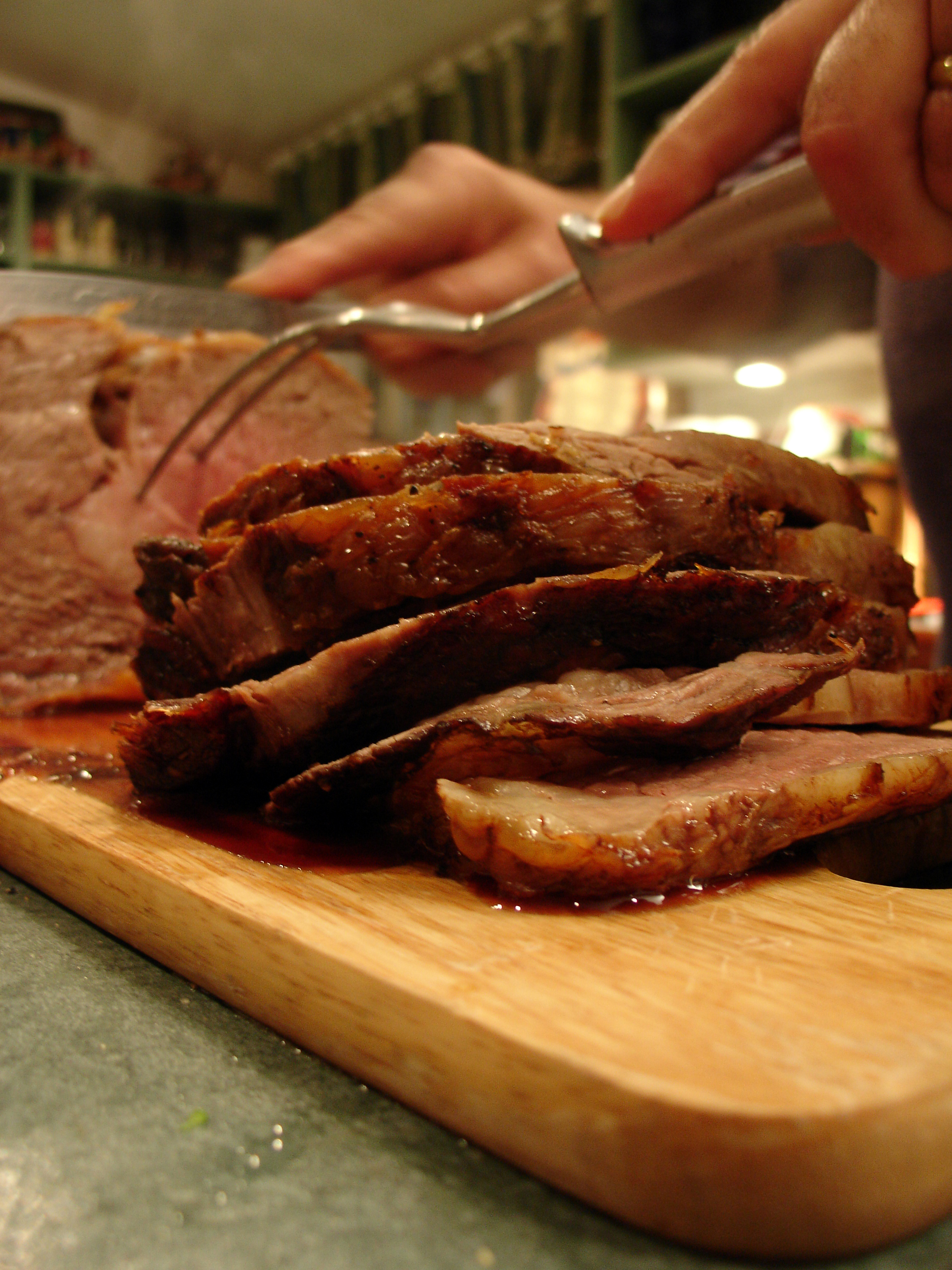
2.  Forget the fat and focus on the cooking:  The mantra is that meat and chicken and turkey need the fat to taste good, but that’s not actually true. Whether your meat or turkey or chicken is dry and tasteless really depends on your cooking technique.

For meats and poultry, the key to seasoning is to do it everywhere.  Make a rub of herbs and spices and onions and garlic with just the tiniest bit of an oil like olive oil to create a paste and rub it everywhere.  For the meat, you can even put little slits into the meat and put seasoning into.  For the birds, use your hands to pull the skin away from the flesh and put the herbs in between the skin and breast as well as on top and inside the bird.  For inside, add an onion or garlic cloves or veggies like carrots and celery for even more flavor.

Cook the meats and poultry to maximize moisture.  Cook them on high heat for only 10 minutes to get the outside crisp immediately, then tent them with foil and cook on low heat for more even cooking. At the end you can cook them for another few minutes at high heat to finish them off with a nice brown crust or skin.  For folks who are extra wary, you can also use a reduced sodium, fat free stock to baste meats and birds during the cooking process.

Finally, let your meats and poultry rest after cooking.  If you let them sit for at least 15 to 20 minutes, all the juices which have been released will be reabsorbed into the meat and poultry, to allow for moister slices when you do cut them into pieces.

For tender cuts like a pork tenderloin or turkey tenderloin, just trust the meat. Once you season it with your herbs and spices, you can simply cook them at 350 for an hour, and they’ll taste great.  You choose to make a nice glaze to brush on instead, too.

For ham, you can omit the glazes that come packaged with the meat, and either cook it without or make your own less caloric version and just cook the ham according to instructions.

3. Make it yourself: If you’re making something like chicken cordon bleu, make your own bread crumbs. Whether you use 100% whole wheat bread or a gluten free millet bread, you’ll add more fiber to the crumbs which is good, and you can then season the bread crumbs as you’d like without all the salt. Contrary to thinking, it literally takes about two minutes to make your own crumbs.  A couple of tips:  For gluten free bread, use frozen slices.  For both breads, if the bread is already at room temperature, toast them on the lowest setting and cool before processing. If adding herbs and spices, throw them in with the slices you’re about to zoop in the processor, because that will meld the herbs and spiced into the crumbs.

If you’re supposed to use a certain type of bottled glaze or marinade, find a recipe that you like and modify to omit the salt and sugar and fat, using the tips I’ve put into past posts.

If the recipe calls for a bottled spice that includes salt, create your own mix, using herbs and spices from your cabinet which you combine with onion and/or garlic powder and black pepper.

4. Look for better options: If you’re making something like a stuffed, rolled pork tenderloin and the recipe calls for crumbled sausage, use a turkey variety. If you’re supposed to use cheese, find a lower sodium, reduced fat variety or a vegan substitute instead. If the recipe calls for ham and you really want to use ham, use half the amount and slice it into smaller pieces to distribute the taste throughout something like a cordon bleu. If you’re supposed to use meat to stuff a meat, try using sauteed vegetables instead. If butter is required, use a heart healthy and dairy free oil instead.

5. Think outside the box: Maybe this is the year you don’t make a chicken cordon bleu or ham for Christmas. Maybe you created a stunning whole wheat or gluten free roasted vegetable lasagna. Or maybe you make a spanikopita, only you use olive oil instead of butter and lower fat cheeses. Or maybe you try your hand at a vegan manicotti which used vegan cheeses and pureed cashews and is stuffed with butternut squash.

Chicken Cordon Bleu

(This is for four chicken breasts; we always double the recipe and use a 9 x 13 pan. If you aren’t allergic to dairy, you can use low fat real cheese!)

Ingredients: 

1/4 cup reduced sodium, fat free chicken broth

2 tsp minced garlic

1 tsp herbs of choice (oregano, thyme, basil, rosemary, etc…)

1/2 cup breadcrumbs (make your own!)

1 tbsp grated vegan Parmeson

1 tsp paprika

4 chicken breasts (smaller 4 to 6 ounce portion, not the huge ones!)

herbs of choice (oregano, basil, thyme, rosemary, etc…)

black pepper

4 thinly sliced pieces of fat free ham or turkey ham (the ultra thin deli style works well)

chopped fresh baby spinach

1/4 cup shredded vegan mozzarella

Cooking Instructions:

1. Lightly coat an 8 inch square pan with your choice of “grease”. (I usually brush a very light coat of olive oil.) Preheat the oven to 350 degrees.

2. Combine the broth with the garlic and herbs and microwave for 20 seconds until it’s warm.

3. Combine the bread crumbs with the Parmeson and paprika.

4. Pound the chicken breasts to a uniform thinness.  (We put the breast between parchment paper and pound them with the bottom of a heavy ice cream scoop.  If you have a meat mallet, that works, too. Recipes will often tell you to pound between saran wrap. Do what works for you.)

5. Sprinkle both sides of the chicken breasts with the herbs of your choice and black pepper.

6. Place one slice of the ham, some chopped baby spinach, and 1 tbsp of the mozzarella on top of each chicken breast and roll up the breasts in a jelly roll style.

7. Dip the rolled chicken breasts into the chicken broth and cover with the breadcrumb mixture.

8. Put the breasts into the baking pan, seam side down, and pour the remaining chicken broth over the chicken breasts evenly.

9. Bake for about 30 minutes until the juices from the chicken are clear and the chicken is golden brown.

10. You can serve immediately or cover them with foil to keep warm until it’s time to serve them.

Handling Holidays: Side Dishes

website side dishes

“But it’s mostly Korean food.”

The first time anyone came to my house for Thanksgiving, it never failed that someone would make the above exclamation. Being a half Korean-half white family, our Thanksgiving dinner would consist of the traditional turkey but surrounded by mostly Korean side dishes with a couple of American ones thrown in for good measure. In many ways, the turkey was simply there as a centerpiece to accent the foods we actually wanted to eat: chop chay (Korean noodle and vegetable dish), kimbop (essentially Korean sushi), kimchee (fermented vegetables of all types), mandu (sort of a Korean dumpling), chemi (a Korean melon), gogoma (Korean sweet potatoes), chigay (a hot Korean soup), mashed potatoes, and green bean casserole.

As I’ve had the opportunity to attend other families’ Thanksgiving dinners, I’ve learned that it’s not just my half and half family, though, that thinks Thanksgiving is really about the side dishes and not the hailed turkey. The question being asked all around the U.S. this week is, “What are we going to serve with the turkey?” Families will have long Facebook, email, and phone conversations about who will bring what and in what quantity.

As wonderfully-tasting as the many side dishes are to our palates, they are also usually loaded with fat and calories and wheat and dairy which a lot of folks can’t have for one reason or another.  This doesn’t mean, though, that side dishes needed to be relegated to, well, the side, for us.  There are many ways to revamp traditional dishes.

For Healthier and/or Allergy Friendly Side Dishes:

1.  Roast the vegetables: Roasting intensifies the natural flavors of the vegetables so you don’t need to accent them with heavy cream or butter or cheese. Simply use just enough heart healthy oil to coat the vegetables for cooking. Then drizzle the vegetables with some freshly chopped herbs or a little balsamic vinegar or a light glaze. The other advantage of roasting is that you can roast the vegetables the day before and then just reheat them on Thanksgiving by popping them into the oven at the end of the turkey’s cooking time.

For glazes, work with flavors you like. Start with a liquid, add spices, and heat until it’s thickened down to a glaze. Maybe mix a little soy sauce with ground ginger, garlic, agave, and rice wine vinegar. Or take 100% unsweetened orange juice and add cumin and black pepper. Kids tend to like maple syrup mixed with a little balsamic vinegar and black pepper. Experiment and see what you can create.

Roasting tips: Make sure all your vegetables are the same size and shape, so they’ll cook evenly. Only put the vegetables into a pan just large enough to hold them. Cook similar textures of vegetable together. For example, don’t cook broccoli which roasts very quickly with carrots which take longer. Cook at a very high temperature for a shorter period of time for the best flavor.  I usually cook at 475 to 500 degrees and check them every ten minutes, turning them over as needed to cook all sides well.

2. Revamp your potatoes: Use reduced sodium, fat free chicken or vegetable broth for your mashed potatoes instead of milk.  Or make your potatoes with half potatoes and half cauliflower. If you cook the cauliflower with the potatoes until they’re very soft, they’ll mash up with the potatoes, providing moisture which means you don’t need to add any milk or butter at all. You can also cut back on the fat by reducing the butter and increasing the spices. Cooking the potatoes with garlic, onions, chives, or thyme adds a nice flavor that my kids particularly like. Or you can roast garlic, smash it and add it to the mashed potatoes for a more intense flavor. If you’re making twice baked potatoes, use a fat free regular or Toffuti sour cream or cream cheese and try Cabot’s 50% reduced fat shredded cheese.

3. Try a different style of stuffing: Instead of letting the bread dominate your stuffing, imagine it as the “glue” that holds better things together. Saute a variety of finely chopped vegetables and add it to the stuffing for added flavor as well as healthier eating. Use your food processor to finely chop dried fruit, coconut flakes or roasted chestnuts to add to the stuffing. Crumble cooked turkey or tofu sausage into the stuffing for protein. Swap out the bread for brown or wild rice. Use a heart healthy oil instead of butter. Use chicken or vegetable broth instead of butter.

4. Remake that green bean casserole: Instead of using canned soup, make your own sauce. Saute garlic, onions, mushrooms, and some finely chopped vegetables like carrots, peppers, zucchini and/or yellow squash in a little bit of olive oil, about two to three teaspoons. Add 2 to 4 tbsp of a flour of your choice, depending on how thick you want your sauce, (I like garbanzo bean flour) and stir. Add flavoring of your choice: thyme, oregano, basil, tarragon, chives, marjoram, etc…. Slowly add 2 cups of milk of your choice. Stir constantly and heat until it thickens.  Pour the sauce over partially cooked green beans and put into a casserole dish. Caramelize some onions by slowly cooking onions in a little bit of olive oil for 15 to 20 minutes until they thicken and become brown and sweet. Mix the caramelized onions with about 1/4 to 1/3 cup home made bread crumbs and top the green beans. (I make bread crumbs in my food processor with Udi’s gluten free millet chai bread.) Bake in the a 350 degree oven for until warm and bubbly, about 20 minutes.

5. Rethink that sweet potato/yam casserole: Instead of using heavy cream as the liquid, think about using chicken or vegetable broth or a nondairy fat free “milk”. You can even leave the liquid out entirely if you’ve cooked your sweet potatoes or yams soft enough. Instead of using butter for flavor,  ponder spices like cinnamon and nutmeg and a dollop of maple syrup. Or roast the sweet potatoes before mashing them, which will intensify their flavor. Instead of using a lot of large marshmallows and nuts, consider using a smaller amount of mini marshmallow and finely chopping a smaller quantity of nuts.

6. Get the sugar out of your cranberry sauce: Because cranberries are so tart, most recipes call for an awful lot of sugar. But making cranberry sauce without sugar is relatively easy. You can substitute agave or stevia or coconut sugar which would mean you could use half the amount of granulate white sugar. You can also use 100% fruit juices like pineapple or orange. You can also use unsweetened applesauce.

7. Consider soups: I personally like a nice soup at Thanksgiving. Butternut squash is my favorite. Recently I tried making it in a way a friend suggested, and I was very happy with the results. Roast chunks of peeled, fresh butternut squash with a couple of sliced apples until they’re soft. Take a hand blender and puree the squash and the apples. Add enough chicken or vegetable broth to make it the consistency you like. Add the herbs you like. I used thyme, onion powder and black pepper, but ginger and nutmeg would probably be great, too. Heat until the soup is warm. Simple, fat free, and delicious. And you could do this with anything. Roast some potatoes for a potato soup. Try carrots and parsnips. Let your imagination go wild.

8. Think outside the box: Create your own food tradition with side dishes that fit your dietary needs and which you like. As you’ve seen with my family, just about anything goes with turkey.

Korean Chop Chay

Ingredients:

Bean Thread Noodles

Assorted Thinly Sliced Vegetables (carrots, peppers, zucchini, yellow squash, onions, etc…)

Sesame Oil

Soy Sauce

Baby Spinach

Minced Garlic Ground Ginger

Black pepper

Toasted Sesame Seeds

Cooking Instructions:

1. Cook the bean thread noodles according to instruction. Rinse with cold water and let it drain in a colander. Use scissors to cut the noodles into shorter threads and put them into a large bowl. Mix the noodles with soy sauce to taste.

2. Saute the thinly sliced vegetables over medium heat in a little bit of sesame oil until the vegetables are softer and becoming a brighter color. Remove from the heat and mix in soy sauce to taste. Drain the vegetables of all liquid. Add to the bowl with the noodles.

3. Saute the spinach in sesame oil just until it begins to slightly wilt, just a couple of minutes. Add to the bowl with the noodles and other vegetables.

4. Mix the noodles, vegetables and spinach with ground ginger, minced garlic, black pepper and sesame seeds to taste.

5. If you’re not eating the chop chay immediately, refrigerate it until you need it. Then reheat on the stovetop in a pan until the noodles are nice and brown and everything is warm.

Handling Holidays: Cakes and Tortes

KONICA MINOLTA DIGITAL CAMERA

“Why are the Christmas decorations up when it’s not even Halloween?”

My son and I had popped into BJ’s to pick up a couple of much needed bulk items. As we entered, we were greeted by twinkling lights, decorated trees, and gift wrapping.  Since it was still a week and  a half until Halloween, I could understand the reason for my son’s question.

What I didn’t know, though, was how much I should explain to an eight year old about the “pushing” aspect of the holidays — everyone trying to get us to think we need to purchase something, whether we need to or not.  For the most part, I don’t actually mind all the early decorating.  It’s pretty.

What boggles my mind is the onslaught of catalogs that begin to pile up in my mailbox. It wouldn’t be so bad if you received one for every company, but you don’t.  You receive multiple copies from October through December.

I usually simply recycle them all without looking at them.  One which my children love to pore over, though, is the Swiss Colony catalog with its different types of cakes and tortes and petit fours that they’re hoping we will purchase.

When it comes to the holidays, nothing says, “Celebrate!” like a cake.  And in many parts of the world, a torte is seen as special holiday food.  There are basically two types of tortes:  traditionally thought of torte which is made with little flour where nuts and jams take center stage in a layered extravaganza and the type of torte which is a multi-layered cake alternating cake with cream, frosting, ganache or jam.

Both types can wreak havoc with a healthy diet and/or an allergy sensitive one. Below, I’ll give you some tips for lightening cakes and substituting ingredients when necessary, but I’ll also share some thoughts for that latter type of torte (multi-layered cake alternating with filling), in case you’re thinking your holiday dinner ought to end with one.

For Healthier Cakes:

1.  Cut the amount of “filling” you use:  If your cake or torte calls for chocolate chips or dried fruit  or coconut flakes or nuts, use mini chocolate chips and/or process the dried fruit or coconut or nuts into smaller pieces. By doing so, you can distribute more of the filling throughout the cake or torte and can then cut the amount you’re using by a quarter or half without losing the flavor and texture.

2.  Swap out solid butter or shortening with coconut oil, which is actually a solid, not a liquid as the name implies.  It’s considered a healthier fat than butter and shortening.

3.  Substitute applesauce or pureed banana, pumpkin or prunes for up to half of the fat called for in a cake recipe.

4.  Swap out melted butter or vegetable oil for a heart healthy oil:  safflower oil, grapeseed oil, canola oil, a nut oil, Smart Balance, olive oil, etc….

5.  Substitute egg whites for the whole eggs.  Two egg whites equals one egg. You can also substitute ground flaxseed meal mixed with water for the eggs. 1 tbsp of meal mixed with 3 tbsp of water equals one egg.

6.  Swap out part of the flour in the recipe with a nut flour, coconut flour or soy flour.  You can substitute up to half of the flour with  a nut flour, about 1/4 of the flour with coconut flour, and up to 1/3 of the flour with soy flour.

7.  Swap the white flour for whole wheat.  100% whole wheat has a higher fiber content, but you can also use white whole wheat if you want something closer to white flour.  Since 100% whole wheat flour is denser than white, you should use about 1/4 cup less in your recipe.

8.  Use Agave or Stevia or Coconut sugar in place of the sugar in the recipe. For every cup of sugar use about half of any of these substitutes.  If you use the Agave and it’s simply a couple of tablespoons to 1/4 cup, don’t worry about it being a liquid.  If you’re using a cup or more, though, decrease any other liquid by at least 1/4 cup to 1/2 cup or increase a flour ingredient by 1/4 to 1/2 cup.

9.  Swap out any “whole” milk product (milk, yogurt, cream cheese, etc….) for a lower fat, lower sodium variety.

10.  Use date molasses instead of regular molasses.  You can use the same amount of date molasses as regular molasses.

For Allergy Friendly Cakes:

1.  Use gluten free flour instead of wheat.  Authentic Foods has a multi-flour blend that includes everything including the xanthan gum which works very well as a substitute.  You can also use your favorite flour blend and add 1/2 tsp of xanthan gum for every cup of flour your recipe needs.

2.  Substitute water, 100% fruit juice or your type of “milk” (soy, rice, almond, coconut, etc…) for any milk needed in a recipe.

3.  Swap out the heavy cream: You can substitute using coconut milk; or 3/4 cup of your type of milk with the addition of an extra 1/4 cup of your type of butter per cup of “cream” needed; or a type of yogurt you can eat; or pureed soft or silken tofu.

4.  Substitute vegan butter or coconut oil for any butter or shortening called for in a recipe.

5.  Use a recipe that calls for a liquid oil as opposed to butter so you can use safflower, canola, grapeseed, walnut, pumpkin, etc… oils instead.

6.  Substitute vanilla soy milk for evaporated milk.  1 1/2 cups is equal to those 12 oz cans usually used.

7.  Make your own dairy free sweetened condensed milk.  This recipe only works for a cake that is going to be baked:  Beat 2 eggs until thick.  Add 1 cup brown sugar and mix well.  Add 1 tsp vanilla and mix well.  Add 2 tbsp of a flour and beat for one minute.  Add 1/2 tsp baking powder and 1/4 tsp salt. Beat for another minute.  Set aside until you need to add it to your recipe. This is equivalent to one 14 oz can of sweetened condensed milk.

You can also try making homemade sweetened condensed milk by mixing about 2 1/2 cups of your type of “milk” (rice, nut, coconut, soy) with 8 tbsp sugar or agave.  Stir well and simmer over low heat until the “milk” has reduced and thickened.  This will take a couple of hours.  Keep the heat low and stir frequently.  When it’s thickened, you can add 1/8 tsp of salt and/or 1/2 tsp vanilla, if you’d like.  Put a clear plastic wrap up against the mixture before cooling in the fridge to prevent a “skin” from forming.

8.  Make a dairy free whipped cream.  Chill a can of full fat coconut milk overnight. Turn the can upside down and drained out the liquid.  Put the cold cream into a cold mixing bowl and whip into it’s light and fluffy.

9.  Substitute eggs with 1 tbsp ground flaxseed meal mixed with 3 tbsp water for every egg needed in the recipe.  Simply mix up the meal with the water and let it sit for at least five minutes to thicken to an egglike consistency.  Or if you are allergic to flaxseed, you can substitute 1/4 cup applesauce for every egg needed in the cake recipe and add 1 tsp of baking soda with 1 tbsp of vinegar to the cake recipe.

10.  Use Tofutti sour cream and cream cheese instead of the dairy versions.

11.  Substitute the dairy chocolate in chocolate cakes or fillings with Enjoy Life chocolate bars and/or chocolate chips.  Or use unsweetened cocoa powder instead of the chocolate.  Three tbsp of cocoa powder plus one tbsp of a fat (oil or “butter”) is equivalent to one ounce of unsweetened chocolate. One tbsp of cocoa powder plus two teaspoons of a fat (oil or “butter) plus one tbsp of sugar is equivalent to one ounce of semi-sweet baking chocolate.

12.  Replace nuts in a cake recipe with chopped dried fruit or coconut flakes or chocolate chips.

Allergy Friendly Torte

1.  Decide what type of torte you’d like to make:  chocolate mint (chocolate cake with mint filling); raspberry (white cake with raspberry jam filling); pumpkin spice (pumpkin cake with spiced filling); lemon (yellow cake with lemony curd filling); etc….  The options are actually endless.

2.  Make your cake:  Find a recipe that you really like and make your substitutions as needed.  Most torte recipes will tell you to bake one or two layers and then cut them.  I suggest instead that you bake thinner layers.

Line your cake pans with parchment paper and pour one cup of batter into each pan and bake for 10 minutes in a preheated 350 degree oven.  Let the cakes cool for a couple of minutes, then turn them over onto a wire cooling rack to cool, removing the parchment paper immediately from the cakes.

If you only own two cake pans or your oven will only fit two 8 or 9 inch pans at a time,  after you bake the first two cake layers and turn them over onto a wire cooling rack, put the cake pans into the freezer for a couple of minutes to cool them.  Then reline them with your previously used parchment paper and fill them with one cup of batter each again and repeat.

I usually find that a basic cake batter recipe for a two layer cake will make six of the one cup layers.  Let all the layers completely cool.

3.  Make your filling:  If you’re simply going to use jam, scoop out whichever jam you are going to use (I like to use Polaner All Fruit which has no added sugar) and whip it up in a bowl to a nice spreadable consistency. Similarly do the same if you are using a store bought lemon or fruit curd or fruit butter.

A recipe for your own lemon curd:  Heat 1/3 cup of lemon juice in a pan until it’s warm, but not boiling.  Whisk two whole eggs and one egg yolk with 1/2 cup of sugar.  Then while you’re constantly stirring, very slowly pour the hot lemon juice into the egg mixture.  Pour all of the mixture back into your pan and cook for about two to three minutes, stirring constantly.  Remove the pan from the heat and stir in 2 tbsp of “butter” which has been cut up into small pieces.  Add 1 tbsp of cream or cream substitute, 1/4 tsp vanilla and 1/8 tsp salt.  If you want the curd to be smoother, push it through a mesh strainer.  Wrap the curd with plastic wrap, pressing the wrap directly onto the curd surface.  Let it cool in the fridge until needed.

If you are making an allergy friendly cream filling: A nice versatile recipe I like to use is as follows:  Overnight, put two 14 oz cans of coconut milk into the fridge. When you’re ready to use them the next day, turn the cans upside down and open them.  Pour out the coconut water and scoop the “cream” into a cold mixing bowl (I put the bowl into my freezer for about ten minutes, along with the mixing tool.) Whip the cream until it’s nice and thick.

For a chocolate cream, add 1/3 cup special dark unsweetened cocoa powder, 1/2 cup coconut sugar, and 2 tsp vanilla.  To make it minty, reduce the vanilla to 1 tsp and add 2 tsp mint extract.  For a spice cream, add 1/2 cup coconut sugar and 2 tsp cinnamon or a mixture of cinnamon, ginger, cloves, nutmeg, etc….  For just a plain sweetened cream, just add 1/2 cup of coconut sugar and 1 tsp vanilla.

While the cream is being whipped, put 2 tbsp of cold water into a bowl. Gently sprinkle 2 tsp of unflavored gelatin over the cold water.  Let it sit for two minutes. Carefully pour 1/4 cup of boiling water over the gelatin and whisk until its completely dissolved. Let it cool for a couple of minutes. Then add it to the whipped cream.  You can either cool it in the fridge for two hours and then stir it and spread it over your layers or you can spread it directly onto your layers immediately and let the entire cake cool for two hours in the fridge.

4.  Layer your torte:  I find that the best way to layer the cake is to use a springform pan that fits your cake.  Put down one of the cake layers on the bottom of the pan, layer your filling, and then keep repeating until you reach the top layer of cake.  Cover and let the cake chill.  When you’re ready to top the torte, release the springform pan and clean up the sides with a metal spatula.

5. Top your torte:  After your torte is cooled, you can frost it with your favorite frosting or cover it with a ganache or top it with melted chocolate.

Elana’s Pantry has some nice allergy friendly frosting recipes if you’re trying to also avoid using sugar.  If you have no problems with powdered sugar, then use a recipe you like and just substitute as necessary for ingredients like butter and spread the frosting over your cooled torte.

For a ganache:  If you aren’t allergic to dairy, heat in a pan over low heat 1 cup of cream, 1 cup of sugar, and 1/4 tsp salt, stirring frequently until it begins to simmer.  Pour the hot mixture over 10 ounces of small pieces of chocolate.  Whisk until smooth.  Add 1 tsp vanilla and 1 stick of butter.  Cover and refrigerate for about an hour until it’s cool but spreadable.  Spread carefully over your cooled torte.

If you need to substitute, you can use Enjoy life chocolate, and/or water or your type of “milk” (this will just make it  bit thinner and have less of a “shine”) and/or 1/2 cup of Agave and/or your type of butter.

You can also make another type of ganache where you melt one ounce of your type of butter with two fluid ounces of your type of milk per four ounces of chocolate, cool, and then whip until thick.

For a hard chocolate topping:  Fill a small pan halfway with water.  Put a larger pan on top of the smaller pan and turn the heat to medium low.  Melt 2/3 of a 10 ounce bag of Enjoy Life mini chocolate chips, keeping the other 1/3 nearby.  Be sure to stir constantly.  Once the chips are melted, remove them from the heat and quickly stir in the remaining 1/3 of the chocolate chips until all the chips are melted.  Working quickly, pour the melted chocolate over the cooled torte, and use a cake spatula to spread the chocolate over the top and around the sides.

You can use regular chocolate if you’re not allergic to dairy.

If you use the chocolate as a topping, you’ll need to remove the torte from the fridge about an hour before you’re going to serve it so it can soften a bit. Then run your knife under hot water before slicing the torte.

Handling Holidays: Cookies

website holiday cookies

Food Traditions.

My husband and I were only about a month into our marriage when we realized that growing up with a non-baking mother versus a baking one makes for very different expectations about the holidays.  For my husband, special holiday specific desserts were normal.  Cherry pie for Washington’s birthday and a Lincoln log for Lincoln’s. Coconut cake for Easter and a mint torte and cookies for Christmas.  And a variety of different pies for Thanksgiving! It quickly became clear that I had married over my head when it came to holiday treats!

Fortunately, we were able to reach a compromise:  I bake two of the four handed-down-from-the-Civil War-cookies and a mint torte for Christmas, only two pies for Thanksgiving – apple and pumpkin – and a coconut cake only when my husband’s parents’ are here for Easter.  The rest of the holidays fend for themselves!

Over the years, though, I’ve come to really appreciate the tradition of making holiday cookies with the children.  Never having done it myself as a child, I was surprised by the joy and eagerness with which my children looked forward to baking them every single year.  Our own new family traditions have evolved around the cookie making, and now Christmas wouldn’t seem like Christmas without them.

So you can imagine the pressure when I developed food allergies to flour and butter, the two key ingredients in our cookies, and had to also reduce my use of sugar due to hypoglycemic reactions.  Suddenly, the allergies weren’t just disrupting what I could eat, but they were affecting my family’s tradition and expectations for the holidays.

Fortunately, accommodating food restrictions and/or allergies is quite easily doable within the realm of cookies.  Below, I’ll share some learned experiences for making substitutions in any type of cookie, plus some tips specific to making holiday rolled, cut-out cookies.

Substituting Ingredients in Cookies:

1.  Swapping the white flour in the recipe for whole wheat or gluten free flour:  Match your flour to your cookie type.  100% whole wheat and heavier gluten free flours like garbanzo bean, coconut or almond are fine for heartier cookies like ginger, biscotti, and shortbread.

If, however,  you are making a lighter cookie like a spritz, linzer or snowballs, you should use white whole wheat or for a gluten free flour, rice flour or sorghum.

For both types, though, if you’re making them gluten free, a mixture of flours is better than simply using just one type. Authentic Food, Bob’s Red Mill, and King Arthur sell blended flour mixtures which you can easily substitute for regular flour. Just remember to add 1/4 tsp of xanthan gum per cup of gluten free flour if you’re using a mixture that doesn’t already include it.

2.  Swapping out the butter or shortening:  When it comes to the fat in a cookie, you need to consider the taste.  For cookies like sugar cookies, where keeping the buttery taste is important, you may want to use a vegan “butter”.

For a cookie that calls for melted butter, you can often substitute a heart healthy oil like safflower or grapeseed or Smart Balance without changing the taste.

Where the taste won’t conflict, like with an oatmeal cookie, coconut oil, which is actually a solid, not a liquid as the name implies, is a good substitute.

With all cookies, if you’re simply trying to cut down on the fat, you can also simply reduce the amount of butter up to half without usually affecting the cookie’s taste and quality.

3.  Swapping out refined sugars:  You can always use Agave, Stevia, or Coconut sugar in place of sugar in any cookie recipe.  For every cup of sugar use about half of any of these substitutes.  If you use the Agave and it’s simply a couple of tablespoons to 1/4 cup, don’t worry about it being a liquid.  If you’re using a cup or more, though, decrease any other liquid by at least 1/4 cup to 1/2 cup or increase a flour ingredient by 1/4 to 1/2 cup.

For molasses, you can use date molasses in the equivalent amount.

4.  Swapping out milk products (milk, yogurt, cream cheese, etc….):  If you simply want to have a lower fat cookie,  use low fat, reduced sodium varieties of any milk product.

For food allergies, use soy, coconut, almond, and rice varieties of “milk” in equivalent amounts.

You can also simply use water or a 100% fruit juice in place of milk.

If a bar cookie recipe calls for sweetened condensed milk, make your own dairy free sweetened condensed milk.  This recipe only works for bar cookies that are going to be baked:  Beat 2 eggs until thick.  Add 1 cup brown sugar and mix well.  Add 1 tsp vanilla and mix well.  Add 2 tbsp of a flour and beat for one minute.  Add 1/2 tsp baking powder and 1/4 tsp salt. Beat for another minute.  Set aside until you need to add it to your recipe. This is equivalent to one 14 oz can of sweetened condensed milk.

Vanilla soy milk is a good substitute for evaporated milk.

5.  Substituting for eggs:  If you simply want to cut your cholesterol, using egg whites in place of whole eggs works well in cookie recipes.  Just use two egg whites for every whole egg or 1/4 cup liquid egg whites.

To substitute for the eggs completely, mix 1 tbsp ground flaxseed meal with 3 tbsp water for every egg needed in the recipe.  Simply mix up the meal with the water and let it sit for at least five minutes to thicken to an egglike consistency.

You can also use pureed fruit or vegetables as a binder in place of eggs. Use 1/4 cup for every egg needed in the cookie recipe.  Cooked and pureed apples, figs, pumpkin, squash, prunes all work really well in cookie recipes.

6.  Replacing nuts and peanuts:  If you’re making a cookie which usually uses peanut butter and you’re not allergic to tree nuts, there are a variety of nut butters you can use instead.

If you are allergic to tree nuts as well, there are soy butters and sunflower butters.

If you’re making a recipe that usually calls for nuts in the batter as a filler, just replace the nuts with chocolate chips or chopped dried apricots or cranberries or dates.

If you’re making a cookie that uses peanuts or nuts to give the cookie a certain “nutty” texture, using rolled whole oats will give the cookie a similar texture.  You can also use a gluten free flour mix that uses garbanzo bean flour, because the “beany” taste is similar to a “peanutty” taste.

Tips for Making Rolled, Cut-out Cookies

1.  Use wax paper to roll out the dough.  Simply cut a sheet that overlaps around a large cutting board or piece of cardboard and tape it down.  Then when you sprinkle your flour over the wax paper, your dough won’t stick to the board.

2.  Use sifter to put flour onto your cutting board and rolling pin.  If you sprinkle it on with your fingers, you’re more likely to clump the flour in places which then get stuck to your cookie dough.

3.  Use a long, thin metal spatula to periodically release your dough from the board while you’re rolling it, and before you use your cookie cutters, be sure to go completely under the entire rolled out piece of dough so that your cookies won’t stick to the board when you’re cutting the shapes.

4.  Invest in some smaller cookie shapes which you can use to cut little cookies from the dough left after you cut out the big cookie shapes.  This cuts down on the amount of dough you need to re-roll.  Put one cookie sheet aside specifically for the little cookies, which you fill up as you go along and then bake at the end.

5.  Make sure your dough for rolling is very cold and firm.  Most recipes will tell you to chill for an hour, but in reality you’re better off planning ahead and chilling your dough for several hours or overnight.  When you’re making the cookies, be sure to put the dough back into the fridge in between scooping out new dough to roll.

6.  Put all your re-roll dough into a small bowl which you then put into the freezer while you’re finishing up the regular dough.  This will make the dough firm enough for you to re-roll immediately as opposed to having to wait for it to firm back up again.

7.  Make your own colored sugars.  Put 1/4 cup of sugar into a bowl and add two to four drops of food coloring.  Carefully work the color into the sugar, using the back of a spoon to continualy “spread” the color completely into the sugar.  You can store extra, leftover sugar in a sandwich baggie for a very long time!

8.  Use parchment paper to line your cookie sheets.  Your cookies will never stick. You won’t have to clean the cookie sheets.  And you won’t have to worry about cross-contamination of your cookies.  I usually use the If You Care brand.  The parchment sheets can also be re-used over and over again on one cookie sheet.

9.  Be sure to completely cool your cookie sheets before putting new cookie dough shapes onto them.  I usually pop my cookie sheets into the freezer for a minute or two after removing the cookies.  Works like a charm.

10.  Invest in metal cookie cutters which you can use year after year. When you’re cutting out the shapes, put a pan of flour in the center which you can dip the cutters into so the cutters won’t stick to your dough.

11.  When you’re done with your cookie cutters, fill the sink with hot, soapy water and just let them sit for a while.  You’ll be able to simply rinse them off without having to try to “clean” the crevices.  Then pop them (as long as they’re metal) onto one of your cookie sheets and place the cookie sheet in the oven which is turned off and cooling down.  The residual heat will evaporate all the water, and your cutters will be sterilized and ready for next year’s use.

Gluten and Dairy Free Holiday Cut-out Ginger Cookies

These make a lot of cookies, so you may want to cut it in thirds.

Ingredients:

2 cups melted coconut oil (You can use regular butter, vegan butter, or a heart healthy oil if you prefer)

2 cups date molasses (You can use regular molasses if you prefer)

1 cup coconut sugar (You can use regular white or brown sugar or Stevia or Agave instead)

2 tsp ground ginger

1 tsp ground cloves

1 tsp ground cinnamon

1/2 tsp ground black pepper

1 tsp baking soda

4 tsp vanilla soy milk (You can use another type of milk like rice or coconut or use sweetened condensed milk instead)

6 to 8 cups Gluten Free Flour Blend or sorghum flour (You can use any gluten free blend you prefer, or the straight sorghum, or 100% whole wheat flour — you’ll need just enough flour to make a soft dough)

Baking Instructions:  (The dough needs to chill overnight so make the dough up  the night before you want to bake the cookies.)

1.  Mix the coconut oil with the date molasses, coconut sugar, ginger, cloves, cinnamon, black pepper, baking soda, and milk.

2.  Add in the gluten free flour, a cup at a time, only as much as you need to make a soft dough.  Blend well.

3.  Cover the dough tightly with plastic wrap and chill overnight, or at least for several hours.

4.  Preheat the oven to 350 degrees.  Line cookie sheets with parchment paper.

5.  Line a board with wax paper.  Sprinkle the board and a rolling pin with flour of your choice, and roll out small amounts of dough to a very thin thickness – thin enough to make a crispy cookie but not so thin that you can’t actually move the cut out dough to the cookie sheet.

6.  Cut out shapes with cookie cutters and place on the prepared cookie sheets.  The cookies will not spread a lot so you can put them fairly close together.

7.  Decorate the cookies with colored sugar and/or currants. (You can also just bake the cookies and then decorate them with icing when they’re cooled.)

8.  Bake in the preheated oven for 8 to 10 minutes.  Start with 8 minutes and then go up by 1 minute increments.  The cookies should be browned but not burnt and slightly puffed.

9.  Move the cookies to a wire cooling rack and cool them completely. Once cooled, they’ll be nice and crispy ginger cookies.  If you eat them while they’re warm, they’ll be chewier.

10.  When the cookie are completely cooled, store them in a tightly covered container.  They’ll last for a few weeks, though after a couple of weeks, they’ll get a bit softer.

Handling Holidays: Pies

website pies

“As American as apple pie.”

As the story goes, the Pennsylvania Dutch invented the two crusted fruit pie as we know it today, and apparently being able to have pies regularly with your meals was seen as a status symbol.  Whether this is all true or not, I don’t know, but I do know that my husband would rather have a pie than a birthday cake; that my members of my extended family would think Thanksgiving had gone horribly wrong if no pies were present; that figures say 700 million dollars in pies are sold every year in the U.S.; and that students everywhere are thrilled to celebrate Pi Day with pies of every type every year.

Ironically, though, pies, which are made with “good for you” ingredients like fruit and vegetables, are full of fat, sodium, and allergy triggers like wheat, nuts, and dairy.

Fortunately, when it comes to desserts, however, pies are probably the easiest to adapt for healthier eating or for an allergy restricted diet.  They usually don’t require very exact ratios of ingredients, and because you don’t need to make anything “rise”, you can pretty much substitute any ingredient with another without worry of disastrous results.

Healthier Pies

If you simply need to eat healthier, here are a few easy fixes to try:

For Crusts:

1.  Swap the white flour in the crust for whole wheat.  100% whole wheat has a higher fiber content, but you can also use white whole wheat if you want something closer to white flour.  Since 100% whole wheat flour is denser than white, you should use about 1/4 cup less in your recipe.

2.  Swap out the butter or shortening with coconut oil, which is actually a solid, not a liquid as the name implies.  It’s considered a healthier fat than butter and shortening.

3.  Make a crust using a liquid healthy oil as opposed to a solid fat.  A general recipe:  1 1/3 cup flour, 1/2 tsp salt, 1/3 cup oil, 3 tbsp “milk”.  I have used safflower oil, grapeseed oil, canola oil, etc… and almond milk, soy milk, and rice milk — all to success.

4. Substitute part of the flour in the recipe with a nut flour, coconut flour or soy flour.  You can substitute up to half of the flour with  a nut flour, about 1/4 of the flour with coconut flour, and up to 1/3 of the flour with soy flour.

For Fillings:

1.  Use Agave or Stevia or Coconut sugar in place of the sugar in the recipe.  For every cup of sugar use about half of any of these substitutes.  If you use the Agave and it’s simply a couple of tablespoons to 1/4 cup, don’t worry about it being a liquid.  If you’re using a cup or more, though, decrease any other liquid by at least 1/4 cup to 1/2 cup or increase a flour ingredient by 1/4 to 1/2 cup.

2.  Swap out any “whole” milk product (milk, yogurt, cream cheese, etc….) for a lower fat, lower sodium variety.

3.  Substitute egg whites for any whole eggs.  If you’re worried about the texture of a certain type of pie like pecan pie, use half whole eggs and half egg whites.

4.  Use date molasses instead of regular molasses.  You can use the same amount of date molasses as regular molasses.

Allergen Friendly Pies

If you need to substitute traditional ingredients, here are a few things you can try:

For Pie Crusts:

1.  Make a gluten free crust instead of a wheat flour type.  There are tons of recipes online you can follow.  Companies like Bob’s Red Mill also have their own pie crust mixes which you just add water to and roll out.  HINT:  These always need slightly more water than the instructions indicate, though, and you’re best rolling them out between wax paper.

2.  Substitute water or your type of “milk” (soy, rice, almond, coconut, etc…) for any milk in a crust recipe.

3.  Substitute vegan butter or coconut oil for any butter called for in a recipe.

4.  Use a recipe that calls for a liquid oil as opposed to butter so you can use safflower, canola, grapeseed, walnut, pumpkin, etc… oils instead.   A general recipe:  1 1/3 cup flour, 1/2 tsp salt, 1/3 cup oil, 3 tbsp “milk”.

For Fillings:

1.  Substitute vanilla soy milk for evaporated milk.  1 1/2 cups is equal to those 12 oz cans usually called for in a pumpkin pie recipe.

2.  Substitute vegan butter or a liquid oil or coconut oil for any butter called for in a recipe.  If you’re making a fruit pie that calls for “dotting with butter”, you can just omit the butter altogether and still have a tasty pie.

3.  Use a gluten free flour like garbanzo bean instead of a wheat flour.

4.  Make your own dairy free sweetened condensed milk.  This recipe only works for a pie that is going to be baked:  Beat 2 eggs until thick.  Add 1 cup brown sugar and mix well.  Add 1 tsp vanilla and mix well.  Add 2 tbsp of a flour and beat for one minute.  Add 1/2 tsp baking powder and 1/4 tsp salt.  Beat for another minute.  Set aside until you need to add it to your recipe.  This is equivalent to one 14 oz can of sweetened condensed milk.

You can also try making homemade sweetened condensed milk by mixing about 2 1/2 cups of your type of “milk” (rice, nut, coconut, soy) with 8 tbsp sugar or agave.  Stir well and simmer over low heat until the “milk” has reduced and thickened.  This will take a couple of hours.  Keep the heat low and stir frequently.  When it’s thickened, you can add 1/8 tsp of salt and/or 1/2 tsp vanilla, if you’d like.  Put a clear plastic wrap up against the mixture before cooling in the fridge to prevent a “skin” from forming.

5.  Use a frozen non-dairy dessert to replace the vanilla ice cream as a topping.

6.  Make a dairy free whipped cream.  Chill a can of full fat coconut milk overnight.  Turn the can upside down and drained out the liquid.  Put the cold cream into a cold mixing bowl and whip into it’s light and fluffy.

7.  Make a soy cream:  Mix one pint soy creamer, 1/2 cup soy sour cream, 1/4 cup Agave, 2 tablespoons cornstarch, and 1/4 teaspoon salt.  Cook over low heat until it thickens, stirring constantly.  Remove from the heat and add 2 teaspoons vanilla.  Scrape into a heat safe bowl and press plastic wrap directly against the cream to prevent a “skin” from forming.  Cool in the fridge.  Before serving, whisk the cream to make it lighter and fluffier.

8.  Substitute eggs with 1 tbsp ground flaxseed meal mixed with 3 tbsp water for every egg needed in the recipe.  Simply mix up the meal with the water and let it sit for at least five minutes to thicken to an egglike consistency.

Crustless Dairy Free Gluten Free Pumpkin Pie

Ingredients:

2 cups cooked, pureed pumpkin or 1 15 oz can of pumpkin

1 1/2 cup vanilla soy milk (or milk of your choice: evaporated milk, rice, almond, coconut)

1/2 cup liquid egg whites (or two whole eggs or 2 tbsp flaxseed meal mixed with 6 tbsp water)*

1/2 cup Agave

1/2 cup garbanzo bean flour (or other gluten free or wheat flour of choice)

1 tsp ground cinnamon

1 tsp dried orange  peel

1 tsp gluten free baking powder

1/2 tsp ground ginger

1/2 tsp ground nutmeg

1/4 tsp ground cloves

1/8 tsp salt

1/2 cup gluten free whole grain rolled oats

1/2 tsp ground cinnamon

1 tbsp Agave

1 tbsp melted vegan butter or oil such as grapeseed

Baking Instructions:

1.  Preheat an oven to 350 degrees.  Lightly grease a 9.5 or 10 inch pie pan with your preferred method.

2.  Mix the pumpkin with the soy milk, egg whites, and Agave.

3.  Mix the garbanzo bean flour with the cinnamon, orange peel, baking powder, ginger, nutmeg, cloves, orange peel, and salt.

4.  Mix the dry ingredients into the pumpkin mixture and pour into the prepare pie pan.

5.  Mix the rolled oats with the cinnamon.  Add the Agave and melted “butter” or oil, and combine well to make an oat topping.

6.  Use clean hands to evenly top the pumpkin mixture with clumps of the oat topping.

7.  Bake in the preheated oven for about 50 minutes.  The pie will be puffed and golden.

8.  Cool for 15 minutes on a wire cooling rack.  Then put into the fridge to cool completely.

* If you like your pumpkin pie denser, simply whisk in the egg whites with the rest of the liquid ingredients.

If you prefer a lighter, creamier version, though, whip the egg whites with 1/8 tsp of cream of tartar until they’re stiff. Mix the wet and dry ingredients together, and then gently fold the egg whites into the batter until they’re fully incorporated.

To fold egg whites:  Used a large curved spatula and be sure to put your batter into a large bowl.  Gently scoop your egg whites on top of the batter.  Then go along the curve of the bowl along the bottom of the batter with your spatula to gradually get some of the batter.  Scoop the batter gently into the center of the egg whites.  Then scoop your spatula back up toward the top of the batter and start all over again.  Essentially you’re just really, really gently incorporating the batter into the egg whites.