Healthy Habits: Easy Allergy Friendly Company Meal

Help….

This past weekend, my family traveled to New Jersey to celebrate my niece’s First Communion. The reception afterwards was at a beautiful, well-reputed restaurant where my brother had rented a room, complete with a buffet of assorted options from seafood, beef, and chicken to pasta and rice to salads and roasted vegetables. Of the ten items to choose from, I could eat three. The rest were all cooked in butter.

Fortunately, my brother had arranged for a special plate to be made for me, but it can be sad to be the odd person out, watching folks enjoy food you can’t have. This experience was fresh in my mind when a friend called to ask if there was something quick and easy she could make that would also be a “nice, company meal” because she was hosting a dinner where one person had severe food allergies. No wheat, eggs, dairy, nut, soy, or citrus foods could be served.

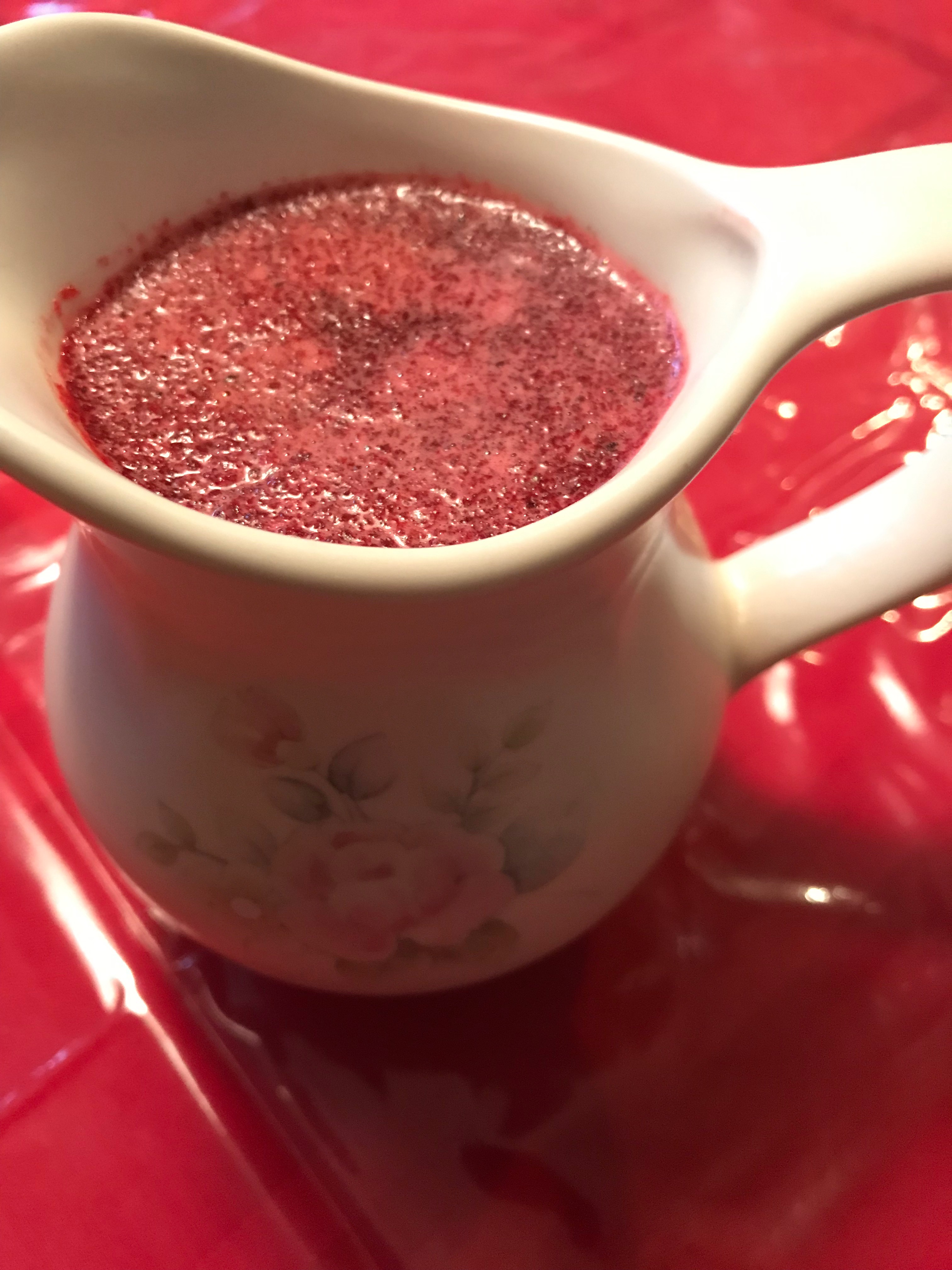
I applauded her desire to make something which everyone could eat and immediately thought of one of my go-to meals, chicken and vegetables. This may seem like a ho-hum meal to serve company, but if you roast whole carrots with sliced zucchini and bake tender, seasoned chicken breasts and serve both with a beet sauce, the experience becomes more than ho-hum, and if you look at the pictures, the food looks pretty, too, which enhances the appetite.

What’s even better, is that the entire meal takes only about 45 minutes from beginning to end to make, which gives you plenty of time to hang with your guests. While the veggies roast, you work on the chicken, and while the chicken cooks, you work on the sauce.

Company Baked Chicken Breasts and Roasted Vegetables

Ingredients:

2 lb bag of whole carrots, peeled (normal size, not crazy, huge ones)

Zucchini, sliced lengthwise into quarters, about size to eight medium-sized ones

6 chicken breasts, 4 ounces each (palm size portion, not crazy, hormone-induced size)

olive oil

onion powder

garlic powder

oregano

thyme

tarragon

red pepper flakes

black pepper

1 1/2 cups cooked beets (I buy precooked, ready to go ones in the vegetable section)

1 cup unsalted, no sugar chicken bone broth (I find this at my local grocery store)

1 tsp minced garlic

2 tbsp chopped onion

1/4 tsp ground cumin

1/4 tsp ground ginger

Cooking Instructions:

  1. Preheat the oven to 500 degrees.
  2. Lightly coat the carrots with olive oil and place into a large oven proof pan which will hold the carrots in a single layer with space left for the zucchini to be added.
  3. Roast for 10-15 minutes, depending on the thickness of the carrots.
  4. Remove the pan, stir the carrots, lightly coat the zucchini quarters in olive oil, and add them to the pan.
  5. Roast for 5 minutes, remove the pan and stir, adding onion powder, garlic powder, oregano, thyme, tarragon, red pepper flakes and black pepper – all to your liking.
  6. Roast for another 5 minutes and arrange the vegetables on an oven safe, serving platter, and set aside. Turn the heat down to 450 degrees.
  7. While the vegetables are roasting in the oven, line a 9 x 13 pan with parchment paper and lightly brush olive oil on both sides of the chicken breasts. Sprinkle both sides of the chicken breasts with the onion powder, garlic powder, oregano, thyme, tarragon, red pepper flakes and black pepper – to your taste and liking.
  8. Cover the chicken breasts with another piece of parchment paper, tucking the ends in around the chicken into the pan.
  9. Bake the chicken for 15 minutes.
  10. Remove the chicken from the oven and let it sit, exactly as it is with the parchment covering it, and turn down the heat to 300 degrees. Let the chicken sit for 10 minutes to reabsorb its juices.
  11. Put the veggies which have been transferred to an oven safe serving platter into the oven to finish cooking while the chicken sits for the 10 minutes.
  12. While the chicken breasts are resting and the veggies are finishing, put the cooked beets into a blender with the bone broth, garlic, onions, cumin and ginger, and puree until completely smooth.
  13. Pour the sauce into a microwave safe, serving pitcher, and microwave for a minute at a time until the sauce is warm.
  14. After the 10 minute resting time, remove the parchment paper from the chicken, remove the veggie platter from the oven, and serve both with the warmed beet sauce.


Healthy Habits: Rethinking Weeknight Pasta


“But it’s all I can eat….”

My oldest decided a few weeks ago to do the elimination diet, which basically is eliminating everything except meat, poultry, fish, and non-starchy vegetables from one’s diet. She could not eat wheat, soy, dairy, nuts, peanuts, eggs, sesame, corn, peppers, potatoes, vinegar, yeast, sweeteners of any type, etc…, which meant dinners became a bit more complicated.

Since I usually include non-meat protein in many of our family dinners, I had to rethink our meals for a few weeks to make sure we were not eating too much meat and chicken. Obviously, eating more fish and beans was one solution, but the number of fish or bean dinners we currently eat are not my husband’s and son’s favorites as it is, so I did not want to create issues there. We could increase our vegetable dishes, but not being able to add any cheese, whether dairy or soy, or add tofu meant having no protein at all, which does not work for my or my daughter’s hypoglycemia.

So, as I thought about eating more meat and chicken dishes, it occurred to me that I could rethink weeknight pasta dinners, which is a staple for most families. Pasta and sauce is quick and easy for those busy nights when families do not have much time to pull dinner together. For my purposes, pasta and sauce was also a good dinner to be able to alter for our dietary needs.

For the pasta, we simply opted to substitute many of the grain free, protein packed pastas which are on the market: red and green lentil, chickpea and bean pastas are easily found at most supermarkets and are actually quite tasty. The ingredients are literally just red lentils or chickpeas or beans. Nothing else. So, for folks who need to watch ingredients, these pastas are great one ingredient pastas. (NOTE: there are pastas which mix flours with legumes to add protein. These are fine, too, if folks can eat grains.)

For the sauces, the solution was simple: substitute half of any meat or chicken with vegetables or quinoa. That way we had the protein but not as much of it. The result were healthier sauces which were just as filling but with less meat and poultry. Some of the pasta sauces and meatball recipes we made are below in case any folks want to try them for themselves.

Beet and Meat Pasta Sauce:

In a large skillet, brown 1/2 lb of lean hamburger meat with finely chopped onions, garlic, and herbs such as oregano, basil, black pepper, and thyme. Drain the fat from the meat and add 8 oz of frozen riced beets, one cup frozen chopped spinach, and a 16 oz can of no salt, no sugar added petite diced tomatoes. Saute until most of the liquid from the tomatoes has evaporated. Add a jar of your favorite spaghetti sauce (I use Victoria’s which literally only has tomatoes, garlic, salt oregano, and onions as its ingredients). Heat until warm and serve over a protein based ziti style pasta.

Kale-Carrot Turkey Pasta Sauce:

In a large skillet, brown 1/2 lb of lean ground turkey with finely chopped onions, garlic and herbs such as oregano, thyme, basil, and black pepper. Drain the fat from the meat, and set aside. In the skillet add 2 tbsp olive oil. Heat the oil for a minute and add 1/4 cup of a gluten free flour like GF oat or sorghum or millet. Stir until well mixed with the oil. Add 2 cups of a no salt, turkey bone broth, stirring and cooking over medium heat until it begins to thicken. Flavor the sauce with herbs like oregano, thyme and basil. Add the browned turkey, 8 oz frozen chopped kale and one cup grated carrots. Heat until the kale and carrots are soft and fully cooked. Serve over a protein based spaghetti style pasta.

Quinoa Meatballs:

Mix one pound of ground beef, chicken or turkey with 2 cups of cooked quinoa. Add to taste: chopped green onions, minced garlic, black pepper, oregano, basil, thyme, dill, and onion powder. Form into quarter cup size meatballs and place the meatballs on a pan lined with aluminum foil and lightly greased with olive oil. Preheat the oven to 375 degrees. Bake the meatballs for 25 minutes until browned on top and cooked through. Serve with your favorite sauce and protein based pasta.

Healthy Habits: Most Everything Free Blackberry Filled Mini Sponge Cakes

“You won’t be left out….”

So, what do you do when Valentine’s Day is approaching, and you cannot have eggs, dairy, wheat, soy, nuts, peanuts, chocolate/cocoa powder, sesame, coconut, or any non-fruit sweeteners, whether sugar or natural? Then, even planning for a nice dessert after dinner seems to out of the question, too.

This was the problem presented to me this week, and I had to really think about how to make something which was free of everything but would somehow seem a bit special at the same time. Removing every other ingredient except for sweeteners would not actually be a problem. Removing all sweeteners, however, becomes a bit more problematic.

Removing sugar from a cake means removing the ingredient which absorbs the moisture from the protein and carbs and which helps with the leavening process. This means your baked good will be more moist and dense simply by virtue of removing the sugar. Sugar substitutes like coconut sugar or agave, while not as efficient as sugar, can still do the same job. Once you are limited to only fruit, however, there’s not much you can do, other than to increase your dry ingredients and decrease the liquid but then the result may be a very dry dessert.

As I considered options, I realized that sponge cakes are actually cakes which are made to be more dense on purpose and that maybe I could use the lack of a sugary sweetener to my advantage. In the end I created blackberry filled mini sponge cakes, using Polaner’s Blackberry All Fruit. While not chocolate, it is a different, which could be therefore be considered special.

Blackberry Filled Mini Sponge Cakes

Ingredients:

3 cups whole grain gluten free flour blend

2 tsp baking powder

1 tsp baking soda

2 tsp cinnamon

1 tsp nutmeg

1/2 tsp nutmeg

1/2 tsp ginger

1/4 tsp cloves

1/2 tsp salt

2 tbsp ground flax seed

6 tbsp hot water

1/3 cup Polaner All Fruit

1/2 cup hot water

2 cups mashed ripe bananas

1/2 cup safflower oil

2 tsp vanilla

1 tbsp apple cider vinegar

Polaner Blackberry All Fruit

Baking Instructions:

  1. Preheat the oven to 350 degrees and line 24 muffin cups with cupcake liners
  2. In a bowl, mix together the flour, baking powder, baking soda, cinnamon, nutmeg, ginger, cloves and salt. Set aside.
  3. Mix the ground flax seed with the hot water, and let it thicken.
  4. In a large bowl mix together the blackberry all fruit with the hot water and add to it the mashed bananas, oil, and vanilla.
  5. Add the thickened flax seed to the wet ingredients.
  6. Add the dry ingredients to the wet ingredients with the vinegar and mix just until blended.
  7. Evenly divide the batter among the muffin cups.
  8. Bake in the preheated oven for 20 minutes until the cakes puff and a toothpick inserted in the center comes out clean.
  9. Remove the mini cakes to a cooling rack and allow them to cool.
  10. After the cakes are cooled, fill a pastry bag with a round tip with blackberry all fruit, insert the tip into each cake until the tip is hidden by the cake, and then slowly squeeze the all fruit into the cake until the cake puffs. Slowly pull the cake tip out and fill in the remaining space with all fruit, just ’til a little bit of the all fruit is peeking out of the top of the cake.


Healthy Habits: Vegan Dark Chocolate No Added Sugar Cupcakes

“No sweeteners except fruit are allowed….”

This past weekend, I was tasked with figuring out how to make a chocolate cupcake which would not only be dairy, egg, soy, gluten, and nut/peanut free but which also could not include any sweeteners like sugar, agave, honey, molasses, maple syrup, stevia, etc…. And of course, the recipient wanted the cupcakes to be fudgy and “healthy” as well.

Folks who have food allergies know how difficult it can be to find and/or make desserts which are free of whatever one can’t eat. When you add to that difficulty, though, that it has to be vegan and have absolutely no sweetener other than fruit, things become exponentially more complicated for ensuring the baked product tastes good.

Not one to give up, however, I figured out a way to make exactly what was ordered… a fudgy, dark chocolate cupcake which had some healthy greens mixed in and which used only fruit sweeteners. What came to my rescue was an apple butter pure fruit spread – apple butter sweetened only by fruit and no sugar. The result was quite tasty, even though it wasn’t sweet.

Vegan Dark Chocolate No Sugar Cupcakes 

(makes one dozen)

Ingredients:

1 1/2 cup gluten free flour (I used King Arthur’s whole grain version)

1/2 cup Country Farms Super Greens powder (you can omit this and just substitute another cup of gluten free flour, if you’re not interested in adding “healthy greens”)

1/2 cup Hershey’s Special Dark unsweetened cocoa powder

1 tsp baking soda

1/2 tsp baking powder

1/4 tsp salt

3/4 cup water

1/2 cup plant based milk (I used unsweetened gluten free oat milk)

1/2 cup plant based oil (I used avocado oil because it brings out chocolate flavors well)

1 cup apple butter pure fruit spread (I found this at a local store; made with only fruit)

1 1/2 tsp gluten free vanilla

1 tbsp apple cider vinegar

Baking Instructions:

  1. Preheat the oven to 350 degrees and line a muffin tin with 12 cupcake liners.
  2. Mix together the gluten free flour, greens, cocoa powder, baking soda, baking powder, and salt. Set aside.
  3. Mix together the water, oat milk, avocado oil, apple butter, and vanilla.
  4. Add the dry ingredients to the wet ingredients, along with the vinegar and whisk together until well blended.
  5. Divide the batter evening among the twelve cups. The cupcake liners will be filled almost to the top.
  6. Bake in the preheated oven until the cupcakes puff and a toothpick in the center comes out clean. Mine took 20 minutes.
  7. Remove the muffin tin to a wire cooling rack and allow the cupcakes to cool about five to ten minutes in the tin before removing them. They will collapse a bit, but that is what makes them fudgy.
  8. Remove the cupcakes from the tin and cool completely. They keep well in a covered tupper ware.


Holiday Hints: Allergy Friendly Ice Cream Cake

“Don’t be people who destroy hearts….”

I watch as Yoko Kawashima Watkins, author of So Far from the Bamboo Grove, explains to a group of 7th graders that the Japanese Kanji for “busy” is a combination of the characters for “heart” and “destroy”. At 83, her body is frail but her voice is strong as she leans in closer to the children.

“Never have I told anyone that I am ‘busy’,” she says to them. “I don’t want to destroy anyone’s heart, and neither do you, right?”

Her gaze takes in each individual child as they vigorously nod their heads. They’ve already promised to thank their “honorable” parents for all that they do to take care of them (without letting their parents know that Yoko told them to do so, of course), so what could it hurt to agree with Yoko on this, too?

Later after I drive Yoko home, I think about the Japanese Kanji for “busy” and how interesting it is to me that being busy is seen as something that destroys one’s heart. Here in the States, being busy means you’re being productive, getting things done, not slacking off. When we’re “too busy”, then maybe it is something which can destroy one’s heart, but being just plain busy?

The holidays are probably a good example of what Yoko meant, though. Often the busyness of preparing for the holidays eclipses the amount of time actually spent just being with family members. For this reason, I’ve always tried to keep food prep to a minimum in favor of more time with my family, and as we think about yet another “special” dessert for New Year’s, I thought I’d share the fastest dessert recipe I have – allergy friendly ice cream cake.

You simply buy two flavors of your favorite pint size ice creams, a package or two of your favorite cookies, and a container of a chocolate frosting – all of which can be found in allergy friendly options- and within ten minutes you can assemble a dessert which will be both pretty and delicious. Below I will post the version which is pictured above.

Ice Cream Cake

Ingredients:

2 pint size containers of allergy friendly vanilla ice cream (I used So Delicious coconut milk version)

8 to 10 oz package of allergy friendly chocolate sandwich cookies (I used KinniToos)

2 cups of allergy friendly chocolate animal crackers (I used K-Kritters)

2 pint size containers of allergy friendly chocolate ice cream (I used Cados avocado version)

one cup chocolate frosting (I used Simple Mills)

Sprinkles (optional)

Assembling Instructions:

  1. Take out the four pints of ice cream and let them sit on the counter while you crush the cookies.
  2. Crush the chocolate sandwich cookies into bit size chunks and set aside.
  3. Crush the chocolate animal crackers into medium-sized crumbs.
  4. In a large bowl, scoop out the vanilla ice cream, and using a rubber spatula or wide wooden spoon, mix the chocolate sandwich cookie chunks into the ice cream until well mixed.
  5. Spread the ice cream evenly into a 10 inch spring form pan, making sure to level the ice cream flat.
  6. Sprinkle the chocolate animal cracker crumbs evenly over the layer of ice cream.
  7. Scoop out the chocolate ice cream into the large bowl and mix until the ice cream is soft and spreadable.
  8. Drop the ice cream gently in scoops to evenly cover the animal crackers. Then carefully spread the ice cream evenly over the chocolate crumbs and level the ice cream flat.
  9. Put the ice cream cake into the freezer for a few minutes while you’re working on the frosting.
  10. In a small bowl, stir the chocolate frosting until it is soft and spreadable. Spread it evenly over the ice cream cake.
  11. If desired, decorate the top of the ice cream cake with sprinkles.
  12. Put the cake back into the freezer and freeze until ready to eat.
  13. To cut the cake, run a butter knife around the edge of the pan and remove the side of the spring form pan. Run a large knife under hot water and cut the cake into wedges to serve.


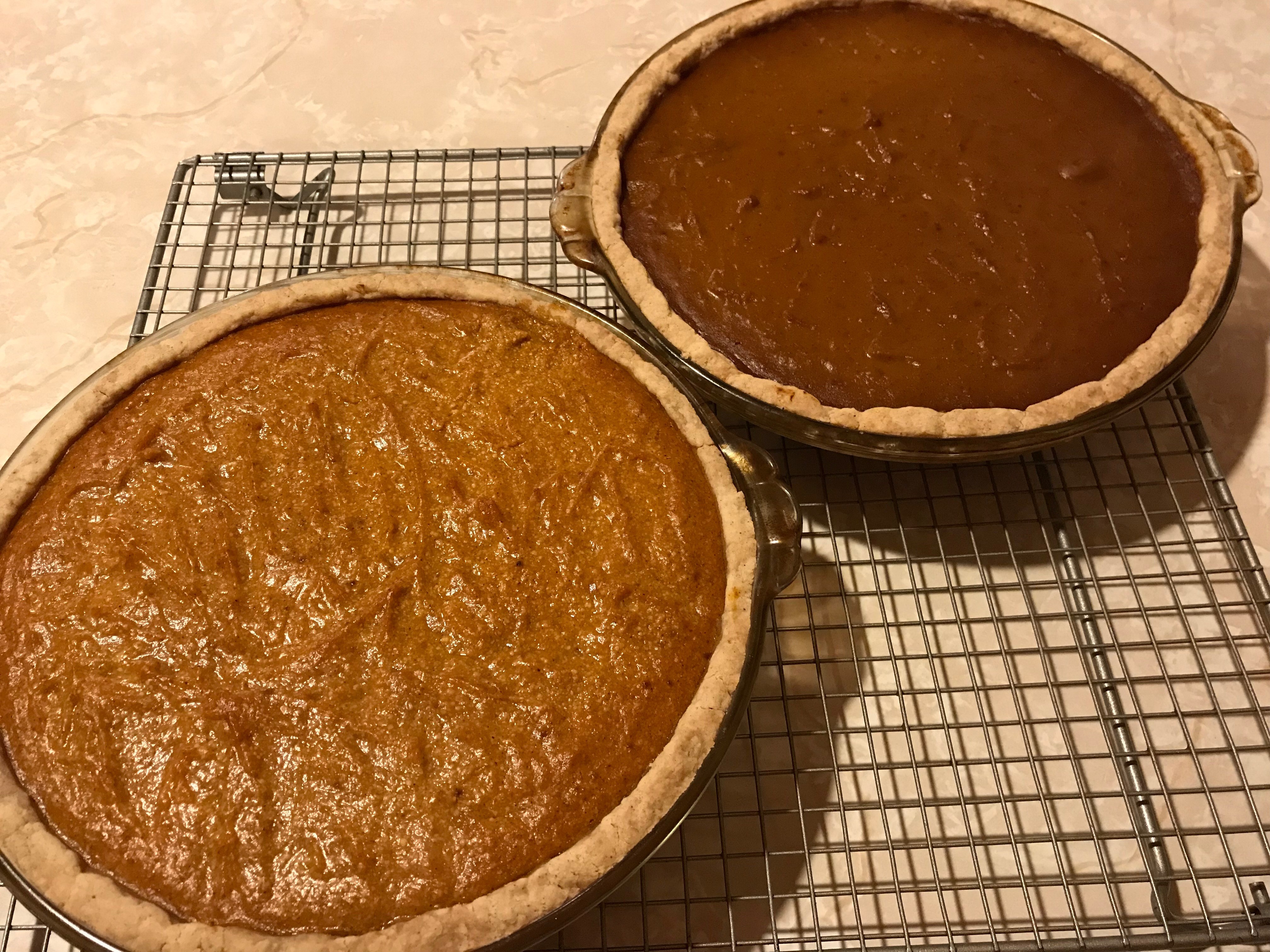
Thanksgiving Thoughts: Vegan Pumpkin Pie, Two Ways

“But pie….”

After posting the black bean-kale soup recipe, I received a question about pies. More than any other holiday, Thanksgiving tends to be about the pies. Pumpkin, apple, cranberry-pear, and mince meat tend to be the more traditional pies associated with Thanksgiving, but I have seen people put out other types like lemon meringue and chocolate pies as well. For today’s post, I’ll focus on the question asked which was for a vegan pumpkin pie, but below are links to other pies I’ve posted about in the past.

Apple Pies

Struesel Cranberry Pear Pies

Peach Pies

Chocolate Pies

Making a pumpkin pie vegan is easy. For the crust, folks can simply substitute vegan butter, vegan shortening or coconut oil for the butter or shortening in any pie crust recipe without anything else needing to be done to the recipe.

For the pumpkin filling, the first ingredient which makes pumpkin pie non-vegan is the eggs, and in pumpkin pie, the eggs simply act as a binder, which is simple to replace. To make a pumpkin pie which is just like regular egg-filled pumpkin pie, the easiest substitute for the eggs is a flour or a starch. Most recipes you’ll find use cornstarch. Many folks, however, are allergic to corn, and I personally like to add protein and/or fiber if possible when I can, so I opt to use a gluten free flour like oat or millet or sorghum.

The other ingredient in pumpkin pie which is dairy is the milk, whether it’s evaporated milk or heavy cream which is used. To substitute for milk in a pumpkin pie, one can choose a plant based “milk” like almond or soy or hemp or flax or any other type on the market which you prefer.  Usually 1 1/2 cups of a “milk” is equivalent to a can of evaporated milk.

For folks who might want a slightly different pumpkin pie and who are not allergic to soy, I also make a pie using tofu which tends to be a heartier, more protein filled pie. Pureed tofu then acts as the binder which eliminates the need for flour, and the pie also does not require any “milk” at all.

For both types of pumpkin pie, I reduce the “sugar” amount substantially and use an alternative to refined white sugar – coconut sugar for the more traditional type of pumpkin pie and agave for the tofu pumpkin pie. Folks who have eaten my pies never say it’s not sweet enough and always comment on how the pumpkin flavor really shines.

Below are recipes for both versions.

Pumpkin Pie Recipes

Ingredients:

Pie crusts (click the link for tips on making Allergy Friendly Pie Crusts)

Version 1 Filling:

2 cups cooked, pureed pumpkin (canned works, too)

1/2 cup coconut sugar

2 tsp spices (I use a mixture of cinnamon, nutmeg, ginger, allspice, cloves and/or cardamom)

I 1/2 cup plant based “milk” (I prefer to use flax or soy milk)

1/4 to 1/2 cup gluten free flour (use the lower amount for a more silky pie; the higher amount for a sturdier pie; I like to use millet or sorghum or GF oat flour to add some protein and fiber)

Version 2 Filling:

2 cups cooked, pureed pumpkin (canned works too)

1/2 cup agave (I like to use the maple flavor agave for this pie; if you can’t find it, you can mix 2 tbsp of maple syrup with enough agave to make 1/2 cup – this gives you the flavor but substantially reduces the amount of calories you’d get from using 1/2 cup of maple syrup)

2 tsp spices (I use a mixture of cinnamon, nutmeg, ginger, allspice, cloves and/or cardamom)

16 oz silken tofu, pureed to be smooth and creamy

Baking Instructions:

  1. Preheat the oven to 350 degrees.
  2. Prepare the pie crust and put into a 9.5 inch glass pie pan. Set aside.
  3. Choose which pumpkin pie filling to make, and mix all the ingredients until well blended.
  4. Pour into the prepared pie crust.
  5. Cover the edges of the pie crust with aluminium foil, leaving the center of the pie uncovered.
  6. Bake for 60 to 65 minutes until the pie is set and the center only jiggles a bit.
  7. Put into the fridge to completely cool. Best to cool overnight but at the very least, several hours. Without the eggs, the cooling is what solidifies the pie.


Thanksgiving Thoughts: Vegan Black Bean Kale Soup

“It is wonderful that she can see other people eat like this….”

I had a workshop last weekend where a mother brought her entire family. She explained that she wanted her daughter to see that they were not the only family who had to eat the way they did – meaning allergy friendly. Over the course of the two hour workshop, I watched the daughter enjoy treat after treat, surprised that her mother had told her she could eat anything she wanted from the table.

Too often the holidays are difficult for folks with health and/or food allergies because we know that much of what is on the table we can’t eat. At Thanksgiving, this can be especially depressing since Thanksgiving is celebrated largely through food.

Over the past couple of weeks I have been trying to post Thanksgiving ideas which are not as traditional, just to give folks something new to consider. From the emails I’ve received, it seems folks liked the the notion of vegan, gluten free cornbread stuffing and vegan, gluten free butternut squash swirled cheesecake. Today I’m going to suggest a hearty soup for folks who like to serve a soup course for Thanksgiving.

For any traditionalists who may have people with food allergies or health needs coming to dinner, making a roasted vegetable soup is a good way to go. The Roasting Vegetables post shares how to roast vegetables in a quick and easy way. To make what you’ve roasted into a soup, simply add to the roasted vegetables your favorite no salt, no sugar added vegetable broth, herbs, garlic and onions and puree to the consistency of your choice. Then on Thanksgiving day, just put it into your crockpot and let it cook until your guests arrive. Serve with allergy friendly crushed croutons, “cheese”, “sour cream”, and/or sunflower or pumpkin seeds.

Anyone who may be looking for something a bit heartier and different, though, I offer a black bean, kale soup, just as easy to prepare as the roasted vegetable soup but which adds not just another flavor to the meal, but which can be a more “filling” soup for vegans who have come for dinner.

Black Bean-Kale Soup 

(serves 6 to 8, depending on size of bowls)

Ingredients:

14 oz can no salt, no sugar added lentils

one tsp olive oil

minced garlic to taste

chopped onions to taste

crushed thyme leaves to taste

ground cumin to taste

black pepper to taste

one to two cups frozen or fresh finely chopped kale

1/4 to 1/2 cup finely diced yellow pepper

14 oz can of black beans, drained and rinsed

2 tbsp to 1/4 cup finely diced vegan ham

32 oz no salt, no sugar added vegetable broth

salsa to taste

Cooking Instructions:

  1. In a food processor or blender, empty the contents of the can of lentils and puree/blend until smooth. Set aside.
  2. In a large-width pan shallower (not a narrow soup pot) which has at least 2 inch sides, add the olive oil, garlic, onions, thyme, cumin and black pepper. Saute over medium-low heat for a minute to release the flavors, stirring so nothing burns.
  3. Add the kale and yellow pepper and saute for another couple of minutes to release the water from the vegetables.
  4. Add the drained and rinsed black beans and vegan ham bits, and saute for a minute, mixing them well with the herbs and vegetables.
  5. Add the vegetable broth and salsa to taste, and simmer for 10 to 15 minutes over low heat until the soup has reduced a bit and is thicker.
  6. Serve with allergy friendly sour cream and “cheese”, if desired.


Creative Cooking: Vegan Gluten Free Lasagna

“It’s what you choose….”

Last week, a woman starting walking across the space I was going to pull into at the grocery store parking lot. Having been raised to be both courteous and safe, I put my blinker on to let people behind me know what I was doing and then patiently waited for the woman to finish crossing. Just as she finished making her way across, a car came from the other direction and pulled into the spot, narrowly missing hitting the front fender of my car.  As you can imagine, I was a bit perturbed, but the spot was taken, and I chose to believe that maybe the gentleman hadn’t seen me waiting for the spot. After all, no good would come of doing anything other than moving on.

As I put my car into drive and started to move forward, though, I noticed that several of the folks who had witnessed what happened were shaking their heads at the driver in the other car and giving me sympathetic looks, which seemed to annoy the gentleman based upon the look he had on his face. One man who had apparently been walking to his car, pointed to me, to himself, and then to a car in the next row to my right, as if to say that I should follow him and take his spot. I smiled at him and waved, “Thank you,” but indicated that I had seen a spot which was already open in the row to my left and would be taking that.  He nodded at me, and we both continued on our paths.

We make decisions every day about how we are going to react to any given situation. Sometimes we act in manners which we may not want to admit in public to; other times we are proud of how we behaved. At times, life situations weight us down; at other times, we are able to rise above them.  When it comes to food allergies, it is easy, I think, to sometimes be upset about the foods we can’t eat or the ways restaurants may not be accommodating or how extended families may forget that we can’t eat certain foods or about recipes which simply don’t work.

I had dinner with friends the other night, and we talked about my constant reworking of a vegan, gluten free lasagna recipe. For years I have been trying to figure out how to make nondairy cheese crust up the way that mozzarella does on top of a lasagna. It was so disappointing to bite into a lasagna and not have that crispy, gooey top layer. Another friend had recently used the word “bulldog-ish” to describe me. I’d choose tenacious, but either way, my tenacity finally paid off, and my friends told me I should write a cookbook. Since I don’t want to write a cookbook but have this blog, I’m going to share my recipe with you instead.

Vegan, Gluten Free Lasagna

Ingredients:

Topping:

8 oz vegan mozzarella (I use the Daiya brand)

4 oz vegan parmesan (I use the Follow Your Heart brand)

4 oz nutritional yeast (I use the Bragg brand)

finely chopped onions to taste

finely mince garlic to taste

herbs to taste (I use basil, oregano, and thyme)

2 to 3 tsp extra light olive oil

Filling (Homemade Vegan Ricotta):

8 oz extra firm tofu

herbs and seasonings to taste (I use black pepper, basil and oregano)

minced garlic to taste

chopped onions to taste

2 tbsp lemon juice

2 tbsp nutritional yeast

1 tbsp white miso paste

1/2 to 1 cup vegan mozzarella (depends on how “cheesy” you want the filling; I use the Daiya brand)

2 tbsp to 1/4 cup vegan parmesan (depends on how “cheesy” you want the filling; I use the Follow Your Heart brand)

Tomato Sauce:

one eggplant, finely diced

two zucchini, finely diced

one small jar roasted red peppers, finely chopped (depending on the brand, 8 to 12 oz size)

minced garlic to taste

chopped onions to taste

black pepper to taste

herbs to taste (I usually use oregano, basil and marjoram)

14 oz can petite diced tomatoes

8 oz of your favorite chorizo style vegan sausage (I usually just buy whatever is on sale)

two jars of your favorite spaghetti sauce, reserving about a cup for the bottom of your lasagna pan (24 oz size jars will usually do)

Pasta:

1 to 2 boxes of your favorite gluten free no boil lasagna noodles (how much you use depends on the size of your pan and number of layers you make; I usually use the Barilla brand oven ready gluten free noodles because they’re flat and smaller, so much easier to layer and use)

Cooking Instructions:

  1. Ready the topping by mixing the mozzarella, parmesan, nutritional yeast, onions, garlic and herbs together in a bowl. Add the olive oil and mix until all ingredients are sufficiently covered with the olive oil. Set aside.
  2. Ready the ricotta filling by pureeing in a blender or food processor the tofu, herbs and seasonings, garlic, onions, lemon juice, nutritional yeast and miso paste. Transfer the mixture to a bowl and stir in the mozzarella and parmesan. Set aside.
  3. Ready the tomato sauce by sauteing the eggplant and zucchini with a little bit of olive oil over medium-low heat. Just as they are softening add the roasted red peppers, garlic, onion, black pepper, and herbs. Cook for a minute and add the diced tomatoes. Let the mixture cook for several minutes until the tomato juice has evaporated. Turn off the heat and add the chorizo and the spaghetti sauce (minus the cup you are reserving).
  4. Preheat your oven to the temperature your no boil noodle package says it needs.
  5. In a large, deep pan, spread the reserved spaghetti sauce to completely cover the bottom of the pan. Lay down one layer of noodles. Completely cover every inch of the noodles with some of your tomato sauce.
  6. Lay down another set of noodles, going in a different direction from the previous layer of noodles and again, completely cover the noodles with some of your tomato sauce.
  7. Carefully drop spoonfuls of the ricotta mixture all around on top of the sauce and then spread the ricotta filling to cover the noodles. (If your pan isn’t deep but large in width, use all the ricotta in this layer. If your pan is deep and small in width, use half here and do another layer of noodles, sauce and ricotta before moving on to the next step.)
  8.  Lay down another set of noodles, going in a different direction from the previous layer of noodles and again, completely cover the noodles with the rest of your tomato sauce. (If your pan isn’t deep but large in width, this will be your last layer of noodles. If your pan is deep and small in width, you may need to add another layer of noodles and sauce before moving on to the next step.)
  9. Sprinkle the mozzarella topping mixture over the top of the sauce to completely cover the noodles. Use all of the mixture.
  10. Cover the pan with two layers of aluminum foil. Be sure to spray or grease the first layer of foil before laying it down or your cheese will stick
  11. Bake the lasagna with the foil on for the time indicated on the pasta box. After the allotted time, regardless of what the box says, remove the foil and bake uncovered for another 10 to 20 minutes until the topping has bubbled up, browned and is crusty.
  12. Remove the lasagna from the oven and let it sit for 20 to 30 minutes before serving so it can set completely.
  13. Enjoy!


Healthy Habits: Triple Chocolate Avocado Brownies

“You’d have to do the impossible….”

As a child my father told me that I could do anything I set my mind to, and I believed him. His words served me well as I grew, helping me to succeed at things folks were quick to say I could not, to endure difficult situations I felt ill-equipped to handle, and to learn how do things I might not have otherwise tried.

I did learn that simply setting one’s mind isn’t always enough, of course, but at the end of the day, having confidence that you can achieve does tend to open up possibilities which are closed to folks who don’t even make the attempt.

So, when a friend who is allergic to wheat, dairy, soy, rice, apples, nuts, peanuts, coconut, flax seed, eggs, and bananas told me she hadn’t had a brownie in 15 years, I took up the challenge. How could I not? What did it matter that I couldn’t use any of the usual substitutions for traditional ingredients in brownies? I was determined to make a brownie my friend could eat.

My friend wasn’t convinced I could make a brownie from “nothing” as she said, and especially not one that would taste like a brownie, but it helped that she wasn’t allergic to avocados and that she wanted a fudgy brownie as opposed to a cakey or chewy one.

The beauty of avocados is that they can substitute for eggs and the fat as one item so both eggs and butter could be substituted for in the traditional brownie recipe. Most nontraditional recipes would then use a dairy free milk but my friend is allergic to most versions. I opted to use water but I needed the water to be thick. Using unsweetened chocolate as part of my flavoring added the thickness I needed to the water. Then, I only needed to refine the chocolate-ly taste by adding unsweetened special dark cocoa powder, Enjoy life mini chocolate chips, and cinnamon.

I tried the brownies out on a group before taking them to my friend, and the reviews were positive, and one person commented, “The whole piece tastes like the inside of a brownie, which is the best part!”

When I took a pan to my friend, she couldn’t believe I had done it – made a brownie she could eat. I, of course, had trusted that once again my father’s words would be true!

Triple Chocolate Avocado Brownies

Ingredients:

1 cup mashed ripe avocado (usually two avocados)

2 ounces unsweetened chocolate

1 cup boiling water

2 tsp vanilla

1 cup agave

2 cups gluten free flour blend (I used King Arthur’s whole grain version)

3/4 cup Hershey special dark unsweetened cocoa powder

1 tsp baking powder

1/2 tsp salt

1 tsp cinnamon

1 cup Enjoy Life mini chocolate chips

Baking Instructions:

  1. Preheat the oven to 350 degrees and line a 11 x 15 pan with parchment paper.
  2. Mash the avocado in a large bowl and set aside.
  3. Place the unsweetened chocolate into a measuring cup or bowl which can sustain heat and pour the boiling water over it. Stir until the chocolate is melted and the liquid is slightly thick.
  4. Add the chocolate water mixture to the avocados, along with the vanilla and agave.
  5. In a smaller bowl, mix the flour with the unsweetened cocoa powder, baking powder, salt and cinnamon.
  6. Add the dry ingredients to the wet and mix just until moistened.
  7. Add the chocolate chips and stir until the batter is well mixed.
  8. Spread the batter into the prepared pan and bake for 20-25 minutes until the brownies are slightly puffed and just a slight indent remains in the center when you touch it.
  9. Allow the brownies to cool in the pan on top of a cooling rack.
  10. Remove the brownies from the pan by lifting the parchment paper, and slice the brownies into squares to enjoy.

Recipe Revamping: Carbonara

“It’s just that it was one of his favorites….”

Most folks ask me to revamp baked recipes since that is what I mostly post about, but I received a request this week from a mom after she saw my roasted garlic bread recipe, asking if I might help with one of her son’s favorite recipes, carbonara. Her son is eight, and the family recently learned that much of his stomach issues were due to eggs, dairy and wheat, all three of which are in carbonara.

For anyone who might not be familiar with carbonara, it is an Italian pasta dish which is essentially a creamy, cheesy sauce over noodles which tends to use cured meat products such as bacon, pancetta, prosciutto, or Italian sausage to flavor the sauce. To make the sauce creamy, recipes usually use cream or half and half and egg yolks with a variety of fancy cheeses and then adds the cured meat and white pasta to the dish. So, as a rule, even if you do not have food allergies, you probably should not make carbonara a regular part of your diet.

Unless, of course, you can find a way to create a healthier, allergy friendly version….

My first order of business was to tackle the cheesy sauce. The beauty of a carbonara sauce is that it clings to the noodles, so the sauce needs to be a thick, heavy sauce, which is why usually cream and egg yolks are utilized. I opted to make a basic white sauce with olive oil, millet flour and dairy free milk. To that I added Daiya cheddar cheese, garlic, onions, oregano, basil, and a tiny bit of red pepper.

The next item to tackle was the cured meat. To make it a tiny bit healthier, I chose to chop just four low fat, reduced salt, no nitrates, sweet Italian style fully cooked chicken sausage links into small pieces. This distributed the flavor without all the extra added fat and sodium and nitrates.

The final decision I made was to nix pasta altogether and use spiral cut veggies. I used a mixture of turnips, yellow squash and zucchini. Because I like my food to have lots of color, I also added diced petite tomatoes, which added a slight flavor twist to the whole dish. The result was quite yummy!

Vegetable “Noodle” Carbonara

(This recipe makes a lot because I wanted to feed a family of five and have leftovers for a second meal. You may want to halve the recipe.)

Ingredients:

2 tbsp extra light olive oil (you don’t want a heavy taste)

1/4 cup millet flour (or any other variety you’d like to use)

2 cups dairy free “milk” (I used soy but any variety will work)

8 oz shredded Daiya cheddar cheese

garlic, onions, oregano, basil, and red pepper (to your taste and liking)

16 oz each spiral cut turnip, yellow squash, and zucchini (you can change up the spiral cut noodle veggies as long as you have 48 oz total so the sauce and “noodle” amounts are in a good sauce to noodle clinging ratio)

4 low fat, reduced salt, no nitrates sweet Italian style fully cooked chicken sausage links

garlic, onions, oregano, basil, and red pepper (to your taste and liking)

14 oz can of no salt, no sugar added petite diced tomatoes (optional)

Cooking Instructions:

  1. In a shallow sauce pan, heat the olive oil for a minute over medium-low heat, and then stir in the millet flour until well mixed and cook for another 30 seconds.
  2. Slowly add one cup of the milk, stirring until the flour mixture is incorporated into the milk. Let the mixture begin to thicken. Time will vary, depending on how shallow your pan is but shouldn’t take more than a couple of minutes.
  3. Slowly add the second cup of milk, stirring to evenly mix the sauce.
  4. Add the Daiya cheese and stir well. Add the spices, and stir until the cheese is all melted, and turn the heat to low, stirring occasionally.
  5. In a larger shallow nonstick pan (if you aren’t using a nonstick pan, drizzle a tiny bit of olive oil), cook the turnips until softened, usually about 3 to 5 minutes.
  6. Dice the sausage links into small bits and add to the turnips. Mix well and cook for a minute.
  7. Add the yellow squash and zucchini with the spices, and cook just until the squash and zucchini begin to soften.
  8. If you are using the tomatoes, add the diced tomatoes to the cheese sauce and stir well. Then add the sauce to the veggie noodles, mix well and serve. (As a garnish, you may sprinkle a mixture of fresh basil and chopped garlic as I did in the picture.)
  9. If you are not using the tomatoes, simply add the cheese sauce to the veggie noodles, mix well, and serve.


Roasted Garlic Bread

“It’s the simple pleasures….”

I celebrated another birthday this year, and unlike many people, I don’t mind that I did. While I am not thrilled that my metabolism is slowing down and that aches tend to last longer, I am grateful for the maturing process which only aging and experience can bring. One gets to know oneself better as time goes on, and that’s a good thing, in my opinion, because only then can you really embrace your strengths, recognize and work on your weaknesses, and allow yourself to be the best version of yourself.

My husband wanted to know what I wanted to do for my birthday this weekend, because we have had a particularly stressful couple of weeks with a funeral and a graduation and time at a hospital with a dear friend. As I thought about what I wanted, I realized I simply wanted to hang with my family, particularly to have a good meal and to watch a movie while all three of my children were actually with me on my birthday for the first time in a few years.

Now, both cooking and watching a movie are not my husband’s ideas of a good time, but as a loving husband, he dutifully grilled the zucchini and chicken I prepared and sat through a movie. My gift to him for being kind enough to grill for me was to figure out a starch to go with the meal. Since I do have that slowing-down metabolism, I tend to eat less carbs these days, but I know that my husband thinks a meal is not complete without bread.

So, I decided I’d make garlic bread, but I didn’t want to use traditional white bread or the large amounts of butter. As I thought about garlic bread, I realized what I love best is the garlic so it occurred to me that garlic should be the the “showpiece” of garlic bread as opposed to the minced versions usually made, which led me to the idea of roasting the garlic and making a garlic bread similar to bruschetta which used olive oil, tomatoes and basil, only I used a gluten free whole grain bread instead.

The roasted garlic bread was ridiculously easy to make and added a nice dimension to the grilled dinner!

Roasted Garlic Bread

Ingredients:

peeled garlic cloves

olive oil

whole grain bread (gluten free or whole wheat or multi-grain)

fresh basil

grape tomatoes (optional)

Cooking Instructions:

  1. Preheat the oven to 500 degrees.
  2. Mix a couple of cups of peeled garlic cloves (how much you need depends on how many slices of bread you are making; also if you buy them already peeled, it makes life easier) with just enough olive oil to coat them, and roast them in the oven, turning them every five minutes until the garlic has darkened in color. (Usually this only takes ten to 15 minutes.)
  3. Remove the garlic from the oven and reduce the oven to 350 degrees. Let the garlic cool for a few minutes.
  4. While the garlic is cooling, slice your whole grain bread (whether gluten free or not) into thin slices (unless you bought the already sliced version, in which case you’re set) and place the slices on a cookie sheet or shallow pan.
  5. Chop up a couple of cups of fresh basil into small sprinkle-able pieces (how much you need depends on how many slices of bread you are making; also, if you don’t have fresh basil, you can also use dried basil, but you’d only need a couple of teaspoons then).
  6. Slice the roasted garlic into thin slices and sprinkle evenly among all the bread slices. Then sprinkle the basil. (Optional: slice grape tomatoes into think slices and sprinkle in between the garlic before sprinkling the basil.)
  7. Drizzle a small amount of olive oil over each bread.
  8. Bake in the reduced-heat oven for five to ten minutes until the bread is toasted.
  9. Serve immediately and enjoy.
  10. Leftovers keep well in the fridge. Simply reheat in the oven for a few minutes for crispy bread or microwave for a few seconds if you simply want it warm.

Creative Cooking: Cinnamon Chocolate Chip Cupcakes

“Well, it’s not actually my birthday….”

Growing up, my family did not have birthday parties because every person’s birthday was near a major holiday which made parties a bit difficult. Either life was too busy to plan a party or everyone else was too busy and unable to come. So, we developed a family tradition of going to see a movie as a family, followed by pizza and ice cream cake.

I never really thought too much about how my family celebrated birthdays until I had children and their friends began inviting them to birthday parties. It seemed that every 3 year old in preschool was having a party, and not just any party, but a big blowout party at some special location charging exorbitant amounts of money to entertain the entire preschool class for two to three hours.

Never one to follow the trends, I was not inclined to throw a big birthday bash, but I did come to see how celebrating our children’s birthdays with others, even on a small scale, could be special. Unfortunately, two of our children were born in the summer and one just before Christmas which made parties difficult. So, we began a tradition of hosting birthday parties a month or two before their actual birthdays, which confused people but allowed our children to experience the joy of marking their birth with friends.

All my thoughts about birthdays swirled together this week when a mom asked about a dilemma she had: Her young daughter did not like either chocolate or yellow cupcakes but wanted cupcakes for her birthday party. She also is allergic to eggs, wheat, soy, and dairy, and can’t eat bananas or berries for non-allergy health reasons. The mom needed a suggestion for something which would be “special” for her daughter’s party.

I had just the thing: cinnamon chocolate chip cupcakes. Chocolate chips make everything special, or at least according to my children! And cinnamon is a different but complementary flavor that is not yellow or chocolate cupcakes. And if you add cinnamon frosting, it’s a hit with everyone, children and adults alike.

Cinnamon Chocolate Chip Cupcakes

(makes 24 cupcakes)

Ingredients:

2 2/3 cup gluten free flour blend (I used a whole grain sorghum flour blend by Bob’s Red Mill for this recipe)

4 tsp baking powder

1 tsp ground cinnamon

1/2 tsp salt

4 tsp egg replacer (I used Bob’s Red Mill for this recipe)

1 cup Enjoy Life mini chips

2 tbsp ground flax seed

1/2 cup “milk” (I used coconut milk for this recipe since the girl was allergic to dairy and soy but any other type will work too)

1 cup solid “fat” (I used coconut oil but a vegan soy free butter or vegan shortening will work just as well)

2 cups coconut sugar (folks can always use sugar if that is preferable)

1 cup additional “milk” (I used coconut milk for this recipe since the girl was allergic to dairy and soy but any other type will work too)

Baking Instructions:

  1. Preheat the oven to 350 degrees and line cupcake tins with paper cupcake liners.
  2. Mix the flour, baking powder, cinnamon, salt and egg replacer. Stir in the chocolate chips, and set aside.
  3. Mix the ground flax seed with the milk and set aside.
  4. Cream the coconut oil (or chosen fat) with the coconut sugar (or sugar), scraping down as needed.
  5. Add the additional milk to the thickened flax seed mixture, and add the flour and the wet ingredients to the creamed sugar mixture, alternating dry and wet in batches, blending just until all the ingredients are incorporated into one another.
  6. Divide the batter evenly among the cupcake tins.
  7. Bake for 15 minutes until the cupcakes are golden and puffed and firm to the touch.  A toothpick inserted in the center will come out with only a dry crumb or two attached.
  8. Allow the cupcakes to cool for a five minutes in the tins, and then remove them to a wire cooling rack to cool completely.
  9. Frost with favorite frosting and sprinkle with cinnamon.

Cinnamon Frosting: Cream 1/2 cup vegan butter or coconut oil or vegan shortening with 1 cup powdered sugar. Add 1/4 cup coconut cream and blend well. Mix in enough powdered sugar to make a soft frosting. (Usually another cup.) Chill the frosting in the fridge until ready to frost the cupcakes.