Recipe Revamping: Coffee Cake

“It’s different but also the same.”

We were fortunate this past weekend to attend the world premiere of an orchestral piece by a composer from Singapore. My oldest was playing her French horn in the orchestra so my other daughter and my son drove with me to watch the performance.

For the selection, the composer began with an opera by Beethoven and imagined a different way of composing the piece. As the orchestra played his version, speakers placed at the four corners of the the building piped singing from the original opera piece. The conductor invited the audience to experience the “difference” and “sameness” by moving around the room. The conductor also asked the audience to add to the entire experience by downloading different variations of Beethoven’s work onto our phones and to play those, too, as we listened and walked around.

One would imagine this would be cacophonous but it was not, and in fact, the experience was quite pleasing and delightful; and we were glad we had been able to attend and participate.

As I thought about what the composer did – taking something known and creating something different, all the while keeping the essence of the original – I realized that this is precisely what I did when I set about perfecting a healthier and allergy friendly coffee cake. I wanted to create a coffee cake which I could eat but also which was better than traditional coffee cake.

Coffee cake is one of those foods which everyone enjoys but which truly is quite awful for your body, because it’s mostly white flour, butter and sugar. To create a coffee cake which kept the essence of what folks liked about it but which was allergy friendly and healthy was a very tall order.

But I like a challenge, so I created a recipe the other day which hit a home run the first time out….

Revamping Coffee Cake:

1. The butter: With a dairy allergy I obviously wanted to substitute the butter with a vegan version, but I also wanted to cut how much butter is usually in a coffee cake. I thought about what makes coffee cake most appealing and realized it’s really that streusel topping. As such, I didn’t want to get rid of the butter in topping which meant I needed to get rid of it in the cake part.

To substitute for the butter, though, I needed to find a perfect substitute which would mimic what butter does for the flavor and texture of coffee cake.  Simply substituting a healthy plant oil wouldn’t work. Neither would using mashed fruit or vegetables. I finally decided to use a combination of tofu sour cream and frozen bananas. The tofu sour cream would add some fat without adding as significant an amount as butter, especially if I used half the amount I might otherwise have by mixing it with bananas. I wanted something which had the texture of butter, though, so I froze the bananas and pureed it with the tofu sour cream which mimicked the texture of soft butter.

2. The flour: Besides having gluten which I can’t have, white flour also adds nothing nutritionally to one’s body. I needed to substitute a gluten free flour, but I also wanted to use flours which protein and fiber. This meant foregoing the usual gluten free blends which use rice flours which are just carbs. I didn’t want to use the heavier blends, either, though, with the garbanzo and fava bean flours because the texture would be compromised.

In the end I made my own blend which was a mixture of 1/2 cup quinoa flour, 1 1/2 cup gluten free oat flour, 1/4 cup coconut flour, 1 1/4 cup sorghum flour, 1 cup potato starch, and 2 tsp xanthan gum. The oat and sorghum flours have low glycemic indexes with high fiber. The oat and quinoa flour have a good amount of protein, and the quinoa and coconut flours add nutty lightness to the heavier oat and sorghum flours. The potato starch is necessary for binding and adds smoothness to the flour blend.

3. The sugar: Since refined sugar is poison to one’s body, I wanted to get rid of it altogether in the coffee cake. Agave would affect the texture of the coffeecake, and Stevia would affect the flavor. So, I opted to use coconut sugar which has a very low glycemic index and which would not affect the texture of the cake.

4. The eggs: Coffee cake usually utilizes a generous amount of whole eggs. To keep the cake healthier, I used liquid egg whites instead.

5. The cake pan: Since I wanted the cake to be healthier, I wanted to use less streusel topping than regular coffee cake recipes call for, but I still wanted a nice topping to cake ratio. As such, I opted to put my coffee cake batter into a larger 11 x 15 pan instead of the usual 9 x 13. This made for a slightly thinner coffee cake which meant the thinner layer of streusel was perfect.

6. The additions: One of the fun things about coffee cake is that there’s a variety one can purchase or make, so I wanted to experience with flavor. What I found worked well was to drop small dollops of Polaner’s All Fruit on top of the batter before I sprinkled on the streusel topping. The all fruit would melt while cooking and spread but then re-solidify with the streusel when cooling to mix the flavors.

7. The streusel: To make the streusel topping I decided to use garbanzo bean flour because it would add protein and fiber. Also, it is a heavier, denser flour which would make for a thicker streusel topping. I blended the flour with coconut sugar and added some cinnamon and nutmeg for flavoring. For the butter, I substituted a vegan butter which worked really well.

Allergy Friendly Coffee Cake

Ingredients:

1/2 cup garbanzo bean flour

1 cup coconut sugar

1 tsp cinnamon

1/2 tsp nutmeg

1/2 cup vegan butter

3 cups Paula’s flour blend**

2 cups coconut sugar

4 tsp baking powder

1 tsp baking soda

2 tsp cinnamon

1/2 tsp nutmeg

1/2 tsp salt

1/2 cup vegan tofu sour cream

2 frozen bananas (medium 5-6 inch in length)

1/2 cup soy milk mixed with 1/2 tbsp lemon juice

3/4 cup liquid egg whites

1/2 cup Polaner All Fruit

Baking Instructions:

1. Preheat the oven to 350 degrees. Grease 11 x 15 pan with favorite method or line with parchment paper.

2. Combine the garbanzo bean flour with the coconut sugar, cinnamon and nutmeg. Using a pastry knife cut the vegan butter into the flour mixture until coarse crumbs form. Set the streusel topping aside.

3. Mix the gluten free flour blend with the coconut sugar, baking powder, baking soda, cinnamon, nutmeg and salt. Set aside.

4. In a food processor or blender, blend the tofu sour cream with the frozen bananas until thick and creamy. You should have 1 1/4 cup yield to use for the recipe.

5. Mix the sour cream-banana mixture with the soy milk mixed with lemon juice. Blend well, and then add the liquid egg whites.

6. Quickly mix the liquid ingredients with the dry ingredients and spread the batter evenly into the prepared pan.

7. Drop small dollops of the Polaner All Fruit onto the cake batter so they’re evenly spaced on the surface. You won’t cover the entire surface of the cake.

8. Evenly distribute the streusel topping over the cake batter.

9. Bake in the preheated 350 degree oven for about 30 minutes. The cake will puff and be golden brown and a toothpick inserted into the center will come out clean.

10. The cake is delicious warm. It’s also good at room temperature after it’s cooled a little bit.

** Paula’s coffee cake gluten free flour blend: 1/2 cup quinoa flour, 1 1/2 cup gluten free oat flour, 1/4 cup coconut flour, 1 1/4 cup sorghum flour, 1 cup potato starch, and 2 tsp xanthan gum. You’ll only use 3 cups of this which will leave you with some leftover flour which you can use for something else.



Recipe Makeover: Ginger Snaps

“What do you mean they aren’t new?”

You know you’re getting older when your childhood comes back in style. First, it was the clothes. That bell bottoms actually became the rage again is beyond comprehension. Then my husband’s high school students began to talk about Bruce Springsteen as if they had discovered him. Finally, my children’s cartoons and toys gave deja vu a whole new meaning. Holly Hobbie, Transformers, Power Rangers, Strawberry Shortcake and Gang… though more hip than the ones I grew up with, they are familiar nonetheless.

For the most part, nostalgia has made these returns good things, but when my daughter and my niece came to me with the Strawberry Shortcake Berry Yummy Cookbook, I knew that whatever recipe they wanted to make would not bring immediate joy to my heart.

Sure enough, they wanted to make Ginger Snap’s Gingersnaps. For folks who might be unaware, there is a difference between gingersnaps and the ginger cookies most people make these days. Ginger cookies are thick, soft, gingery, molasses cookies. Gingersnaps are thin, crisp cookies flavored by ginger. Essentially, the difference is in the molasses to flour ratio, but that difference creates two very distinct cookies.  Gingersnaps are so-called because they are supposed to literally snap when you break them in half, and they were very popular when I was a child.  How to substitute gluten free flour and replace the sugar and dairy without sacrificing the “snap” of the cookie was going to be tricky.

We put our brains together, though, and in the end we created a rather pleasing gingersnap cookie which all the cousins enjoyed immensely.

The original recipe:

2 cups flour, 2 tsp baking soda, 1/2 tsp salt, 2 tsp ground ginger, 2 tsp cinnamon, 3/4 cup butter, 1/2 cup white sugar, 1/2 cup brown sugar, 1 tsp vanilla, 1 egg, 1/4 cup molasses.

Revising the recipe:

1. Flour: The types and variety of gluten free flours abound, and finding the right combination, along with whether to use potato or arrowroot or tapioca starch, took some work. We finally decided that a mixture of gluten free oat flour, sorghum, and coconut flours with potato starch and a bit of xanthan gum worked the best.

So, I made up a large batch of the following which would yield enough flour to make two batches of the cookie recipe: 1 1/2 cup gluten free oat flour, 1 1/2 cup sorghum flour, 1/2 cup coconut flour, 1 cup potato starch, 2 tsp xanthan gum.

2. Sugar: Usually I like to use Agave because I can use so very little of it. For one cup of sugar, I could use a scant 1/4 cup of Agave. Agave, however, would provide moistness which we wanted to avoid for gingersnaps. My second choice would normally be to use stevia, but stevia has a distinct flavor which wouldn’t combine well with the ginger. In the end we decided to use coconut sugar because we were already using the coconut flour, and it would complement the ginger well. In addition, the glycemic index of coconut sugar is very low.

3. Butter: Normally I would replace the butter with a plant-based oil because it’s healthier, but we would have the same problem of adding unwanted moisture. Since we were using the coconut sugar and flours, it might make sense to use coconut oil, but coconut oil wouldn’t provide the spreading of the batter which is necessary for a gingersnap to be thin and crispy. So, finally we decided simply to stick with “butter” and use the vegan, soy-free version offered by Earth balance.

4. Molasses: Since I try to reduce sugars as much as possible, we opted to replace the regular molasses with date molasses. It’s still higher in sugars than I’d like but it has less than regular molasses and at least has the advantage of being made with dates. Plus it’s only a scant 1/4 in the recipe, so overall what we’re adding per cookie isn’t much.

5. Egg: Since we don’t have an issue with eggs (currently) we opted to leave it as is for our version, but I tried making it with ground flaxseed mixed with water as an egg substitute, and the batter worked just as well.

Gluten and Dairy Free Gingersnaps

(makes about three dozen cookies)

Ingredients:

2 cups gluten free flour blend*

2 tsp baking soda

1/2 tsp salt

2 tsp ground ginger

2 tsp cinnamon

3/4 cup vegan butter

1 cup coconut sugar

1 tsp vanilla

1 egg or 1 tbsp flaxseed mixed with 3 tbsp water

1/4 cup molasses

Baking Instructions:

1. Preheat the oven to 350 degrees and line cookie sheets with parchment paper.

2. Mix together the flour, baking soda, salt, ginger and cinnamon.

3. Cream the butter. Add the coconut sugar and vanilla. Mix well.

4. Add the egg (or flaxseed mixture) and beat well.

5. Slowly add the molasses while mixing on low.

6. Gradually add in the flour in small increments and beat until well combined.

7. Drop dough by level tablespoons onto the cookie sheets, making sure to leave space for them to spread.

8. Bake for 15-20 minutes until the cookies have browned and spread.

9. Let the cookies cool for a minute or two on the cookie sheet. Then remove them with a spatula to a wire cooling rack to cool completely. It’s important that they cool completely, because that’s what will harden them and give you the “snap”.

* Gluten Free Flour Blend:1 1/2 cup gluten free oat flour, 1 1/2 cup sorghum flour, 1/2 cup coconut flour, 1 cup potato starch, 2 tsp xanthan gum. (Will make two batches of cookies)  


Simple Pleasures: Chocolate Chip Muffins

website choc chip muffins

“Well, can you make it a junky, healthy snack, then?”

My son has a sweet tooth – there is no doubt about that – and every day he looks for a way to finagle a treat. For a mom who’s trying to feed her children healthy foods, it can become tiresome to always be “fighting” about what is good and what it isn’t. So, I’m always creating recipes which can be a compromise between what my son considers a treat and what I think is healthy.

The other day, my son really wanted something “junky” as he called it, and I advocated for something healthy. When he asked me for a “junky, healthy snack” I laughed, but then I got to work. After all, if I could create something he thought was “junky” but it really wasn’t, then we’d both be happy.

I asked my son what he wanted, and he replied that he wanted a chocolate chip muffin. He, of course, meant one of those monstrosities they sell at the store which is all white flour and butter and huge chocolate chips, a lot of them. I wasn’t going for that, but it did give me an idea, and the result was a low fat chocolate chip muffin which was full of potassium from bananas, antioxidants and fiber from dates, and protein (and fiber) from oat and garbanzo bean flour – plus the muffins were free of dairy, soy, gluten, eggs, nuts, and refined sugar. What more could a mother ask?

And my son plus my daughters, and later, my writing group, all enjoyed the muffins immensely.

Chocolate Chip Muffins

Ingredients:

8 ounces of pitted, chopped dates

1 cup gluten free rolled whole oats

1 cup boiling water

2 tbsp ground golden flaxseed

6 tbsp water

1 cup gluten free oat flour

1 cup garbanzo bean flour

2/3 cup potato starch

1/3 cup arrowroot starch

2 tsp baking powder

1 tsp baking soda

1/2 tsp salt

2 tsp cinnamon

1 tsp nutmeg

1 tsp ginger

1 cup Enjoy Life mini chocolate chips

Four 6 inch bananas (comes to about 1 1/4 cups mashed)

1/4 cup safflower oil

2 tbsp apple cider vinegar

Baking Instructions:

1. Preheat the oven to 400 degrees and line 24 muffin cups with cupcake liners or grease them so the muffins won’t stick to your pan.

2.  Use a food processor to finely chop your dates into tiny pieces. (This will distribute the dates throughout your batter.)

3. Mix the finely chopped dates with the oats in a bowl, and pour the boiling water over them, pushing the dates and oats down into the water so they are covered. Let sit.

4. Whisk together the flaxmeal with the water, and set aside.

5. Whisk together the oat flour, garbanzo bean flour, potato starch, arrowroot starch, baking powder, baking soda, salt, cinnamon, nutmeg, and ginger.  Stir in the chocolate chips and set aside.

6. Mash the bananas and mix with the oil and the dates and oatmeal mixture and the flaxmeal mixture.

7. Make a hole in the center of the dry ingredients and pour in the wet ingredients along with the apple cider vinegar. Mix up quickly just until the dry ingredients are moist.

8. Evenly scoop the muffin batter among the 24 muffin cups and bake for 15 minutes or until the cupcakes are golden and puffed and a toothpick inserted in the center comes out clean.

9. Remove the muffins to a wire rack and cool completely.  These keep well in a tightly covered tupper ware container.


Simple Pleasures: Blondies

“I’d rather be a stromboli.”

My son loves pizza, and if he had his way, he’d eat pizza morning, noon, and night, seven days a week. His great sadness in life is that he only gets pizza every couple of months. The nice thing is that he doesn’t care what type of pizza it is – whether it’s frozen from the grocery store or fresh from a pizza parlor or homemade; so occasionally I’ll also make a pizza stromboli where I roll the dough like a cinnamon bun with the tomato sauce and cheese and filling wrapped up inside.

The other day I was teasing him that he’d turn into a pizza if he wasn’t careful, and he responded by saying that he’d rather be a stromboli because it’s neater, easier to pack for his lunches at school, and that people ask questions about it.

As I thought about our conversation, I started thinking about blondies. Blondies are to brownies what stromboli is to pizza. It’s similar but different enough that people don’t often associate the two. Simply put, blondies are brownies which aren’t chocolate. They have the same fudgy texture and are made just like brownies, and if you’re feeling like something just a little bit different, these are just the thing.

My family loves them, and when I make them for company, they love them, too. When it came to revamping a recipe, though, it took a little bit of creativity because blondies usually get their rich, caramel and butter taste from butter and sugar, both of which we don’t use, plus we were making them gluten and egg free. We found a recipe on the back of an Enjoy Life package, and after tweaking it a bit, we were able to create a recipe that is quick and easy to make and delicious.

Blondies

Ingredients:

1/4 cup ground golden flaxseed

3/4 cup water

2/3 cup safflower oil

1 tbsp gluten free vanilla

2 cups coconut sugar

1 cup Gluten Free flour blend (we use Authentic Foods brown rice version)

1 cup sorghum flour

1/4 cup gluten free oat flour

1 tsp baking soda

1/2 tsp baking powder

1/2 tsp salt

2 cups allergen free chocolate chunks (we use Enjoy Life)

Baking Instructions:

1. Preheat the oven to 350 degrees and lightly grease an 11 x 15 pan. (Can use whatever you prefer.)

2.  Mix the flaxseed with the water and let it sit while mixing the other ingredients.

3. Mix the oil, vanilla and coconut sugar. Stir the flaxseed mixture to be sure it’s thickened and looks like beaten eggs, and add it to the we ingredients.

4. Whisk together the gluten free flour blend, the sorghum flour, the oat flour, the baking soda, the baking powder, and the salt.

5. Add the dry ingredients into the wet ingredients, along with the chocolate chunks, and mix quickly until the batter is well mixed.

6. Spread the batter evenly into the prepared pan and bake for 20 to 25 minutes until the blondies are a golden brown. The batter will have puffed and be slightly firm to the touch.

7. Cool completely on a wire rack before cutting into pieces to be eaten. (You can certainly cut them while warm, but like brownies they won’t cut as well.)

Creative Cooking: Chocolate Raspberry Cupcakes

“Can we make something chocolate?”

My few weeks have been beyond crazy.  On top of our usual busyness of school, work, and activities, we’ve continued to deal with my oldest’s recovery from being hit by a car, we’ve grieved the death of a friend’s daughter, we’ve agonized over a loved one being in the hospital in an induced coma, and we added rehearsals for my son to be in “It’s A Wonderful Life” and auditions for a play I’m directing.

So, it’s now just a few days before Thanksgiving, and I’m finally turning my attention to the menu for that day and returning to this blog which I have ignored for these past three weeks. When I asked my children what we should have my middle child responded with the question:  “Can we make something chocolate?”

Now, two of my three children are well-rounded dessert lovers. When presented with choices, they may choose a slice of apple pie or a piece of zucchini cake or a ginger cookie or a slice of pumpkin cheesecake. My middle child, however, when given options to choose from, will opt for the chocolate cream pie or the chocolate fudge cake or the double chocolate cookie or the chocolate cheesecake.

So, I wasn’t surprised when she asked if we could make something chocolatey. She always does, and I always suggest that we stick to the traditional pies for Thanksgiving and make something chocolate for another time. I surprised myself yesterday, though, by actually contemplating the idea of making chocolate cupcakes.

Why? Three reasons: One, I just had a really, really long week and the thought of something comforting like chocolate cupcakes was enticing; two, with the death of my friend’s daughter at such a young age (20’s) and my own daughter being alive after being hit by a car, I’m realizing that life’s too short to NOT have chocolate, no matter the season; and three, we just watched my son’s performance in “It’s A Wonderful Life” where I was reminded that it’s all really about family and friends and time together and not the menu.

So, if you need assistance in revamping your holiday menu to fit allergy or health needs, please read my posts from last year (Nov and Dec 2013) where you’ll learn all sorts of lessons for how to do so; but for this Thanksgiving, I’m offering a creative addition to the Thanksgiving menu:  Chocolate Raspberry Cupcakes which are gluten, dairy, nut, soy, peanut, and egg free. Enjoy and have a most Happy Thanksgiving!

Chocolate Raspberry Cupcakes

Ingredients:

3 1/2 cups gluten free flour (I used Authentic Foods Multi-Blend)

1/2 tsp salt

2 tsp baking soda

1 cup Enjoy Life allergen free mini chocolate chips

1/2 cup Hershey’s dark unsweetened cocoa powder

3/4 cup oil (I used safflower)

1 cup Agave

2 tsp vanilla

2 cups water

2 tbsp vinegar (I used raspberry but apple cider or white will do)

Polaner’s Raspberry All-Fruit

Baking Instructions:

1. Preheat the oven to 350 degrees and line 24 muffin cups with cupcake liners.

2. Whisk together the flour, salt, baking soda and cocoa powder. Add the chocolate chips and set aside.

3. Whisk together the oil, agave, vanilla, and water.

4. Mix the dry ingredients into the wet, adding the vinegar.

5. Divide half of the batter evenly among the muffin cups. I usually put about 1 1/2 tbsp of batter into each.

6. Carefully put one teaspoon of raspberry all fruit into the center of the batter.

7. Evenly distribute the remaining batter among the muffin tins, carefully putting the batter over the raspberry all fruit.  Again, this is usually about another 1 1/2 tbsp.

8. Bake the cupcakes until a toothpick inserted in the center comes out clean, about 15 to 20 minutes.

9. Cool in the muffin tins on a wire rack for about five minutes before removing them from the tins and completely cooling them on a wire rack.

10. For a festive touch, put the cupcake into a bowl with a scoop of vanilla ice cream or nondairy frozen dessert next to it with a raspberry and mint leaf on top.


Cooking Techniques: Allergy Friendly Pie Crusts

website crusts

“Yay! Thanksgiving in October!”

My ninth grade daughter is taking French this year for the first time, and the high school she is at hosts an exchange program with another high school in France. We were asked to host a French student for two weeks, and one of the suggestions for entertainment was to have a Thanksgiving meal with them, since that would be a different experience for them.

We were happy to oblige, as you can tell by my son’s response above.

As we prepared, we explained to our French student that no matter what people say about the Turkey and the side dishes and the rolls, that Thanksgiving really is all about the pies: apple pie, pumpkin pie, mincemeat pie, cranberry pie, pecan pie, sweet potato pie, pear pie, buttermilk pie, and every possible variation of these pies which exist.

For folks with food allergies, though, pies can be tricky. May people struggle with pie-making in general, even when you’re able to use white flour, butter, and salt. The thought of trying to make a pie crust with substitutions is something a lot of folks simply just don’t want to consider.

The good news, though, is that making a gluten, dairy, soy, salt free pie crust is actually easier than making a traditional pie crust. You just need to know a few things, and you’ll be on your way to a great Thanksgiving dessert buffet!

Tips for Allergy Friendly Pie Crusts:

1. It’s just a simple swap: Because pie crusts don’t need to rise the way breads and cakes do, you can simply substitute your favorite gluten free flour for the all purpose flour. No need to make up any special flour blends at all. If you want a flakier, crispier, closer to traditional pie crust, opt for flours like brown rice or sorghum. If you want a more substantive crust with flavor, protein and fiber, try garbanzo bean or gluten free oat flour. If you have a gluten free flour blend sitting around in your closet, you can by all means use, too.

2. Cold is best all the way around: All pie crust recipes call for cold butter or shortening, cold ice water, and to put the made crust in the fridge for a little while. Why? Because warm pie crust dough sticks and won’t roll very well. Warm pie crust dough makes for a denser, less flaky crust.

What I find works wonderfully is to stick your measured butter and/or shortening into the freezer for five 10 minutes or so before using, to put ice cubes into your water, and to put your prepared pie crust dough into the fridge for a minimum of thirty minutes, an hour at the most.

3. “Fat” substitutions work: I use soy free vegan butter and shortening in my pie crusts all the time without any difference. So you can simply use what works for you without worry. It’s a straight one to one substitution ratio. What you should know, though, is that the allergy friendly versions tend to be softer than regular butter and shortening so sometimes I freeze them a little longer more like 10 to 15 minutes.

4. Work around and with the rolling: When it comes to pie crusts, the rolling out of the dough is what usually causes issues for people. I’ve learned a couple of things:

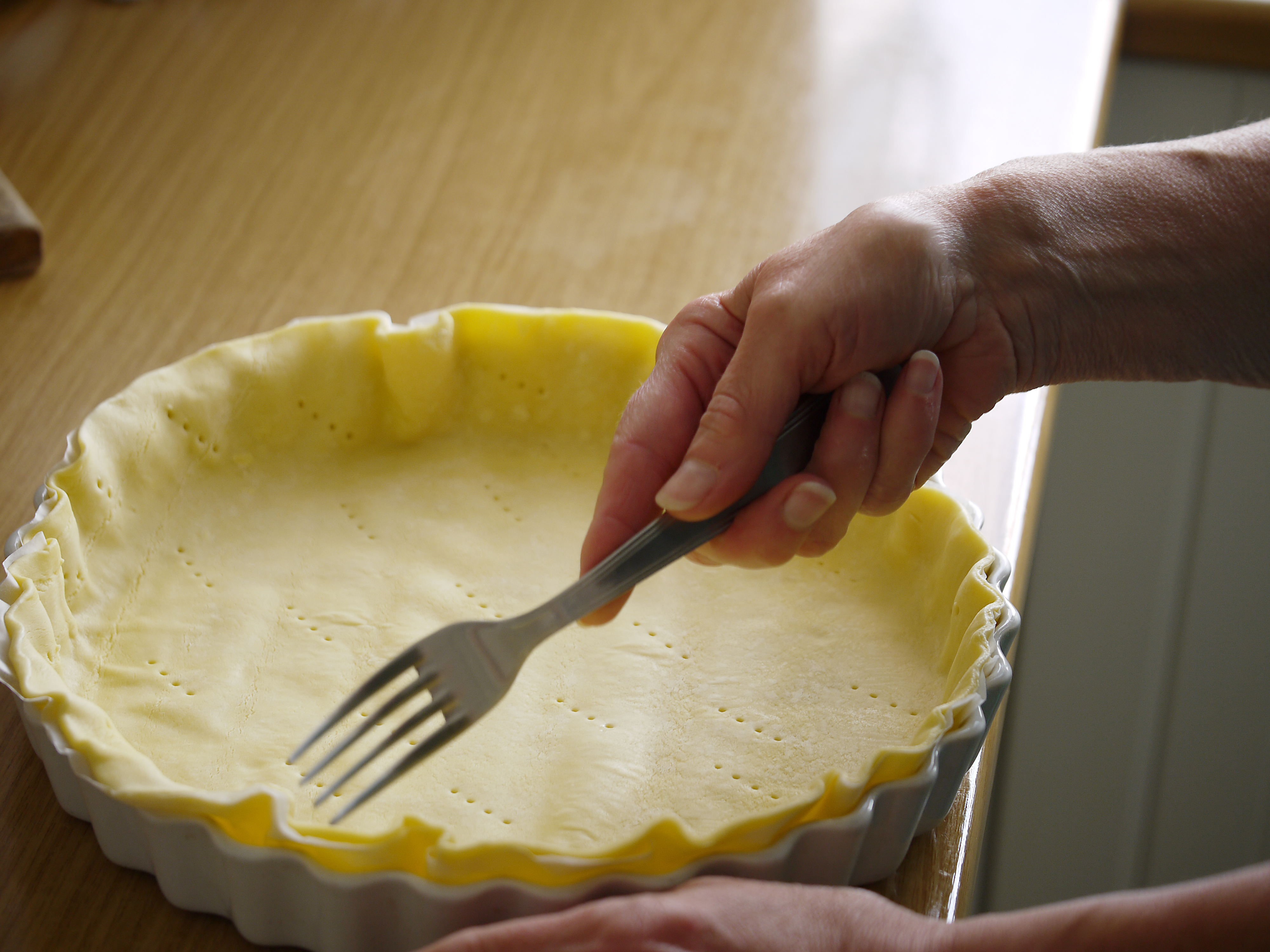
One, you don’t have to roll the bottom crust. I shape my dough into a slightly flattened disk (about an inch high) which I cool in the fridge for my 30-60 minutes, and then I simply use my fingers to push the dough outward from the center to the edges. It takes less than five minutes and actually makes for a more even crust.

Two, when I do have to roll the crust for the top part of a pie, I’ve found that putting the dough between two pieces of wax paper which I’ve also lightly greased is the best approach. The dough rolls easily, doesn’t stick, and comes off when I go to put it on top of the pie.

5. Be creative with the flavoring: Salt is the go-to for pie crusts, but it doesn’t have to be. If you’re making an apple pie, add some cardamom to complement the cinnamon in the pie. If you’re making a pumpkin pie, add grated orange peel as a contrast to the pumpkin. If you’re making a sweet potato pie, add grated nutmeg to intensify the sweet potato taste. You simply add the spices to the dry ingredients of the pie dough before cutting in the fat.

6. Know the effects of the process: Another issue people often have problems with is making their dough too dry or too wet. It’s important to understand the dynamics of the different ways you process the dough:

If you use a food processor which is what many recipes say to do nowadays, the dynamics of the food processing blade means the water is incorporated quickly and efficiently. If you have cut the fat in yourself with a hand pastry blender of two knives and are adding the water by stirring the dough with a fork, the water will drain into different parts of your dough more quickly than you can stir it. As a result you will often need more water for hand processing than when using a food processor.

Also, a food processor will draw the dough naturally into a ball which makes it easy for you to see that you have enough water. When you stir the dough by hand, the dough will usually not form a ball unless you’ve added too much water.

So, a tip: If a recipe calls for a certain tbsp amount of ice water for use in a food processor, it will normally mean you’ll need about two tablespoons more for hand stirring, so if my dough looks dry after the amount specified, I will go ahead and add two more tablespoons, and then even if it looks dry still, I will push the dough together with my hands to form two disks. If the dough will stick together, it’s fine, if there are dry pieces falling off, I simply wet my hands with the ice water and incorporate those dry pieces into the disks.

Struesel Pear Cranberry Pie

(This recipe makes two pies)

Ingredients:

Pie crust, prepare enough for two bottoms only

1 cup agave

1/4 cup water

one 12 oz package of fresh cranberries (be sure to check for stems)

8 pears, washed, cored and sliced into 12-16 slices each

3 tbsp cornstarch

3 tbsp water

2 cups gluten free whole oats

1/2 cup sorghum flour

1 tsp cinnamon

1/2 tsp nutmeg

1/4 tsp ground cloves

1/2 cup vegan soy free butter*

Baking Instructions:

1. Prepare your favorite pie crust recipe. If you don’t have one, Bob’s Red Mill pie crust mix works very well. Would recommend adding some spices to jazz it up a bit, though.  Line the bottoms of two 9.5 inch pie pans with the crusts.

2. Mix agave with water and put into a stove top pan large enough to hold all the pears.

3. Add the cranberries and bring to a boil. Cook for a minute or two until the cranberries begin to pop.

4. When the majority of cranberries have popped, add the pears, stirring to coat with the cranberries. Cook for 3-5 minutes until pears have softened.

5. Mix the cornstarch with the water, and making a well in the center of the pear mixtures, slowly add the cornstarch, stirring continually. Mix the cornstarch syrup thoroughly with the pear-cranberry mixture, cooking for a minute or two to make sure the syrup has thickened.

6. Evenly divide the pear-cranberry mixture between the two pie crusts.

7. In a food processor, add the oats, sorghum flour, cinnamon, nutmeg, cloves and butter.  Process until the mixture is a nice crumbly topping.

8. Evenly distribute the topping over both pies to completely cover them.

9. Bake in a preheated 375 degree oven for about 40-45 minutes until the pie is bubbling and the streusel is golden brown.

10.  Cool completely before serving.

* This makes for a savory topping which contrasts with the sweetness of the pear-cranberry mixture. If you happen to like your toppings sweet, you should add a tbsp or two of Agave with the butter.


Autumn Appetites: Apples

website apples

“An apple a day keeps the doctor away.”

For many folks autumn in New England is all about the beautiful colors and the opportunities for leaf-peeping. For me, I adore that it’s apple season. Orchards abound with every type of apple you can imagine, and you can pick them right of the trees by your very self.

My favorite is a variety called, Honey Crisp, which is just as it sounds – crisp and sweet. For someone like myself who doesn’t use refined sugar, these apples are wonderful for making pies and cakes and cookies and for sauteing slices to put on top of pancakes, waffles and ice cream (or rather nondairy frozen dessert, in my case!).

The thing about apples, though, is that most of the fiber and nutrients which are healthy for you are in the skin which people peel and throw out. So, I like to make recipes which require using washed, unpeeled apples which will mean that me and my family will receive the many benefits one can receive from eating apples.

Some suggestions for whole apple eating:

1. Make baked apples:  Wash and core your apples and put them whole into a baking pan. Melt a little bit of vegan butter and mix it with a little bit of natural sweetener like agave or coconut sugar and spices like cinnamon or cardamom or ginger or nutmeg or allspice or orange peel or a combination and sprinkle the mixture over the apples. Pour some hot water into the bottom of the pan and cover with foil. Bake at 350 degrees for half an hour, remove the foil, and bake the apples until they are fork-soft.

I usually can bake about 15 to 18 apples in a 9 x 13 pan, depending on the size of the apples, and I mix 2 tbsp of vegan butter with 2 tbsp of agave and 3 tsp of mixed spices.  To top the apples after they’ve cooked, I saute gluten free whole grain oats on the stove top with spices and butter and agave. (2 cups oats mixed with 4 tbsp melted vegan butter, 1/4 cup agave, and 1 1/2 tsp cinnamon, 1 tsp nutmeg, and 1/2 tsp ground coriander.)

2. Make apple cake:  A lovely cake I recently developed using all that extra sorghum flour I have is:  Mix 2 c sorghum flour with 1/2 c garbanzo bean flour, 1 c gluten free flour blend, 2 tsp baking soda, 2 tsp baking powder, 2 tsp cinnamon, 1 tsp sea salt, 1 tsp nutmeg, and 1/4 c coconut sugar.

In a separate bowl, mix 2 1/2 cup grated apples (keeping the peels on but draining the shredded apples in a colander for 5 minutes before adding the other wet ingredients) with 2/3 cup safflower oil, 2/3 cup milk mixed with 2 tsp lemon juice, 3/4 cup agave, and 3/4 cup liquid egg whites.

Mix the dry ingredients into the wet, quickly and thoroughly. Bake in a parchment paper lined 9 x 13 or 11 x 14 pan (depending on how high you want the cake) for 30 to 40 minutes until a toothpick in the center comes out clean. Baking time may vary depending on the type and size of pan.

3. Make apple crisp or apple pie with the peels on the apple:  I have recipes for both on the site already. Both say to peel the apples because that is how we make them for company, but for home we keep the peels on and the crisp and pies are just as tasty and actually more filling.

4. Saute the apples: Wash, core and slice apples with the peels on. Put into a pan and saute over medium low heat with a couple of teaspoons of agave mixed with an equal amount of water and cinnamon and nutmeg. Usually within five minutes or so, the apples are fork tender and delicious for topping pancakes or waffles or cake or ice cream.

5. Make quick and easy homemade applesauce:  Cut up an apple with the peels on and put into a microwave safe bowl. Add spices of your choice and microwave until the apples are soft enough to chop up and mash (usually just a couple of minutes in my microwave). Mash up with a fork or in your food processor. Cool and enjoy.

6.  Make an apple sweetened squash or carrot soup: Roast chopped butternut squash and/or carrots with cut up apples with the peels on. Be sure that everything is cut to the same size so they roast equally. When the vegetables and apples are soft, cool them for a few minutes and then puree with a hand blender or processor, adding fat free, low sodium broth of your choice and seasonings like thyme or rosemary or onions or black pepper to add extra flavor. Warm the soup to the temperature you’d like, and enjoy.

7. Add unpeeled chopped apples to salads:  Put apple slices into your green leaf salad for added flavor. Add finely chopped apples to your tuna fish or chicken salad for some crunch and texture.

8. Eat the apples as are:  I like to slice the apples and eat them with little dabs of peanut butter on them. When my children need a snack after school, they will eat apples whole, enjoying the sensation of biting into a sweet, crisp apple. Sometimes on a cold day, I core an apple and microwave it to soften it a bit and eat the apple warm which is soothing and tasty.


Recipe Experiment: Sorghum Quick Bread

“Well, can’t you make some healthy junk food for me to have as a snack?”

If my son was growing up in what the surveys say is a typical American home, he’d be a junk food junkie. Given the choice, cookies, ice cream, cake, chocolate, candy, would always win. As it is, though, he was born into our family so he is more of a junkie wannabe, constantly nagging me for all those things and resigning himself to a banana when the answer is, “No.”

The other day, though, he had a particularly rough day, and he really wanted something sweet but a banana wasn’t cutting it. (Yes, he must be my son, since he’s already learned that food can sometimes provide solace in the face of difficult days! No, I do not approve of folks “feeding” their problems, but face it, sometimes you just need some comfort food!)

One look at his little sad face, and I caved. Since I still have all that sorghum flour I mentioned in the sorghum pancake post, I decided I’d try experimenting. Maybe I could make a quick bread which would be a good healthy snack but provide that little sweet solace my son craved.

Since sorghum flour is so high in fiber, it seemed it would make a great base for a banana bread where ripe bananas would help to cut down on the need for sugar and the fiber in the sorghum flour would counter any spike in blood sugar levels from all the fructose. I didn’t want the bread to be too heavy, though, so I mixed a bit of brown rice flour, and then, because you know how much I like that protein-full garbanzo bean flour, I added that, too.

Because I wanted to steer clear of egg, dairy, and soy allergies, I used ground flaxseed and flax milk, using lemon to make a “buttermilk” and adding vinegar at the end to help the eggless, gluten free breads to rise.

I had wanted to use a little bit of safflower oil, but since the cupboards were bare of that, I opted for a coconut oil and used some coconut sugar, figuring any residual coconut taste would complement the bananas. To add other flavor, I decided this would be a spice bread and incorporated some cinnamon, nutmeg, ginger, allspice and cardamom. Then because this was supposed to be “medicinal” bread, I added mini Enjoy Life chocolate chips, and the results were two loaves of delicious, healthy snacking bread.

My son was happy that he got to eat a “healthy junky snack”, and I was happy that I was able to bring a smile to his face without compromising my principles surrounding junk food.

Sorghum Banana Quick Bread

Ingredients:

2 tbsp golden ground flaxseed mixed with 6 tbsp of water

1/2 cup flax milk* mixed with 1/2 tbsp lemon juice

2 cups mashed very ripe bananas

1/2 cup melted coconut oil**

1/4 cup Agave

2 cups sorghum flour

1/2 cup brown rice flour

1/2 cup garbanzo bean flour***

1/2 cup coconut sugar

1 1/2 tsp baking soda

1/2 tsp sea salt

2 tsp ground cinnamon

1 tsp ground cardamom

1/2 tsp ground ginger

1/2 tsp ground nutmeg

1/2 tsp allspice

1 1/2 cups Enjoy Life allergen free mini chocolate chips****

2 tbsp apple cider vinegar*****

Baking Instructions:

1. Line two 9 x 5 loaf pans with parchment paper so there are wings hanging over the sides of the pan for lifting the bread out, and preheat the oven to 350 degrees.

2. Mix together the flaxseed and water and let it sit for five minutes to thicken.

3. Mix together the milk and lemon juice and let that sit for five minutes to thicken.

4. Mix together the flaxseed mixture, the milk mixture, the mashed bananas, coconut oil and agave. Set aside.

5. Whisk together the sorghum, brown rice and garbanzo bean flours with the coconut sugar, cinnamon, cardamom, ginger, nutmeg, and allspice.

6. Add the chocolate chips to the dry mixture, and then add the dry mixture to the wet ingredients with the apple cider vinegar.  Mix quickly and well.

7. Evenly divide the batter between the two loaf pans.

8. Bake for 40 minutes until the bread is golden brown and a toothpick in the center comes out mostly clean.

9. Cool the bread for 10 minutes in the pan. Then remove the bread, using the parchment paper wings to a wire cooling rack. Cool another ten minutes, and then carefully slide the loaves off the parchment paper onto the wire rack.

10. Cool completely, slice and enjoy.  Or eat it while it’s still warm, if you can’t wait!

* You can use any other type of milk, too.

** Try it with safflower oil or vegan melted butter instead of coconut oil if you have a tree nut allergy.

*** If you have a legume allergy, just double the brown rice flour or opt for another type altogether.

**** If you want to mix it up, omit the chocolate chips and try using chopped dried plums or apricots or dates instead.

*****If you don’t have apple cider vinegar, white distilled is fine.

Final Note: If you don’t want to use all those spices, don’t. Feel free to omit any of them or experiment with your own flavors.


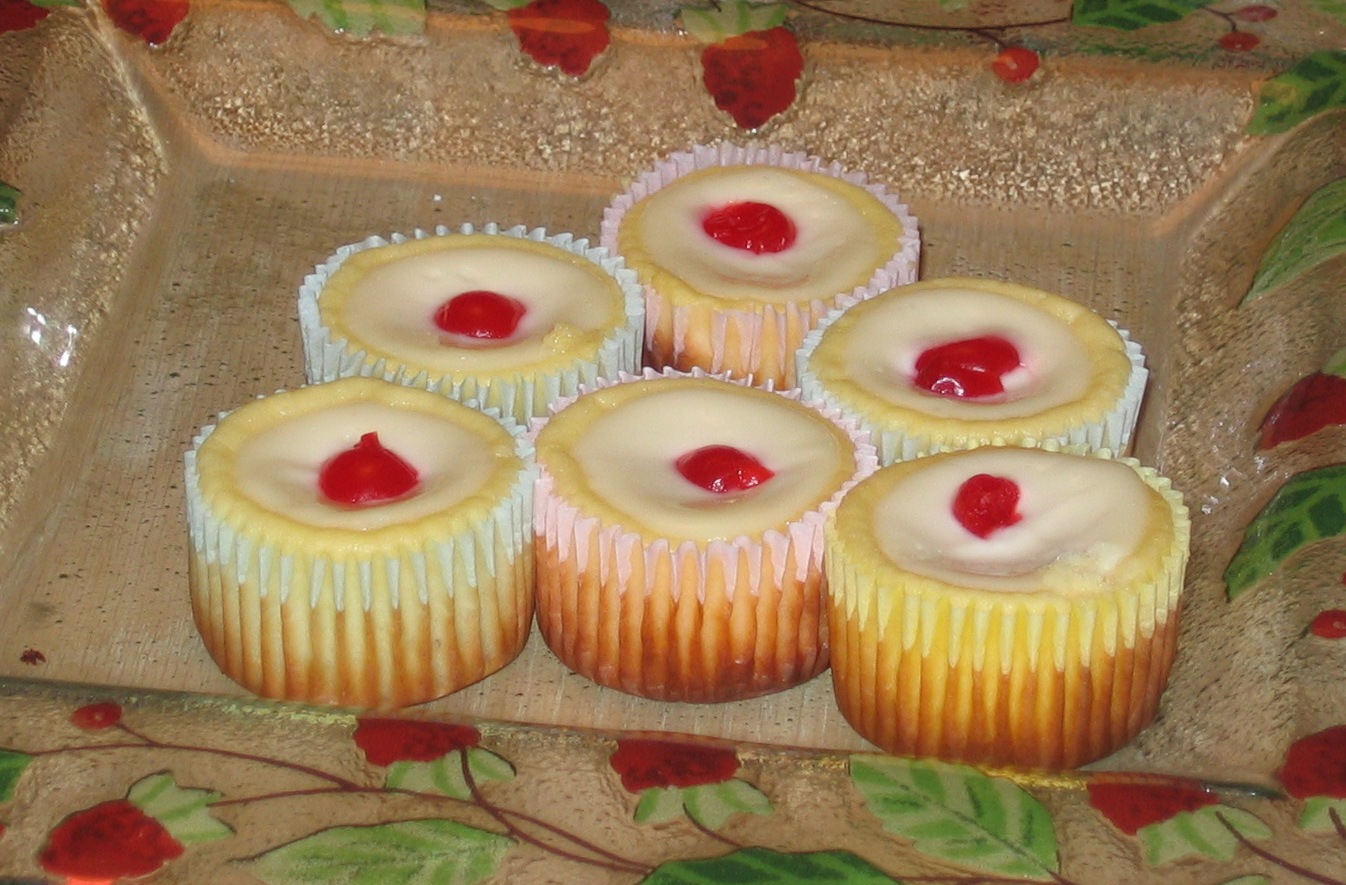
Menu Suggestion: Mini Cheesecakes

website mini cheesecakes

“You’re going to host a brunch? With everything you have going on?”

Even after 20 years together my very introverted husband doesn’t fully understand his more extroverted wife. The more he has happening, the more likely my husband is to retreat to a corner of the house for time alone because being with people drains him. For me, the crazier my life is, the more I need time with people with whom I can “refuel”. Extroverts are invigorated by the energy they get from spending time with people.

So, when I had an article due, a baking workshop to prepare for, several recitals, baseball games, and volunteer meetings to attend, my daughter’s graduation to prepare for, relatives coming in from town, and literally a dozen doctors’ appointments for myself and my children, it seemed a good time to host a brunch of some of my closest friends.

We had a great time, and I received the laughter and love I needed to sustain me through the hectic weeks to follow.

So, when I received a question this past week at a baking workshop about what I’d recommend as the perfect dessert to take to a potluck brunch if you had to make something gluten, dairy and tree nut free, I was ready with an answer: mini cheese cakes.

Mini cheesecakes are elegant, easy to make, versatile, and very adaptable for dairy, gluten and tree nut allergies.

Cheesecake Tips:

1. The crust: Crusts for cheesecake can be made from just about anything you want – honey graham crackers, animal crackers, shortbread cookies, oreo cookies coconut cookies, chocolate grahams, ginger cookies  – your imagination is your only limitation. And today we live in a time where all the above can be found in gluten, dairy, and nut free versions at the grocery store. Depending on the type of cheesecake you want to make, you can vary which type of crust you want to make.

Making crusts are ridiculously easy, too. Simply zoop up your cookie or graham crackers in a food processor to make crumbs, or if you don’t have a food processor, put the cookies or crackers into a ziploc bag, seal, and whack away with a rolling pin or the end of an ice cream scoop or a clean meat mallet. then you mix the crumbs with a little bit of a sweetener like Agave or coconut sugar and a little bit of a fat like melted vegan butter or safflower oil. A good ratio is one tablespoon each of the sweetener and fat for every 1/3 cup of crumbs.

And if you’re trying to watch your overall caloric, carb and fat content, you can always omit a crust altogether.

2. The cheesecake filling: Cream cheese is the main ingredient in cheesecake. Today, folks with dairy allergies can find vegan versions of cream cheese at their local grocery store which makes for a nice substitute. Sometimes, though, folks prefer to use straight tofu, which works well, too.

The key tip for making good cheesecake is to be sure all your ingredients come to room temperature. If your cream cheese or tofu are cold, you’ll get lumps in your cheesecake, which doesn’t affect the taste but definitely detracts from the texture. To make sure your cream cheese isn’t affected by other ingredients, all other ingredients like your eggs should be at room temperature, too.

You should always cream the cream cheese alone before adding any of the other ingredients. Sometimes an online recipe will tell you to just mix all the ingredients together. Don’t. It will affect the texture of your cheesecake. Also, if you start to cream your cream cheese and find it’s still too cold, you can then just wait a little bit and resume creaming. If all the ingredients are together, you’ll never get the lumps out, no matter how long you wait.

If you are using cream cheese instead of tofu, you should decide on the type of texture you want for your cheesecake. Using only cream cheese makes for a nice, thick, “cheesy” cheesecake. If you want your cheesecake to be a bit silkier, adding sour cream (a vegan version) or silken tofu or a dairy free yogurt will lighten the cheesecake. If lightening the cheesecake, use a 3 to 1 ratio (e.g. 3 containers of cream cheese with 1 container of sour cream).

If you’re making cheesecake with tofu, I like to use the silken tofu because it’s so much smoother. One 15/16 ounce container is about equivalent to two containers of cream cheese.

3. The flavoring: You can make just about any type of cheesecake you desire. For a regular cheesecake, you only add vanilla and some sweetener. If you want a flavor, you can add lemon or orange zest, unsweetened cocoa powder, raspberry liquor, pureed cooked pumpkin or squash, or even herbs like rosemary and basil for a more savory type of cheesecake.

If you’re in a fun mood, you can make a layered cheesecake where you layer two different flavors of cheesecake or you layer cheese cake on top of a brownie crust or layer a mousse on top of cheesecake. The ideas are endless.

4. The sweetener: Regular cheesecake will often call for about 1/4 cup of sugar per one 8 ounce container of cream cheese. If you’re watching sugar, you can always use Agave (half the amount of sugar called for) or coconut sugar (same ratio as sugar) or Truvia (half the amount you’d use for sugar).

If you’re using Agave, the best way to incorporate it into the cream cheese is to slowly pour the Agave into the creamed cream cheese mixture while the mixer is constantly stirring and incorporating the Agave into the mixture. For coconut sugar and truvia, simply follow the instructions for sugar.

5. The eggs: Most cheesecake recipes call for eggs to help give the cheesecake structure. If you’re trying to watch your cholesterol, you can use egg whites only. The cheesecake will be slighly drier and a little less creamy but some people actually prefer their cheesecake that way.

If you want to avoid eggs altogether you can simply omit the eggs, but you’ll need to add a little flour or cornstarch to give the cheesecake some structure, about a 1/4 cup of either. I make an eggless chocolate cheesecake where I mix  a 6 oz container of yogurt with cornstarch as a substitute for the eggs.

6. Making the cheesecake mini: The advantages of mini cheesecakes are several. For one, they bake up more quickly. Secondly, they are easier to serve. Thirdly, if you’re taking them to a party, they’re easy to transport. Fourthly, when you decorate them, you can vary the toppings and have a variety of cheesecakes to offer to the guests.

To make mini cheesecakes, you just use muffin tins. I like to line my muffin tins with paper liners to prevent any cross-contamination and for easy removal of the cheesecake, but you can also simply spray or grease the tins, too.

7. Baking the cheesecake: Cheesecakes are usually baked at low heat to prevent cracking and drying out the cheesecake. So, the best temperature is about 325 degrees. If you want to have extra smooth cheesecakes and really prevent cracking,it’s best to add some moisture to your oven. You can fill a pan with some hot water and put it at the bottom of your oven while the cheesecakes cook or you can put the muffin tins into another larger pan which is filled halfway with hot water. If you don’t do either of these steps, it is not a big deal. The cheesecakes just may crack a bit on top or be a little less smooth and moist. They’ll still taste good.

When your cheesecake is done, the edges are more done than the center. A knife inserted into the edges should come out clean while the middle should still be less stiff. It shouldn’t be liquidly and runny still, but it shouldn’t be as stiff as the edges. If you overcook the cheesecakes and the middles are stiff and cracked, don’t sweat it. the cheesecakes won’t be as creamy, but they’ll still be good and you can cover the cracks with your lovely toppings.

8. Cooling the cheesecakes: Cheesecake needs to cool before you eat it because it’s the coolin process that finishes cooking the cheesecake center and which solidifies the cheesecake. It’s best to let the cheesecakes cool at room temperature first and then to put them into the fridge.

9. The toppings: You can top your cheesecakes with just about anything. Slices of fruit like strawberries, kiwi or blueberries or a chocolate drizzle or crushed cookies or a whole cookie or a raspberry drizzle or shredded coconut. Your imagination is the only limit.

You can wait to add fruit garnishes until right before you’re taking them to a party or before you serve them so the fruit will stay fresh. Drizzles can be added while the cheesecakes are still warm or when they are cold. Cookies should be put on while the cheesecakes are still soft enough for you to push them down into the cheesecake.

10. Transporting mini cheesecakes: Always keep your cheesecakes in the fridge until it’s time to take them to the party. If you’re going a short distance, you don’t need to worry about keeping them cold, but if you’re going far away, pop them into a cooler with an ice pack or into a bag with a ziplock baggie full of ice.

Since the mini-cheesecakes are muffin size, you can usually fit them into a rectangular tupperware container or cupcake holder and transport them easily.

Mini Cheesecakes

Ingredients:

2 cups Smorables Gluten Free Graham crackers (about one box)
6 tbsp melted vegan butter
3 tbsp Agave
4 8 oz containers Tofutti vegan cream cheese, at room temperature
1/2 cup Agave
2 tsp gluten free vanilla
4 eggs, at room temperature

Baking Instructions:

1. Preheat oven to 325 degrees and line 24 muffin cups with cupcake liners.

2. Crush the graham crackers into crumbs by either processing them in a food processor or by whacking them with a rolling pin or mallet in a sealed bag.

3. Mix the melted butter with the Agave and blend well into the graham cracker crumbs until the crumbs are moist.

4. Evenly divide the crumbs among the muffin cups, about one tablespoon per muffin cup. Press the crumbs down to form an even crust.

5. Bake in the oven for 5 minutes and remove onto a cooling rack.

6. Cream the cream cheese in a mixer until smooth and creamy.

7. Slowly pour in the Agave while continually stirring until all the Agave is incorported into the cream cheese

8. Add in the vanilla.

9. Add the eggs, incorporating them one at a time.

10. Divide the cheesecake filling evenly among the muffin cups. They will be almost to the top of the muffin cups.

11. Bake until the cheesecakes are dry on the edges and mostly firm but still slightly soft in the center. This will take between 15 and 25 minutes depending on the thickness of your muffin tins and how evenly your oven is heating food.

12. Remove the cheesecakes to a wire cooling rack and cool to room temp. Put into the fridge so they can cool completely and solidify.

13. Garnish with fruit or chocolate drizzle or raspberry drizzle or cookie crumbs and serve.

Recipe Makeover: Wacky Cupcakes

website wacky cake

“It’s just not wacky enough.”

The saying is that “necessity is the mother of invention”, and certainly for families in the Depression and World War eras, lack of rations led to the creation of what we know as wacky or Depression cake. These are cakes made without eggs and milk which were scarce, and today many people with egg and dairy allergies have turned to them gratefully for countless number of birthday and family parties.

The email I received yesterday, though, made me laugh because it said, “Unfortunately, the recipe just isn’t wacky enough for my family.” This particular person also needed the cake to be gluten and sugar free in addition to egg and dairy free.

And I’m finding that to be a common problem among folks who send me emails. The world has come a long way: grocery stores, online sites and even restaurants carry gluten free products, nut free foods, dairy free items, and sugar free versions of just about everything. Unfortunately, for the person who is allergic to more than one of these, it can still be difficult to find foods which meet all the needed “free” criteria.

So, this morning, I took a gander at reworking the two recipes sent to me. I had signed up to bring some allergy friendly desserts to the Teacher Appreciation luncheon my children’s elementary and middle schools were hosting, so I decided I’d use the recipes to make cupcakes.

The first recipe sent was for a plain wacky cake calling for 3 cups of all purpose flour, 2 cups of sugar, 2 tsp baking soda, 1 tsp salt, 2 tbsp vinegar, 2 tsp vanilla, 3/4 cup vegetable oil, and 2 cups of water.

The second recipe was for a chocolate wacky cake calling for 3 cups of all purpose flour, 2 cups of sugar, 2 tsp baking soda, 1 tsp salt, 1/2 cup unsweetened cocoa powder,  3/4 cup vegetable oil, 2 tsp vanilla, 2 tbsp vinegar, and 2 cups cold water.

For both recipes, it just called for mixing everything together.

The Makeovers:

1. The flour: Since it needed to be gluten free, I had to decide which type of flour blend to use. Since the recipe is already compensating for the loss of eggs with the use of vinegar and baking soda, I was concerned about the batter’s ability to rise. As such, I decided that Bob’s Red Mill Biscuit and Baking Gluten Free Mix which is a blend of garbanzo bean flour, rice flour, cornstarch, xanthan gum, and baking powder would be best.

Why? Because 1) the mix of rice and garbanzo bean flour would allow for the higher fiber and protein without being too heavy; 2) the mix already has the xanthan gum in it which means one less item to mix in myself; and 3) the extra baking powder would help to compensate for the lack of leavening ingredients.

Folks who can have gluten could always use a white whole wheat or red whole wheat to boost the nutrients and fiber in the recipe.

2. The sugar: I decide that I would opt for two different sugar substitutes. For the chocolate wacky cake, I used coconut sugar because I wanted to try a dry substitute and because I thought the brown sugar flavor of the coconut sugar would complement the chocolate flavor better. I used a one for one substitute.

For the plain wacky cake, I opted for Agave, wanting to experiment with a liquid substitute. Also, I had decided I’d turn the cake into a chocolate chip spice cupcake which I felt the Agave would complement better. For the Agave, though, I used half the amount of called for sugar, and added 1/2 cup to the amount of flour needed to counter the extra liquid.

3. The oil: Because I prefer healthier plant oils, I chose to swap the vegetable oil with other types. For the chocolate cake, I used a blend of olive, grapeseed and canola oil which would lend a fruity undertone to the chocolate flavor. For the vanilla cake, I chose to use safflower oil to lend some flavor without overpowering it to the vanilla.

4. The vinegar: Since the recipe didn’t specify, I was presuming they were calling for regular distilled white vinegar. Since I prefer to always add a little “something”, I decided to use a raspberry vinegar for the chocolate cake and an apple cider vinegar for the vanilla cake.

5. The additions: I chose to keep the baking soda, salt and vanilla the same for each recipe, but I added cinnamon and nutmeg to the vanilla cake to make it more a vanilla spice cake, and I swapped the regular unsweetened cocoa powder for Hershey’s Special Dark unsweetened cocoa powder to lend a deeper chocolate flavor.

I also decided to throw in chocolate chips to help give the cakes more structure. For the chocolate cake, I added a package of Enjoy Life mini chocolate chips. For the vanilla cake, though, I wanted more of the taste to exude from the batter so I put a package of Enjoy Life mega chunks into my food processor and ground them to tiny pieces which I incorporated throughout the batter.

6. The assembling: The original recipes called for simply mixing everything up. Since I wanted to make sure the batter would fully incorporate all the necessary ingredients for adding structure and leavening, I opted to do the cake batter in steps. First, I mixed all the dry ingredients minus the chocolate chips/pieces together. Then I used a spoon to incorporate the chocolate chips/pieces into the dry ingredients. Then I mixed all the wet ingredients minus the vinegar together. Finally, I added the liquid mixture to the dry mixture, adding the vinegar last and mixing until everything was well-blended. By doing this, I ensured that the effects of the vinegar would last through putting the batter into the muffin tins and into the oven.

7. The cooking: Since I needed to bake for the luncheon and because I wanted to see quickly if the structure of the batter would hold up, I opted to make cupcakes instead. I lined 24 muffin cups per each recipe with muffin liners and scooped batter into each cup all the way to the top of the muffin liner, being careful to simply scoop the batter in without squashing it down. Then I baked the cupcakes for 20 minutes in a preheated 350 degree oven, turning them halfway through the cooking time.

Upon removing them, I left them in the muffin tins for about 15 minutes before removing them. This allowed the cupcakes to begin their cooling inside the tins which allows the structure of the cupcake to gain stability before being removed. After the 15 minutes, I removed the cupcakes to wire cooling racks to cool completely.

8. The new recipes:

For the chocolate wacky cupcakes, the new recipe was: Mix 3 cups Bob’s Red Mill Biscuit and Baking Gluten Free flour with 2 cups coconut sugar, 1/2 cup Hershey’s Special Dark Unsweetened cocoa powder, 1 tsp salt, and 2 tsp baking soda. Then add one 10 oz package of Enjoy Life chocolate chips. Set aside. Mix 3/4 cup healthy blend oil (olive, grapeseed, canola mix) with 2 tsp vanilla, and 2 cups cold water. Add the liquid mixture to the dry mixture with 2 tbsp raspberry vinegar. Blend well. Gently scoop mounds of the batter into 24 lined muffin cups, filling to the top. Bake in a preheated 350 degree oven for 20 minutes, turning halfway through cooking time. Cool in tins for 15 minutes. Remove to wire cooling racks.

For the vanilla spice wacky cupcakes, the new recipe was: Mix 3 1/2 cups Bob’s Red Mill Biscuit and Baking Gluten Free flour with 1 tsp salt, 2 tsp ground cinnamon, 1 tsp nutmeg, and 2 tsp baking soda. Food process one one 10 oz package of Enjoy Life chocolate mega chunks into tiny pieces and add to the dry mixture. Set aside. Mix 3/4 cup safflower oil with 1 cup Agave, 2 tsp vanilla, and 2 cups cold water. Add the liquid mixture to the dry mixture with 2 tbsp apple cider vinegar. Blend well. Gently scoop mounds of the batter into 24 lined muffin cups, filling to the top. Bake in a preheated 350 degree oven for 20 minutes, turning halfway through cooking time. Cool in tins for 15 minutes. Remove to wire cooling racks.


Handling Holidays: Serving the Meal

website serving meal

“Umm… did you just use my scoop?”

We were having a lovely gathering at our home of friends over the summer, complete with ice cream sundaes, when I realized that one of our guest’s children was using my scoop to get herself some ice cream.

For most folks, using another person’s scoop doesn’t seem like a big deal, but when you have a serious allergy to dairy and cross-contamination can potentially kill you, you tend to be a bit less friendly about “sharing”. Fortunately, I caught the “sharing” in action and was able to wash the scoop before using it for myself.

Holiday meals can be a bear when it comes to potential cross-contamination.  Even if you’ve planned ahead as I had that summer evening with a different scoop for my nondairy frozen dessert which was sitting off to the side of everyone else’s “real” ice cream, you never know when someone might accidentally upset your best laid plans.

So, what can you do?  Some suggestions:

1.  Definitely do plan ahead:  If you’re hosting, decide whether you’re going to avoid cross-contamination by simply making everything allergen friendly.  When I’m entertaining in my own home, I usually just make foods which I can eat which everyone else will enjoy, too.  Then I don’t need to worry.

If there are some foods, however, that you do want to make for your guests which you can’t eat or vice versa, then decide how many of those you’ll make and plan how you’ll separate them from the rest of the food.  Some options:

a. Put allergen free food in similar dishes and the other food in different dishes so you can point out to folks which are which.  I have round and rectangular dishes so it’s easy for folks to know which foods they should be careful to avoid contaminating.

b. Label the food.  Put little index cards in front of the food which tells folks what the dish is free of or contains.  The additional advantage to this is that if you have folks with a variety of allergies, they can see with a quick glance what they can and can’t eat.

c.  Put the food on different tables.  If you have available table space, put allergen free food on one table and the rest on another so folks can go to both tables separately to get their food.

2.  Educate:  Sometimes folks just don’t know how dangerous it can be for them to switch the serving spoons on you.  Take a minute to just explain that folks need to be careful to put the same spoon back into each dish because it would be a great service to your health for them to do so. I’ve found that folks are understanding once they know the potential consequences and take better care about how they serve themselves.

3.  If you’re going to someone else’s home for the holidays, be pro-active: Find out if the host is going to be making food you can eat, and if so, ask them if they could follow some of the above suggestions for your and the other guests’ benefit.

If you’re going to contribute a dish of your own, make sure to both label it and point out to folks at the dinner that it is a special dish made to be allergy friendly, and bring a serving utensil that is “different” to go with it. Maybe it’s an unusual color or a non-traditional size or one that matches the serving dish.  Give folks a way to recognize that that particular serving utensil needs to be used with your particular dish only.

4. Watch the children: In most cases, as with my summer gathering, it’s the little ones who don’t realize, because they are after all just little. So be sure to keep an eye on them. Enlist the help of the other adults to help serve the children and to watch the children who can serve themselves. At a certain age, the children can be told, too, about being careful, because if the food allergy is explained, children tend to be rather caring about not wanting to hurt anyone.

5. Practice avoidance in the absence of information:  Many times folks will bring a dish or purchase a dish and not know exactly what specific ingredients are, but they’ll tell you generally that it is something you can eat.  Don’t.  It’s as simple as that.   I’ve had times when folks have actually fished out an ingredient label from the trash for me and discovered that, yes, five of the six ingredients are fine, but there was that last ingredient that was deadly.

6. Be prepared:  Sometimes, because you’re in your own home or because you’re going to a trusted home which you’ve been to many times, you don’t necessarily think about keeping your Epi-Pen close by.  You just never know.  As with the little incident at my house over the summer, accidents happen.  Always be prepared and keep whatever you need, whether it’s the Epi-Pen or benadryl or the emergency phone number, close by within easy reach.  Better to be prepared than sorry.

Berry Oat Bars

These are favorite with folks I know.  I can’t make enough of them, they get eaten so quickly!

Ingredients:

2 cups gluten free whole grain oats

2 cups gluten free flour blend (I use garbanzo bean and brown rice flour)

1 tsp cinnamon

1/2 tsp salt

1/3 cup Truvia or coconut sugar

3/4 cup vegan “butter”

3 tbsp Agave divided

15 oz Polaner All Fruit with Fiber (your choice of flavor)

Baking Instructions:

1.  Line a 9 x 13 pan with parchment paper so there are “wings” hanging over the edges, and preheat the oven to 325 degrees.

2.  Mix together the oats, flour, cinnamon, salt and Truvia or coconut sugar in a large bowl.

3.  Put the “butter” into the oat mixture in pieces and use a pastry blender to cut the butter into the oat mixture until it’s crumbly and the butter is incorporated into the mixture.

4.  Remove about 1/3 of the mixture and put it aside for the topping.

5.  To the remaining 2/3 of the oat mixture, add 2 tbsp of Agave and mix it well.  Pat this into the bottom of the 9 x 13 pan to form a crust.

6.  Spread the Polaner All Fruit carefully over the crust.  (We’ve made raspberry, strawberry, apricot, blueberry, etc….) 

7.  Add the remaining 1 tbsp of Agave to the remaining 1/3 oat mixture and mix it up until the mixture is moist but still crumbly.  Evenly distribute the mixture over the top of the all fruit.  You will have open spots of jam showing.  This is fine.

8.  Bake in the preheated oven for about 30-40 minutes.  The oats will be golden brown and the jam bubbly.

9.  Remove from the oven and put the pan onto a wire cooling rack.  It’s very important that you allow the bars to completely cool.

10.  Once the bars are completely cooled, you can carefully remove them from the pan using the parchment paper and cut them into the desired size, or you can cut them directly in the pan and remove them one by one.

Handling Holidays: Cakes and Tortes

KONICA MINOLTA DIGITAL CAMERA

“Why are the Christmas decorations up when it’s not even Halloween?”

My son and I had popped into BJ’s to pick up a couple of much needed bulk items. As we entered, we were greeted by twinkling lights, decorated trees, and gift wrapping.  Since it was still a week and  a half until Halloween, I could understand the reason for my son’s question.

What I didn’t know, though, was how much I should explain to an eight year old about the “pushing” aspect of the holidays — everyone trying to get us to think we need to purchase something, whether we need to or not.  For the most part, I don’t actually mind all the early decorating.  It’s pretty.

What boggles my mind is the onslaught of catalogs that begin to pile up in my mailbox. It wouldn’t be so bad if you received one for every company, but you don’t.  You receive multiple copies from October through December.

I usually simply recycle them all without looking at them.  One which my children love to pore over, though, is the Swiss Colony catalog with its different types of cakes and tortes and petit fours that they’re hoping we will purchase.

When it comes to the holidays, nothing says, “Celebrate!” like a cake.  And in many parts of the world, a torte is seen as special holiday food.  There are basically two types of tortes:  traditionally thought of torte which is made with little flour where nuts and jams take center stage in a layered extravaganza and the type of torte which is a multi-layered cake alternating cake with cream, frosting, ganache or jam.

Both types can wreak havoc with a healthy diet and/or an allergy sensitive one. Below, I’ll give you some tips for lightening cakes and substituting ingredients when necessary, but I’ll also share some thoughts for that latter type of torte (multi-layered cake alternating with filling), in case you’re thinking your holiday dinner ought to end with one.

For Healthier Cakes:

1.  Cut the amount of “filling” you use:  If your cake or torte calls for chocolate chips or dried fruit  or coconut flakes or nuts, use mini chocolate chips and/or process the dried fruit or coconut or nuts into smaller pieces. By doing so, you can distribute more of the filling throughout the cake or torte and can then cut the amount you’re using by a quarter or half without losing the flavor and texture.

2.  Swap out solid butter or shortening with coconut oil, which is actually a solid, not a liquid as the name implies.  It’s considered a healthier fat than butter and shortening.

3.  Substitute applesauce or pureed banana, pumpkin or prunes for up to half of the fat called for in a cake recipe.

4.  Swap out melted butter or vegetable oil for a heart healthy oil:  safflower oil, grapeseed oil, canola oil, a nut oil, Smart Balance, olive oil, etc….

5.  Substitute egg whites for the whole eggs.  Two egg whites equals one egg. You can also substitute ground flaxseed meal mixed with water for the eggs. 1 tbsp of meal mixed with 3 tbsp of water equals one egg.

6.  Swap out part of the flour in the recipe with a nut flour, coconut flour or soy flour.  You can substitute up to half of the flour with  a nut flour, about 1/4 of the flour with coconut flour, and up to 1/3 of the flour with soy flour.

7.  Swap the white flour for whole wheat.  100% whole wheat has a higher fiber content, but you can also use white whole wheat if you want something closer to white flour.  Since 100% whole wheat flour is denser than white, you should use about 1/4 cup less in your recipe.

8.  Use Agave or Stevia or Coconut sugar in place of the sugar in the recipe. For every cup of sugar use about half of any of these substitutes.  If you use the Agave and it’s simply a couple of tablespoons to 1/4 cup, don’t worry about it being a liquid.  If you’re using a cup or more, though, decrease any other liquid by at least 1/4 cup to 1/2 cup or increase a flour ingredient by 1/4 to 1/2 cup.

9.  Swap out any “whole” milk product (milk, yogurt, cream cheese, etc….) for a lower fat, lower sodium variety.

10.  Use date molasses instead of regular molasses.  You can use the same amount of date molasses as regular molasses.

For Allergy Friendly Cakes:

1.  Use gluten free flour instead of wheat.  Authentic Foods has a multi-flour blend that includes everything including the xanthan gum which works very well as a substitute.  You can also use your favorite flour blend and add 1/2 tsp of xanthan gum for every cup of flour your recipe needs.

2.  Substitute water, 100% fruit juice or your type of “milk” (soy, rice, almond, coconut, etc…) for any milk needed in a recipe.

3.  Swap out the heavy cream: You can substitute using coconut milk; or 3/4 cup of your type of milk with the addition of an extra 1/4 cup of your type of butter per cup of “cream” needed; or a type of yogurt you can eat; or pureed soft or silken tofu.

4.  Substitute vegan butter or coconut oil for any butter or shortening called for in a recipe.

5.  Use a recipe that calls for a liquid oil as opposed to butter so you can use safflower, canola, grapeseed, walnut, pumpkin, etc… oils instead.

6.  Substitute vanilla soy milk for evaporated milk.  1 1/2 cups is equal to those 12 oz cans usually used.

7.  Make your own dairy free sweetened condensed milk.  This recipe only works for a cake that is going to be baked:  Beat 2 eggs until thick.  Add 1 cup brown sugar and mix well.  Add 1 tsp vanilla and mix well.  Add 2 tbsp of a flour and beat for one minute.  Add 1/2 tsp baking powder and 1/4 tsp salt. Beat for another minute.  Set aside until you need to add it to your recipe. This is equivalent to one 14 oz can of sweetened condensed milk.

You can also try making homemade sweetened condensed milk by mixing about 2 1/2 cups of your type of “milk” (rice, nut, coconut, soy) with 8 tbsp sugar or agave.  Stir well and simmer over low heat until the “milk” has reduced and thickened.  This will take a couple of hours.  Keep the heat low and stir frequently.  When it’s thickened, you can add 1/8 tsp of salt and/or 1/2 tsp vanilla, if you’d like.  Put a clear plastic wrap up against the mixture before cooling in the fridge to prevent a “skin” from forming.

8.  Make a dairy free whipped cream.  Chill a can of full fat coconut milk overnight. Turn the can upside down and drained out the liquid.  Put the cold cream into a cold mixing bowl and whip into it’s light and fluffy.

9.  Substitute eggs with 1 tbsp ground flaxseed meal mixed with 3 tbsp water for every egg needed in the recipe.  Simply mix up the meal with the water and let it sit for at least five minutes to thicken to an egglike consistency.  Or if you are allergic to flaxseed, you can substitute 1/4 cup applesauce for every egg needed in the cake recipe and add 1 tsp of baking soda with 1 tbsp of vinegar to the cake recipe.

10.  Use Tofutti sour cream and cream cheese instead of the dairy versions.

11.  Substitute the dairy chocolate in chocolate cakes or fillings with Enjoy Life chocolate bars and/or chocolate chips.  Or use unsweetened cocoa powder instead of the chocolate.  Three tbsp of cocoa powder plus one tbsp of a fat (oil or “butter”) is equivalent to one ounce of unsweetened chocolate. One tbsp of cocoa powder plus two teaspoons of a fat (oil or “butter) plus one tbsp of sugar is equivalent to one ounce of semi-sweet baking chocolate.

12.  Replace nuts in a cake recipe with chopped dried fruit or coconut flakes or chocolate chips.

Allergy Friendly Torte

1.  Decide what type of torte you’d like to make:  chocolate mint (chocolate cake with mint filling); raspberry (white cake with raspberry jam filling); pumpkin spice (pumpkin cake with spiced filling); lemon (yellow cake with lemony curd filling); etc….  The options are actually endless.

2.  Make your cake:  Find a recipe that you really like and make your substitutions as needed.  Most torte recipes will tell you to bake one or two layers and then cut them.  I suggest instead that you bake thinner layers.

Line your cake pans with parchment paper and pour one cup of batter into each pan and bake for 10 minutes in a preheated 350 degree oven.  Let the cakes cool for a couple of minutes, then turn them over onto a wire cooling rack to cool, removing the parchment paper immediately from the cakes.

If you only own two cake pans or your oven will only fit two 8 or 9 inch pans at a time,  after you bake the first two cake layers and turn them over onto a wire cooling rack, put the cake pans into the freezer for a couple of minutes to cool them.  Then reline them with your previously used parchment paper and fill them with one cup of batter each again and repeat.

I usually find that a basic cake batter recipe for a two layer cake will make six of the one cup layers.  Let all the layers completely cool.

3.  Make your filling:  If you’re simply going to use jam, scoop out whichever jam you are going to use (I like to use Polaner All Fruit which has no added sugar) and whip it up in a bowl to a nice spreadable consistency. Similarly do the same if you are using a store bought lemon or fruit curd or fruit butter.

A recipe for your own lemon curd:  Heat 1/3 cup of lemon juice in a pan until it’s warm, but not boiling.  Whisk two whole eggs and one egg yolk with 1/2 cup of sugar.  Then while you’re constantly stirring, very slowly pour the hot lemon juice into the egg mixture.  Pour all of the mixture back into your pan and cook for about two to three minutes, stirring constantly.  Remove the pan from the heat and stir in 2 tbsp of “butter” which has been cut up into small pieces.  Add 1 tbsp of cream or cream substitute, 1/4 tsp vanilla and 1/8 tsp salt.  If you want the curd to be smoother, push it through a mesh strainer.  Wrap the curd with plastic wrap, pressing the wrap directly onto the curd surface.  Let it cool in the fridge until needed.

If you are making an allergy friendly cream filling: A nice versatile recipe I like to use is as follows:  Overnight, put two 14 oz cans of coconut milk into the fridge. When you’re ready to use them the next day, turn the cans upside down and open them.  Pour out the coconut water and scoop the “cream” into a cold mixing bowl (I put the bowl into my freezer for about ten minutes, along with the mixing tool.) Whip the cream until it’s nice and thick.

For a chocolate cream, add 1/3 cup special dark unsweetened cocoa powder, 1/2 cup coconut sugar, and 2 tsp vanilla.  To make it minty, reduce the vanilla to 1 tsp and add 2 tsp mint extract.  For a spice cream, add 1/2 cup coconut sugar and 2 tsp cinnamon or a mixture of cinnamon, ginger, cloves, nutmeg, etc….  For just a plain sweetened cream, just add 1/2 cup of coconut sugar and 1 tsp vanilla.

While the cream is being whipped, put 2 tbsp of cold water into a bowl. Gently sprinkle 2 tsp of unflavored gelatin over the cold water.  Let it sit for two minutes. Carefully pour 1/4 cup of boiling water over the gelatin and whisk until its completely dissolved. Let it cool for a couple of minutes. Then add it to the whipped cream.  You can either cool it in the fridge for two hours and then stir it and spread it over your layers or you can spread it directly onto your layers immediately and let the entire cake cool for two hours in the fridge.

4.  Layer your torte:  I find that the best way to layer the cake is to use a springform pan that fits your cake.  Put down one of the cake layers on the bottom of the pan, layer your filling, and then keep repeating until you reach the top layer of cake.  Cover and let the cake chill.  When you’re ready to top the torte, release the springform pan and clean up the sides with a metal spatula.

5. Top your torte:  After your torte is cooled, you can frost it with your favorite frosting or cover it with a ganache or top it with melted chocolate.

Elana’s Pantry has some nice allergy friendly frosting recipes if you’re trying to also avoid using sugar.  If you have no problems with powdered sugar, then use a recipe you like and just substitute as necessary for ingredients like butter and spread the frosting over your cooled torte.

For a ganache:  If you aren’t allergic to dairy, heat in a pan over low heat 1 cup of cream, 1 cup of sugar, and 1/4 tsp salt, stirring frequently until it begins to simmer.  Pour the hot mixture over 10 ounces of small pieces of chocolate.  Whisk until smooth.  Add 1 tsp vanilla and 1 stick of butter.  Cover and refrigerate for about an hour until it’s cool but spreadable.  Spread carefully over your cooled torte.

If you need to substitute, you can use Enjoy life chocolate, and/or water or your type of “milk” (this will just make it  bit thinner and have less of a “shine”) and/or 1/2 cup of Agave and/or your type of butter.

You can also make another type of ganache where you melt one ounce of your type of butter with two fluid ounces of your type of milk per four ounces of chocolate, cool, and then whip until thick.

For a hard chocolate topping:  Fill a small pan halfway with water.  Put a larger pan on top of the smaller pan and turn the heat to medium low.  Melt 2/3 of a 10 ounce bag of Enjoy Life mini chocolate chips, keeping the other 1/3 nearby.  Be sure to stir constantly.  Once the chips are melted, remove them from the heat and quickly stir in the remaining 1/3 of the chocolate chips until all the chips are melted.  Working quickly, pour the melted chocolate over the cooled torte, and use a cake spatula to spread the chocolate over the top and around the sides.

You can use regular chocolate if you’re not allergic to dairy.

If you use the chocolate as a topping, you’ll need to remove the torte from the fridge about an hour before you’re going to serve it so it can soften a bit. Then run your knife under hot water before slicing the torte.