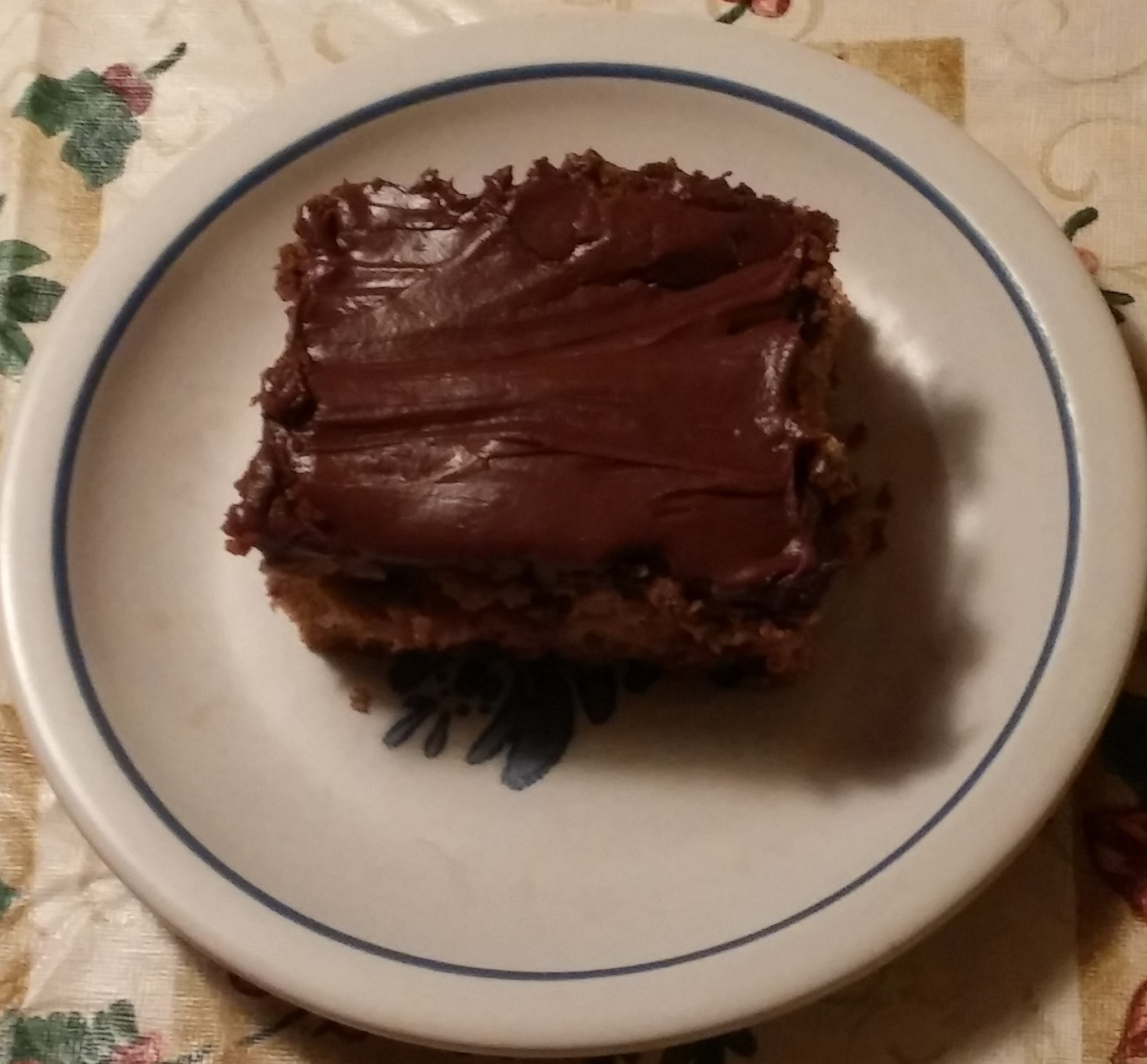
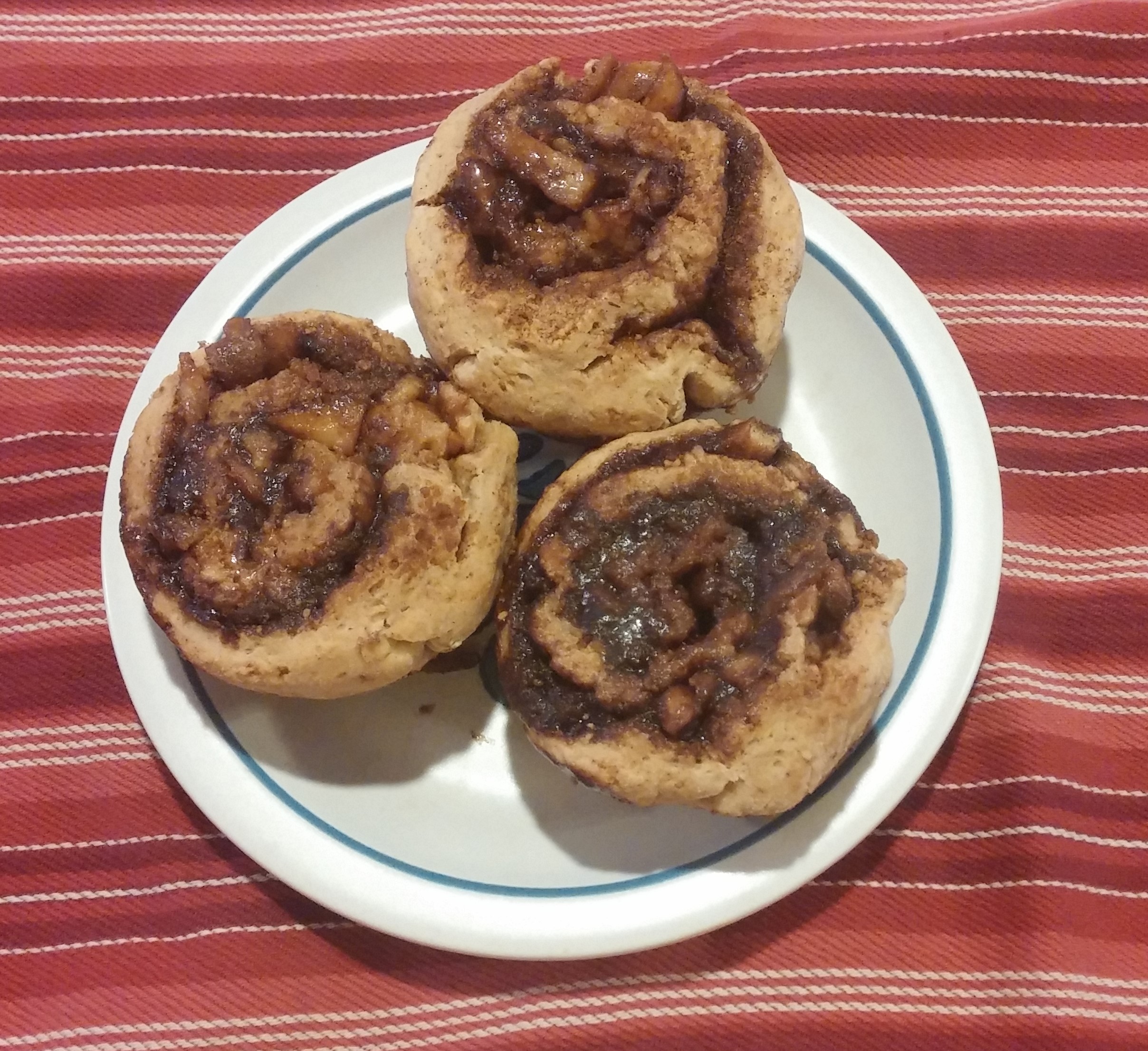
Creative Cooking: Brussel Sprout Chocolate Chip Cake

brussel-sprout-cake

“The secret ingredient is what?”

After one day of Thanksgiving leftovers, my husband is usually ready for something different. So, over the past few days we’ve had a turkey shepherds’ pie (using leftover turkey, some of the roasted carrots and cauliflower, and the mashed potato timbale), turkey-vegetable soup (using leftover turkey, the rest of the roasted carrots and cauliflower, and the leek gravy), stuffing muffins (using leftover stuffing and some of the leftover turkey sausage stuffed mushrooms), cranberry waffles (using leftover whole berry cranberry sauce), cranberry muffins (using leftover cranberry-orange relish), and quiche (using the rest of the leftover turkey sausage stuffed mushrooms).

Yesterday as I was rummaging through the fridge to see what we still had leftover, I found the roasted brussel sprouts which I hadn’t used in any of the above meals. While searching online to see if there might be anything interesting I could use them for, I found a recipe for brussel sprout cake. I was intrigued but a closer look at the multitude of recipes — which I discovered to actually be the same two recipes just remade by many, many people — revealed a lot which I didn’t like about the cake.

One was simply that the cake seemed to be a variation of a fruit cake recipe, only with vegetables added, so the bake time was lengthy and the cake, more dense than I’d like. Two, the recipes called for two cups of sugar and two cups of oil.  Third, all the extras which make the cake more like a fruit cake — the raisins, walnuts or pecans, shredded coconut, etc… — were not ingredients my children would like in a cake. Four, the recipes, were of course, not allergy friendly for wheat, dairy and nuts.

So, I decided I’d create my own brussel sprout cake which used gluten free flour in place of the wheat, agave instead of sugar and in half the amount, applesauce for some of the oil, and a small amount of mini chocolate chips in place of the original “extras”. When the cake was done, we topped it with a dark chocolate frosting, and the result was an extremely tasty cake which now contained the health benefits of brussel sprouts which includes being high in protein and vitamins C and K.

Brussel Sprout Chocolate Chip Cake

Ingredients:

2 cups roasted brussel sprouts

1/2 cup safflower oil

1/2 cup unsweetened applesauce

1 cup agave

1 tbsp vanilla

4 eggs (if you are watching cholesterol, use 1 cup liquid egg whites instead)

2 cups gluten free flour blend (I used Pillsbury brand for this cake)

1 cup gluten free oat flour

2 tsp baking powder

1 1/2 tsp baking soda

1 tsp salt (you can reduce this if you are watching sodium intake)

2 tsp ground cinnamon

1 tsp ground nutmeg

1/2 tsp ground ginger

1/2 tsp ground cloves

1 cup Enjoy Life allergen free mini chocolate chips

2 tbsp apple cider vinegar

Baking Instructions:

  1. Preheat the oven to 350 degrees and line an 11 x 15 pan with parchment paper.
  2. Coarsely chop up the brussel sprouts in a food processor for a few seconds or with a knife on a cutting board.
  3. In a large bowl, combine the brussel sprouts with the oil, applesauce, agave and vanilla.
  4. Beat the eggs and add them to the brussel sprout bowl. Set aside.
  5. Combine the gluten free flour with the oat flour, baking powder, baking soda, salt, cinnamon, nutmeg, ginger and cloves.
  6. Stir in the mini chocolate chips.
  7. Add the dry ingredients to the wet ingredients, along with the cider vinegar, and mix just until the dry ingredients are moistened.
  8. Pour into the prepared pan and bake for 30 to 35 minutes until the cake has puffed, is golden, and a toothpick inserted in the center comes out clean.
  9. Cool on a wire rack.
  10. Frost with favorite frosting recipe. (We made dark chocolate but I think a cream cheese frosting or vanilla or cinnamon frosting would be equally tasty.)


Holiday Happenings: Cranberry Sauce

bags-of-cranberries

“Apparently cranberry sauce is underappreciated….”

My husband came home the other day and told me about a news story on the radio. The topic was cranberry sauce and how it was not as appreciated as other foods eaten during the Thanksgiving meal. This, of course, spurred discussion among our family about our own cranberry preferences. My son will only eat jellied cranberry sauce with no chunks. My oldest, my husband and I love cranberry sauce in any form. My other daughter won’t eat it, no matter the texture.

Cranberries, however, are very good for your health, containing antioxidants, fiber, and many nutrients needed by the body. What I find, though, is that because they have such a tart flavor, folks use way too much sugar when cooking with them. So, I like to make my own cranberry sauce instead of purchasing it from the store.

When I tell folks that I make cranberry sauce, they always seemed to be surprised, which I find surprising since cranberry sauce is the easiest food to make. You simply put cranberries into a pot with water and sweetener and let it cook down. The entire process takes about 10-15 minutes, at the most.

Where the creativity comes in is deciding what type of cranberry sauce you’d like for Thanksgiving. You can add other fruits to the cranberries like pears or apples or tangerines or oranges or apricots or cherries to add a contrasting fruity flavor to the cranberries. You can add red wine or port or bourban if you’d like a more complex flavor. You can add ginger or maple or anise or jalapeno if you’re looking to try something a little different this year. You can use water, orange juice, apple cider or any other liquid you can imagine to change the flavor. You can add nuts or dried fruits to add crunch and texture. You can even change up the texture of the sauce, making it chunky, relish-style or jellied.

And after Thanksgiving the cranberry sauce can be “recycled” in many ways. Swirl it into your favorite cheesecake recipe. Add the sauce as a fixing for your favorite sandwich. Mix it into a muffin recipe. Top pancakes or waffles with it. Combine it with another fruit to make the filling for a pie. Stir it into your breakfast oatmeal. Use it as a spread for a slice of quick bread like banana or zucchini. Combine it with cream cheese for a dip. Top vanilla ice cream with it. The ideas are endless.

A food as versatile as cranberry sauce is truly just begging for you to experiment this year. And what’s great is that unless you’re allergic to cranberries, people with food allergies can eat it!

Some tips:

  1. The cranberries: It doesn’t matter whether you use fresh or frozen cranberries. The general rule of thumb is that about 12 ounces of cranberries requires about 1 cup of liquid.
  2. The sweetener: For most recipes, for 12 ounces of cranberries, they’ll call for 1 cup of sugar. I’d suggest you cut that in half and save your health or use 1/4 cup Agave or 1/2 cup of coconut sugar or 1/3 cup truvia.
  3. The add-ins: Decide what type of cranberry sauce you’d like to make and add the ingredients in with the cranberries so that they all cook together and the flavors meld.
  4. Traditional Style: To make traditional cranberry sauce, simply put all your ingredients into a pot, bring the liquid to a boil, let it simmer for about 5-10 minutes until the cranberries pop and are the texture you’d like, remove from the heat, let it cool, and then refrigerate until you’re ready to use it.
  5. Relish Style: Simply use your food processor to chop up the cranberries, sweetener and additions and refrigerate. You should decrease the liquid, though, and only add just enough to moisten the relish.
  6. Jellied Style: Prepare the sauce as you would for the traditional but then push everything through a strainer, mashing the ingredients as much as you can to get as much as you can into the sauce and then refrigerate what you’ve pushed through the strainer.


Autumn Appetites: Winter Squash-Kale-Bean Soup

“Grandma’s wisdom….”

Last week I read that the folks at America’s Test Kitchen learned something which my grandmother had taught me 30 years ago and which she had known for many more years than that before she taught me. Not for the first time, I was surprised that those culinary “experts” hadn’t known something which I had figured was known by many.

As I thought more about it, though, I realized that there’s a difference between folks who have culinary jobs and people who have years and years of cooking experience. My grandmother raised eleven children and had to find ways to stretch food as much as she could, and she learned the best ways to make food and how to keep things as simple as possible whenever she could.

What I had learned from my grandmother, which America’s Test Kitchen apparently just learned this month according to their magazine, is that you never boil corn on the cob. You bring water to a boil and then you let the ears of corn sit in the hot water for a set time, depending on the amount of corn. This is how I’ve made corn on the cob ever since my grandmother showed me as a teenager. I had taken it for granted that others knew, too.

I figured my grandmother had learned it from someone before her, but she may also have simply figured it out on her own after cooking for so many for so long. I started thinking about the many other tips my grandmother had given me over the years when I was younger before she passed away, and I realized a lot of my cooking depends on things I learned from her. Just this past weekend, I made one of my family’s favorite soups, which uses tips I learned specifically from my grandmother.

My grandmother rarely had “fresh” food in the house. Dependent on food from local farms, which tended to be seasonal, certain foods simply weren’t accessible year round. So, she always had meat and vegetables frozen in a big freezer and jars of canned beans, jellies, sauces, and fruits in the “pantry” which was the walk-through area between the garage and their double-wide trailer. From her, I learned how to create foods which use staples from the freezer and pantry and which can be quickly put together to feed a lot of people.

The winter squash, kale and bean soup I made uses frozen squash, which I roasted last year, pureed, and froze; frozen kale which I always keep on hand, purchasing them by the bagfuls at the grocery store when they’re in season (early Spring and then again in the Fall); canned, unsalted, no sugar added beans, which I keep in my pantry; and no salt, fat free vegetable broth which I also keep in my pantry. I mixed everything together in my crock pot with some herbs and let it cook all day. When evening came, we had a hearty soup for dinner which warmed both the heart and the tummy.

Winter Squash-Kale-Bean Soup

Ingredients:

9 cups thawed, frozen pureed cooked winter squash (equivalent to 6 of those 12 oz packages you can purchase in the freezer section of the grocery store)

1 cup frozen chopped kale (equivalent to half a 16 oz bag you can purchase in the frozen section of the grocery store)

One 16 oz can of no salt, no sugar added white or northern or cannellini beans, rinsed and drained

1/2 tsp dried thyme, crushed between your fingers before putting in

1 tsp onion powder

1/2 to 1 tsp salt

1/4 tsp black pepper

No salt, fat free vegetable broth (amount will depend on how thick or think you like your soup, between 1 to 3 cups)

Cooking Instructions:

In a crock pot (4 1/2 quart will work), mix the thawed squash with the frozen kale, the can of beans, the thyme, onion powder, salt and black pepper. Add the desired amount of vegetable broth and let it cook in the crock pot on low all day (6-8 hrs) or on high for half the day (3-4 hrs).


Recipe Revamping: Saltine Brickle

“Please, can you help me?”

I receive emails from various types of people. Folks who have toddlers with food allergies. Mature adults whose doctors have put them on restricted diets. People who have suddenly developed food allergies after years of eating anything they wanted. Diet conscious folks who want to eat healthier. What all these folks have in common, though, is that they’ve always been adults.

This week I received an email for the first time from a child who had stumbled upon my site. She is ten and apparently really likes saltine brickle, which she had tried at a friend’s house. Her mother, however, had told her it had too much fat and sugar and wasn’t good for her. Like many folks of her generation, she went online to see if there was a solution to her problem.

In her email to me, she wanted to know if I could “fix” the recipe so it wouldn’t have as much fat and sugar but still taste good.

I confess, I found her and her email just too cute! Of course, I had to do what I could to help her out. It turned out that she has both a nut and dairy allergy, so I needed to accommodate those in the revamping of the recipe.

When you google saltine brickle recipes, you’ll find that the recipes call for anywhere from 1 to 2 cups of butter, usually about 1 cup of sugar, and anywhere from 1 1/2 to 3 cups of semi-sweet chocolate chips. The first order of business became all that butter. I opted to cut the amount down to 1/2 cup, and for the dairy allergy I used vegan soy free butter. The second item to tackle was the sugar. I could have simply cut the amount, but since I don’t like to use sugar as a general rule, I chose to use agave and cut the amount down to only 1/4 cup of it. For the chocolate, I swapped dairy and nut free dark chocolate mini chips for the regular sized semi-sweet chocolate chips, and I reduced the amount to 1 cup. To make the dessert slightly “better” I used a whole grain cracker instead of the white flour saltines. I tried Market Basket whole grain saltines, Manischewitz whole grain matzo, and Van’s whole grain gluten free crackers. For the final change, I decided to add some protein to the dessert and sprinkled pumpkin seeds on top.

The final creations were all tasty and worth the effort, and the young girl wrote to tell me that her mom let her make my version because she, one, thought it was great that her daughter showed initiative, and two, because she agreed that the reduction in sugar and butter and the addition of whole grains and protein made them “better” for eating.

Saltine Brickle

Ingredients:

40 whole grain saltine sized crackers, your choice of wheat or gluten free (you want to make a 16 inch x 10 inch rectangle; if using the matzo crackers, you’ll obviously use less because they are larger crackers) 

1/2 cup vegan soy free butter

1/4 cup agave

1 cup allergy friendly dark chocolate mini chips

1/2 to 1 cup pumpkin seeds (I used the no salt added version but I tried both roasted and raw and liked both; if you have no allergies to nuts or peanuts, try using those if you don’t like pumpkin seeds; the amount to use depends on whether you just want a few seeds on each cracker or want the crackers to be covered with them.)

Baking Instructions:

  1. Preheat the oven to 425 degrees.  Line a rectangle 17 x 11 inch pan with aluminum foil. Generously grease the foil with your favorite method.
  2. Place the crackers on the foil lined pan to make a 16 x 10 inch rectangle.
  3. Melt the vegan butter in a small saucepan over low heat, stirring frequently (should take only about a minute). Add the agave.
  4. Carefully pour the butter mixture over the crackers so each cracker is covered.
  5. Bake the crackers in the oven for  4 minutes. Remove the pan and turn off the oven.
  6. Sprinkle the mini chocolate chips over the crackers and put the pan back in the turned off oven for 1 minute.
  7. Using a spatula, carefully spread the melted chocolate so all the crackers are covered.
  8. Sprinkle the pumpkin seeds over the top of the chocolate.
  9. Put the pan into the freezer for about 10 minutes until the chocolate has solidified.
  10. Break apart the brickle and enjoy!

Autumn Appetites: Spiced Apple Bundt Cake

apple-bundt

“Life is too short to not bake.”

To my great sadness, a friend and neighbor unexpectedly passed away. She had been fine but then wasn’t feeling well one day, discovered she had stage four pancreatic cancer, and died within two weeks of the diagnosis. The funeral was this past Friday, a week after her passing. As I dealt with the sorrow of losing her this weekend, I turned to those things which give me solace: my faith, family and friends, writing, and cooking. In their own way, each provides me comfort and renewal.

Fortunately for me, my husband is teaching a class on Sundays which I tend to bake for, so I had the perfect opportunity to create a recipe. Because a friend generously gave me tons and tons of my favorite Honey Crisp apples, I knew I wanted to make something apple-y. I wanted something a little special, though — something wonderful like my friend. A bundt cake came to mind.

In a previous post, talking about bundt cakes, I mentioned that they’re tasty, dense cakes which are pretty to serve because they retain the shape of their molded pans. Usually bundt cakes are filled with goodies like fruit and nuts and chocolate, so they’re even pretty once they’re cut into slices. Since I had the abundance of apples, I decided that a spiced apple bundt cake would be perfect.

The batter is very important to a bundt cake. I decided that I’d combine sorghum and millet flour with arrowroot starch for my gluten free blend with a little bit of xanthan gum. For the spices I opted for cardamom, cinnamon, nutmeg, ginger and cloves because they remind me of Autumn. With the sweetness of the apples, I didn’t really need to much for a sweetener so I chose to add Agave which would add mild sweetness as well as some liquid moisture to the cake. For the fat, I decided safflower oil would be best because of it’s light taste. To add some more spice to the cake, I mixed the apples with the same spices as the batter. Then to finish the cake, I drizzled a little mixture of cinnamon and powdered sugar mixed with flax milk on top of the cake. The result was both pretty and tasty.

Spiced Apple Bundt Cake

Ingredients:

3 cups of finely diced peeled and cored Honey Crisp apples, about 3 to 4 apples (My daughter and I liked the batter to apple ratio in the cake but my son and husband suggested that next time I increase the apple pieces to four cups so there would be “apple pieces in every bite”; I’ll let you decide what you’d prefer to do. *grin*)

1 tsp cinnamon

1/2 tsp cardamom

1 cup sorghum flour

1 cup millet flour

1 cup arrowroot starch (you can also use tapioca or potato starch if you’d prefer)

1 1/2 tsp xanthan gum

1 tsp salt

1 tsp ground cinnamon

1/2 tsp ground cardamom

1/2 tsp ground nutmeg

1/2 tsp ground ginger

1/4 tsp ground cloves

2 tsp baking powder

1/2 tsp baking soda

3/4 cup safflower oil (I like a drier cake which goes well with tea and coffee or glass of milk so this was perfect in my opinion, but I know some folks prefer a moister cake, so if you do, increase the oil to 1 cup)

1 cup agave

2 eggs

1 1/2 tsp gluten free vanilla

1 tbsp apple cider vinegar

Baking Instructions:

  1. Preheat the oven to 350 degrees and liberally grease a bundt pan with your preferred method and then dust it with your preferred flour. (I used vegan shortening and brown rice flour.)
  2. Mixed the peeled, diced apple pieces with the cinnamon and cardamom and set aside.
  3. Blend the sorghum and millet flours, arrowroot starch, xanthan cup, salt, cinnamon, cardamom, nutmeg, ginger, cloves, baking powder and baking soda. Set aside.
  4. Whisk together the oil, agave, eggs and vanilla.
  5. Add the dry ingredients to the wet with the apple cider vinegar and mix just until the dry ingredients are moistened.
  6. Carefully fold in the apple pieces until the apples are fully incorporated into the batter.
  7. Spoon the batter into the prepared bundt pan.
  8. Bake for 50 minutes until the cake is golden and pulling away from the sides and a toothpick inserted into the center comes out clean.
  9. Let the cake sit in the pan on a cooling rack for at 15 to 25 minutes.
  10. Turn the cake over onto the cooling rack to cool completely.
  11. The cake can be served as is or you can top it with a sprinkling of powdered sugar or a mixture of powdered sugar and cinnamon, or you can glaze it. I glazed it by mixing a couple tablespoons of powdered sugar with 1/2 tsp of cinnamon and just enough flax milk to make a drizzable glaze.
  12. Enjoy!


Autumn Appetites: Cinnamon Apple Strudel Muffins

apple-cinnamon-muffins

“Will you teach me to cook?”

A couple of months ago my son asked if I’d give him weekly cooking lessons because as he explained, “When I grow up I need to know how to make the two most important meals of the day:  breakfast and dessert!”

So, over the past several weeks he’s learned how to make pancakes, waffles, French toast, marble cake, brownies, and oatmeal crumb cake. This morning, since Autumn has officially begun, and my favorite apples, Honey Crisp, are finally in season, I thought I’d teach him how to make my version of an apple strudel.

Strudels are lovely recipes where dough is filled with yummy fruit, rolled and cooked. I have found them to be rather messy, though, and not easy to eat without a fork and knife. I do, however, love to make use of Honey Crisp apples during the Fall months because they are naturally sweet which means I don’t need to add any additional sweetener to them.

The recipe that follows is sort of a combination between an apple strudel and a cinnamon roll which is cooked in the shape of a muffin using muffin tins. I got the idea from a recipe by Nicole Hunn of Gluten Free on a Shoestring (http://glutenfreeonashoestring.com/). If your only issue is gluten, she is a good source to refer to for recipes. Since I, however, have multiple allergies, I’m always having to adjust her recipes to fit my particular needs. In this case, though, her idea of making cinnamon buns in a muffin tin appealed to me, and I adapted that method for my recipe, which it turns out even my eleven year old can easily make.

Making this recipe for a Saturday morning is lovely because while the forming of the muffin takes about 20 minutes, the last half of the time is them baking in the oven while you make something else to go with them, which in our case this morning was turkey breakfast sausage.

For the recipe, I created my own flour blend because I wanted the “breakfast” muffins to be fiber full and have some protein. I found over time that a combination of sorghum, millet, oat, brown rice and tapioca flour gives us the best taste and texture. I also opted to use coconut sugar because I stay away from refined white sugar. Folks who have coconut allergies, though, should go ahead and use sugar or some other sugar substitute. In addition, I chose flax milk for my liquid because I figure it doesn’t hurt to add more omega 3’s to our diet, but again, if folks are allergic or prefer some other milk, go for it.

Cinnamon Apple Strudel Muffins

Ingredients:

Filling:

Apple:

2 Honey Crisp apples

1/4 cup water

1/2 tsp cinnamon

Cinnamon:

1 cup coconut sugar

2 tablespoons cinnamon

1/4 cup vegan soy free butter (or regular if you’re not allergic and prefer)

Batter:

1 cup sorghum flour

1 cup millet flour

1 cup tapioca flour

3/4 cup brown rice flour

1/4 cup oat flour

2 tsp xanthan gum

2 1/2 teaspoon baking powder

1 1/2 tsp cinnamon

1/2 tsp nutmeg

1/4 tsp salt

1/2 cup coconut sugar (or sugar, if you’d prefer or are allergic)

1/4 cup plus 2 tablespoons of vegan soy free butter (or regular if you’re not allergic and prefer)

2 eggs

1 cup flax milk (or other type if you prefer or are allergic; I would’t recommend rice milk, though, because it’s too thin)

Topping:

1 tbsp vegan soy free butter

1 tbsp coconut sugar

1/2 tsp cinnamon

Baking Instructions:

  1. Preheat the oven to 350 degrees and grease a 12 muffin tin with your preferred method.
  2. Peel, core and chop the apples by cutting them into quarters, then slicing each quarter thinly into five or six slices, turning the slices on their sides and cutting them on the short ends into small strips. You’ll have a couple cups worth of matchstick width pieces of apples.
  3. Put the apple pieces into a shallow pan which allows the pieces to be one layer. Pour the water over the apples and sprinkle the cinnamon on top. Stir the apples to coat them well with the cinnamon and then saute the apples over medium-low heat. The water will come to a boil and then slowly dissipate. Stir occasionally until all the water is gone and the apples are soft. Usually this entire process only takes about five minutes. Turn the heat off and let the apples cool while you make the rest of the filling and the batter.
  4. Mix the coconut sugar with the cinnamon and set aside. Melt the vegan butter and set aside.
  5. Mix the sorghum, millet, tapioca, oat and brown rice flours with the xanthan gum, baking powder, cinnamon, nutmeg, salt and coconut sugar.
  6. For the next part, it works well if you have a mixer with a dough handle but if you don’t have a dough handle, you can mix the dough with spoon and then finish kneading everything in by hand: Add to the dry ingredients, the vegan butter, eggs and milk, incorporating them just until you have a ball of dough, if you’re using the mixer. If you’re doing it by hand, mix the ingredients into well incorporated and then knead on parchment paper sprinkled with flour until you have a soft, pliable ball of dough.
  7. Put the dough ball onto parchment paper sprinkled with flour (I use the brown rice flour but you can use any type you’d like). Lightly sprinkle the dough with flour and roll it into an 15 by 12 inch rectangle. I find it’s best to start in the center and slowly work your way outward in all four directions, occasionally shaping the dough with your hands into a rectangle shape. (This was the part my son found to be the most fun!)
  8.  Using a brush, brush the melted butter over the surface of the dough, leaving about a 1/4 inch on one of the short ends free of butter. It’ll seem like you have a lot of butter but be sure to use all of it on the top of the dough.
  9. Sprinkle the butter surface of the dough with the coconut sugar mixture, leaving that 1/4 inch on the short end free as before of anything.
  10. Carefully spread the apple slices evenly on top of the cinnamon covered dough so that they’re in an even single layer but mostly covering the surface with the exception of the 1/4 inch on the short end.
  11. Starting on the short end opposite the free 1/4 inch side, carefully tuck in the end and begin rolling the dough toward the uncovered end. You can use the parchment paper to help roll. With every roll of the dough, it helps to use your hands to tighten it along the entire edge before continuing with the rolling. If you are using the parchment paper and have sprinkled flour, the dough will easily roll off the paper. If you are finding that it does stick, use a spatula to gently unstick the dough from the paper before continuing with your rolling. (I have never had to do this, but just in case….)
  12. When you reach the end which is free of filling, gently seal the edge and use your hands to carefully shape the log so it’s evenly round along the entire log.
  13. Slice the log into 12 even pieces. I like to just lay a 12 inch ruler and mark off the 12 inches and then use a serrated knife to cut the pieces.
  14. Put the pieces into the greased muffin tins. You should find that they just fit into the tins. You may need to shape/squash them a bit on the sides to get them in if your dough is nice and puffy, but that’s okay.
  15. Bake in the preheated oven for 25 minutes. They’ll be puffed and golden brown. While the muffins are baking, mix the tablespoon of coconut sugar with the cinnamon. Set aside.
  16. Using a butter knive, gently go around the edges to release them from sticking. Let them cool about five minutes in the tins before removing them to a cooling rack. While they are cooling in the tins, divide the tablespoon of butter evenly on top of each of the 12 muffins and brush them until the butter is melted. Sprinkle the sugar/cinnamon mixture evenly on top of the muffins and let it melt into the butter.

Note: For the holidays, instead of using the cinnamon sugar on top, I make an icing to drizzle on top which is tofu cream cheese blended with agave and cinnamon. If you prefer to use sugar, you can mix powdered sugar with cinnamon and milk.


Summer Loving: Tomato Tarts

“It’s the best time of the year!”

If you have children, had children, or simply remember being a child, you know that this time of the year is filled with the rush of buying needed school supplies, the excitement (for the children) and exasperation (for the parents) of replacing worn or outgrown clothing and shoes, and either the sadness or the joy, depending on the type of children and parents, of going back to school.

I’m one of those parents who is always sad when the new school year begins because I prefer the lazy days of summer when the children and I don’t need to rush anywhere, can play games, and no one is stressed by homework and relational angst. So, when school resumes I need to find ways to cheer myself up, and fortunately for me, this is also the time of year when some of nature’s best gifts present themselves.

I’m talking about tomatoes. Large, fresh, sweet, home or local farm grown, deep red, yellow and even purple organic tomatoes. True fact about me: I only eat large tomatoes in August and September when I can get them fresh from the garden. I will not purchase store tomatoes which have yet to fully turn their color and have very little taste. Life’s too short to insult my taste buds.

So, when tomatoes are in season, I make as many different types of dishes as I can because I know it’ll be another year before I can enjoy their taste again. One of my family’s favorite dishes is tomato tarts. A simple crust, layers of lovely, tasty fresh tomatoes, and an egg custard. I recently made some tomato tarts using fresh tomatoes to serve at a brunch for my husband’s family forest, and they were an absolutely hit. Fortunately, I had made several of them so that when people went back for even thirds, we had enough!

Now, a warning: Yes, you can make these tarts with any tomatoes, but you have to trust me when I tell you that there’s nothing like the sweet taste of a freshly picked tomato to enhance these tarts. So, if you can, swing by your local farm and get a basket full. Your taste buds will thank you!

Tomato Tart

Ingredients:

1 1/2 cup your favorite flour (I use gluten free flours like garbanzo or fava bean or oat or sorghum but whole wheat works, too)

1/2 tsp ground onion powder

1/4 to 1/2 tsp salt (your taste preference)

1/2 tsp dried oregano

1/8 tsp black pepper

1/3 cup safflower oil

3 tbsp your favorite milk (cow, soy, flax, quinoa, rice, etc…)

3 eggs

1/2 cup your favorite milk (cow, soy, flax, quinoa, rice, etc…)

1/4 tsp black pepper

1/2 tsp dried oregano

Fresh tomatoes

salt, pepper and oregano

Cooking Instructions:

  1. Preheat the oven to 350 degrees.
  2. Mix the flour with the onion powder, salt, oregano and pepper.
  3. Whisk the safflower oil with the milk until it’s creamy. Pour into the flour mixture and stir with a fork until a dough ball forms.
  4. Press the crust into a 8 or 9 inch pie pan, using your clean hands to form an even crust along the bottom and sides of the pan. Set aside.
  5. Whisk the eggs with the milk, pepper and oregano. Set aside.
  6. Thinly slice the tomatoes, allowing some of the juices to drain out in a colander. Then layer the tomato slices in the prepared crust, sprinkling some salt, pepper and oregano on each layer before putting on the next.  How much you put in is up to you, but I like to layer them up to the top of the crust.
  7. Carefully pour the egg custard over the tomato layers. If you find that you’ve layered so many tomatoes that your egg custard doesn’t cover the tomatoes as you’d like, whisk another egg with a tablespoon of milk and add it.
  8. Bake in the preheated oven until the eggs are set. How long will vary on how thick your tomato layers are as well as which type of milk you ended up using.  I suggest you set the timer for 15 minutes and go from there. The longest it’s ever taken for me is 30 minutes.


Creative Cooking: Crepes

“Sorry we tried to kill you and your students. Do you want a job with us?”

Several weeks ago I had a terrible experience at a banquet I helped to host for the music students of our high school. Several conversations and in-person meetings with the chef and the functions manager of the facility to ensure that the students from our high school would have no worries regarding their food allergies didn’t yield the expected results . Despite having put together a completely allergy friendly menu ahead of time, on the day of the banquet, the chef cooked the food with all the ingredients he was supposed to leave out which caused no end of stress as we learned that fact literally minutes before several students put the food into their mouths! Fortunately, we did get to the students before their forks touched their lips, and new meals were made, but as you can imagine, I was not at all pleased.

Laughably, all my mother’s etiquette training must have worked, because at the end of the event, the onsite coordinator actually took the time to thank me for being the most polite angry person he’d ever had the pleasure of working with to deal with an issue. More incredibly, he also told me that he and the chef had taken a liberty in having a piece of the gluten, dairy, soy, nut free chocolate mousse cake I had brought for the students with allergies and that it was the best cake either of them had ever eaten. Most unbelievable, though, was the next day when the manager, who had called to see what she could do to keep our school’s business after the unfortunate event, asked me if I wanted to work for them, making cakes for their weddings!

As a writing facilitator, I always tell the folks who attend my writing groups that truth is stranger than fiction and that they only have to look at life for creative writing ideas. My experience above bears out the truth of what I’ve been telling them!

The fact is that while there’s more recognition around gluten and nut sensitivities, there’s still a long way to go for the world to think proactively about accommodating people with food allergies in general. Our allergy friendly menu fell off the radar for the chef and the manager because they simply don’t think about it regularly. Fortunately, now the manager has revamped all of their forms so that allergies are actually the first item on the form — and in bright red now! So, hopefully no other folks will have to deal with the issues we went through on that day.

As for the job offer, the chef was surprised that my cake was actually good! The site coordinator went on and on about how the chef couldn’t believe how much the texture and the taste was like a “real” cake. As he spoke, I kept thinking that my cake WAS a REAL cake. It wasn’t “fake”. It wasn’t made of air. All the ingredients were ingredients you can buy at the store, made from real, natural foods like tofu and garbanzo beans and oats and flaxseed.

I was thinking about all this the other day as I made crepes….

Like the cake I made, crepes are misunderstood to be something they are not. Most folks I’ve spoken to seem to believe crepes are complicated to make. Crepes are actually wonderfully easy to make and are very versatile. They are basically just flour, eggs, and milk — all of which people can be allergic to. This, however, isn’t a problem, because it’s so easy to substitute ingredients for crepes. And it’s worth doing, because you can make crepes for breakfast, lunch, dinner and dessert in just a matter of minutes. And if you have guests, they’ll be highly impressed because they’ll think you did a lot of work when you didn’t!

What you need to know about crepes:

  1. Ratios: Google crepes recipes, and you’ll discover that the only consistency lies in the three basic ingredients: eggs, milk, and flour. The ratio of the three to one another varies from recipe to recipe. For every one cup of flour, some will call for 1 cup of milk; others 2 cups. For that same cup of flour, some recipes will call for two eggs; another four. What you need to know is this: crepes are supposed to be thin, so your liquid ingredients combined – the milk and eggs – should be more than the flour, unlike in pancakes where the dry to liquid ingredients are usually one to one. How much milk versus eggs you add is really all about your preferences. More eggs makes slightly thicker, custardy crepes. More milk creates lacier, more delicate crepes. If you are making crepes for the first time, I’d suggest using one cup of flour, one cup of milk and two eggs as a basic recipe and then experiment from there to see which texture you prefer.
  2. The Flour: You are not limited to white flour for crepes. You can use wheat; you can use gluten free; you can even use nut flours. What’s important to know is that because you want your crepes to be light, if you are going to use a heavier flour like garbanzo bean or whole wheat or sorghum, you should opt to use less than you might with typical white flour – more like 1/2 cup. If you want to use the same one cup amount, opt for a lighter flours like rice or tapioca or arrowroot.
  3. The Milk: Once again, your options are unlimited. You can use other types of milk for crepes besides cow milk. Almond milk, coconut milk, rice milk, quinoa milk, etc… they all work! And unlike the flour substitutions, these can all be substituted one to one for the regular milk.
  4. The Eggs: If you are watching your cholesterol, you can opt to use only egg whites. Just remember that you need two whites to replace one whole egg, or if you’re using liquid egg whites, that about 1/4 cup is equivalent to a large egg. If you are allergic to eggs, you can also simply leave the eggs out. You can simply increase the milk amount to replace the liquid you’re losing from the eggs — again about 1/4 cup of milk for each egg you omit. You can also mix one tablespoon of ground golden flaxseed with three tablespoons of water to replace one egg.
  5. The Fat: Crepes usually have one other important ingredient: a fat. Usually one tablespoon of butter or olive oil or melted coconut oil or almond butter or whatever you decide is enough, but it’s good to choose a fat because it helps the crepes to stick less to your pan, as well as adds some flavor.
  6. The Flavor: Crepes are usually made so that you can fill them with savory or sweet fillings so you don’t really need to add anything other than a pinch of salt, but as always, tailor the crepes to your taste. If you want something sweet, add a bit of honey or agave to the batter. If you want something savory, add some herbs. Want something distinctive? Substitute orange juice for part of the milk. Experiment and see what you like.
  7. The Batter: Okay, I promised you that making crepes was easy, and it is. Whatever you’ve decided to use for your crepes, you simply mix all the ingredients together. You can whisk them, blend them, shake them, food process them, and in a matter of minutes you have a nice batter. What’s key is that you want your batter to be very smooth. The smoother, the better. If you are making crepes with flour, you should let the batter rest because this relaxes the gluten in the batter. If you’re making gluten free crepes, then you have no such worries.
  8. The Cooking: People think making crepes is difficult and takes time, but I make enough crepes for a family of five in less than ten minutes. Crepes cook very quickly. You simply grease your pan, pour a scant amount to just cover the bottom, let the crepes begin to solidify (usually only about a minute), flip, let the crepes finish cooking on the other side (usually about thirty seconds), transfer to a plate, and you’re done with a stack in just mere minutes. You simply need to follow a couple of easy steps:
    1. Don’t use a large pan. A pan sized for an omelet is the perfect size. It allows you to easily flip the crepes without worrying about tearing them.
    2. Cook over medium heat. Too low and the crepes won’t cook quickly enough. Too high and the crepes will burn.
    3. Don’t use a large scoop. You only want enough batter to just cover the bottom of your pan. Usually a quarter cup works just fine.
    4. Invest in a wide spatula. A spatula which allows you to get completely under the crepe to flip it quickly is best.
    5. Make sure your crepes won’t stick to your pan. Use your favorite spray or oil in between each crepe if you don’t have a nonstick pan. You don’t need a lot – a quarter tsp will work – but you do need something to make sure the crepes don’t stick because otherwise they’ll tear or burn.
  9. The Filling: Crepes are great because you can fill them however you want. You can keep them simple and spread jam on the crepes and roll or fold them over. You can put fresh fruit on top. You can make a creamy vegetable filling (I like to make a white sauce with spinach and mushrooms which I roll the crepes around). You can fill the crepes with ice cream or a vanilla custard. You can spread cheeses like ricotta or marscarpone and fold the crepes. You can fill them with pureed pumpkin or squash. You can use a lemon curd. You can roll chicken salad inside crepes. The list is endless. Experiment and see what you like!


Cooking Techniques: No Bake Cheesecakes

“But they’re really more like suggestions than hard and fast recipes….”

Once again some friends were telling me this week that I needed to write a cookbook….. And once again, as I thought about it, I realized that the problem with a cookbook is that it presumes you believe your recipes should be followed…. And I don’t!

I personally never follow recipes. Even the ones I put on this blog, I’m always re-creating to see if I can either make them better or differently. To me the goal of this blog is to give folks enough tips and techniques and knowledge that you can then be as creative as you want. My recipes are supposed to be jumping off points, not “hard and fast, you must follow this to the T” types of experiences. That’s why I write at length about the “how’s” of each recipe I give, and it’s also why there are so many posts on this site which give no recipes and only “techniques”.

To illustrate my point today, I thought I’d use no bake cheesecakes: Right now they’re all the rage because they’re versatile and summery without the use of an oven. I could certainly give you a recipe for a no bake cheesecake but the fact is that there are so many different ways to make them that I’d hate to limit you to just one recipe.

For instance:

The crust: For a no bake cheesecake, you can use just about any type of crust you’d like: a crust made from graham crackers, cookies (any type there is from ginger to lemon to sandwich cookies to chocolate chip to oatmeal to you name it!), pretzels, crackers,coconut, goldfish, vanilla or chocolate wafers, nuts, etc…. What type of crust you’ll make will depend on what you’re making for the filling. If you want a traditional cheesecake, use graham crackers. If you’re making a cheesecake with chocolate in it, you might want to use chocolate wafers or a cookie with chocolate pieces. Maybe you’re making a lemon cheesecake which might go well with lemon or vanilla cookies. You can experiment and see what tastes you prefer. If you have allegies, you can use allergy friendly versions of all the above which you can now find in any supermarket.

What’s key is that you should process whatever you’re using into fine crumbs and mix them with a binder such as melted butter or vegan substitute or coconut oil or a nut oil or plant oils such as olive or safflower. Rule of thumb: about 1 1/2 cups of finely processed crumbs will cover the bottom and sides of a traditional pie pan. How much binder you use depends on your tastes and health: I tend to use a low amount, about 2 tablespoons, just enough to moisten the crumbs so they’ll adhere to one another. Many recipes will call for 4 to 6 tablespoons. You can also begin with two and add more if you think it’s needed. What you use can depend on your tastes and health and allergies. If you’re allergic to dairy or have health issues, you may opt to use a plant oil instead of butter. Or maybe you want just the taste of the cookies you’re using to come through, so you might use a more neutral canola oil. Or maybe your cheesecake will do well to have the complementary flavor of a nut oil.

Whatever you choose for the crumbs and the binder, for a no bake cheesecake, the crust should be made first. You then can either pop the crust into the freezer for 15 to 30 minutes or put it into the fridge for an hour or two. Either way, you want the binder to get cold enough to keep the crumbs together so it won’t crumble when you cut into your cheesecake. So, make sure the crust is solid before making and adding your cheesecake filling.

If you’re looking to make things even easier, you can use store bought crusts. Now they even make gluten, dairy, nut free versions which you can purchase at the regular grocery stores.

The cream cheese: For folks with no allergies, regular cream cheese is what most cheesecake recipes call for. if you’re trying to watch the fat, using a light or fat free version of the cream cheese is acceptable.  If you have dairy allergies, you can use the Tofutti vegan cream cheese. If you’re allergic to soy, you can puree tofu or soaked cashews to replace the equivalent 16 oz of cream cheese.  What’s important is that if you’re using cream cheese, any version, you should bring it to room temperature so it will blend more smoothly without chunks. If you’re using the tofu or soaked cashews, make sure to puree them completely so they’re as smooth as they can be. For a traditional pie pan, two packages of cream cheese or two cups of a replacement is enough to fill the pie pan once you’ve added the rest of the ingredients.

The sweetener: Most no bake cheesecake recipes call for the use of either sugar or powdered sugar in quantities ranging from 1/2 to 1 1/2 cup. You can use either, varying the amount to your particular tastes. If you’re like me and don’t use sugar, you can substitute coconut sugar or stevia or agave which usually require half to less the amount you’d use of sugar. I’d suggest beginning with 1/4 cup and tasting to see if you need to add more. What’s important to know is that no matter what you use for the sweetener, you should add it immediately after you’ve creamed your cream cheese smooth, and you should combine the sweetener well so the cream cheese is not grainy. If you using Agave, keep your mixer going on low while you slowly pour the agave in a little at a time.

The flavor: A no bake cheesecake can be whatever you want it to be: chocolate, lemon, mint, berry, peanut butter, etc…. What’s important to keep in mind is that whether the flavoring is an extract or peel, or chunky like chopped chocolate pieces or mint cookies or pureed strawberries, or if you opt to use jello or pudding mix for the flavoring (see below), add it AFTER you’ve made your cream cheese or substitute smooth and after you’ve added the sweetener.  The first thing you always do with a no bake cheesecake is to make the cream cheese smooth. Then you want to add the sweetener, and then you can add the other ingredients, with the binder being the final ingredient.

The no bake filling binder: When making a no bake cheesecake, you don’t use eggs which is what usually helps to solidify the cheesecake as it bakes. What you can use in the place of eggs varies, though. Some recipes use heavy cream. Others use a combination of sour cream and whipping cream. Some use condensed sweetened milk. Others use whipped topping. Still more use pudding mixes or jello/gelatin or even marshmallow creme. This is why I’d rather not give you a recipe, because you may want to use one or the other depending on tastes, allergies/health, and/or what you have in the house.

What I can give you, though, are tips and information to help you: So, for example, if you are going to use heavy cream or sour cream or whipping cream or whipped topping or marshmallow creme, the ratio is usually two 8 oz containers of cream cheese to 3/4 to 1 1/2 cups of whichever you use. What’s important is that they should be added at the end after you’ve mixed the rest of your cheesecake ingredients, just before you put the cheesecake into the fridge. The quantity will depend on the type of consistency and taste you want for your cheesecake: the more you put in, the airier, lighter and less cheesecake-tasting the cheesecake will be. The less you put in, the more dense cheesecake-like and tasting it will be.

If you choose to use gelatin or pudding mix, the ratio is usually two 8 oz packages of cream cheese to one package of jello or pudding (3 oz size) or one envelope of unflavored gelatin. What’s important is that if you’re using jello or pudding mix, you have two options for how to use them.  One is to simply mix it in really, really well with the cream cheese so it’s smooth. Another is to make up the jello or pudding and let is slightly set before mixing it in with the cream cheese mixture.  If you’re using an unflavored envelope of gelatin, the gelatin needs to be dissolved according to directions (usually a couple of minutes over a tablespoon of cold water and then stirred with a tablespoon of hot water until dissolved) and added to the cream cheese mixture at the end.

For people with allergies, So Delicious makes a whipped topping out of coconut which you can substitute for whipped topping. To substitute for heavy cream you can puree an equal amount of silken tofu; or mix 2/3 cup soy milk with 1/3 cup melted vegan butter for one cup of heavy cream; or use coconut cream in a one to one ratio; or make a cashew cream (soak cashews for a day and puree really, really well) where about one and 1/4 cups of soaked cashews purees into one cup of cream.

The topping: A no bake cheesecake can be simple with just the above ingredient choices mixed together and poured into a crust, but you can also jazz up the cheesecake with toppings. You can pipe whipped topping in designs. You can melt chocolate and drizzle it over the cheesecake. You can chop up cookies or chocolate and carefully place the pieces on top. You can chop berries and put them on top. You can spread jam on top. You can cook a fruit compote and pour it over the cheesecake. The ideas are endless. Let your creative side have fun.

For folks who do like a recipe, below is one a version I made recently.  It does have coconut and soy, though if anyone has allergies to either, you can substitute with anything I’ve written about above!

Lemon Blueberry No Bake Cheesecake

Ingredients:

1 1/2 cup gluten, dairy, nut free graham cracker crumbs (I pureed Midel graham crackers)

2 tablespoons vegan butter, melted

two 8 oz containers Tofutti vegan cream cheese, at room temperature

2/3 cup coconut sugar (I like things tart; you may want to sweeten it more)

one tablespoon lemon juice (Meyer lemons are sweeter)

one tablespoon lemon peel (optional, grating fresh lemons are better; store bought dried peel can be bitter)

one teaspoon gluten free vanilla

one cup So Delicious dairy free Coco Whip

one cup fresh blueberries

1/4 cup water

one tablespoon Agave

one tablespoon cornstarch

one tablespoon water

Cooking Instructions:

  1. Combine the graham cracker crumbs with the melted butter and mix until the crumbs are completely moistened. If you need to add a bit more melted butter, do so. Carefully press the crumbs in a glass pie pan to cover the bottoms and sides. Place into the freezer for half an hour.
  2. In a mixer, blend the cream cheese until smooth. Scrape down the sides and bottoms.
  3. Add the coconut sugar and blend for a couple of minutes until completely smooth and not grainy.
  4. Add the lemon juice, lemon peel, and vanilla. Mix well.
  5. Add the Coco Whip, and mix just until blended. Pour into the prepared crust.
  6. In a small saucepan on the stove top, mix the blueberries with the water and agave and bring to a boil over medium heat.
  7. Once boiling, mix the cornstarch with the water and blend until smooth.  While stirring the blueberries, add the cornstarch mixture and keep stirring until the blueberries thicken. Remove from the heat.
  8. Carefully places spoonfuls of the blueberry mixture on the top of the cheesecake. Use a knife to run through the berries to create a pretty pattern and to mix the berries a bit into the top layer of the cheesecake.
  9. Refrigerate for at least four hours.
  10. Enjoy!


Cooking Techniques: Stir Fry

“It was magnificent!”

Our family had a recent opportunity to attend a concert my oldest was performing in which was her women’s Glee club singing with Cornell’s men’s Glee club. Over 120 voices combined in four part harmony to create a most wonderful listening experience. What was amazing was listening to the individual voices even as their voices melded to become one united sound.

I thought about this when I received an email asking about how to make a good stir fry. Stir fry is food’s equivalent to a choir. Separate types of food becoming one dish where the tastes of the individual food remains even as their flavors meld to create a delicious stir fry.

Too often, though, people think of stir fry as something difficult. “Well, I don’t have a wok,” some say. “It’s too much chopping,” others say. I’ve also heard, “I never have the proper ingredients.” The fact, though, is that stir fry can be easy, quick, and done without a wok. It’s a great way to use up leftovers or to make when you only have a little bit of a variety of food items available. It’s also versatile and can be made any number of one thousand and one ways, not to mention stir fry is very accommodating for people with food allergies.

The Pan: The reason people like woks is that their curved shape allows you to cook at different temperatures at the same time. The bottom, which is closest to the heat is hotter and the temperature gets increasing cooler as you get to the top. This means you can move cooked foods toward the top and add newer food to the bottom to begin cooking on the hottest part, and then you simply mix everything together in the end. The shape of a wok also allows you to cook in different ways. The food that hits the hot bottom sears which traps flavor into the veggies or protein. When the sauce is added, though, moisture rises in the concave center of the convex wok, allowing the foods near the middle to top of the pan to be braised, which softens the food without making it mushy. If you don’t have a wok, though, you can still make a good stir fry. The key is simply to use a skillet which is just slightly larger than your burner and which has at least 2 in sides, which most of the larger skillets have these days. The center closer to the burner will get hotter than the edges of the skillet which allows you to move food to cooler sections of the pan, and the higher sides will allow you to braise. If you don’t have a large skillet with 2 in sides, you can also simply cook in smaller batches, cooking the veggies and protein separately, then mixing the two, and thickening the sauce separately and adding it to the mixed vegetables and protein. Doing everything separately doesn’t add time, it only adds another dish, and if you use the dish you’ll ultimately be serving the food in, then it won’t even do that!

The Veggies: All good stir fry dishes have an assortment of vegetables. Varying what goes into the dish can make for a colorful presentation as well as provide a variety of nutrients, textures, and flavors. People tend to get hung up on what they see as a “traditional” stir fry with bamboo shoots and baby corn and water chestnuts, but virtually any vegetable can go into a stir fry, so whatever you may have on hand works: broccoli, green beans, carrots, peppers, cauliflower, cabbage, kale, spinach, sweet potato, zucchini, squash, bean sprouts,leeks, asparagus, beets, radishes, mushrooms, onions, eggplant, and of course, baby corn, water chestnuts and bamboos as well. What’s key is cooking your vegetables uniformly. This means chopping vegetables of similar texture into the same size. It may also mean that you start vegetables which may take longer to soften like carrots and sweet potato first and adding greens like spinach or kale at the end. What’s nice about stir fry is that your goal isn’t to cook the vegetables for a long time; it’s to cook them just long enough for their colors to become bright and deep. You want the veggies to be still have some of their crunch and crispy-ness, not for them to be mush. For folks who don’t want to do any chopping or prep at all, nowadays you can buy your vegetables pre-chopped in the vegetable section. You can also used frozen chopped veggies, which is what I tend to do because then I always have veggies on hand.

The Protein: A stir fry doesn’t need to have protein but if you’d like to add protein, just about any type can go into a stir fry. Beef, pork, chicken, shrimp, scallops, tofu, beans. As with the vegetables you want the protein to be able to cook quickly and uniformly, so make sure all pieces are similar size. Cutting the protein into smaller pieces allows you to use less, increases it’s ability to blend in with the vegetables, and spreads its flavor. Most recipes will tell you to sear the meats like beef, chicken and pork first and then to move them to the cooler section of the wok or skillet while you cook the vegetables and then to mix the two together, adding the sauce. This allows the meats to begin cooking their cooking process with the searing but then finishes the cooking with the braising which keeps the meat from becoming tough and dry. When using protein like tofu or softened beans or seafood, though, it’s often better to cook those at the last minute, just before you add the sauce because they usually only need a couple of minutes to cook, and overcooking them will make them tough or fall apart. For folks worried about the prep and chopping for these, you can find pre-sliced tofu and meats at the grocery store. For seafood such as scallops, I use the frozen variety; I simply thaw them in cold water for about 15 minutes and throw them in. You can also simply used leftovers from previous meals which you throw in at the last minute just to rewarm.

The Sauce: A good stir fry will have some flavor added more than just your veggies and protein. What you do can vary, though. If you don’t want a sauce, you can simply use herbs and spices. Stores carry premixed blends for specifically adding to stir fry. You can also experiment with herbs and spices to see what you like. For me fresh ginger, garlic, and green onions are my preferred flavors. If using dried herbs and spices, you’ll want to add them to the veggies and to the protein as you begin cooking them so the flavor have time to meld. If using fresh, add them at the end. If you opt to make a sauce, the key thing to know is that you need a thickener for your sauce. For stir fry usually cornstarch is the thickener of choice but you can also use tapioca starch or arrowroot or any type of flour. You want to whisk the thickener in with your liquid before adding the sauce to the pan to thicken. A good rule of thumb is that one tablespoon of cornstarch, tapioca starch, arrowroot, or flour is needed for every cup of liquid. When cooking the sauce, you’ll want to continually stir the sauce whether you’re cooking the sauce separately or whether you’ve added it to the pan with the vegetables and protein. If you add it the pan with food in the pan, simply move the veggies and protein to the edges of the skillet or up the sides of the wok, so you can thicken the sauce in the middle of the pan. Once thickened, combine the sauce with the veggies and protein. As for ingredients in a stir fry sauce, that all depends on your tastes. For the liquid part you can use soy sauce, hoisin sauce, oyster sauce, broth such as chicken, beef, or vegetable, red or white wine, sherry, etc…, whatever your tastes prefer. To add another dimension of flavor to whatever liquid you choose, you can add different flavored vinegars like apple cider, rice, or red wine, juices like lemon or lime or pineapple, oils like sesame or peanut, etc…. You can also add herbs and spices like garlic, scallions, ginger, shallots, lemongrass, etc…. To make the sauce, simply mix all your chosen ingredients in the ratio that tastes the best to you and which makes one cup’s worth, add your thickener, mix well, and cook over heat, stirring constantly until the sauce thickens to a consistency where it will cling to the veggies and protein in your stir fry. If you find that for some reason you need more thickener, simply mix more of your thickener with the equivalent amount of water and add it to the sauce (so, one teaspoon of cornstarch with one teaspoon of water).

The Sides: Stir fry can be eaten alone or atop something else. Good options if you want to eat them with something else are rice (brown, white, wild, jasmine, etc…), quinoa, barley, noodles such as udon, soba, lo mein or rice noodles, strips of spaghetti squash or zucchini ribbons or chopped cabbage, fresh greens like spinach, kale, arugula or swiss chard, etc…. Use your imagination and be creative.


Creative Cooking: Currant Muffins

“Muffins again?”

For the past month my life has been drama, drama, drama – quite literally. A musical I wrote had its debut this past weekend so I had been busy directing rehearsals, working with AV for lights and sounds, producing, finalizing music, and everything else which goes into putting on a drama performance.

As such, the meals my family has eaten has been almost all crock pot meals because those I can throw together in the morning, and when we’re ready to eat in the evening, it’s ready for us. So stews, soups, chili, and the like have been our mainstays. To go with these dishes, I had been making muffins. Normally we only have muffins every so often, but after a week or two of eating muffins more regularly, I realized that our family was in a muffin rut. Blueberry, pumpkin, zucchini squash, and banana muffins seem to be our go-to muffins.

So, after a couple of weeks, I was wanting something different. As I perused the staples in my kitchen pantry, I found Zante currants leftover from our Christmas cookies. For folks not familiar with Zante currants, they’re basically just baby raisins. True currants, which we don’t often find in the States, are a different type of tart berry. (Anyone familiar with Anne of Green Gables knows the difficulties that homemade currant wine caused the literary heroine. *laugh*)

Because Zante currants are small and sweet, I figured they’d make for a nice muffin, so I pulled them out of the pantry and went to work. I didn’t want the currants to be hard in the muffin so I first soaked them in boiling water to soften them. Then, because I didn’t want the muffins to simply be the fruit sugars, I opted to puree cooked vegetables (we’ve now tried the muffins with cooked pureed carrots, butternut squash, and pumpkin – all three have worked well). I used a plant based oil (both safflower and grapeseed have worked well) and egg whites only to keep down the fat. I also simply used a store bought gluten free flour blend to keep things easy. I chose to use Agave for the moisture and added some cinnamon and cloves for taste. Even my middle child who doesn’t like “chunks” in muffins declared it a success.

Currant Muffins

Ingredients:

1 cup boiling water

2 cups Zante currants

2 cups cooked pureed vegetable of choice (carrots, pumpkin, butternut squash, etc….)

3/4 cup liquid egg whites

2/3 cup plant oil (I’ve used both safflower and grapeseed)

1 cup Agave

3 1/2 cups gluten free flour blend

3 tsp baking powder

1 tsp soda

2 tsp cinnamon

1 tsp cloves

1/2 tsp salt

1 tbsp apple cider vinegar

Baking Instructions:

  1. Preheat the oven to 400 degrees and line 30 muffin cups with liners.
  2. Add the boiling water to the currants and let sit for at least five minutes.
  3. To the currants add the pureed vegetable of choice, the egg whites, the oil, and the Agave.  Mix well and set aside.
  4. Blend together the flour, baking powder, baking soda, cinnamon, cloves, and salt.
  5. Add the dry ingredients to the wet ingredients with the vinegar and mix just until the dry ingredients are completely moistened.
  6. Evening divide the batter among the muffin cups.
  7. Bake for 15 minutes or until muffins are puffed, golden and a toothpick inserted into the center comes out clean.


Creative Cooking: Crumb Cake

“Your EKG is abnormal.”

A couple of weeks ago I was asked to make an allergy friendly version of a crumb cake recipe for an office party.  I was told, though, “Please don’t change anything other than to make it gluten and dairy free for my co-workers.  It’s a delicious recipe, and I don’t want to lose the taste.”

I did as instructed, but it killed me emotionally. Simply reading the ingredients was enough to give anyone a heart attack. Between the cake batter and the crumb topping the recipe called for two cups of full fat sour cream, four cups of sugar, four cups of butter, four whole eggs, and of course, white flour.

I’m sure the gentleman was correct in saying that the crumb cake was delicious. All that butter and sugar, how could it not be. My question, though, was whether it couldn’t be just as delicious as a healthier version of itself. I thought about that question again this week as I laid in a hospital bed after a severe stomach flu rendered me completely dehydrated which in turn caused an abnormal EKG.

I was sent home yesterday and spent this morning being checked out by a cardiologist. Fortunately, because I do lead a healthy lifestyle of exercise and good eating choices, the abnormal EKG did appear to be caused by low potassium levels and not anything being wrong with my heart itself. I thought, though, about how differently the results could have been if I did eat crumb cake the way a lot of people do.

Food is to be enjoyed, and I want to eat delicious crumb cake just like other people. I think, though, that what one eats should be the best it can be for my body’s health. So, I confess, that after I made the crumb cake as I was asked, that I went to work creating a healthier version which I shared with my writing group, a friend, and my family, all of whom declared it to be delicious. It took a little though, but I was able to make a few simple changes which made all the difference.  Let me share….

The Sugar: Four cups of sugar is crazy. Really. As I’ve mentioned in the past, sugar is a poison to our body, and we’re better off avoiding it if we can. As I’ve also mentioned, sugar replacements aren’t the end all as well. They still have calories and still can cause some fluctuations in one’s glycemic index, but that you can lose so much less in a recipe and are not as refined has pluses which sugar does not. So, I opted to use a cup of Agave for the cake batter and 1/2 cup of coconut sugar in the crumb topping which reduced the sweetener from 4 cups to 1 1/2 cups. Everyone agreed the cake was plenty sweet enough.

The Butter: Four cups of butter is A LOT. I agreed, though, that for a good crumb topping you did need a substantial amount of butter to get the right consistency and taste. So the question was how to create a balance between quantity and quality. In the end, I swapped grapeseed oil for the butter in the cake batter. As a plant based oil it has health benefits which butter does not, and as a liquid fat, I only needed to use 1/2 cup versus the two cups of butter in the original recipe. For the crumb topping, I decided I could halve the amount and use one cup of a vegan soy free butter which still reflected the taste and consistency of a good crumb topping. So, I was able to decrease the fat from 4 cups to 1 1/2 cups.

The Eggs: Eggs are not bad in general. In fact, they’re quite good for you. But as with all things, moderation is the key, and four whole eggs carry a lot of cholesterol in those egg yolks, which is not always good for people with certain health risks. This was an easy enough fix, though. I simply opted to use 3/4 cups of liquid egg whites which eliminated yolks altogether but kept the liquid ratio needed for the cake batter.

The Sour Cream: I admit, I love sour cream. Even the tofu version I have to eat because of my dairy allergy. It’s creamy texture and tangy taste definitely make for a delicious crumb cake. The problem is that even the vegan version isn’t really that great for you. Being made from tofu only adds a small margin of protein, nothing concrete enough to counter the fat and other additives. So, I thought about for something different to give the cake it’s moisture and flavor. In the end I decided to use pureed pumpkin because it would lend a pretty orange color to the cake as well as all those good minerals and vitamins which our bodies need. Two cups of pumpkin instead of sour cream eliminated a lot of extra fat and calories from the cake.

The Crumb Topping: This was key to do correctly, because crumb cake is, after all, about the crumb topping. If it didn’t meet expectations, all would be lost. As I previously mentioned, I had reduced the quantity of butter to one cup and swapped 1/2 cup of coconut sugar for the two cups of white sugar , but there was still the problem of how little nutritional value the white flour in the topping had, not to mention my allergies to wheat. I finally chose to use a combination of gluten free whole rolled oat and gluten free oat flour. With the addition of protein and fiber, I felt better about the topping being healthier than the original version. I also reduced the overall amount of “flour” and used 2 cups instead of the original three cups to reduce the extra calories.

The Flour: White flour is another food to be avoided if at all possible. There is no nutritional value to white flour, and if you’re like me and allergic to wheat, you can’t have it anyway. The problem, though, is that my usual switch, which is to use high fiber, high protein gluten free flours like bean flours and sorghum flours wouldn’t necessarily give me the texture I wanted for the crumb cake. Crumb cake batter is supposed to be a medium batter, not light and airy but not overly dense. Since I had altered the crumb topping, though, to have more fiber and protein, I decided I could be more lenient with the cake batter, and I opted to use a gluten free baking mix that was a mixture of brown rice flour and sweet white sorghum with potato and tapioca starches that worked well.

The Flavoring: Since I had omitted the sour cream which usually gives a good crumb cake its flavor, I needed to consider adding some spices to the pumpkin replacement. Cinnamon, nutmeg and cloves did the trick.

The Ratio: Because crumb cake is all about the crumb topping to cake ratio, and because I was reducing the amount of flour and butter, I opted to cook the cake in an 11 x 15 pan which meant I could distribute the crumb topping over a shallower depth of cake batter to ensure that there wouldn’t be more cake to crumb topping which might prevent enjoyment of the any piece given.

The Appearance: Crumb cake usually has a powdered sugar coating which makes for a beautiful presentation. I admit, I didn’t want to eliminate the aesthetics because for me presentation is important, too. I could, however, greatly reduce the amount used. The original recipe called for 1/2 cup of powdered sugar. I was able to use one tablespoon and create the same appearance without all the added sugar.

Crumb Cake

Ingredients:

Cake Batter:

2 1/2 cup gluten free flour blend (use a version with brown rice flour)

2 tsp ground cinnamon

1 tsp nutmeg

1/2 tsp cloves

1 1/2 tsp baking soda

1 1/2 tsp baking powder

3/4 cup liquid egg whites

2 cups cooked, pureed pumpkin

1/2 cup grapeseed oil

1 cup Agave

1 tbsp apple cider vinegar

Crumb Topping:

1 cup gluten free whole rolled oats

2 cups gluten free oat flour

1/2 cup coconut sugar

1 tsp ground cinnamon

1/2 tsp ground nutmeg

1 cup vegan soy free butter

1 tbsp powdered sugar

Baking Instructions:

  1. Preheat the oven to 350 degrees and line a 11 x 15 pan with parchment paper. Set aside.
  2. Mix together the gluten free flour blend, cinnamon, nutmeg, cloves, baking soda, and baking powder. Set aside.
  3. Blend together the liquid egg whites, pumpkin, grapeseed oil, and agave. Add to the dry ingredients with the apple cider vinegar, and blend until the dry ingredients are fully moistened.
  4. Pour cake batter into the prepared baking pan.
  5. Combine the whole rolled oats, oat flour, coconut sugar, cinnamon, and nutmeg. Using clean hands incorporate the vegan butter into the mixture until everything is completely mixed and you have no dry ingredients leftover. You’ll have a nice clump which you can then crumble for the crumb topping.
  6. Evenly distribute small chunks of the crumb topping over the cake batter.
  7. Bake the prepared cake in the preheated oven for 30 minutes or until a toothpick inserted in the center comes out clean and the cake is puffed and golden.
  8. Cool the baked cake on a wire cooling rack. Using a sifter, gently sprinkle the powdered sugar to completely cover the crumb topping.